How MOV's Protect Key Automation Equipment
A typical Metal Oxide Varistor (MOV) is generally made of a combination of Zinc Oxide and other types of metal oxides such as Cobalt, Bismuth, and Manganese oxides. The metal oxide substance is arranged between two metal electrodes or plates with no polarity (no positive or negative sides) to interact with each other; so, the two leads of the MOV can be connected in any direction since they conduct electric current in both directions.
The Zinc Oxide arrangement gives the MOV similar Volt-Ampere characteristics (V-I characteristics) as a Zener diode. Such that when a moderate or small voltage is supplied across the MOV’s electrodes, only a small amount of current will flow through due to the high resistance of the MOV. If a large voltage is applied across the MOV, its resistance value will decrease significantly and a large amount of current will flow through it. If the flowing current rises to a particular point, known as the breaker point (break over voltage), the zinc oxide particles between the two MOV electrodes will start to conduct the electrical current only among themselves. At this point, the MOV acts as a short circuit. This prevents high-voltage electric current from passing through the MOV into the rest of the surge protector components or the electronic devices connected to it.
MOVs are normally used along with a fuse in a parallel configuration to the power circuit or electronic device that’s to be protected. This is because, unlike standard circuit breakers or fuses which provide over-current protection, the Metal Oxide Varistor offers over-voltage protection by means of voltage-clamping in the same way as the Zener diode. So in the event of high voltage spikes or a sudden power surge, the MOV is capable of responding much more quickly than similar surge-protector components. How is this possible?
Remember, MOVs can vary their resistance depending on the applied voltage, a property that makes them ideal components for use in electrical surge protectors in an electronic network to protect circuits or electronic devices from high voltage spikes. Thus, during normal operating circuit conditions, the resistance of the Metal Oxide Varistor is usually high, so it conducts small amounts of electric current very well. But when there is a power surge in the electronic network, the voltage applied across the MOV will rise above the Clamping or Knee voltage and the MOV will stop conducting and start drawing in more current; this dissipates the power surge and protects sensitive electronic devices or automation equipment plugged into the surge protector.
What Does A Metal Oxide Varistor Protect Against?
The main condition a Metal Oxide Varistor is meant to protect sensitive electronic devices against is the presence of high transient voltages. It does this by absorbing the transient voltage (as discussed previously) and dissolving it like heat. Transient voltages are short duration (temporary), high-magnitude spikes in the applied voltage that have fast rising edges. They result from transformer faults, load variations in a power line, failing switch gear, high amount of ON and OFF switching operations, unfiltered electrical equipment, lightning strikes, or high winds causing power flickers.
At present, the resistive body of a Metal Oxide Varistor is being made from semiconductor material, making it a state-of-the-art type of semiconductor variable resistor with non-ohmic symmetrical current and voltage characteristics ideal for both DC and AC voltage applications. Thus, today’s MOVs are capable of protecting different automation equipment from various types of faults. For example, they can be useful in single-phase line to line & line to ground protection in either DC or AC circuits. In other cases, these MOVs do provide only single-phase line to line protection in DC or AC electrical circuits. They can also be used for Contact Arcing protection in motor-operated automation equipment and semiconductor switching protection in Thyristors, Power Transistors, or MOSFETs.
Note: MOVs cannot resist transient voltages above the permitted rating; for this reason, they can only be used for short duration surge protection since they are not capable of handling sustained power surges. Hence, if a MOV is exposed to repeated power surges its properties might slightly degrade. Because whenever it experiences a power surge its Clamping Voltage drops a little lower, after some time it can effectively burn out and the user may not know. So, when the next power surge occurs, the attached automation equipment will be unprotected from the high voltage spike.
To avoid these types of risks, MOVs used in electrical surge protectors are mostly linked in series with a thermal switch or fuse that can activate when a high current is drawn. Also, some advanced but more expensive electrical surge protectors include indicator LEDs that display the status of the MOV.
Use of MOVs in Protecting Key Automation Equipment
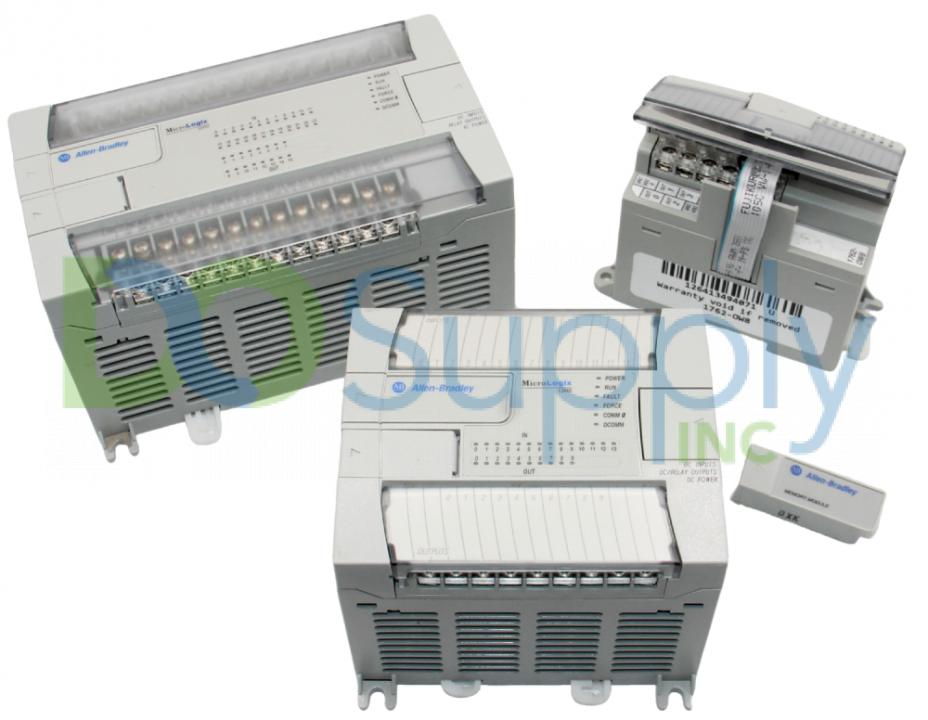
Low voltage circuits of 12…48 VDC are widely used in most automation applications including industrial control contact relays, automation control systems such as Programmable Logic Controllers(PLCs) or Programmable Automation Controllers(PACs), and many other types of automation-related systems. Such systems are highly susceptible to high voltage transients that can readily damage Integrated Circuits (ICs) or other sensitive electronic devices within their circuits, as well as cause loss of data or interruptions in service provision. The high voltage transients can also pose a threat to users/operators of various automation equipment.
Over-voltage transients on those low voltage circuits are often caused by inductive spikes from power switching, lightning interference, or fast voltage spikes from induced power line fluctuations. For example, a high voltage spike can result from a magnetic transient in relay coil inductance due to ON and OFF switching operations of a relay. To suppress such over-voltage transients, circuit designers and system integrators typically incorporate a shunt element acting as a clamp into the circuit, such as the Metal Oxide Varistor.
Compared to other transient-voltage suppression technologies, Metal Oxide Varistors (MOVs) provide one of the most cost-effective means of protecting automation equipment against high-energy power surges. As mentioned earlier, MOVs are voltage-dependent, nonlinear devices whose electrical behavior (V-I characteristics) is similar to that of back-to-back Zener diodes; thus, they provide excellent transient-voltage suppression performance. Also, MOVs can dissipate very high energy levels of transient voltages across the entire bulk of a power circuit or electronic device. For this reason, they are often used in industrial or AC power line applications to suppress high-energy transient voltages common in such applications.
In addition, to extend the service life of contact relays used in motor control and industrial automation circuits, circuit designers often incorporate MOVs on the secondary side of the relay circuits. In such applications, the MOVs clamp down high transient voltages and prevent arcing when the relay contacts are switched ON/OFF. They prevent the arcing by absorbing the arcing energy that’s contained in the overall energy released by the contact relay magnetic fields.
Moreover, MOVs form a part of the low-voltage Surge Protective Device (SPD) modules that are commonly used in industrial applications to provide module-based power surge protection of complete automation systems. The latest MOV designs feature high surge handling density, which enables the SPDs to offer significant surge protection advantages. Note, SPD modules are typically mounted on a DIN rail.
Let’s look at some examples of key Automation Equipment that use MOVs for protection against high transient voltages.
A) MOVs in Power Supply Circuits
Metal Oxide Varistors are used in power supply circuits powered directly from AC mains to protect them against high transient voltages. The MOV protects the power supply circuit from high-energy voltage spikes by varying its resistance depending on the applied voltage across it. You can often spot the MOV as the circular component that’s orange or blue-colored on the input side of the AC power source circuit
When the input voltage to the power supply circuit is within the rated limits, the MOV resistance is normally very high and this allows all the electric current to flow through the circuit while the MOV draws no current. However, when a high transient voltage occurs in the main supply line, it will appear directly across the MOV that’s connected in a parallel configuration to the AC main supply. The high voltage transient significantly reduces the MOV resistance to a very minimal value causing the MOV to act as a short circuit.
This forces the MOV to draw in a large amount of current which would otherwise blow the connected fuse and disconnect the power supply circuit from the mains voltage. But since power surges are short-lived, the faulted high voltage returns to a normal value in a short while, in such cases, the duration of current flow is not high enough to blow the connected fuse and the power supply circuit will return to normal operation when the input voltage value gets back to within the rated limits. However, whenever the MOV detects high transient voltage it shorts itself thereby disconnecting the power supply circuit momentarily and the high current flowing through it can be damaging. So if you come across a damaged MOV in any power supply circuit it’s possibly because the circuit has gone through multiple high transient voltages.
B) MOVs in I/O Terminals
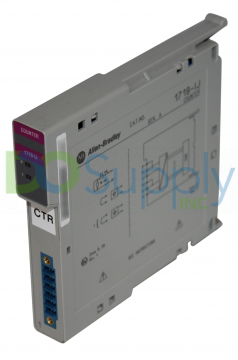
Metal Oxide Varistors are commonly placed on Input/Output terminal boards across I/O terminals to protect other more sensitive I/O packs and cards from damaging over-voltage transients. For example, you can connect a MOV in parallel configuration with relay coils that are energizing through a PLC output relay card. The MOV will protect the relay contacts of the PLC output card against high voltage spikes that’s likely to occur when the relay coils de-energize.
In that case, you’ll need to select the most appropriate MOV based on the amount of energy expected to be released by the de-energizing relay coils; the energy should be measured in Watt-second (W.s) or Joules(J).
C) MOVs in Variable Frequency Drives (VFDs)
A Variable Frequency Drive circuit also makes use of MOVs to counter over-voltage transients at the incoming input voltage from an AC power supply. You can easily spot a MOV in a VFD circuit because it’s represented by an electronic symbol that looks like two diodes connected end-to-end.
In a VFD circuit with a three-phase AC power supply, the Metal Oxide Varistors are connected between the ground and each of the three phases (L1, L2, and L3) of the incoming AC power to protect sensitive electronic components of the VFD from an excessive input voltage. The MOVs are used along with a system of fuses in parallel connection to the VFD circuit that is to be protected. These fuses are connected in series with the three terminals (L1, L2, and L3) of the three-phase AC power supply.
The fuses in the VFD circuit only check for an over-current condition, so they can never detect an over-voltage condition at the incoming AC supply voltage. But when an over-voltage condition occurs, the high voltage spike lowers the resistance of the MOV making it appear like a short circuit and causing an over-current condition that makes the fuse elements melt open. So, the MOVs remain non-conductive as long as the incoming AC supply voltage to the VFD circuit remains below the MOV’s Clamping Voltage. But when the supply voltage across the MOV exceeds its input voltage rating, the MOV will fail.
This type of MOV behavior, particularly in VFD applications, enables the MOVs to suppress line voltage surges thereby protecting other sensitive power devices downstream. For example, when a 400 VAC power surge goes through a 200 VAC Variable Frequency Drive, it’s highly likely that one of the input MOVs will be burnt out to protect the VFD from the over-voltage condition–you can verify that by opening up the VFD. This not only protects other VFD components downstream but all valuable automation equipment down the power line. So, the burnt out input MOV is the sacrificial component for the entire system.
In such a case, you will need to replace the damaged MOV, inspect the rest of the VFD components, and finally check the input rectifier unit by measuring the supply voltage from the L1, L2, and L3 input terminals to the DC+ and DC- terminals of the DC output power rail. If everything checks okay, reassemble the VFD and connect its power terminals back to the three-phase AC power supply. Running the drive at the rated voltage will confirm that everything is functioning properly including the replaced input MOV.
Note: When connecting a Variable Frequency Drive equipped with Metal Oxide Varistors to a power system, ensure that the MOVs are connected on solidly grounded Wye power systems otherwise connecting the MOVs to other power systems (i.e. ungrounded distribution systems) can result in component failures and/or nuisance tripping because MOVs are referenced to ground. Also, MOVs are specifically designed for surge protection only, so they are not suitable for continuous excessive-voltage operations.
DO Supply Inc. makes no representations as to the completeness, validity, correctness, suitability, or accuracy of any information on this website and will not be liable for any delays, omissions, or errors in this information or any losses, injuries, or damages arising from its display or use. All the information on this website is provided on an "as-is" basis. It is the reader's responsibility to verify their own facts.