Automation 101 for Beginners: Processes
The term “Automation” describes a wide array of technologies, scientific techniques, and tools used to minimize human input in processes, making them more efficient, accurate, fast, and productive. Automation solutions are utilized in practically all areas of our everyday life, covering an extensive range of applications, from household appliances and consumer electronics to advanced and complex systems powering modern-day manufacturing facilities, transport vehicles including ships and aircraft, power plants, etc. Automated banking solutions are also available.
One of the most widely adopted forms of automation is industrial automation, which involves the use of a combination of specialized control devices (such as logic controllers), information technologies, and computer-controlled equipment (e.g., robots) to enhance manufacturing/production processes. Essentially, industrial automation streamlines industrial systems by integrating computers and smart machine tools into multiple operations. Using integrated smart technologies, the automated systems can then control almost all industrial processes with very little human intervention beyond initial machine programming.
This article seeks to assist readers to understand the process of industrial automation, i.e., determine the goals and benefits of industrial automation, identify industrial tasks that can be automated, identify the elements of industrial automation, discuss the most common components and types of industrial control systems, and understand the various levels of industrial automation.
What is the Purpose of Industrial Automation?
An increasing number of modern-day companies are adopting automation solutions to streamline processes and realize a healthy Return on Investment (ROI) in a fairly short timeframe. The use of cutting-edge software technologies, computer-controlled machinery, robots, and advanced control systems enables industries to run entirely all processes with minimum time and effort, leading to incredible levels of efficiency and productivity.
Thus, the implementation of automation solutions can be a valuable investment for companies in virtually any type of industry. Mainly because industrial automation systems not only free human workers so that they can focus on higher-level tasks beyond what automation can achieve, but these systems can also bring other priceless benefits including:
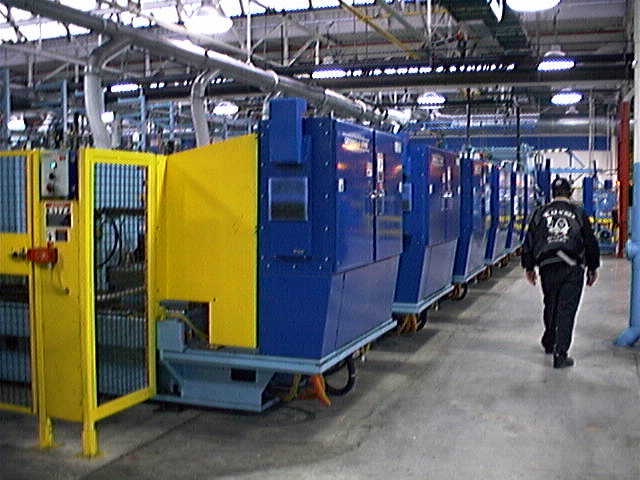
- Easier process control, thereby speeding up complex industrial processes
- Increased productivity, as automated production lines can produce higher volumes at a faster rate
- Enhanced product quality due to high accuracy levels (reduced margin of errors) and fewer instances of human error in production processes
- Improved customer satisfaction due to greater production speeds and efficiency
- Reduced production and operating costs
- Greater flexibility that allows for the adoption of diverse production methods
- Decreased workforce training requirements
- Improved workplace safety, for both machines and human operators
- Predictive maintenance leading to fewer downtimes
- Improved compliance with relevant standards and regulations
- Better production planning and decision making
Identifying Automatable Tasks
This is usually the initial phase of any automation process, whose focus is to enable industries to identify the various operations they can automate. Three key factors are considered when determining whether a given industrial process is suitable for automation or not, they include:
- Repeatability
- Controllability
- Value-addition
In essence, an industrial process can only be automated if it’s repetitive and if it’s possible to design a control system capable of repeating that routine. Next, it is important to assess the impact of automating that particular industrial process; the impact can take the form of higher efficiency, increased productivity, greater consistency, improved product quality, enhanced safety, or less downtime. For example, if an industrial process is tedious, inconsistent, or dangerous when performed by human workers, it could be an ideal candidate for automation.
Examples of automatable industrial processes:
- Packaging and Material Handling
- Food and Beverage Processing
- Automobile Assembly
- Metal Fabrication; cutting, forging, casting, extrusion, drawing, machining, cladding, welding, punching, etc.
- Inspection and Quality Control
- Planning and Decision Making
Elements of Industrial Automation
There are three fundamental building blocks of industrial automation, namely: (i) Action Elements, (ii) Feedback Controls, and (iii) Machine Programming. Almost every automated industrial system you’ll ever come across will include all three elements. Let’s discuss what each element entails.
1. Action Elements
Action elements are those components of an automated system, such as power supply or battery units, that provide the energy required to accomplish desired tasks or goals. Automated industrial systems are designed to perform some useful tasks/actions, and to do so they require energy. This energy can be applied to the automated system in several different forms, such as electricity to run motors driving conveyor belts that move raw materials or heat to adjust the temperature of a factory floor.
Electricity is the most widely used source of power in today’s automated industrial systems because it’s readily generated from other energy sources (e.g., solar, fossil fuel, wind, geothermal, hydroelectric, and nuclear) and it can easily be converted into other forms of energy, such as thermal/heat, mechanical, pneumatic, and hydraulic energy, to perform useful work. Also, electrical energy can be stored in high-performance, rechargeable/long-life batteries.
2. Feedback Controls
Most automated industrial systems use feedback control systems made up of five basic components: (i) Inputs, (ii) Processes being controlled, (iii) Outputs, (iv) Sensing mechanisms, and (v) Controllers and Actuating Devices.
A) Input: The input to a feedback control system is the set point or reference value for the system’s output. It represents the required operating value of the system’s output. For example, the input of a heating feedback control system can be the desired temperature value of a room.
B) Process Being Controlled: Different feedback systems control different processes, which may include manufacturing operations, automobile engines in cruise control, rocket engines on a spacecraft, etc. In the previous example of the heating feedback control system, the process being controlled could be a heater or furnace.
C) Output: This is the process variable that’s being measured and compared to the reference value. In the example above, the output is the actual room temperature.
D) Sensing Elements: These are the measuring devices used in closed-loop feedback control to monitor the performance of an automated system. They measure the values of the output parameters/variables; the obtained measurements are then used to determine whether the process or operation being controlled is proceeding as desired. There are various types of sensors used in feedback control systems for industrial automation, such as pressure sensors, torque sensors, temperature sensors, MEMS (Micro-Electro-Mechanical-Systems) sensors, and position sensors. These sensors are normally connected to indicators like gauges and dials. For example, a thermocouple sensor can be inserted into a pipe to measure the temperature of the liquid flowing through that pipe, while the temperature reading is then indicated on a connected thermometer.
E) Controllers and Actuators: These are the hardware components of a feedback control system that are used to control and operate an automated system. Their function is to compare the measured output value with the input setpoint or reference value and to minimize any difference between the two values. For example, in an automated heating system, the switch connected to the thermostat’s bimetallic strip is the controller and actuating device for that system. So, when the room temperature (output) gets below the reference input value, the switch turns the heater on. And when the room temperature exceeds the desired setpoint, the switch turns the heater off.
In general, the controllers and actuating devices of a feedback control system are the mechanisms by which changes in the operation or process being controlled are implemented to influence the value of the output variable. These mechanisms are normally designed for specific automated systems and they consist of devices such as solenoid switches, valves, motors, power screws, gears, piston cylinders, chain drives, pulley systems, as well as other electrical and mechanical components.
Understanding the different types of controllers and actuators used in feedback control systems and how they work is crucial for successful industrial automation. This is because these are decision elements that differentiate automated industrial systems from conventional mechanized industrial systems. In the latter, human operators must monitor sensor gauges and dials to decide when to activate the necessary control elements. Whereas in an automated system, such decisions can be made either by an actuating device like a thermostat or a program stored in a controller.
3. Machine Programming
Automated systems require specialized software and programming to function. Software is a set of programmed instructions, programs, or data used to operate automated systems. Understanding the different software options available and the programming languages used to create them is essential for designing and implementing automated industrial systems.
The programmed instructions define the set of tasks/actions to be accomplished automatically by the automated system. In other words, machine programming specifies what the automated system is required to do and how its different components should function to achieve the desired output. The program content varies considerably from one automated system to the other. In complex automated industrial systems, the programs consist of both process and command information. Process information is the data that stipulates how the various components of an automated system are to function to accomplish a desired task. While command information contains a series of instructions that tell the control elements of the automated system how they should perform certain operations.
In industrial automation, machine programming is related to feedback control in that the programming commands establish the sequence of the input values (setpoints) for the various feedback control loops that make up an automated industrial system. In that regard, the purpose of the feedback control loop is to verify that the programmed instruction has been implemented correctly. For example, the program in a robotic controller may specify that the robot’s arm is moved to a designated position; in such a case, the feedback control system will be used to verify if the move has been correctly made.
Note: Some programmed commands can be executed in a simple open-loop control system– a one-way system without a feedback control loop for verifying that the commands have been properly carried out. For example, the command to flip a light bulb switch ON/OFF may not require feedback control. Feedback control in an automated system is necessary when there are variations in the input of a process, and the system is required to take these variations into account by adjusting its controlled actions. Otherwise, without feedback control, such an automated system may not be able to exert sufficient control over the output process variables.
Common Industrial Control Systems
In industrial automation, Industrial Control System (ICS) is a collective term used to describe the integration of software and hardware control technologies with network connectivity to automate and manage various industrial processes/machinery, either locally or at remote locations. Control systems available for use in industrial automation can vary both in size and level of complexity, ranging from relatively simple logic controllers that automate localized industrial processes to comprehensive SCADA control systems, able to manage geographically distributed assets and machinery.
Let’s briefly discuss some of the most common ICS technologies.
A) Discrete/Digital Controllers: These controllers implement algebraic algorithms such as compensatory gain and filters to regulate, change, or correct the behavior of the process being controlled in a closed-loop feedback system. They are the simplest types of industrial automation control devices, and they are mostly used in thermostats and timers for basic on and off controls.
B) Proportional-Integral-Derivative (PID) Controllers: PID controllers are specially programmed to use closed-loop control feedback to maintain the actual output of a process as close as possible to the desired output or required setpoint. They accomplish this by automatically applying a corrective response that’s based on the Proportional-Integral-Derivative coefficients. The three coefficients (P, I, and D) are normally fine-tuned or weighted, to correctly adjust the process being controlled.
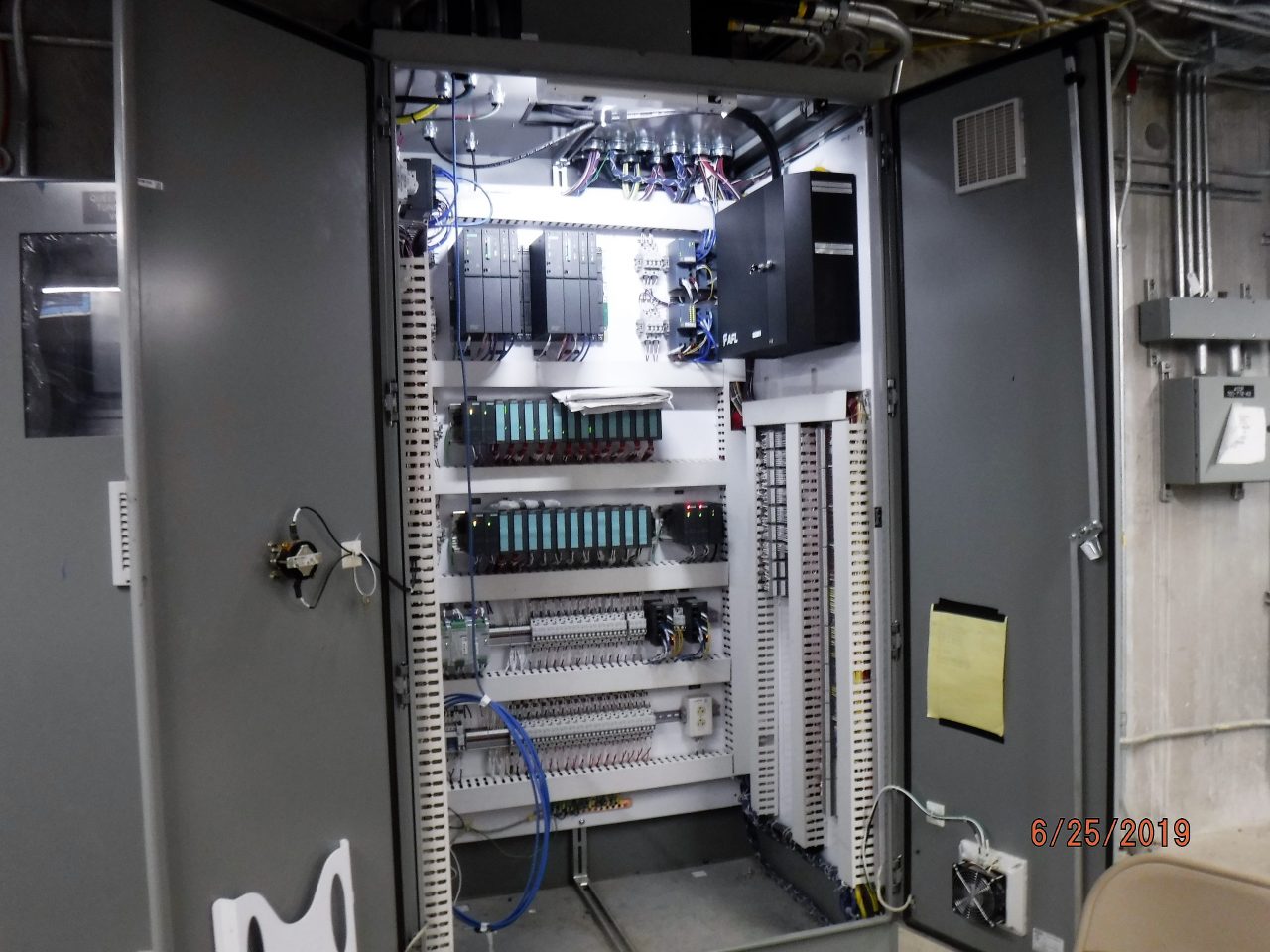
PID controllers are often used in high-precision industrial automation systems, to provide continuously modulated control of critical process variables such as temperature, flow, speed, pressure, etc.
C) Programmable Logic Controllers: PLCs are modular solid-state computing devices that include a microprocessor-based CPU with the appropriate number of inputs and outputs. They are used to interconnect different industrial automation solutions into a single network, enabling automated control and monitoring of specific industrial processes and machinery.
D) Programmable Automation Controllers: PACs are similar to PLCs, but they offer more network connectivity options and increased control capabilities than most PLC systems. Typically, PACs have several microprocessors that increase their computing power, allowing them to perform various control functions simultaneously and control multiple industrial processes.
E) Distributed Control Systems (DCSs): These systems consist of sensors, controllers, and specialized computers distributed throughout an industrial plant. They serve the same purpose as PLCs, providing automated control, monitoring, and management of industrial machinery and processes. However, the field connection I/O modules and controller functions in a DCS are not centralized like in a PLC system, instead, they are distributed all through the system. This feature enables DCS-based automation solutions to control large-scale industrial processes or even the entire plant.
F) Supervisory Control and Data Acquisition (SCADA): SCADA is a complex industrial automation control system that uses a combination of monitoring software and several hardware elements, such as industrial computers (IPCs), networked data communications, and graphical user interfaces, to capture real-time operational data and provide a high level of automated control and monitoring of industrial processes and machinery, often spread out over an extensive geographical area.
G) Remote Terminal Units: RTUs are microprocessor-controlled devices used in industrial control systems to connect various input & output hardware components to SCADA systems or Distributed Control Systems. They are installed at geographically distributed locations within an industrial plant to facilitate communication of remote field equipment in the DCS or SCADA system, thereby enabling industrial automation.
H) Human-Machine Interfaces (HMI): The HMI software enables human operators to interact with automated industrial systems, machines, and other devices via a computer-based Graphical User-Interface (GUI). Also, through an HMI a human operator can remotely monitor and control the status of specific industrial processes. Touchscreens and computer keyboards can function as HMI devices when integrated with the HMI software.
Levels of Industrial Automation
There are four different levels of industrial automation, which are classified based on the complexity of the industrial process being controlled. The four levels are:
- Field Level: This is the lowest level of industrial automation, and it includes several field input and output devices, such as sensors and actuators, that are interfaced with controllers like PLCs or RTUs. The field input devices capture real-time performance data of various industrial machines and process variables like flow, temperature, pressure, etc. They then transfer the collected data to the next level of automation for monitoring and analysis.
- Control Level: This level is comprised of Programmable Logic Controllers (PLCs), Programmable Automation Controllers (PACs), CNC (computer numerical control) machines, Robotic Controllers, etc. which receive the real-time performance data or process parameters from various field sensors. On analyzing and processing the received data, these industrial controllers then drive the field actuators to implement specific control actions based on their programmed logic or a given control technique. PLCs are the most commonly used type of controllers across all industries, as they deliver automatic control functions based on sensor data.
- Supervisory and Production Control Level: This level incorporates monitoring systems and various automation devices that facilitate controlling and human intervention functions like setting production targets, supervising critical operating parameters, historical archiving, starting and shutting down machines, etc. Generally, Supervisory Control and Data Acquisition (SCADA) or Distribution Control Systems (DCS) HMIs are used at this automation level.
- Information or Enterprise Level: This is the top-most level of industrial automation which manages the entire automated industrial system. Tasks carried out at this level include production planning, market analysis, customer evaluation, managing orders and sales, etc.
Note: Industrial communication networks play a key role in industrial automation systems. They are present at all four levels of automation to provide a continuous flow of information. Common industrial communication networks include RS-485/422 or RS-232 serial networks, DeviceNet, ControlNet, EtherNet/IP, Ethernet POWERLINK, EtherCAT (Ethernet for Control Automation Technology), CC-Link IE (Industrial Ethernet), PROFINET IO, PROFINET IRTSERCOS III, PROFIBUS PA (Process Automation), and MODBUS-RTPS.
DO Supply Inc. makes no representations as to the completeness, validity, correctness, suitability, or accuracy of any information on this website and will not be liable for any delays, omissions, or errors in this information or any losses, injuries, or damages arising from its display or use. All the information on this website is provided on an "as-is" basis. It is the reader's responsibility to verify their own facts.