What You Need to Know About EEPROM in Industrial Automation
ROM (Read-only Memory) was used to store BIOS throughout the early stages of microcomputer development. During the ROM manufacturing process, the manufacturer uses a unique technique to burn in the data inside the ROM. Only reading is possible; no editing is permitted. The user can no longer change burned-in data; they can only confirm its accuracy. There is no room for modification. The information must be discarded, and a fresh copy created if there are any faults in it. The manufacturing line is where ROM is created. It is often exclusively utilized in bulk applications because of its high cost.
Later, people created PROM (Programmable ROM) to eliminate the hassles associated with ROM manufacture and updating. In the PROM, no information was created at the factory at first. Users can write their data with the assistance of a dedicated coder, although this possibility is limited. It cannot be changed once written. In the event of a mistake, the chip can only be discarded. PROM has the same properties as ROM, but its cost is more, and its data writing speed is slower than that of ROM mass manufacturing. In general, it is only appropriate for situations with low demand or for testing before large manufacture of ROM. To address all these issues, EEPROM was developed.
What is EEPROM?
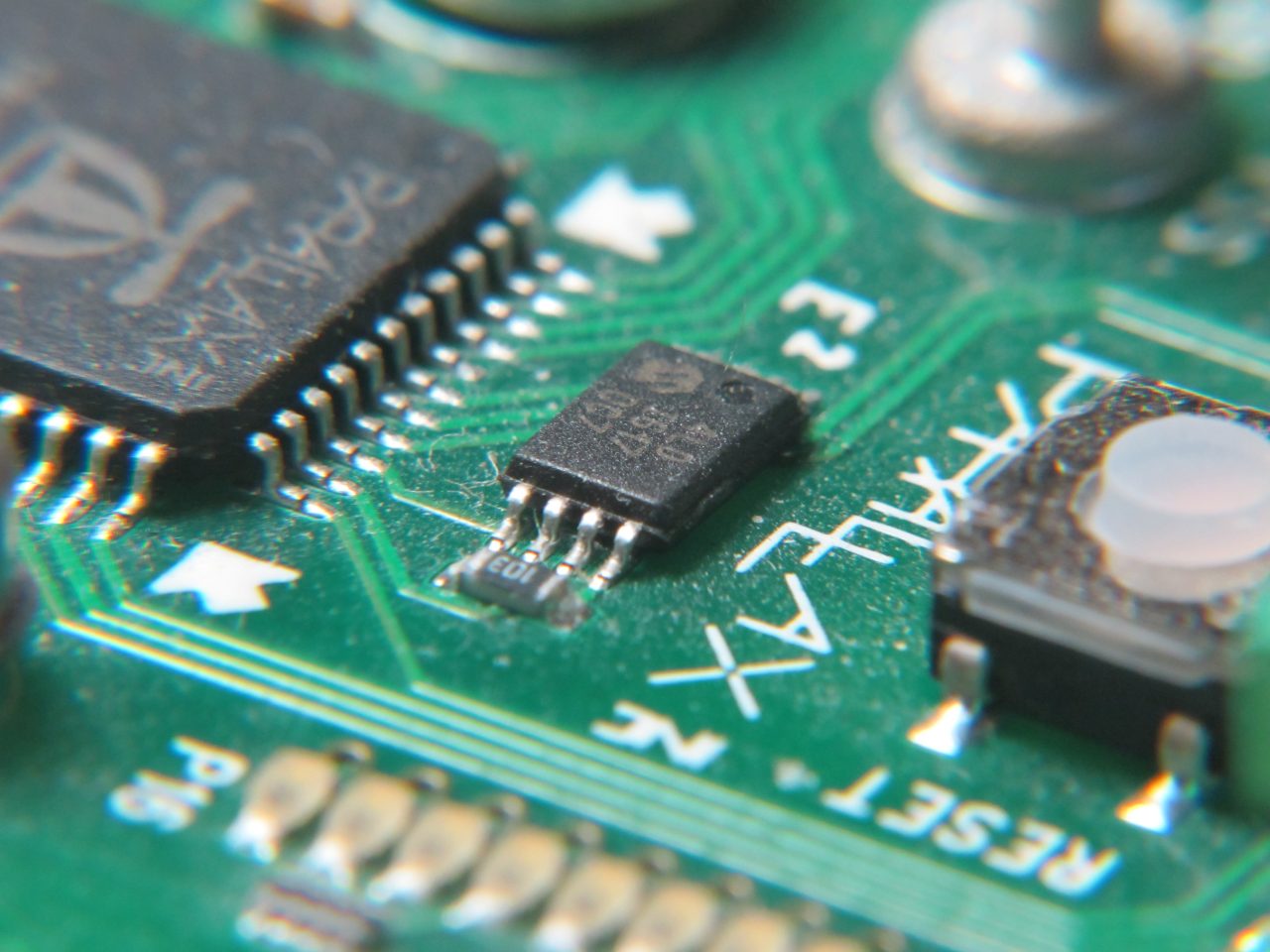
EEPROM, or Electrically Erasable Programmable Read-Only Memory, is a form of ROM that can be modified by the user. This type of memory permits data to be erased and reprogrammed by applying a larger electrical voltage. One of the benefits of EEPROM is that it can retain data even in the incident of a power outage. On a computer or other specialized equipment, EEPROM can be used to erase and reprogrammed information. EEPROM may be programmed/rewritten and wiped using a greater voltage than usual. In contrast to EPROM chips, EEPROM may be changed without having to take the computer apart. EEPROM allows for regular reprogramming while the computer is running. EEPROM’s life is a crucial design consideration element.
EEPROM, or E2PROM, was among the earliest forms of non-volatile memory chips of semiconductors. It emerged from the popular EPROM technology that was widely used during the late 1970s to 1980s. These EPROM memories could be programmed with machine software and later erased, if necessary, by exposing the chip to ultraviolet light. The development of EEPROM technology was a significant milestone in the evolution of non-volatile memory chips.
Although the deletion procedure took around an hour, this was sufficient for development environments. These semiconductor memories, however, could not be wiped electrically, and a complete electrical structure would have been more practical.
A development team at Intel, led by George Perlegos, created a technique based on the already-existing EPROM technology in 1983. The additional EEPROM memory may be wiped and programmed electrically with an addition to the EPROM structure already in place. The Intel 2816 was the first EEPROM device to be released on the market.
Later, many employees with EEPROM development knowledge left Intel and founded a new business called Seeq Technology, which continued to develop and produce EEPROM technology, as well as other semiconductor memory devices.
How Does it Work?
EEPROM, also written as E2PROM, works on the same mechanism as UV-EPROM. The cell’s properties are changed when electrons are trapped in a floating gate, enabling storing either logic “0” or “1”.
EEPROM is a type of memory device with fewer cell design criteria than others. Common cells are generally made up of two transistors: a store transistor with a floating gate to trap electrons and an access transistor for memory operations. While using EEPROM, cells are wiped by trapping electrons in a floating cell. This is different from using an EPROM where cells are wiped by eliminating electrons from the floating gate.
EEPROM Chips may be deleted and written on several occasions, overcoming the disadvantage that PROM chips can only be written at once. EPROM chips have a highly noticeable characteristic. A glass pane on the ceramic container allows you to see the integrated circuit within. By passing UV light through the hole, the inside chip may be erased. The EPROM eraser is required to finish the chip-erasing process. When writing data to EPROM, a specific programmer is to be used, and a certain programming voltage depending on chip-type must be applied when writing material to the chip. After the data has been written to the EPROM chip, the window must be covered with an opaque sticker or piece of tape to protect it from the sun’s UV radiation. The data of each memory cell inside the EPROM chip is 1 when it is in a blank condition (after being wiped with ultraviolet radiation at a high-level).
What Makes EEPROM Ideal for Industrial Automation?
EEPROM has a range of features that make it an ideal choice for industrial automation applications. Some of the key features of EEPROMs include:
- Operation at low and standard voltages – EEPROMs are intended to function at low and standard voltages, making them compatible with a wide range of devices and systems. They have a frequency range of 100 kHz at 1.8 volts and 400 kHz at 2.7 volts and 5 volts.
- Internal organization – EEPROM has a vast array of internal organization options, including 128 x 8 (1K), 256 x 8 (2K), 512 x 8 (4K), 1024 x 8 (8K), or 2048 x 8 (16K), allowing you to choose the right EEPROM for your application.
- Automotive devices – EEPROMs are also available in automotive-grade devices, making them suitable for use in automotive systems.
- Schmitt trigger and filtered inputs – EEPROMs are equipped with Schmitt triggers and filtered inputs to suppress noise and ensure reliable data transfer.
- Two-wire serial interface – EEPROMs have a two-wire serial interface, which allows for bidirectional data transfer using a simple and efficient protocol.
- Write protect pin – EEPROMs have a write protect pin, which offers hardware safety for the stored data.
- Page write modes – EEPROMs support a range of page write modes, including 8-byte pages for 1K and 2K devices, and 16-byte pages for 4K, 8K, and 16K devices. This makes it possible to write data in small, manageable chunks.
- Partial page writes – EEPROMs allow for partial page writes, which can be useful for updating specific parts of a memory page without rewriting the entire page.
- Self-timed write cycle – The write cycle of EEPROMs is self-timed, which ensures that data is written reliably and accurately.
To ease program development, certain microcontrollers created before the invention of flash memory employ EPROM to store the version of the program. One-time programmable devices, for instance, will result in significant debugging waste.
These are just a few of the key features of EEPROM that make them an important part of industrial automation systems.
Which Type of EEPROM is Best for Your Automation System?
Two types of EEPROM memory chips are available:
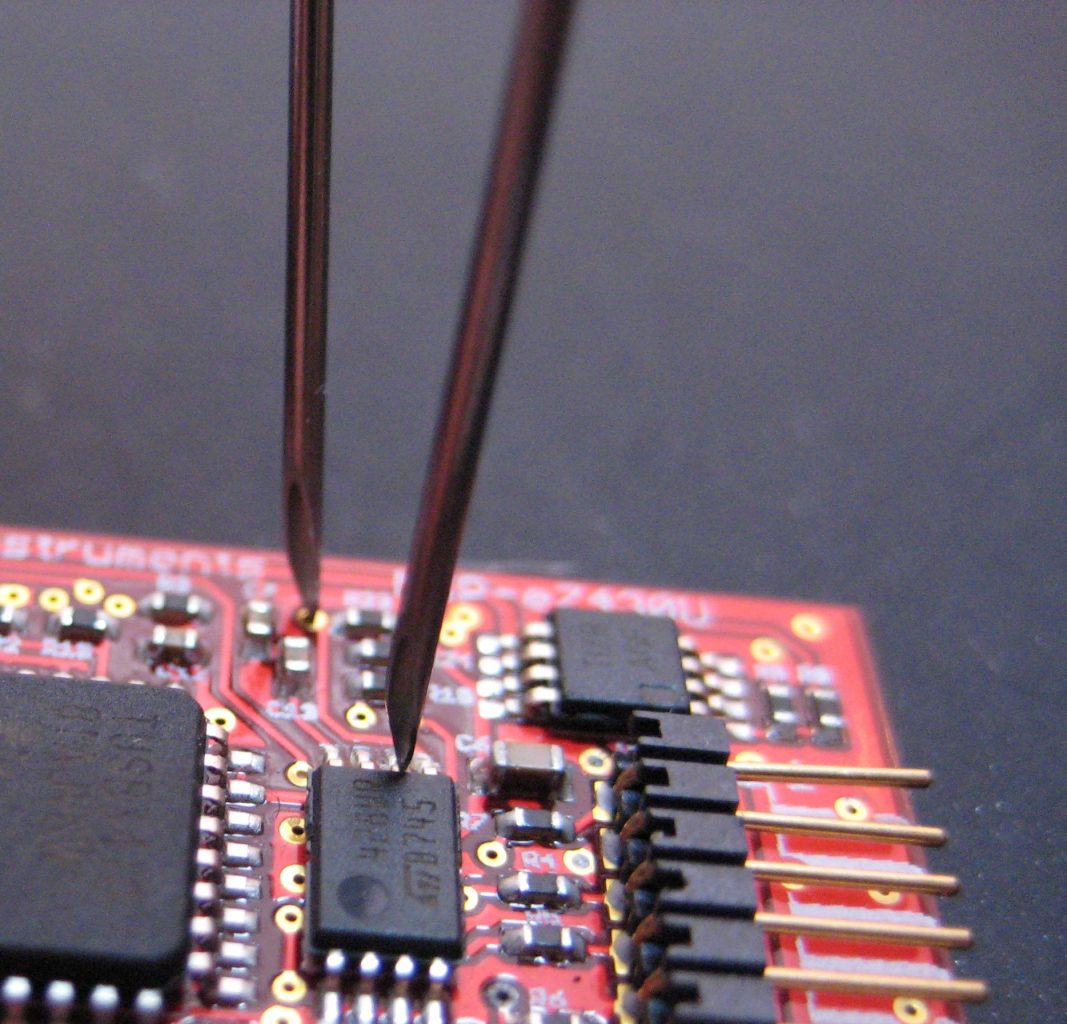
- Serial EEPROM
- Parallel EEPROM
Serial EEPROM
Serial EEPROM is a type of EEPROM that uses a serial interface to communicate with other devices. Data is transmitted one bit at a time over a single data line, making it more suitable for low-speed applications. Serial EEPROMs are widely used in industrial automation due to their compact size and low power consumption.
For serial EEPROM, many standard interface options exist, including Serial Peripheral Interface, UNI/O bus, Inter-Integrated Circuit, Microwire, and One-Wire. One to four control signals are needed for the operation of each of these interfaces.
A three-phase EEPROM serial protocol is used:
- Operation Code Phase
- Address Phase
- Data Phase
Parallel EEPROM
Parallel EEPROM is a type of EEPROM that uses a parallel interface to communicate with other devices. The data is transmitted multiple bits at a time over several data lines, making it faster than serial EEPROM. Parallel EEPROMs are often used in industrial automation applications that require high-speed data transfer and large amounts of data storage.
When Can EEPROM Malfunction?
EEPROM chips are not completely fail-safe, much like any other electrical and computing equipment. There are two main ways that EEPROM chips might malfunction.
Data Endurance
The bit cells in EEPROM become trapped in the programmed status during rewrite operations. This occurs because of trapped electron accumulation in the FGT. The threshold for the “zero state” cannot be identified when more electrons become trapped, leaving the cells permanently in the programmed state and perhaps leading to chipping failure. Because of this, EEPROM manufacturers state the required minimum and maximum rewrite cycles.
Data Retention Time
The EEPROM architecture is designed to permit electrons to drift across the imperfect insulator after being injected into the floating gate. Due to this floating, some charge is lost, which causes some data to be deleted and the memory cell to return to its previously erased condition.
Manufacturers provide a restricted data retention term of a set number of years, such as 10, as a result. Temperature and other environmental conditions can potentially shorten the EEPROM’s data retention period.
A Unique Kind of EEPROM: Flash Memory
A unique kind of EEPROM is flash memory. Flash memory chips, which are structurally identical to EEPROM, use standard PC voltages for reprogramming and erasure. Additionally, a whole block of bytes needs to be cleared first. However, the method of reading, writing, and erasing data in these two forms of memory differs. EEPROM is an acronym that denotes Electrically Erasable Programmable Read-Only Memory, where data can be read, written, and erased at the byte level. On the other hand, flash memory, a type of EEPROM, erases data at the block level and allows for reading and writing at the byte level.
Flash memory utilizes a solitary standard MOS transistor to clear an entire block of floating gate transistors (FGTs). In comparison, most EEPROMs have a dedicated MOS transistor for every eight floating gate transistors (FGTs). The floating gate holds the electrical charge, and the MOS transistor erases it. The MOS transistor deactivates the charge while the FGT maintains it.
Nowadays, Flash memory modules can store gigabytes and even more data, making them ideal for cameras and computers. This information may be semi-static or static. On circuit boards, however, standard EEPROM memory chips are often used to store just a tiny quantity of data or programming instructions. The fact that EEPROMs carry out their erase operations byte-by-byte extends the time needed to erase and modify the device but also gives developers the flexibility to alter certain components as desired. Large data chunks may be erased from flash memory, which dramatically speeds up the erase process and provides for more efficient data storage. When modifications are made, the developer is compelled to rewrite large blocks of data since it can no longer alter particular bytes.
EEPROMs have an improved lifespan compared to other memory devices due to their ability to withstand a higher number of erase and write cycles. EEPROMs can endure up to 1 million erase/write cycles during their lifetime, whereas flash memory devices have a shorter lifespan, typically able to withstand anywhere from 10,000 to 1 million erase/write cycles before the memory begins to deteriorate. The durability of EEPROMs makes them a popular choice for applications where repeated write operations are required. Additionally, compared to EEPROM, flash memory is less costly to manufacture and has lower memory cell sizes.
Remarks
- The fundamental advantage of this type of memory is that data created in a sketch may be permanently stored there. EEPROM is frequently used to store serial numbers or setup options, but it may also be used for storing continuously updated data, such as how many times the Arduino has been reset, or cumulative measures, such as the total distance traveled.
- Another advantage of EEPROM is its capacity for being reprogrammed multiple times. EEPROM is a non-volatile storage media that allows for individual byte erasure, and because the erase process is electrical, it happens quickly. In contrast to EPROM chips, EEPROM chips can be reprogrammed without removing them from the computer.
- EEPROMs have an improved lifespan compared to other memory devices due to their ability to withstand a higher number of erase and write cycles. EEPROMs can endure up to 1 million erase/write cycles during their lifetime.
- Despite these benefits, EEPROM also has some drawbacks. It is more expensive and has a shorter data retention period compared to PROM and EPROM. Systems that use serial EEPROM chips can also be costlier. Additionally, EEPROM read/write cycles take longer than RAM cycles, so it is important to use the information stored in EEPROM in a way that does not hinder system performance.
- Another consideration is the voltages needed to read, write, and erase data from EEPROM. In newer EEPROM chips, a high-voltage source has been integrated, eliminating the need for a separate high-voltage source. This simplifies the design and reduces costs.
- Despite these disadvantages, EEPROM memory is commonly used, particularly in situations where the number of read/write cycles is limited.
DO Supply Inc. makes no representations as to the completeness, validity, correctness, suitability, or accuracy of any information on this website and will not be liable for any delays, omissions, or errors in this information or any losses, injuries, or damages arising from its display or use. All the information on this website is provided on an "as-is" basis. It is the reader's responsibility to verify their own facts.