A Factory in the Dark
Industrial automation has transformed how factories operate, ushering in a new era of efficiency and productivity. But as the machines have become more intelligent and powerful, some factories have become shrouded in darkness, earning the ominous moniker of “dark factories.” These factories are filled with machines that operate independently, whirring away without human intervention. The result is that the boundaries between man and machine blur, and the distinction between light and dark fades away. What secrets lie hidden within these dark factories, and what are the implications of this growing trend of automation? Join us as we explore the mysteries of dark factories and delve into the complex relationship between man and machine.
What are Dark Factories?
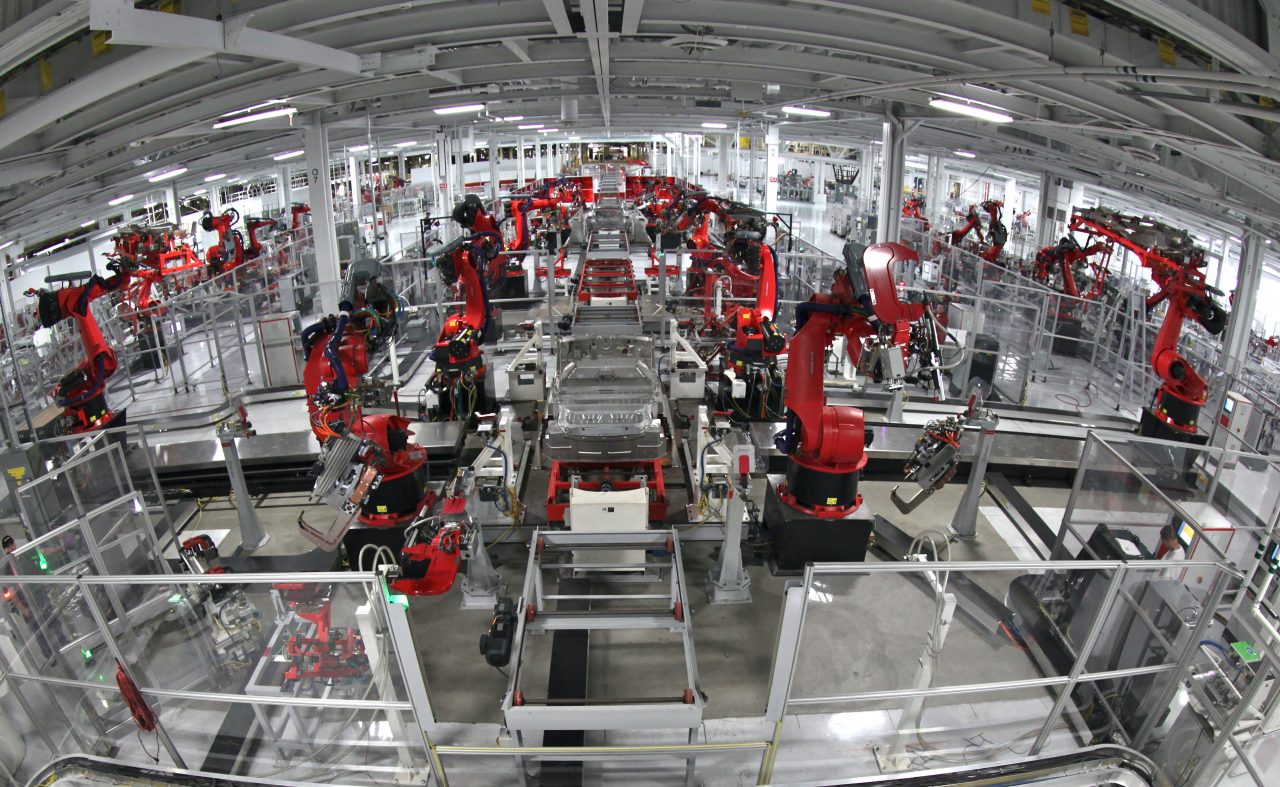
Dark factories, also known as lights-off factories, are automated industrial production plants where no humans are present. They began to gain attention and speculation when a Chinese company, Foxconn, opened its first dark factory in 2018. Rumors and speculation about these mysterious factories ran rampant; could robots and machines produce the same quality goods as human labor? Could the production industry survive without human labor?
The concept behind dark factories isn’t necessarily new. In fact, some trace it back to Henry Ford’s assembly line production techniques from the early 1900s. But with developments in AI and automation technology, it has become increasingly possible for robots or machines to run a large-scale factory completely on their own – no human intervention is needed. In addition to physical automation, such as robotics, dark factories also use digital automation technologies such as artificial intelligence, machine learning, predictive analytics, and computer vision systems. These technologies allow machines to recognize patterns and make decisions without any human input.
Although there is still much speculation surrounding dark factories, they have slowly become more accepted by businesses around the world. Companies are now starting to see potential cost savings associated with using automated production processes in place of traditional manual processes. This increased acceptance of dark factories has resulted in an increase in research and development of new automation technologies that can improve productivity while reducing costs.
Why are Dark Factories so Mysterious?
The idea that there is a factory out there, maybe even close to you, completely run by robots on their own is simply a hard concept to fathom for most people. Most of us have been exposed to science fiction books and movies depicting a dystopian world run by robots and artificial intelligence, so to have something normally run by humans at its core completely taken over by robots, it’s no wonder why the public is weary.
That being said, there are a few rumors and misconceptions surrounding dark factories. Some have speculated that dark factories could be used for unethical practices or dangerous experiments, though there is no evidence to support such claims. There are also rumors that this very technology could replace our workers and take up most of our jobs. This is something we will discuss further in this article. Another is that these factories are completely unmanned. This rumor is simply untrue, as robotics, machines, and even the factory itself require maintenance. In summary, the term “dark factory” may sound mysterious, but in reality, it is simply a term used to describe an unmanned and highly automated manufacturing operation. While there may be some myths and misconceptions surrounding this technology, it is an exciting development in the industry that promises to bring about significant improvements in efficiency, cost savings, and product quality.
Real-World Examples of Dark Factories
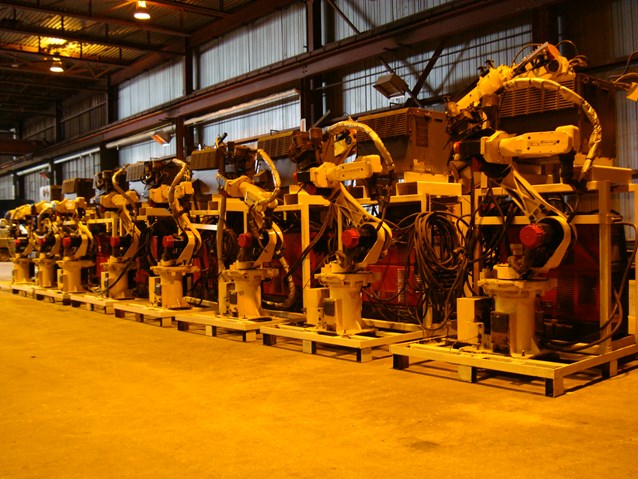
If you are adapted to the Apple ecosystem of technology, chances are that you use a device that has been manufactured inside of a dark factory. Foxconn Industrial Internet Co Ltd (FII) has been building electrical components, such as iPhones for Apple, in dark factories since 2018. With reports of the factory’s efficiency increasing by 30% and the inventory recycled reduced by 15%, it is easy to see why a fully autonomous factory could lead to better products and even reduced costs. These factories also save money by cutting off all of the lights in the factories to save on electricity as well, hence the name “dark factory.” Addressing the previous rumor of no human workers in this dark factory, FII’s vice-chairman Li Jie stated that the firm’s Shenzhen factory uses autonomous manufacturing in the dark with the absence of front-line workers, but a lights-off factory isn’t unmanned. In fact, there are still human workers in the front end to make necessary decisions. As for safety, automated factories are much more friendly to workers’ health as they automate repetitive and low-value tasks. FII’s vice president Chen Guanqi has also said that there would be no worry about whether a worker’s hand could be caught, hit, or cut by a machine.
Another example is the robotics manufacturer FANUC. FANUC is a Japanese industrial robotics company, and its lights-out factory is a true testament to the advancements in automation. FANUC’s lights-out facility is located in Yamanashi, Japan, and it houses its own assembly line that runs entirely on automation – no humans are present. The entire process takes place within the factory walls – from the production of parts to final assembly. This system allows for continuous operation 24 hours a day, 7 days a week, removing the need for human staff on site. This factory is so well optimized that it often goes 30 or more days without supervision. FANUC’s robots can produce up to 20 million parts annually with few breaks and maintenance downtimes. By utilizing this approach, FANUC has drastically reduced its factories’ production costs while also increasing the accuracy and reliability of production. Furthermore, with advanced communication systems used to monitor robot operations remotely, engineers can keep watch over production data as well as remain aware of any issues that may arise during the manufacturing process.
The Benefits of a Robot-Controlled Space
Removing the main labor force, lights, and maybe even air conditioning from a factory will lead to quite a substantial increase in productivity and savings for the business. Research shows that with current dark factories, production is up by 250%, with an 80% decrease in errors. If this method of manufacturing is to expand out to different countries and become a normal practice, we can see:
- Lower production costs – Money spent on employee wages and utilities would be minimal, which would directly impact the cost of manufacturing, thus resulting in cheaper products.
- Superior quality control – With robotic precision, quality control would be more accurate, faster, and more reliable compared to a group of human quality control experts. Robots will be better at spotting imperfections than a tired eye that has been doing it for 4 hours or more consecutively.
- Decrease in labor shortage issues – But isn’t automation taking jobs? Well, yes and no. There is already a shortage worldwide of skilled labor roles. Robots will bridge that gap and keep the factory ‘fully staffed’ at all times and able to run 24/7 with minimal downtime for maintenance or repair.
The Compromise of Greater Technology
The use of Artificial Intelligence (AI) and automation in many industries has caused some concern over the potential for job losses. As AI technology continues to improve, machines are able to take on tasks that were formerly done by humans. This can lead to a reduction in the need for human labor and could have a significant impact on employment levels. Even now, ChatGPT is being used by everyday people to write cover letters, help students with writing or math problems, as well as even produce code. There are art AIs, such as Stable Diffusion and DALL-E, that produce beautiful visual content with just a few prompts and a modern graphics card.
On the one hand, the use of AI and automation can be beneficial for businesses as they can reduce costs and increase efficiency by automating easy and repetitive tasks or the entire factory as a whole. But on the other hand, it can also lead to a decrease in jobs for people who perform those tasks. In addition, there is also the fear that robots may eventually outperform humans in many areas, leaving millions of people out of work.
However, one way to mitigate potential job losses from automation is through retraining employees for higher-skilled positions. By providing employees with training in new technologies such as robotics or computer programming, they will be able to find employment in higher-skilled positions that cannot be automated by machines. Additionally, those involved in factory production can benefit from learning soft skills such as communication and problem-solving, which are still required even when working alongside machines. Another thing to consider is that AI is still in its learning phase currently, as even ChatGPT could be producing wrong information or ineffective lines of code. There is still that element of human interaction needed to fact-check and refine what has been produced.
Although fully automated factories may require fewer manual workers, there is still a need for supervisors, maintenance technicians, mechanical engineers, and software engineers to keep them running smoothly and securely. In addition, those who are responsible for developing new AI technologies require highly skilled professionals such as data scientists and software developers who must continually update algorithms and create innovative systems based on customer needs.
Outside of automation, an Oxford study has shown that labor jobs and trades such as electricians, mechanics, plumbers, construction workers, and most things in between are protected, as automating those services would be extremely difficult. Most health care and civil services would also be hard to automate as well, so the problem of automation taking jobs might be less severe than what people are anticipating.
The implementation of AI and automation can be seen as an opportunity rather than a threat when it comes to job security by encouraging further education and career development among existing employees while creating new roles within these industries. Generally, higher training and education come with higher salaries and benefits packages. This allows companies to remain competitive while ensuring that workers continue to earn a living wage through meaningful work.
The Future of Dark Factories
The future of dark factories is an interesting and complex subject. On the one hand, these technologically advanced production facilities have the potential to improve efficiency and resource utilization while also reducing labor costs. It is also possible that they will become increasingly popular in the near future due to their ability to support automation, increasing their competitiveness with traditional production methods.
However, there are several ethical and political issues associated with the rise of dark factories that may hinder their growth. From an ethical standpoint, many people are concerned about the potential effect on job creation and loss due to automation. With more production being done by machines rather than people, jobs may be displaced or become increasingly scarce. Additionally, certain industries might face difficult choices between consumer convenience and job security for lower-wage workers.
Politically, government regulations could prove a barrier to dark factory growth as well. Some countries may decide to implement laws limiting or prohibiting new types of automated manufacturing processes if it is deemed too damaging to their local workforces. Furthermore, consumer demand could be affected by fear of replacing human workers with robots in order to reduce costs, though this could create a negative feedback loop if fewer people purchase products made by dark factories due to ethical concerns.
Overall, it is difficult to predict exactly how dark factories will shape the future of manufacturing or what sort of impact they will have on politics and ethics; however, it is safe to assume that some level of regulation or resistance from stakeholders will likely be present. Despite this potential roadblock, many experts agree that dark factories are here to stay and can help industries increase efficiency while reducing labor costs – so long as these issues are appropriately addressed by policymakers and business owners alike.
In conclusion, dark factories represent a new frontier in the world of manufacturing, where machines operate independently without any human intervention. While they may be shrouded in mystery and rumor, the truth is that most dark factories are simply a new way of producing goods. However, their autonomy does raise questions about the ethics of using completely automated factories and the implications for society as a whole. As we continue to explore the world of industrial automation, it will be important to address these concerns and ensure that dark factories are used in a responsible and ethical manner.
DO Supply Inc. makes no representations as to the completeness, validity, correctness, suitability, or accuracy of any information on this website and will not be liable for any delays, omissions, or errors in this information or any losses, injuries, or damages arising from its display or use. All the information on this website is provided on an "as-is" basis. It is the reader's responsibility to verify their own facts.