Industrial Automation for a Sustainable Future: How Automation is Helping Combat Climate Change
Introduction
The global issue of climate change has hit a critical phase, demanding immediate action and new solutions from all areas of society. Industrial automation is a significant instrument to address climate change. Currently, climate change holds immense significance in our era. It is creating serious risks not only to society and the environment but also to the economy. All sectors must take quick action and come up with novel solutions. Increased temperatures, severe weather events, rising sea levels, and biodiversity loss are among the outcomes of climate change. These variations have serious implications for ecosystems, human health, the stability of food systems, and financial well-being. Given the severity of the issue, there is increasing global consensus that climate change has to be tackled to move towards a sustainable, low-carbon future.
Industrial automation is applying modern technology to streamline and automate business operations. This game-changing technology has the potential to facilitate resource conservation, the mitigation of GHG (Greenhouse Gases) emissions, and the promotion of sustainable business practices in a variety of sectors.
Automation allows for the simplification of activities, the optimization of energy usage, and the improvement of industrial processes. All of these things have a favorable impact on the environment. By implementing automation into industrial processes, organizations may improve energy efficiency, waste reduction, and overall sustainability performance.
The purpose of the following article is to examine how much industrial automation may aid efforts to combat climate change. We seek to highlight automation’s position as an effective ally in the battle against climate change by investigating the many ways it supports sustainability. The article aims to motivate businesses, decision-makers, and people to embrace industrial automation as a driving force for a sustainable future that promotes economic development, environmental protection, and climate-resilient society.
Understanding Industrial Automation
The term “industrial automation” refers to the utilization of robotics, sensors, and other innovations, like computer software, to operate equipment and procedures that take the place of people in carrying out certain tasks. The functions generally focus on production, quality management, and material handling operations. Industrial automation was first intended to increase productivity by lengthening workdays and lowering the expenses of sustaining an enormous human workforce. These objectives have steadily changed and now place a stronger emphasis on increasing quality and adaptability.
Technologies for Industrial Automation
A system for industrial automation is composed of various essential components, including:
PLC: PLC is a computerized control system designed for industrial use that is built to perform automated actions during industrial processes. It receives data from various sensors as an input device, processes it, and sends automated commands to any associated outputs.
PLCs typically have a CPU, digital and analog inputs, as well as communication channels and machines that are under control.
DCS: DCS provides a further level of processing power over PLCs and additional sensors. Supervisory computers that gather and display data are part of a DCS. DCSs often come from a single provider, assuring system-wide interoperability.
SCADA: SCADA refers to Supervisory Control And Data Collection. Additionally, SCADA systems add an extra layer of supervisory workstations that interact with RTUs and PLCs, giving a Control Room the ability to make choices that may overrule typical RTU and PLC operations. SCADA systems record occurrences, which may be examined to improve operations over time.
Robotics: Interestingly, robots are often utilized in monotonous, challenging, or risky circumstances to improve quality, efficiency, worker safety, and utilization. Robots may also greatly improve the comfort or convenience of everyday living.
Artificial Intelligence (AI): AI technologies, such as machine learning and computer vision, enable automation systems to analyze and interpret data, make intelligent decisions, and adapt to changing conditions. AI algorithms can optimize production processes, predict maintenance needs, and enable autonomous operations.
Internet of Things (IoT): The IoT connects physical devices and sensors to the Internet by enabling real-time data collection between machines and systems. IoT-based automation enables remote monitoring, predictive maintenance, and seamless integration of components and processes.
Climate Change and its Challenges
Climate change refers to long-term shifts in meteorological conditions and global temperature resulting from human interventions, primarily the emission of GHGs (Greenhouse Gases) such as carbon dioxide (CO2) and methane (CH4) into the atmospheric layer. These emissions result from the burning of fossil fuels, deforestation, industrial processes, and agricultural practices.
Key Challenges in Addressing Climate Change
Mitigating climate change demands addressing several complex challenges:
Reduce GHG Emissions: To reduce GHG emissions requires a transition to renewables, improving energy efficiency, promoting sustainable transportation, and adopting sustainable land-use practices.
Adapt to Climate Impacts: It requires building resilient infrastructure, implementing effective disaster response, and adopting a climate-smart system.
Foster Global Cooperation: We should encourage international agreements to reduce emissions, transfer clean technologies, and support vulnerable nations adapting to climate change.
Address Economic and Political Barriers: We should overcome resistance from fossil fuel industries and address concerns about economic competitiveness, job losses, and transition costs to cleaner technologies.
SOLUTIONS TO COMBAT CLIMATE CHANGE
To combat climate change, innovative solutions are needed:

Transition to Renewable Energy: To reduce the impact of fossil fuel consumption and growth to sustainable energy, we can increase the use of solar, wind, and hydro power.
Energy Efficiency: We can implement measures to reduce energy consumption in industries, buildings, and transportation.
Sustainable Land Use: We can protect forests, adopt sustainable agriculture, and preserve natural habitats.
Technological Advances: Investing in clean technologies like carbon capture, advanced batteries, and green hydrogen, we can combat climate change.
Behavioral Changes: We can promote sustainable behaviors and raise public awareness about climate change.
Automation’s Role in Combating Climate Change
Artificial intelligence has become pervasive across different domains today, including the education and the manufacturing sector. Can AI assist us in saving the planet? What role might AI play in combating climate change? Are there any potential ways that AI may harm the environment?
Monitoring of Climate
Although we currently have a lot of equipment to monitor the environment. Adding AI might improve our capabilities. Artificial intelligence might detect patterns in the climate that weren’t picked up by more conventional techniques, especially tendencies that could indicate how our world is changing. Additionally, AI may make significant predictions of our environment, enabling us to minimize its detrimental impacts better.
To accomplish this, it could be helpful to provide orbital satellites with AI capabilities to ensure a more comprehensive image of the status of the earth can be produced. However, on small levels, AI monitoring could be employed to assess the dynamics of a particular ecosystem. Machine learning might be beneficial in educating us about how our activities affect the environment, irrespective of scale.
Monitoring Carbon Emissions
Carbon emissions play a significant role in driving climate change. According to “Our World in Data,” an estimated 1.5 trillion tons of carbon dioxide have been emitted since 1750, contributing to the current environmental challenges we face. “Our World in Data” assesses that 1.5 trillion tons of CO2 have been cast into the atmospheric layer since 1750, making CO2 emissions a noteworthy contribution to climate change. The majority of us are aware that minimizing CO2 emissions is a critical component of fighting climate change, but on a global level, this struggle hasn’t been very successful.
The carbon emissions of major sectors, like textile manufacturers, petroleum industries, and mass agricultural operations, may be continually monitored using AI to evaluate the influence of their activities on the atmosphere. As an alternative, AI may monitor the carbon emissions of particular persons or sizable populations, such as residents of major cities or remote towns.
Utilizing analysis of data and artificial intelligence, predictive AI can generate forecasts in this context. By estimating future greenhouse gas emissions, it will be achievable to grasp how events will evolve based on our present actions. Government-mandated environmental regulations can gain advantages from this response.
Finding the primary sources of CO2 emissions and highlighting the main reasons for this issue is another intriguing possible application for AI in falling the world’s carbon footprint. Both on a minor and high level, this might provide us vital info about what and who threatens the environment.
Tracking Land Use Transformations
How the earth’s land is utilized now has a significant impact on climate change. Emissions of CO2 and the demolition of natural ecosystems, deforestation, large-scale agriculture, construction, and roads all play a role in global warming. Additionally, we need more techniques for consuming land that is less dangerous to the environment.
It is crucial to be tracked to understand how territory is being employed or misused, mainly by more prominent organizations that can transform vast terrains.
For this approach, AI may be employed to inspect how we might improve our land utilization and perhaps provide creative suggestions for more effective land management (such as using deserts for solar power farms or coastal regions for tidal energy harvesting).
Generating Innovative Sustainable Concepts
AI, a smart technology capable of comprehending and learning data, can help develop fresh, original ideas that might combat climate change.
For instance, information on current energy depletion behaviors, the technology available in our contemporary day, and the sustainability goals we want to achieve may be delivered to AI systems. A selection of options for intelligent energy production can be generated by the system that could reduce resource use, CO2 emissions, and perhaps even cost.
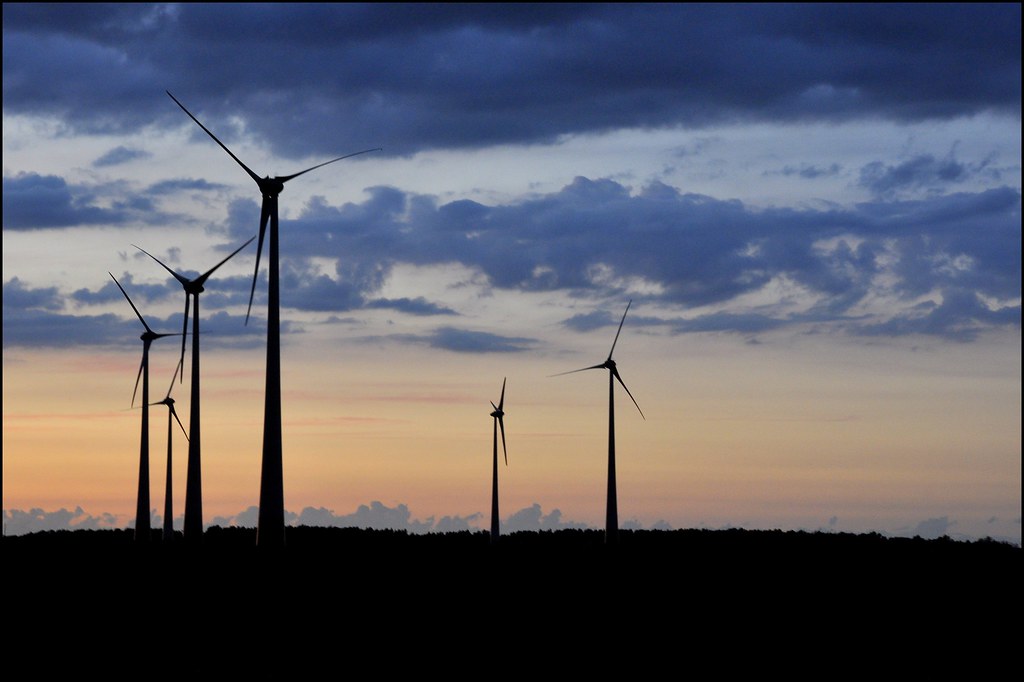
Even though we have a lot of human specialists who can guide us in this zone, the vast quantity of facts that artificially intelligent systems can ingest, together with their propensity for pattern recognition and problem-solving, make them an intriguing contender in our effort to promote environmental friendliness.
Communicating Warnings about Environmental Dangers
The increasing occurrence of natural catastrophes like forest fires and floods is an annoying effect of climate change. To prevent devastating events and save lives, it is essential to employ technology for monitoring and timely alerts. Predictive AI can play a vital role by utilizing sensory equipment and surveillance gear to detect changes in natural patterns. For instance, AI tools can monitor weather systems, predict rainfall, and issue warnings for high temperatures in arid forests, enabling timely response and mitigation.
International Initiatives Promoting Sustainable Automation to Combat Climate Change
Various international initiatives and countries are actively promoting sustainable automation to combat climate change:
- Paris Agreement: The international treaty provides a collaborative framework for countries to reduce GHG emissions and adopt sustainable practices, including technologies.
- European Green Deal: The European Union’s comprehensive plan aims to make Europe climate-neutral by 2050, emphasizing automation and digital technologies across industries, transportation, and energy systems.
- Germany: Germany’s “Industry 4.0” plan combines automation, artificial intelligence, and Internet of Things technology to achieve resource efficiency, energy savings, and sustainable manufacturing practices.
- Japan: Japan’s “Society 5.0” concept combines automation, AI, and data-driven technologies to address societal challenges, including climate change, with a focus on industries like transportation, energy, and agriculture.
- Singapore: Singapore’s smart city initiatives leverage automation in transportation, energy management, and waste reduction, showcasing their commitment to combat climate change through innovative technologies.
The Future of Industrial Automation for Climate Change Mitigation
It can be truly guessed that automation will be necessary for sustainable development in the future as well. Its role in cost-saving, energy efficiency, and GHG emissions is increasing, so its use will become compulsory for every industry. Stakeholders should adopt a holistic approach considering the social, economic, and environmental aspects of automation implementation. Sharing best practices and lessons learned and fostering innovation through collaborative efforts can accelerate the deployment of sustainable automation technologies.
So, the future of automation in combating climate change holds tremendous potential. Advanced analytics and AI will optimize energy consumption and resource management, while renewable energy integration and smart grids will reduce reliance on fossil fuels. Embracing innovative technology and encouraging cooperation will enable automation to play a critical role in climate change mitigation.
Conclusion
Industrial automation is a powerful tool to combat climate change. It is imperative to tackle climate change due to its disastrous effects on society and the environment. It is vital to promote sustainability across various industries by streamlining all operations and optimizing energy usage.
Automation integrates various technologies like PLCs, DCS, SCADA, robotics, AI, and IoT, which enables industrialists smarter decision-making, predictive maintenance, and continuous monitoring. It ultimately leads them to substantial environmental benefits.
The capacity of industrial automation to more efficiently monitor and analyze climatic changes is a key contribution. AI-powered systems can identify and anticipate environmental changes, providing important new information on how human activity affects the environment. We can better comprehend the issues and take focused steps to decrease our carbon footprint by using AI skills to monitor carbon emissions, identify key sources, and track land use alterations.
To address climate change effectively, international initiatives and countries are actively promoting sustainable automation. The Paris Agreement, the European Green Deal, Industry 4.0 in Germany, Society 5.0 in Japan, and Singapore’s smart city are examples of worldwide commitments to combating climate change using automation and digital technology.
Looking to the future, industrial automation is poised to play a more significant role in climate change mitigation. Embracing emerging technologies and fostering collaboration among stakeholders will unlock the full potential of automation in mitigating climate change.
DO Supply Inc. makes no representations as to the completeness, validity, correctness, suitability, or accuracy of any information on this website and will not be liable for any delays, omissions, or errors in this information or any losses, injuries, or damages arising from its display or use. All the information on this website is provided on an "as-is" basis. It is the reader's responsibility to verify their own facts.