Understanding Safety PLCs: Principles and Applications in Industrial Automation
Programmable logic controllers (PLCs) are designed to automate and control industrial machinery and processes. A safety PLC incorporates all the applications of a standard PLC but is equipped with integrated safety functions, allowing it to control safety systems. The primary goal of a safety PLC is to ensure reliability by avoiding failures, and if a failure is unavoidable, the PLC ensures it occurs safely and predictably.
This article will explore the workings of safety PLCs, including their principles, applications, benefits, and challenges.
Operation of Safety PLCs
In safety programmable logic controllers (PLCs), two distinct programs exist, one dedicated to the normal operation of the process and the other solely focused on safety functions. Both of these programs operate simultaneously within the PLC. The safety program is executed multiple times during a single execution of the standard PLC code and occasionally pauses the normal operation to check and guarantee safety functions. After this check, it provides feedback to the standard program. One key aspect of safety PLCs is their robustness against software and hardware failures. They are designed to uphold safety functions under any circumstances, ensuring continuity even in the face of adverse conditions. Unlike standard PLCs, which may be prone to internal failures and software crashes, safety PLCs are engineered to prioritize safety and reliability above all else. As such, opting for a safety PLC often represents the superior choice in critical industrial applications.
Principles for Safety PLC
Safety PLCs are crucial for industrial safety. Let’s understand their key principles.
IEC Compliance
Safety PLCs are distinguished from standard PLCs because they have to meet an international set of standards, i.e., IEC 61508, an international standard governing ‘Functional Safety of Electrical/Electronic/Programmable Electronic Safety-related Systems (E/E/PE, or E/E/PES).’ This set of standards covers every aspect of safety-related equipment design, including methodologies and testing protocols for hardware and software. Certification under the IEC standards typically involves a thorough evaluation process by respected third-party organizations such as UL (Underwriters Laboratories) and TÜV Rheinland.
Safety Integrity Levels (SILs)
Safety Integrity Levels (SILs) are essential metrics in measuring the degree of unacceptable risk within safety functions. SILs represent the levels of risk reduction achievable by these functions and range from SIL1, indicating the least vulnerable, to SIL4, presenting the highest risk of failure. The assigned SILs are closely tied to the severity and frequency of potential hazards, guiding the determination of probabilities of failure and the necessary performance levels for ensuring optimal safety. SIL ratings rely on three main contributing factors: certification or ‘prior use,’ hardware redundancy requirements, and the probability of failure. These factors collectively shape the SIL ratings, providing crucial insights into the reliability and effectiveness of safety measures within industrial environments.
Determining the Safety Integrity Level (SIL) contains a series of rigorous tests on various processes, including program flow control and data verification, within the safety programmable logic controller (PLC). These assessments ensure that internal functions executed by the PLC occur in the correct sequence and that critical data is accurately stored. Safety PLCs must undergo comprehensive software fault injection testing, wherein corrupted programs are downloaded into the PLC to confirm their ability to respond safely. Safety PLCs are normally certified up to SIL3 and must have diagnostic features that identify more than 99% of possible system failures.
Redundancy
Safety is guaranteed through redundancy. PLCs commonly incorporate redundant processors and communication channels to ensure continued operation even when components fail. This redundancy is particularly crucial in safety-critical applications, where a failure could lead to significant consequences. While certain models may feature redundant processors or communication channels, standard PLCs might lack this level of redundancy.
Programming
PLCs and Safety PLCs are programmed using ladder logic and other programming languages, but programming for Safety PLCs often entails greater complexity and time investment. Additional programming is necessary for safety PLCs to ensure compliance with safety standards and thoroughly test the safety functions.
Applications of PLC and Safety PLC in Industrial Automation
Safety PLCs play a crucial role in industrial automation and control systems alongside traditional Programmable Logic Controllers (PLCs). These tools are widely utilized for various purposes, including:
Process Control Automation
PLCs serve as integral components in industrial operations such as manufacturing, assembly, and packaging by facilitating control and automation. They excel in regulating and monitoring variables such as temperature, pressure, flow, and level while executing tasks like sequencing, timing, and logic control. In a beverage bottle manufacturing plant, Programmable Logic Controllers (PLCs) automate critical processes, ensuring efficiency and quality control. PLCs regulate molding machine parameters like temperature and pressure, monitor material flow for consistency, and sequence operations for optimal production. They also perform logic control functions, detecting abnormalities and initiating safety protocols if needed. Ultimately, PLCs streamline production, enhancing efficiency and maintaining product quality.
Material Handling Automation
PLCs are vital in material handling systems, overseeing conveyors, elevators, and other machinery. They track and regulate material movement and control the speed and direction of machinery. In warehouse logistics, PLCs automate material handling processes efficiently. For instance, in an e-commerce distribution center, they control conveyor belts, AGVs, and elevators, ensuring the smooth and safe movement of goods.
Robotics Automation
In industrial robotics, Safety PLCs play a crucial role in ensuring the safe operation of robotic arms and other machinery within industrial environments. These PLCs are specifically designed to prioritize safety in automated processes. For instance, Safety PLCs are instrumental in controlling and automating robotic arms on the assembly line in automotive manufacturing plants. These robotic arms are responsible for various tasks, such as welding car body parts together. Safety PLCs efficiently monitor and control the movement, positioning, and operation of these robotic arms to ensure precision and consistency in the welding process while prioritizing the safety of workers nearby. Moreover, Safety PLCs are programmed to coordinate the movement of robotic arms handling heavy components like engines or chassis. By accurately controlling the positioning and movement of these robotic arms, Safety PLCs minimize the risk of collisions or accidents, ensuring the safety of both workers and equipment throughout the assembly process.
Power Control Automation
PLCs are vital in power control systems, regulating and monitoring electrical equipment like motors, generators, and transformers. In power generation plants, Safety PLCs ensure stable voltage and frequency levels in generators, optimize motor performance and manage transformer functions for reliable power distribution. They enhance safety by swiftly detecting and addressing deviations from safe operating conditions, preventing equipment damage, and ensuring uninterrupted power supply.
Safety Systems
Safety PLCs are specifically designed for critical safety tasks, like monitoring emergency stop buttons, safety gates, and other safety devices. They are dedicated to ensuring the safety and monitoring of these essential components. In an industrial manufacturing facility, Safety PLCs oversee safety-critical systems such as emergency stop buttons and safety gates on assembly lines. For instance, in an automotive assembly plant, Safety PLCs ensure that emergency stop buttons immediately halt the production line if any worker or equipment is at risk. Safety PLCs monitor safety gates to ensure they remain closed during operation, preventing access to hazardous areas. This real-world application demonstrates how Safety PLCs play a crucial role in maintaining a safe working environment in industrial settings.
Building Automation
Safety PLCs are integral in building automation, ensuring the safety of occupants while regulating HVAC systems, lighting, and other building systems. In a commercial office building, Safety PLCs automate systems like HVAC and lighting, monitoring for potential safety hazards such as overheating or inadequate lighting. By integrating Safety PLCs, property managers can prioritize safety while optimizing energy usage and creating a comfortable indoor environment for occupants.
Water Treatment Automation:
Safety PLCs are essential in water treatment systems, overseeing critical safety tasks such as regulating water purity, flow rates, and chemical dosing. In municipal water treatment plants, Safety PLCs ensure the safe operation of treatment processes by promptly detecting and addressing potential hazards. For example, they control water flow through filtration and disinfection stages while monitoring for deviations from safe conditions. Safety PLCs oversee chemical dosing pumps to maintain precise chemical dosing and prevent water quality issues.
Benefits of Safety PLCs
Safety PLCs bring simplicity and efficiency to industrial automation, optimizing space, speeding up processes, and saving costs along the way.
Simple Design
Compared to a two-PLC setup (Standard and Safety) or a design reliant on relays, a Safety PLC results in fewer components and reduced wiring. Four conductors are typically utilized in a traditional dual-channel design using safety devices. Utilizing the technology allows up to 10 devices to be connected in series to a single input, with each device utilizing only two conductors for the safety signal. This effectively halves the inputs required on the safety PLC while enhancing safety levels. Safety PLCs simplify operations, enhance reliability, streamline customer troubleshooting, and ensure smoother industrial processes. Numerous Safety PLCs can be connected to an HMI (Human Machine Interface), providing a comprehensive display of all safety device statuses on the machine. Identifying issues with devices becomes easier, slashing troubleshooting time and minimizing downtime. Programming of Safety PLCs has become simpler with pre-approved function blocks acting as virtual safety relays, replacing the need for hardwiring.
Space optimization
Space optimization is another key advantage of Safety PLCs, stemming from reduced components and simplified wiring. In contrast to employing safety relays, Safety PLCs significantly decrease the number of components and wiring, consequently reducing panel space. This space-saving attribute is particularly pronounced in applications where Safety PLCs can fulfill safety functions and basic process control tasks.
Speed
Speed is another notable advantage afforded by Safety PLCs, owing to their reduced component count and simplified wiring. With components requiring only two safety signal wires instead of the traditional four, wiring is halved. This streamlined wiring process accelerates installation and contributes to more reliable panels by minimizing the number of connections and reducing the likelihood of miswiring. Modifications can be swiftly implemented through program changes, eliminating the need for additional components or wiring adjustments.
Cost Efficiency
Although the initial investment in a safety PLC is higher than that of using safety relays, the cost advantage of Safety PLCs is often evident in systems requiring more than five relays. Reducing space, wiring, and components contributes to decreased panel costs. The potential for reusing Safety PLC code for similar style panels further enhances cost efficiency. Consequently, the cost benefits of Safety PLCs become increasingly apparent, making them a preferred choice in various industrial applications.
Challenges of Safety PLCs
Despite their benefits, safety PLCs encounter hurdles like higher costs, technology learning curves, and reliability concerns, impacting their widespread adoption.
Higher Initial Cost
Safety PLCs often require a larger upfront investment, which may be less feasible for smaller or simpler applications, prioritizing cost-effectiveness.
Technology Familiarity Challenges
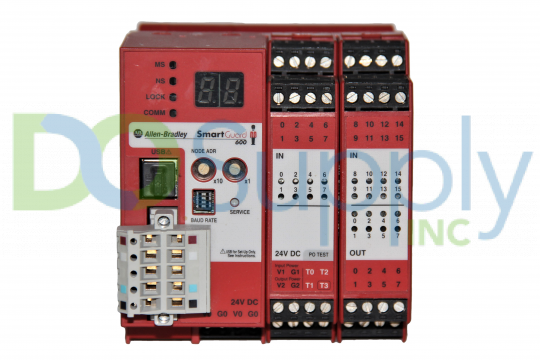
Integrating newer technologies in safety PLCs may pose challenges for maintenance engineers and technicians, who may require additional training to grasp these advancements fully.
Reliability and Integrity Concerns
Professionals may hesitate to trust the reliability and integrity of safety PLCs, especially since they’re relatively new in the field, despite rigorous certification processes.
Application Suitability Evaluation
Thorough analysis is essential to determine whether safety PLCs suit specific applications, considering their advantages and potential drawbacks.
Future Trends in the Development and Use of Safety PLC Technology
PLC (Programmable Logic Controller) and Safety PLC technology are continuously evolving to adapt to advancements in automation technology and evolving industrial needs. The following are some future trends in developing and applying Safety PLC technology.
Integration with the Industrial Internet of Things (IIoT)
As industrial equipment gets more connected, PLC and Safety PLC tech must smoothly work with IIoT platforms. This will help gather and analyze data better, leading to smarter decisions and smoother operations.
Cybersecurity
As industrial automation systems become more interconnected, cybersecurity will be paramount. Safety PLC technology must prioritize cybersecurity measures, including encryption and secure communication protocols, to safeguard against cyber threats.
Wireless Connectivity
PLC technology should back wireless communication standards like Wi-Fi and Bluetooth to adapt to growing mobility and flexibility in industries. This ensures the smooth inclusion of wireless devices and easy data transmission in industrial settings.
Artificial Intelligence (AI) and Machine Learning (ML)
AI and ML algorithms hold significant potential to enhance PLC technology. By optimizing processes and minimizing downtime, these technologies can significantly benefit industrial operations. For instance, predictive maintenance algorithms can identify potential equipment failures before they occur, reducing downtime and increasing productivity.
Final Thoughts
Conclusively, Safety PLCs are crucial for keeping industrial workplaces safe while ensuring things run smoothly. They help prevent accidents and protect workers by controlling factory machines and processes. Although they have challenges like higher costs and new technology to learn, their benefits, like simpler design, saving space, being faster, and costing less in the long run, make them a smart choice. Looking forward, Safety PLCs will keep improving, becoming even more useful with advancements like better internet connections, stronger security, and smarter technology. So, they will continue to play a big role in ensuring factories are safe and efficient workplaces.
DO Supply Inc. makes no representations as to the completeness, validity, correctness, suitability, or accuracy of any information on this website and will not be liable for any delays, omissions, or errors in this information or any losses, injuries, or damages arising from its display or use. All the information on this website is provided on an "as-is" basis. It is the reader's responsibility to verify their own facts.