PowerFlex DC Drives vs. AC Drives: Which One Suits Your Needs
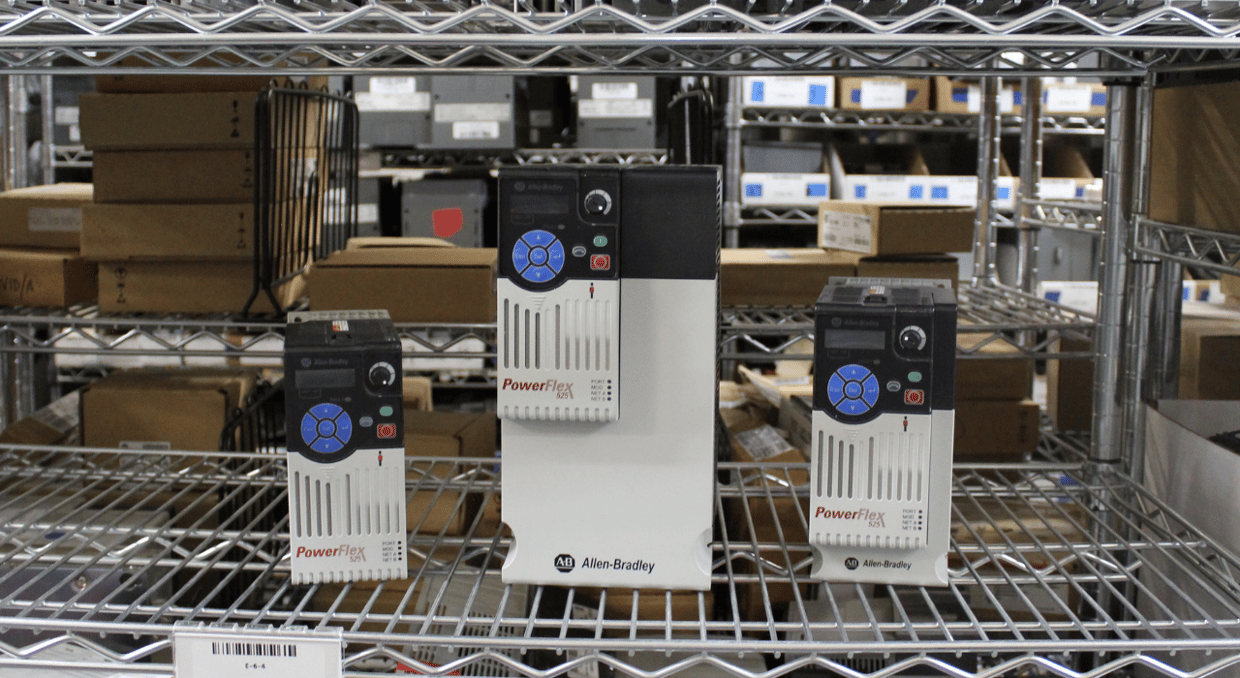
The global industry acknowledges the pivotal function that electric drives, namely PowerFlex AC and DC drives, perform in maximizing motor control and guaranteeing operational effectiveness. The need for these drives has increased significantly as new developments in industrial automation continue to emerge. PowerFlex DC and AC drives are necessary for controlling control signals, but they are not the same in a few important ways. To assist you in selecting the PowerFlex AC or DC drive that best meets your needs, this article examines the differences between the two types of drives. It also covers the advantages, composition, operation, prices, and usability of each drive.
Comparison of PowerFlex AC vs DC Drives
Performance Qualities
Each PowerFlex AC and DC drive has distinct performance qualities that make them suitable for a variety of uses. With a maximum speed of 10,000 RPM and accurate 1% speed control together with fast dynamic reaction rates, PowerFlex AC drives perform well. Because of the way they are made, they also function well in corrosive and moist situations. On the other hand, PowerFlex DC drives are 1% speed-regulated only and have a maximum speed of 2,500 RPM. Because of the possibility of spark creation, they are less appropriate for severe situations. On the other hand, DC drives offer superior speed adjustability and greater starting torques, which makes them perfect for heavy-duty applications like conveyor and wiper systems.
Functionality
While PowerFlex DC drives run more silently, PowerFlex AC drives usually produce more noise when they are operating. Batteries may be directly linked to PowerFlex DC drives, offering a straightforward power option. Conversely, the integration of certain parts and circuits is restricted with PowerFlex AC drives. Furthermore, for PowerFlex DC drives to operate properly, the transformation voltage must be greater than 100V.
Cost Efficiency and ease of usage
PowerFlex AC drives include integrated inverter and converter components, therefore, they are usually more expensive than DC drives. AC drives provide better longevity and dependability while requiring a larger initial investment. They may be employed in a greater variety of applications due to their increased versatility and larger range of compatibility. As opposed to their AC equivalents, DC drives are often less durable and have a smaller range of uses, although they are less costly.
Technological Build-up
PowerFlex DC drives are designed to provide simple power circuit control and speed regulation, which simplifies management. PowerFlex AC drives, on the other hand, have a more intricate construction but are renowned for being durable and requiring less upkeep. Furthermore, because PowerFlex AC drives do not have commutators, they are lighter and less clunky.
Benefits of PowerFlex AC Drives
PowerFlex AC drives are a crucial part of contemporary industrial automation because they regulate motor speed by converting direct current (DC) into alternating current (AC). These drives, which include essential parts including a rectifier unit, DC circuit, and inverter unit, have greatly increased production and stimulated innovation in a variety of sectors.
PowerFlex AC drives are specially made to control motor speeds using electrical supply switching frequency adjustments. This feature improves energy efficiency, lessens system stress, and streamlines process control. Pulse Width Modulation (PWM) for accurate speed control, sensorless vector control for high torque performance, and regenerative braking for energy recovery are some of the cutting-edge technologies that PowerFlex AC drives use. In addition, they include adaptive tuning algorithms that improve drive performance in real-time, guaranteeing maximum adaptability and efficiency in various applications, and inbuilt EtherNet/IPTM connection for smooth integration into networked systems.
Benefits of PowerFlex DC Drives
PowerFlex DC drives serve as the main speed control mechanism for DC motors, making them indispensable for regulating their speed. Delivering the required voltage and converting alternating current (AC) into direct current (DC) are how these drives work. Because of PowerFlex DC drives’ sophisticated features, they are also used in a variety of industrial applications.
PowerFlex DC drives are well-known for their dependability, efficiency, and user-friendliness. They perform very well in harsh settings, including managing spindle drives, elevators, cranes, hoists, crushers, and paper manufacturing equipment. Field supply units, rectifier bridges, firing circuits, and speed control units are important parts of PowerFlex DC drives. Furthermore, PowerFlex DC drives incorporate state-of-the-art features like energy recovery through regenerative braking, real-time monitoring through advanced diagnostics, optimal performance under varying load conditions through adaptive control algorithms, and improved system control and connectivity through seamless integration with Rockwell Automation’s Logix control platform.
Which PowerFlex drive to choose?
Because of its superior process control capabilities, ability to minimize mechanical stress in motor control applications, and ability to maximize equipment performance with electrical motors, PowerFlex AC drives have become incredibly popular. DC drives are still preferred in a few applications, nevertheless, such as spindle drives, excavators, crushers, machine tools, textile mills, elevators, and winders. The increasing inclination towards AC drives may be ascribed to their exceptional control functionalities and efficiency enhancements, which augment the total system performance and dependability in diverse industrial environments.
PowerFlex DC drives enable both regenerative and non-regenerative operations and offer sophisticated digital solutions for accurate control and regulation, comprehensive diagnostics, and simple programmability. They have a completely integrated power module, a compact design, and a single control framework for all horsepower ranges. Improved connectivity is made possible via a common DPI interface, which guarantees interoperability with all PowerFlex DPI communication devices. These motors are perfect for a variety of uses, including coating, drawing, extrusion operations, and finishing. High inertia, high torque, shock loads, quick acceleration and deceleration, and continual regeneration are all skills they excel at. Because PowerFlex DC drives offer better performance and flexibility in challenging industrial situations, they are a great option for modernizing current DC machines.
Ultimately, the demands of the equipment and operations dictate which drive is “best” for the task. To learn more about the differences between AC and DC drives and which is ideal for your needs.
Example PowerFlex Drives
20P-RES-GEF-A0
The 20P-RES-GEF-A0 feedback module is a PowerFlex DC Drive module. Specifically engineered for digital control in DC applications, it guarantees accurate regulation of both current and speed, comprehensive diagnostics, and simple programmability. It performs exceptionally well in coating, extrusion, and finishing applications and is perfect for high inertia, shock load, and regenerative operations. For smooth integration with PowerFlex DPI communication devices, the module has a standard DPI interface, a unified control structure, and a compact form. Eight digital inputs, three analog inputs, two analog outputs, and more are included. Customizable extra inputs and outputs are also offered.
25B-A2P5N114
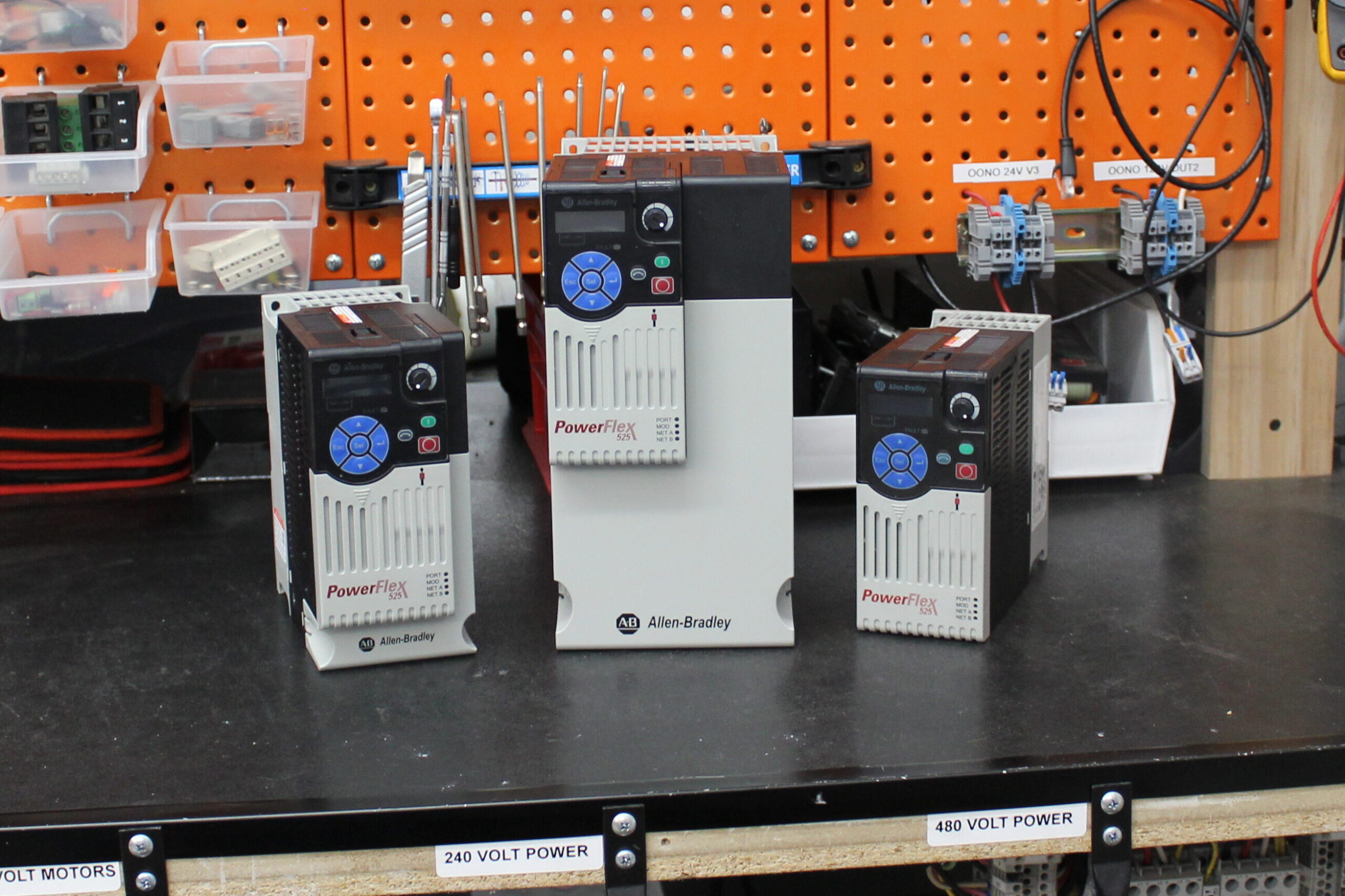
The PowerFlex 525 series AC drive, model number 25B-A2P5N114, runs on 240V AC single-phase input with a maximum current of 2.5A. It complies with EN61800-3, has an IP20 NEMA enclosure, and has an integrated EMI filter for noise reduction. The drive is compatible with several control modes, such as permanent magnet motor control and sensorless vector control. In addition to built-in Ethernet and RS485/DSI communication connectors, it has one analog output, seven digital inputs (six of which are programmable), and two analog inputs. Easy DIN rail installation is a feature of the 25B-A2P5N114, and clearances are needed for appropriate temperature control and ventilation.
Final Thoughts
In conclusion, the choice you make between PowerFlex DC and AC drives depends on your unique operating requirements. Because of their superior energy economy, process control, and robustness, PowerFlex AC drives are perfect for a wide range of applications with different speeds and environmental requirements. On the other hand, heavy-duty applications needing strong performance in difficult circumstances, accurate speed control, and high torque are better suited for PowerFlex DC drives. DC motors offer higher starting torque and flexibility in specific applications, whereas AC drives offer sophisticated control capabilities and wide use. The best option ultimately comes down to the specifications of your application, taking operating demands, cost, and performance into account.
Here at DO Supply, we offer an extended range of PowerFlex Drives as well as expert knowledge to help guide you through a selection process or answer technical support for drives you have already purchased. Feel free to reach out and we will be more than happy to hear from you! We thank you for reading and if you would like to read more about the PowerFlex 525 drives, you may do so HERE.
DO Supply Inc. makes no representations as to the completeness, validity, correctness, suitability, or accuracy of any information on this website and will not be liable for any delays, omissions, or errors in this information or any losses, injuries, or damages arising from its display or use. All the information on this website is provided on an "as-is" basis. It is the reader's responsibility to verify their own facts.