Smart Motor Controllers vs. Soft Starters: What’s the Difference and When to Use Each
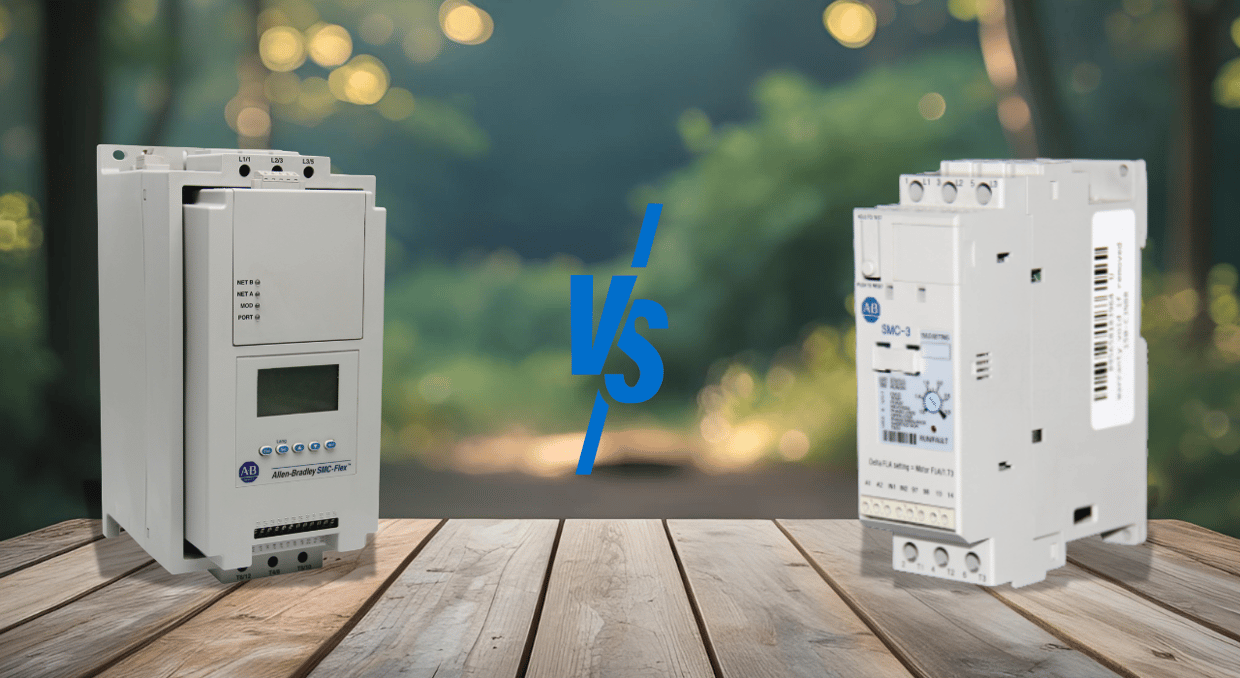
Imagine starting a 500-hp motor by flipping a switch, just like you would with a desk lamp. Sounds a bit reckless, right? After all, all of that power and torque is going to slam on, and who knows what damage that can cause? This is where smart motor controllers and soft starters come in. Yes, they’re different tools, but they’re designed to handle motor startup without damaging components or blowing fuses. But for those who haven’t been in the industry long enough, the difference between them might not be clear. So, how do they differ, and when should you reach for one over the other?
What is a Soft Starter?
A soft starter does exactly what it sounds like: it starts the motor, just.. gently. So instead of slamming full voltage into the motor the second it kicks on, it gradually ramps up to that desired voltage. This limits the inrush current, smooths out acceleration, and reduces mechanical strain on any couplings, belts, and gears.
From a more technical standpoint, soft starters operate by controlling the voltage applied to the motor during startup, typically using silicon-controlled rectifiers (SCRs) in a phase-angle setup. They also help stabilize the electrical system by reducing high inrush current spikes, which can trip breakers, dim lights, and stress the power supply.
Where the soft starters shine the most is in controlling startup torque, but once the motor is running, there’s not much to manage. You can find these setups in conveyor operations, packaging lines, or centrifugal fans. That said, once the motor is running, the soft starter usually steps out of the picture. It’s not designed to provide constant speed control or adjust torque midway through the operation. But what they lack in post-start features, they make up for in price, durability, and simplicity.
Examples of Soft Starters
There are quite a few selections of soft starters out on the market. We carry examples from Eaton to Allen-Bradley. Here are a few examples of what’s available:
Allen-Bradley SMC-3
- Type: Compact, economical soft starter
- Voltage Range: 200 to 600V AC
- Current Rating: 2 to 480 A
- Key Use Case: Simple motor starting in HVAC systems, fans, and small conveyors
- Notable Features:
- Built-in overload protection
- Fixed start/stop ramp profiles
- DIN-rail mountable (smaller sizes)
- Why it matters: The SMC-3 is a true “set it and forget it” device. With minimal configuration and a compact footprint, it’s one of the easiest ways to get smooth motor starts on a budget.
Allen-Bradley SMC Dialog Plus
- Type: Mid-range soft starter with digital adjustment
- Voltage Range: 200 to 600V AC
- Current Rating: 1 to 1000 A
- Key Use Case: Motors needing adjustable soft start/stop behavior and current limiting
- Notable Features:
- LCD for local setup
- Programmable start/stop profiles
- Kick-start and current limit options
- Basic fault diagnostics and metering
- Why it matters: It offers more configurability than the SMC-3, making it ideal for users who want a little more control without stepping into smart diagnostics or communication protocols.
Eaton S801
- Type: Basic soft starter
- Voltage Range: 200 to 600V AC
- Current Rating: 11 to 1000 A
- Key Use Case: Large motors in pumps, compressors, or basic industrial machinery
- Notable Features:
- Compact design with internal bypass
- Simple interface with analog/digital inputs
- Limited programmable functionality
- Why it matters: The S801 keeps it simple. It provides a smooth ramp-up and reliable protection without the learning curve, making it a strong option for straightforward retrofit applications.
Eaton S801+
- Type: Enhanced version of the S801
- Voltage Range: 200 to 600V AC
- Current Rating: 11 to 1000 A
- Key Use Case: High-horsepower applications where compact size and basic control are needed
- Notable Features:
- Improved interface and enhanced protection
- Built-in bypass
- Compatible with C441 motor protection
- Why it matters: The “plus” brings in better coordination with protection and broader usability, all while retaining the simplicity that defines the S801 series.
Eaton S811
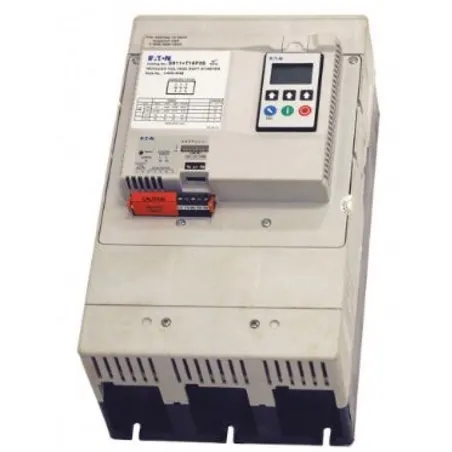
- Type: Digitally adjustable soft starter
- Voltage Range: Up to 690V AC
- Current Rating: Up to 1000 A
- Key Use Case: Motors that require adjustable torque, voltage ramp, or current limit
- Notable Features:
- Digital display with parameter setupStart, stop, and coast modes
- Motor protection and diagnostics
- Why it matters: The S811 offers more control and configuration than the S801, allowing operators to tailor the start/stop behavior to the specific motor and load.
Eaton S811+
- Type: Advanced standard soft starter
- Voltage Range: Up to 690V AC
- Current Rating: Up to 1000 A
- Key Use Case: Motors needing tighter protection coordination and setup flexibility
- Notable Features:
- Enhanced user interfaceAdvanced motor protection
- Optional communication modules
- Why it matters: While it edges close to smart controller territory, the S811+ remains a soft starter at heart. It’s suited for operators who want more data and control without jumping into full network integration.
If you would like more information on the differences between the S801 and S811 soft starters, you can check out this article here. We also have a deeper dive on the SMC Dialog Plus line here.
What is a Smart Motor Controller?
A smart motor controller is a step up from the soft starters and picks up where they left off. SMCs still have the option to soft start, but they also have a whole host of features to aid them after the fact. The “smart” feature originates from microprocessor-based control, enabling them to adjust start and stop profiles based on conditions such as ambient temperature or load inertia. They can run diagnostics, log trip events, and even alert the operator if an error occurs. Some of the more advanced smart features in Allen-Bradley’s SMC line include:
- Current-limiting starts to reduce mechanical shock on gearboxes or belts
- Kick-start functionality to break inertia in heavy-load applications
- Built-in metering for voltage, current, and power factor
- Motor overload protection based on time-current curves
- Network communication via optional modules (EtherNet/IP, DeviceNet, etc.)
- Trip diagnostics and event logging with timestamps
- Thermal modeling to detect overheating trends over time
These features are for more complex systems that focus on minimizing downtime or have a more intricate process. Think of packing machines, conveyors with varying loads, or systems that need remote supervision from control rooms. In many cases, they’re used in conjunction with broader control architectures, feeding operational data back to PLCs or HMIs for full visibility. Variable Frequency Drives will take this even further, but that’s a discussion for another time.
Examples of Smart Controllers
Allen-Bradley’s SMC lineup blurs the line between a traditional soft starter and an intelligent control device. Here is another set of examples that we also carry at our store:
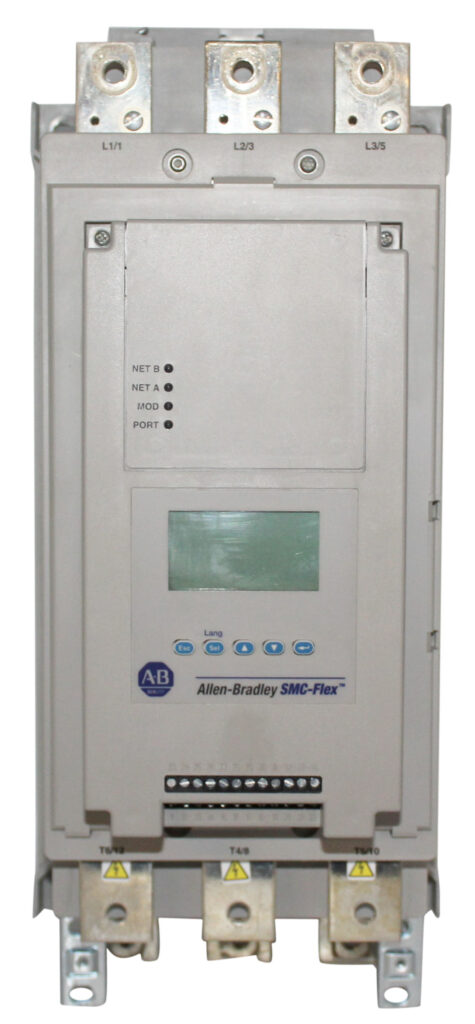
Allen-Bradley SMC Flex
- Type: Mid-range smart motor controller
- Voltage Range: 200–690V AC
- Current Rating: Up to 1250 A
- Key Use Case: Variable load systems like conveyors, mixers, and industrial pumps
- Notable Features:
- Multiple adjustable start/stop profiles (linear, current limit, kick-start)
- Built-in bypass contactor for reduced heat and power loss
- Optional communication modules (EtherNet/IP, DeviceNet, etc.)
- Basic metering and trip diagnostics
- Why it matters: The SMC Flex is a solid middle ground in the sense that it’s smarter than a standard soft starter but without the complexity of a full drive system. It’s perfect for systems that benefit from data visibility and adjustable control without needing full adaptive behavior.
Allen-Bradley SMC-50
- Type: Advanced smart motor controller
- Voltage Range: Up to 690V AC
- Current Rating: Up to 480A
- Key Use Case: High-horsepower motors or systems where downtime must be minimized
- Notable Features:
- Real-time voltage, current, and power monitoring
- Motor overload protection using advanced thermal modeling
- Configurable kick-start and current limit profiles
- Built-in diagnostics and event logging with timestamps
- Communication-ready via integrated Ethernet/IP or optional protocols
- Why it matters: This is where soft starting meets smart control. It’s a top choice for intelligent motor control that doesn’t require a full variable frequency drive.
Final Thoughts
The differences between the two are quite clear. For those who require simple operations without additional features, soft starters are ideal. They’re cheaper, reliable, and get the job done. Although for systems that demand a little more but not quite step into the VFD line, the SMCs might just be for you. Whatever you decide, we at DO Supply have you covered. We carry all of these starters and more. Stop by today or give us a call if you don’t find exactly what you’re looking for. Thank you for reading.
DO Supply Inc. makes no representations as to the completeness, validity, correctness, suitability, or accuracy of any information on this website and will not be liable for any delays, omissions, or errors in this information or any losses, injuries, or damages arising from its display or use. All the information on this website is provided on an "as-is" basis. It is the reader's responsibility to verify their own facts.