AC Drive Sizing: Choosing the Right One for Your Application
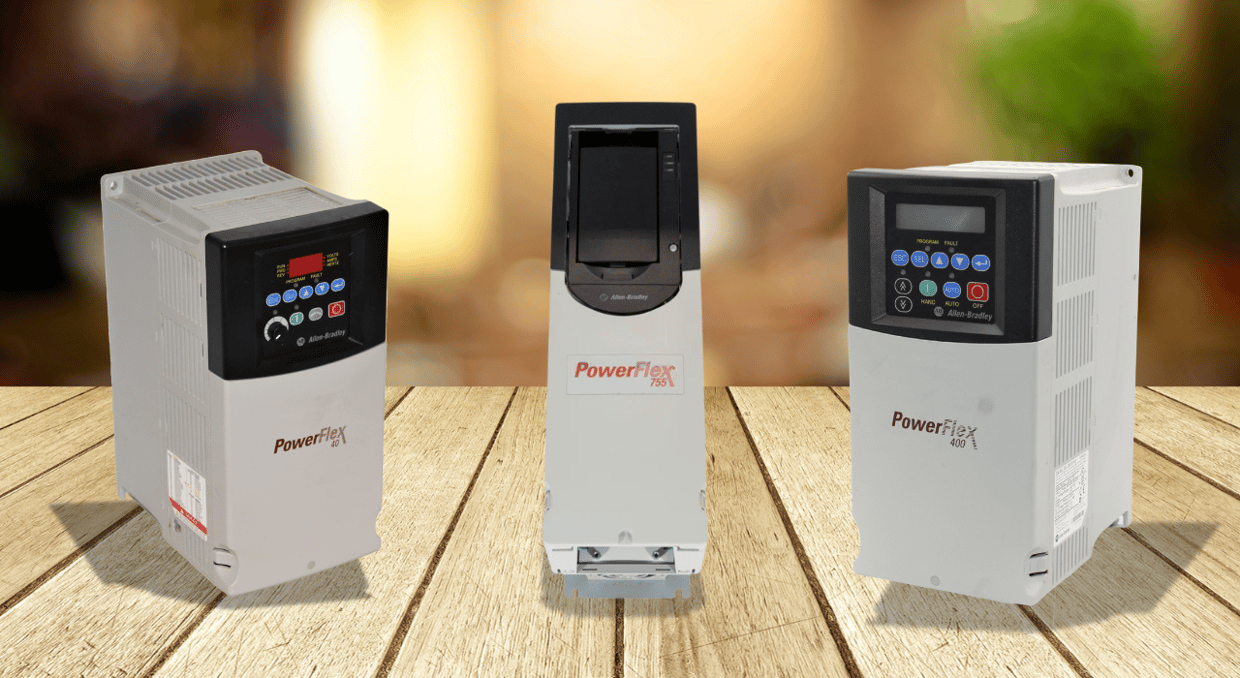
Finding the right AC Drive size is crucial to your motor-driven application’s health, energy efficiency, and longevity. Whether you are running complicated machinery like a conveyor system, a pump, or a fan, an improper drive can lead to inefficiencies, overheating, or equipment failure. In this article, we will first discuss the motor’s requirements and then the AC drive itself to choose which AC drive would be the best for our use. This article aims to clear the key factors and procedures required to choose the best drive for your needs, guaranteeing a balance between dependability and affordability in commercial and industrial automation systems.
Requirements from the Motor’s Side
Compiling comprehensive information on the motor the AC drive will be controlling is crucial before choosing one. The majority of the essential characteristics are included on the motor nameplate, which is a good place to start when reducing the number of drive options available.
Horsepower
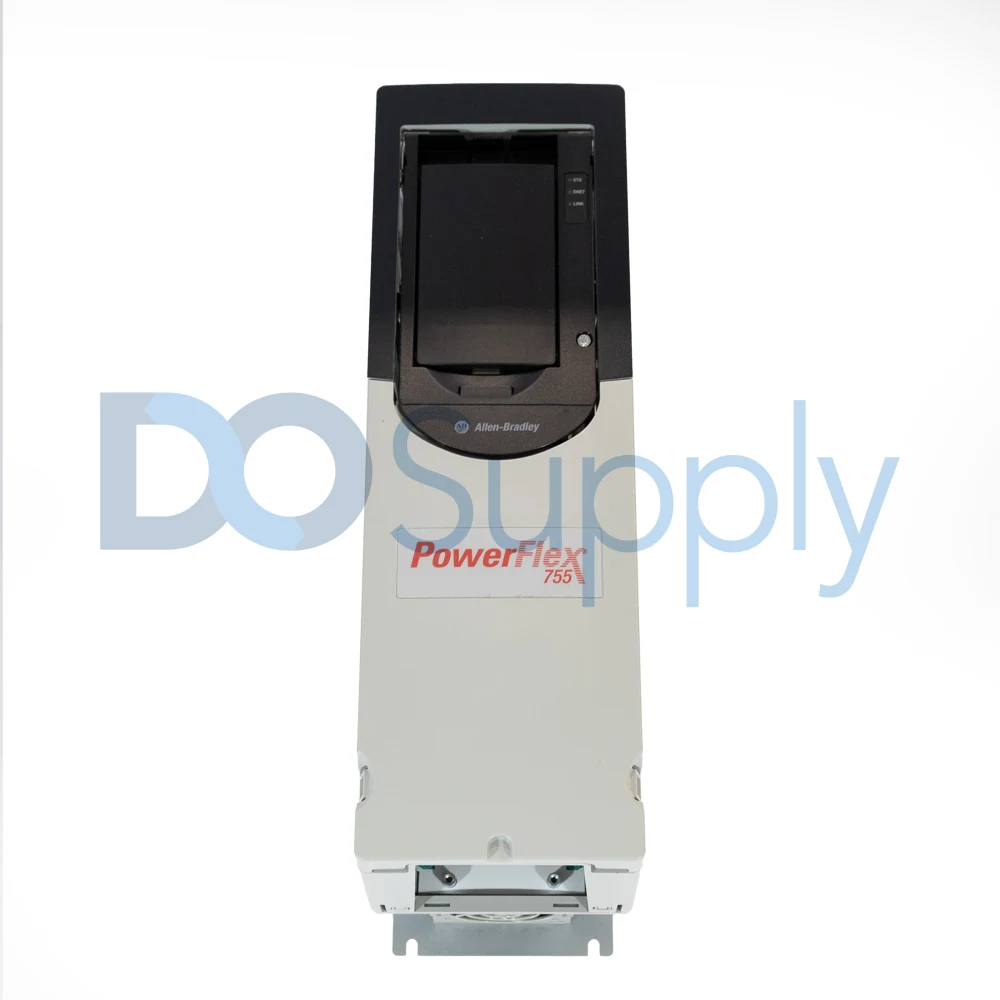
Although it is not the sole determinant, horsepower aids in defining the AC drive’s broad size range. Because most manufacturers mention the HP range that their drives support, it’s easy to get rid of drives that are too big or weak for your use case.
Know the Current Demand (FLA)
When choosing an AC drive, full load amps, or FLA, is an important factor. It directly affects the required drive size by indicating the current the motor draws when operating at full load. Matching or slightly surpassing the motor’s FLA guarantees the AC drive works cooler and more reliably—especially in situations with strong beginning torque or heavy loads. In some situations, oversizing may result in a more robust and effective system.
Match the Power Supply
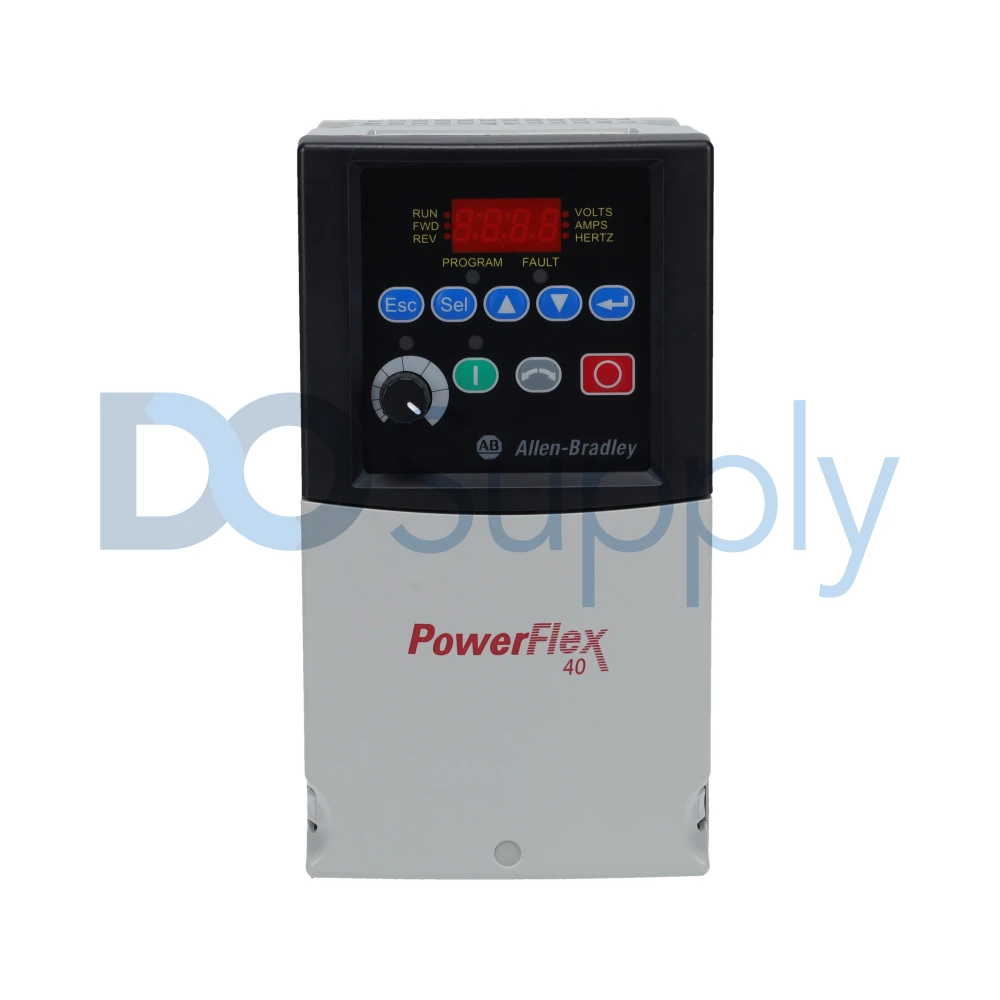
The motor’s voltage rating needs to match the available power source. Three-phase voltages that are commonly used in North America are 208V, 230/240V, and 480V. Extra care must be used with single-phase inputs. Certain three-phase AC drives may be modified for single-phase use, but they need to be the right size, usually twice the FLA of the motor. As an alternative, certain drives—like the Allen-Bradley PowerFlex 40—are made especially to manage single-phase input and provide a three-phase output for motors up to three horsepower.
Speed Range Limits
It’s also critical to comprehend the speed range you need. Motors have safe operating limitations, even if variable speed control is possible with AC drives. Operating at less than 20% of the specified speed without extra cooling may result in overheating. Conversely, accelerating the motor past its rated speed can lower torque and result in long-term mechanical harm. Performance and dependability are ensured by maintaining a realistic speed range.
Motor’s Duty Cycle
It is important to consider how long and how frequently the motor operates. Derated or larger drives may be necessary for continuous-duty applications in order to avoid overheating. On the other hand, intermittent-duty applications could provide greater drive selection freedom. Always take sustained vs peak operation hours into account.
Requirements From the AC Drive’s Side
Match Current Ratings with Motor Load
Choosing an AC drive gets more focused when you have determined the FLA of your motor. Importantly, because AC drives always output three-phase power, the motor must be three-phase even if your input power is single-phase when utilizing an AC drive. The drive can handle regular use without thermal stress or overload if sized following the FLA. Undersized drives may wear out quickly, trip more frequently, or overheat. Always meet or slightly surpass the FLA for increased dependability, particularly in demanding settings.
Account for Overload Demands
Many automation and industrial systems need rapid acceleration or torque bursts. The AC drive needs to be able to handle brief overloads in these situations. Most common drives can sustain 150% of their rated load for around 60 seconds, which is frequently sufficient for short torque spikes or starting surges. However, a bigger drive or one rated for longer overload capacity will be needed for applications like crushers or mixers that demand lengthy acceleration or continuous high torque. Your AC drive will start more smoothly, have fewer problems, and last longer if it is sized for worst-case loads.
Consider Braking Requirements
A motor may need a lot of torque to start, and controlled deceleration may be necessary to stop it. Centrifuges, big fans, and elevators are examples of high-inertia loads that require the AC drive to be able to handle surplus regeneration energy during deceleration. This energy can harm the drive or result in overvoltage trips if left unchecked. A dynamic brake resistor may be necessary for quick stopping, even though most drives automatically lengthen deceleration durations to safeguard the system. This part ensures safe and dependable operation when stopping by absorbing surplus energy and preventing voltage spikes.
Identify the Load Type
The load profile of your application—whether it is constant or variable torque—significantly impacts the choice of AC drive. Conveyors and compressors have constant torque demands and need constant power at all speeds. Conversely, variable torque loads—such as centrifugal pumps and fans—require less torque when speed rises. Selecting a drive that is compatible with your load type lowers operating costs and increases energy efficiency. Some AC drives, like those in the Allen-Bradley PowerFlex 6000 series, are adaptable options for systems with changing performance needs since they include modes that accommodate both torque profiles.
Evaluate Environmental Conditions
When it comes to AC drive size, temperature is often overlooked. Drives produce a lot of heat, which needs to be dissipated effectively to preserve operation and prevent early failure. Derating could be required if the outside temperature is too high, requiring you to select a bigger drive to make up for it. Environmental factors will also affect the enclosure you choose. It could be necessary to use sealed enclosures with sufficient ventilation or even active cooling in dusty, humid, or corrosive conditions. Always check the installation circumstances and drive parameters to guarantee long-term, safe operation.
Control Topology (How You want to Interact with the AC Drive)
When sizing an AC drive, selecting the appropriate control mechanism is essential. Depending on the application, control might be as straightforward as pushbuttons or as intricate as integrating with PLCs and HMIs. Numerous AC drives come with various control choices, including speed potentiometers, analog signals, and two or three-wire configurations. Modern drives facilitate remote operation and diagnostics by supporting digital networks. For instance, Allen-Bradley’s PowerFlex series provides modular choices that facilitate system adaptation. The appropriate control technique increases interoperability with larger automation and industrial IoT systems, simplifies troubleshooting, and improves usability.
Communication Capabilities
Modern AC drives need to be able to communicate with other devices on your industrial network with ease. Without specialized wiring, real-time monitoring and control are made possible via communication protocols as Profinet, EtherNet/IP, and Modbus TCP. Plug-and-play network connection is made possible by the built-in ports found on many drives. This enables them to communicate directly with PLCs or SCADA systems about performance statistics and warnings. Energy tracking is enhanced, commissioning is made easier, and predictive maintenance is made possible by good communication compatibility. Choose an AC drive that supports your network infrastructure for seamless connection, improved data visibility, and long-term flexibility as your system expands.
Taking I/O Needs into Account
I/O ports on AC drives can be connected to buttons, sensors, relays, and other system parts. These comprise analog (variable signal) and digital (on/off) inputs and outputs. For start, stop, and speed control, smaller systems might just require simple I/O. However, additional I/Os could be required for feedback signals, alarms, or managing other drives in more intricate automation installations. Scalable I/O options are frequently available in drives such as those in the PowerFlex series. Consider the system structure and future expansion possibilities when choosing your AC drive to determine how many I/Os are needed.
Final thoughts
In any commercial or industrial setting, selecting the appropriate AC drive size guarantees effective, dependable, and long-lasting motor performance. You can guarantee optimal system functioning by closely examining drive-specific factors, including overload capacity, brake requirements, communication protocols, and I/O availability, in addition to motor requirements like horsepower, FLA, voltage, and duty cycle. In addition to preventing premature equipment failure, proper sizing increases energy efficiency and lowers maintenance expenses. When choosing an AC drive, knowing the particular requirements of your application will ultimately help you find the ideal balance between cost-effectiveness, performance, and durability. We also have a comparison between AC drives and DC drives here if you would like to dive in deeper about what each brings to the table.
We at DO Supply know that picking out the correct drive for your application can be daunting. That’s why our expert support is here to help you find just what you need at the right price. All it takes is an email or a call to get the ball rolling. Our site also has an extensive catalogue of drives, from reputable brands like Allen-Bradley, Mitsubishi, Eaton, and more. Stop on by today!
DO Supply Inc. makes no representations as to the completeness, validity, correctness, suitability, or accuracy of any information on this website and will not be liable for any delays, omissions, or errors in this information or any losses, injuries, or damages arising from its display or use. All the information on this website is provided on an "as-is" basis. It is the reader's responsibility to verify their own facts.