Choosing the right Spindle Motor and drive pair for CNC Machines
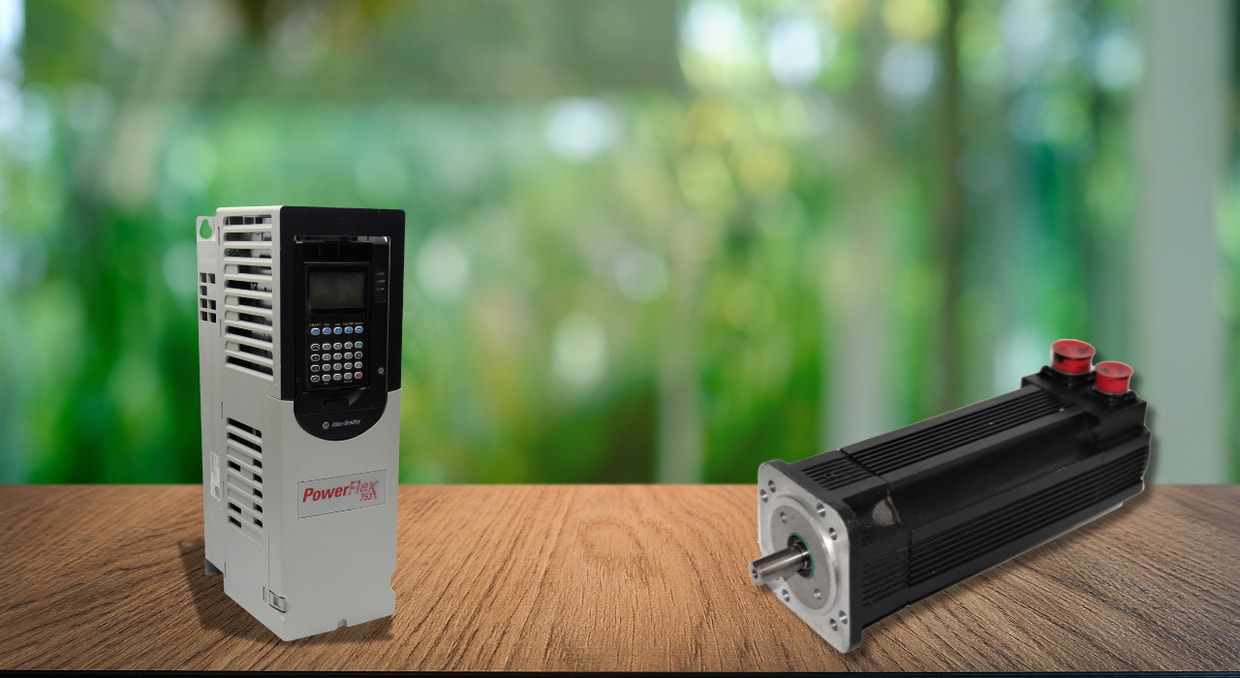
Accuracy, efficiency, and reliability are the keys in the CNC machining arena. The Spindle Motors—the power that drives the rotation of the cutting tool and performs the material removal—lie behind this accuracy-based arena. Even with the finest Spindle Motors, though, they cannot do the job on their own. Their application is, understandably, coupled with the drive electronics that power them. Drive-motor interfacing isn’t a technical nicety; it is the key driver that determines a CNC machine’s ability and has a direct impact on everything from surface finish quality and dimensional tolerances to tool life and uptime. This article is a detailed examination of the critical process of selecting and matching Spindle Motors to their corresponding drives to achieve the best machining performance.
Understanding the Function of Spindle Motors in CNC Machinery
Spindle Motors are CNC machinery’s rotating workhorses that transform electrical power to the exact mechanical motion needed for cutting, drilling, and milling. Spindle Motors, unlike conventional motors, are designed to operate at high speeds, with excellent torque control and low vibration, which are needed for close tolerances and high-quality surface finishes. The fundamental duty of all these Spindle Motors is to provide steady power and speed under varying loads such that a cut will be flawless, whether it is a finishing pass that will be light or a roughing cut that will be heavy.
There are several designs of Spindle Motors, including integrated motor spindles, in which the motor is incorporated into the spindle housing, and belt- or gear-driven systems.
Factors to Consider While Choosing a Spindle Motor
The first step in choosing appropriate Spindle Motors is to examine their technical parameters closely. They determine the motor’s function and directly affect its suitability for the intended machining processes.
- Power Rating (kW) and Torque (Nm): The power rating in kilowatts of the continuous power delivered by the motor. It is one of the most important parameters that provides cutting without stalling. Torque is how much force, in Newton-meters (Nm), is used to rotate the handle. Cutting force is high even at low speeds, which means they require high-torque spindle motors to cut hard materials such as steel and titanium. More useful to an engineer than a single figure is the torque curve – how much torque, generally, potential torque that can be achieved at which engine speeds.
- Speed Range (RPM): This refers to the lowest to highest RPM range in which the motor is intended to operate. Spindle Motors Spindle motors range from high-speed to low-speed series, including high-speed types at 20,000 RPM and higher for aluminum processing, non-ferrous material processing, or composite/plastic milling with accelerated feed speeds or finer surface finishes. On the other hand, applications using larger tools or harder materials will need Spindle Motors that accelerate at lower speeds but deliver more torque. The speed range of such motor-operated devices must be broad, and it is necessary to provide control over the motor over the full extent of this range.
- Cooling Systems: All Spindle Motors generate significant heat during operation. To counter the effects of overheating and thermal expansion, which can lead to loss of precision and early bearing failure, some deliberation may be necessary. Spindle Motors air-cooled are equipped with a fan within and are most suitable for intermittent or low-duty-cycle applications. For extended operation and for more significant power applications, liquid cooling is necessary. The systems transfer coolant to maintain the supply temperature within tolerance and shield the motor from overheating, ensuring centered accuracy under long production runs.
- Encoder Feedback: A critical differentiator for high-accuracy applications. Encoders are sensors on Spindle Motors that deliver real-time feedback on high-resolution shaft position, speed, and direction to the drive. The closed-loop feedback enables the drive to produce immediate corrections, resulting in very tight speed regulation, accurate orientation during tool changes, and synchronized functions such as rigid tapping. The lack of an encoder results in an open-loop system, which is cheaper but lacks accuracy and dynamic response for high-performance systems.
The operation of Spindle Motors requires strict adherence to drive compliance standards.
The Spindle Motors receive their commands from the motor, which operates as an inverter or servo amplifier. The system transforms incoming AC power into a controlled output that enables motor speed and torque management. The correct pairing of drives with Spindle Motors is an essential requirement for achieving smooth, effective operation, as using an incompatible drive system will cause multiple performance problems.
The system experiences multiple problems when using an incompatible drive, including motor overheating, unstable speed operation, insufficient torque at low speeds, and potential life-threatening breakdowns. The drive system requires precise specifications to deliver the current and voltage levels the Spindle Motors require. The control system must operate under a compatible framework. Vector control drives operate Spindle Motors that require high precision torque at low speeds because they manage magnetic flux and torque-producing current independently. A system that achieves perfect compatibility will demonstrate uniform responses to loading changes while maintaining set speeds during cutting operations and achieve maximum energy efficiency, thereby reducing electricity expenses directly.
Advanced Control Features in Modern Spindle Motors and Drives
Control features in modern Spindle Motors and drives extend the capabilities of CNC beyond what was possible before their integration. This seamless integration aligns the motor’s bespoke features with the embedded software in the drives.
- Sensorless Vector Control: With this algorithm, the drive can command the Spindle Motors in both speed and torque without needing an encoder. The drive forecasts the motor’s flux position and dynamically adjusts the motor’s parameters. From an engineer’s perspective, this system delivers excellent low-speed torque and dynamic response. This is achieved at a lower cost compared to a fully closed-loop system. It is an ideal system for general machining applications.
- Regenerative Braking: During rapid deceleration, the inertia of the Spindle Motors can turn it into a generator. When a cutting tool exits a workpiece, the Spindle motor’s inertia can also regenerate energy. Standard drives have no system to dissipate this energy, allowing the DC bus voltage to rise to dangerous levels. This is eliminated with regenerative braking, which allows excess energy to be dissipated into the system, the grid, or dedicated resistor banks. This allows for much faster stop times.
- Dynamic Overload Protection: Machining operations are not always consistent; a tool may occasionally encounter a hard spot in a material. Dynamic Overload Protection keeps machining steady, even when a tool suddenly bites into a tough knot of metal. Spindle motors are usually rated for continuous power, and for short bursts when extra torque is needed—like the quick surge you hear at startup. With the right drive, you can program the spindle motors to push through a brief overload—say, 150% of their rated current for 60 seconds—so they keep turning and ride out a hiccup without shutting down.
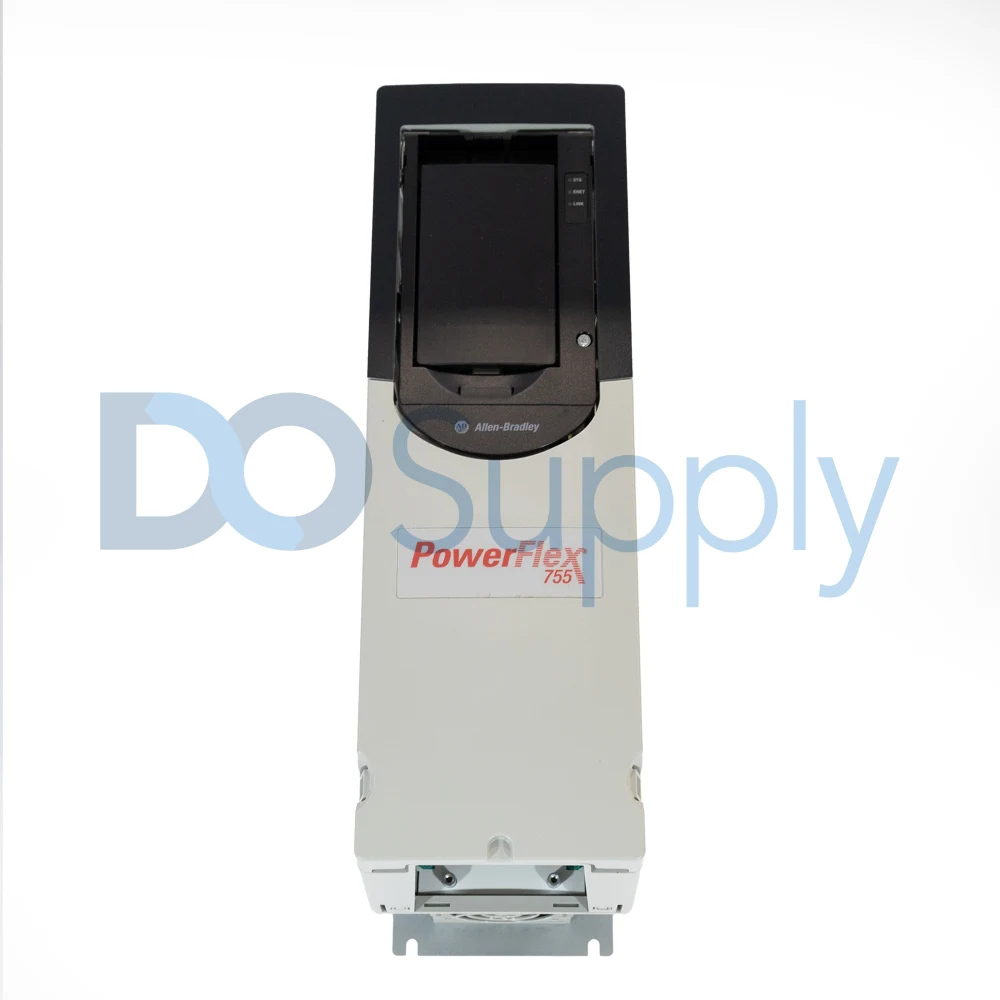
Achieving Optimal CNC Performance Through Effective Motor-Drive Integration.
The end goal of careful integration of Spindle Motors with their drives is achieved through careful integration. The integration is achieved by integrating Spindle Motors with their drives. All drives with Spindle Motors deliver the greatest value, productivity, and profitability.
Spindle Motors with perfect drive integration achieve unparalleled CNC machine precision by holding specific tolerances. The surface-improvement part was finished, improving surface finish and reducing scrap and rework on the part. Improved part reworking. The part-arm control is performed aggressively without breaking, improving the time. Advanced, improved, and not breaking improving time. Advanced time control. Built-in control arms time. Built-in control arms improved time control. Advanced improved control of the energy in the motor. For the plant manager, improved energy savings equate to lower operational costs.
Conclusion
Choosing Spindle Motors and their associated drives is one of the pivotal parts of configuring any CNC machine. Here, one must juggle power, speed, intelligent control, torque, and the complex demands of dynamic control. Engaging with the complete specifications and truly understanding the technical intricacies of the application will permit the integration of encoder feedback, liquid cooling, vector control, and regenerative braking. Such refinements will create a system that engineers and technicians will appreciate. Each system component with this relative adjustment will ensure the Spindle Motors operate within their design parameters, producing a CNC machine that is accurate, efficient, and dependable for many years. Detailing this correlation and adjustment will guarantee the Spindle Motors operate within their design limits. Doing this will ensure the CNC machine being produced will be accurate, efficient, and highly dependable for many years. Building this correlation will streamline CNC machine construction and ensure its reliability for many years. Validating this correlation will streamline your CNC machine construction and guarantee reliability for many years.
At DO Supply, we carry different drives and motors from leading manufacturers, such as Allen-Bradley and Mitsubishi. While our drives aren’t specifically designed for spindle and CNC applications, they can still work for such jobs. If you would like, feel free to reach out to our customer service team! They are more than happy to help pick out a suitable drive and motor for your needs.
DO Supply Inc. makes no representations as to the completeness, validity, correctness, suitability, or accuracy of any information on this website and will not be liable for any delays, omissions, or errors in this information or any losses, injuries, or damages arising from its display or use. All the information on this website is provided on an "as-is" basis. It is the reader's responsibility to verify their own facts.