Spindle Motor Automation: How Allen-Bradley Drives Improve CNC Precision
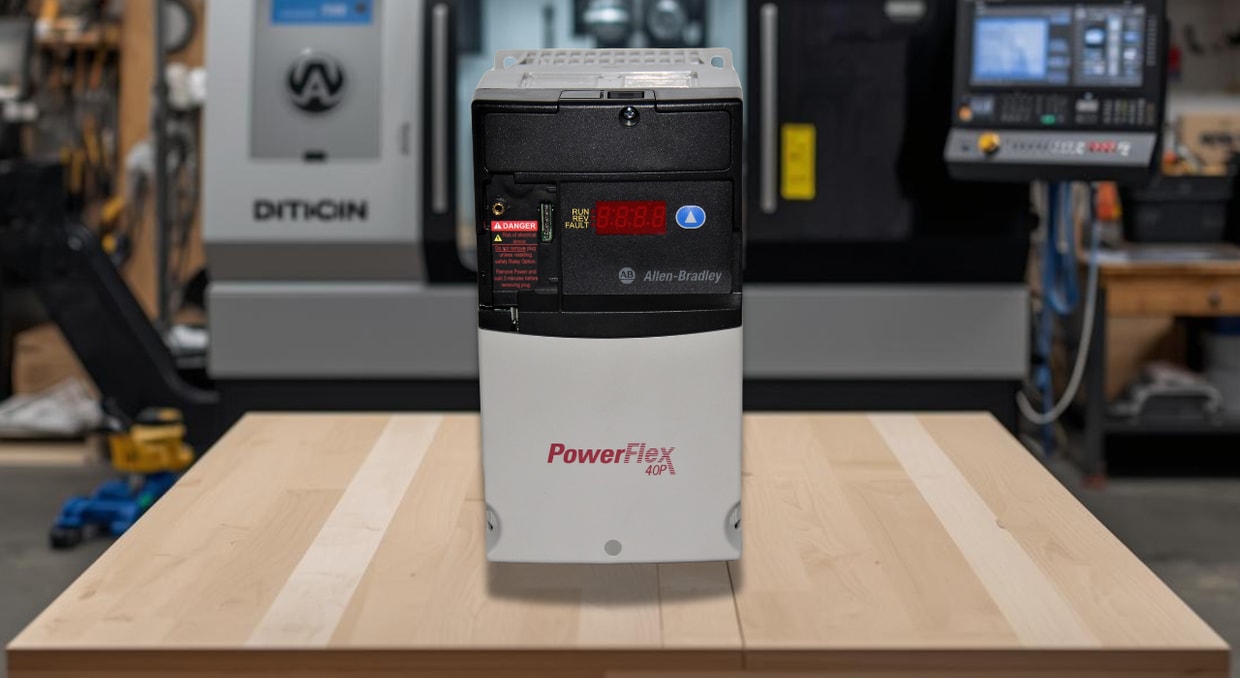
Spindle motors are the main components of any CNC system. The spinning motion of the spindle motors (how fast, how smooth, how steady) determines whether the final workpiece is perfect or flawed. In modern machining, as tolerances shrink and the output expectation rises, you can’t leave your motor control on just the motor and its variable frequency drive. You need smart drives, feedback loops, and precise integration, and that is where Allen-Bradley drives really shine.
In this article, I’ll walk you through:
- What a spindle motor really does in a CNC setup
- Why basic drives fall short
- The Allen Bradley Drive families you should know
- What advantages do you get with smart drive integration
- Real-world use cases
- Tips for selecting and deploying the right spindle drive
Now, let’s discuss the role of spindle motors in the CNC Precision with a little detail.
Role of Spindle Motors in CNC Precision
Spindle Motor Automation uses a variable-frequency drive to control the motor’s speed and a CNC controller to program and manage all functions, such as changing speeds (fast, slow, medium) and starting and stopping the motor. However, there are specific functions that the spindle motor performs, such as:
- Maintain constant RPM even if cutting conditions change
- Deliver torque instantly when the tool plunges
- Hold its thermal stability over long cycles
- Align precisely when coupled with multiple axes
If your spindle can’t keep up when the machine is cutting, your surface finish will suffer, dimensions get sloppy, and your cycle time slows down.
Older setups often used general-purpose Variable Frequency Drives (VFDs). These let you vary speed, but can’t react fast or adapt. In contrast, modern CNC systems demand drives that can adjust in real time, respond to feedback, and communicate with the rest of the control system. That’s exactly where Allen Bradley (Rockwell) drive lines come into play.
Key Allen Bradley Drive Families for Spindle Control
There isn’t one single “Allen Bradley spindle drive” that fits every job. There are many different drive series in the Allen-Bradley catalog that show excellent performance when paired with the right motor and feedback, and can meet different spindle requirements. Here are some you should have on your radar:
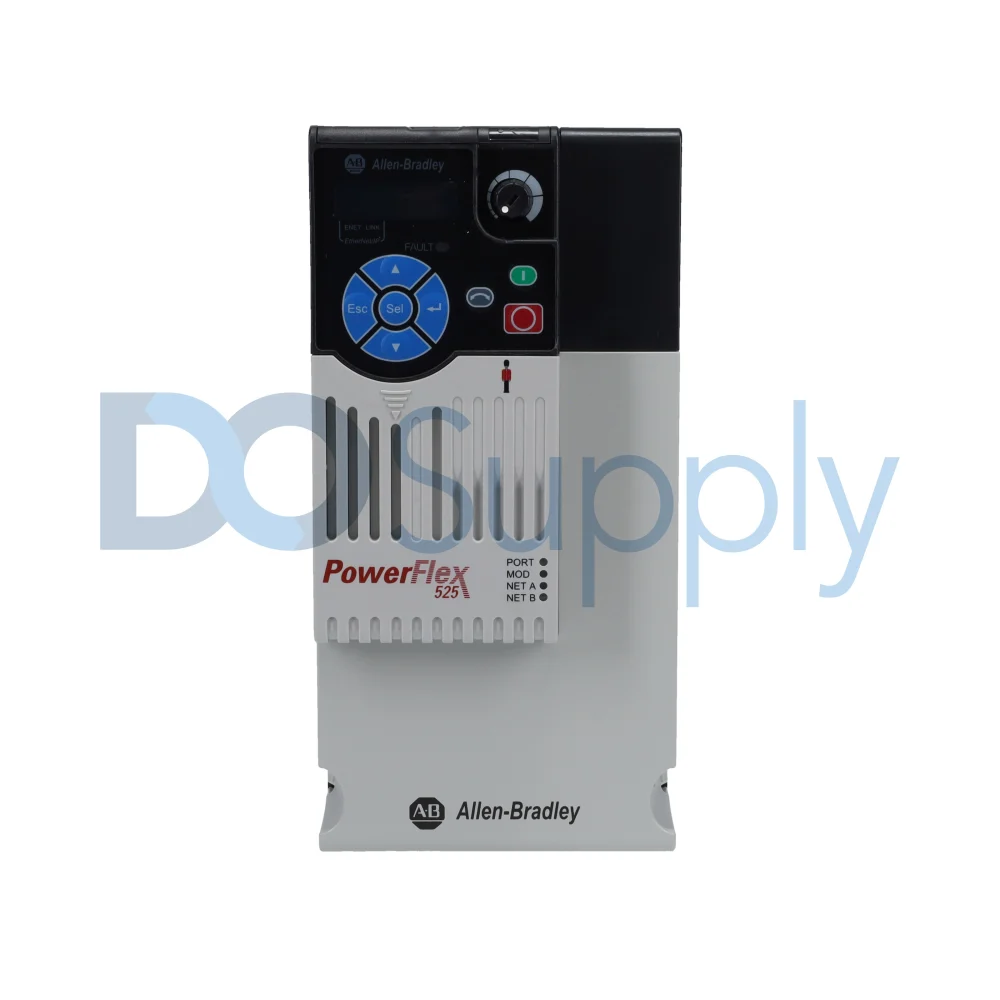
PowerFlex 525 Drive Series
This is the entry point into Rockwell’s more advanced drives. It supports sensorless vector control and comes with embedded Ethernet/IP, so it can link directly to Logix PLCs. It’s suitable for low-to-mid power spindles and small machines.
It’s energy efficient and integrates safety features like Safe Torque Off (STO).
PowerFlex 753 Drive Series
These are higher performance. You get encoder feedback, better torque control, diagnostics, adaptive tuning, and integrated motion control features (in 755). You can use these drive series when your spindle demand is very high and when you want to increase the performance (want more output in less time).
Kinetix Series (5700, 5500, 6500)
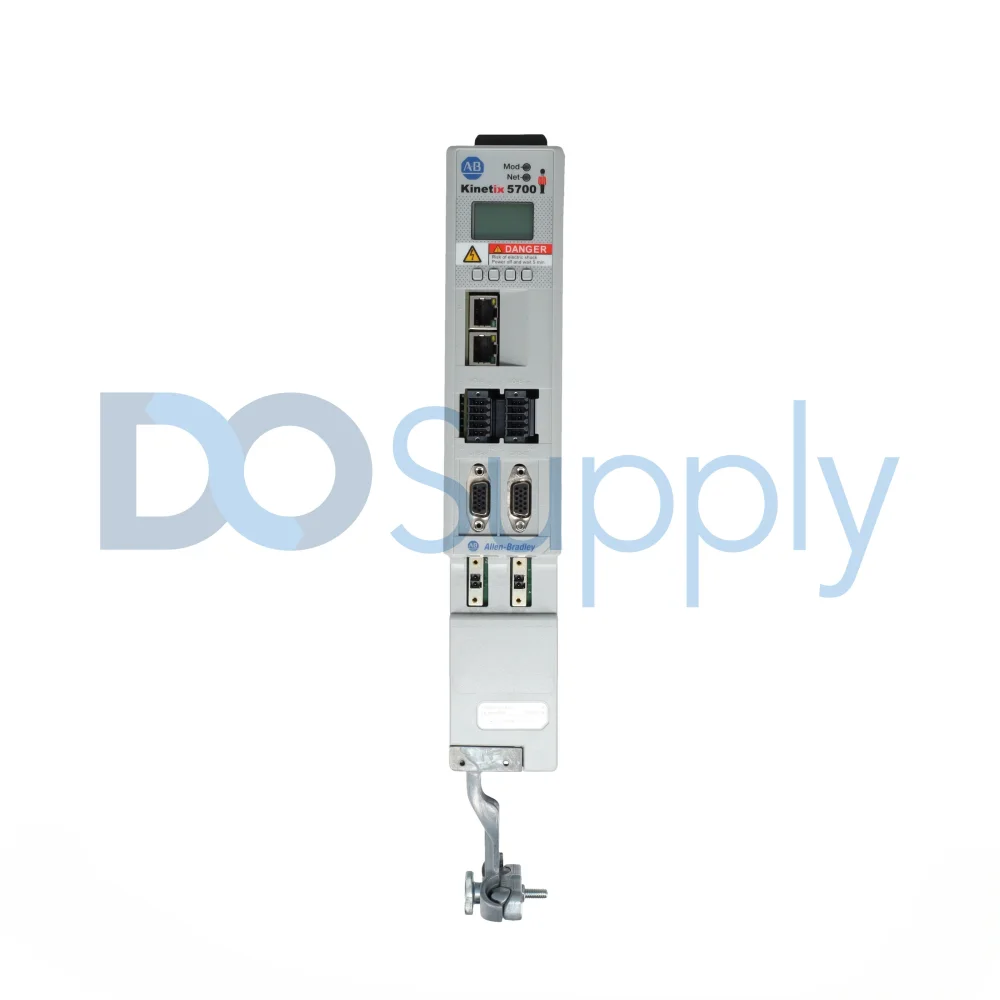
For multi-axis, high-speed machines. These drives are built to coordinate between axes (e.g., spindle + linear axes) and maintain synchronized motion. They can help with complex operations like helical interpolation, thread cutting, and 5-axis moves.
Kinetix 350 Drive Series
A simpler, single-axis drive for spindle motors in basic CNC machines. If you don’t need coordination across axes, this is a lighter, more focused option.
8510 AC Spindle Drive Series
A classic/legacy drive is typically found in older CNC machines or retrofit projects. The 8510 is built specifically for spindle loads (not general motor control) and includes thermal management and robust protections.
Allen Bradley 1394 / 2090 Series
These are legacy parts still used in older CNC platforms. 1394, especially, is still around for motion systems that require integration with older controllers.
When choosing, the match between drive, motor, and feedback system (encoder, resolver, etc.) is critical. The drive must “understand” the motor through feedback so it can adjust dynamically.
What Smart Drives Give You (vs Basic VFDs)
Moving from basic VFD to a drive with feedback and integration delivers several meaningful benefits in practice. Here’s what you really gain:
1. Precision Speed Control Under Load
With vector control and encoder feedback, drives hold speed tightly even when the cutting load changes. No more sagging under heavy cuts.
2. Real-Time Feedback & Diagnostics
Modern drives report spindle temperature, torque, vibration, current, and more. You can detect tool wear, imbalance, or impending faults before they ruin the part or hardware.
3. Safety Built In
Safe torque off, safe stop, and safety via Ethernet/IP ensure the spindle can be shut down cleanly in emergency conditions. That reduces risk and machine downtime.
4. PLC / Motion Integration
These drives talk natively with Logix controllers. No need for bulky wiring or complex protocol adaptation. It simplifies your system architecture and allows you to command the spindle just like any other axis.
5. Adaptive Tuning & Calibration
Some drives (like PowerFlex 755 or advanced Kinetix) dynamically adjust gain settings based on actual load conditions. That means better performance for different spindle sizes or cutting operations without manual retuning.
6. Multi-Axis Coordination
In complex CNC setups, the spindle needs to play in perfect harmony with linear axes. Kinetix drives enable you to coordinate spindle RPM changes, axis positioning, and synchronized motion profiles.
7. Efficiency & Energy Saving
By using intelligent control and regenerative features (especially during deceleration), drives can reduce wasted power. Some drives dynamically adjust current draw for efficiency.
Use Cases & Examples in Factory Floor
Let’s look at a few real scenarios to see how these drives get used:
Retrofit Projects
Older CNC machines might run on legacy drives. Replacing their spindle drive with an Allen-Bradley 8510 or incorporating a modern drive gives new life without a total rebuild.
5-Axis Machining
Use Kinetix 6500 (or integrated servo + spindle solutions) to synchronize spindle rotation with table movement, ensuring complex geometries remain precise.
In one example, a shop retrofitted an old 4-axis machine by replacing the original spindle drive with an 8510 AC drive. They regained consistent stability and reduced scrap, all without changing the rest of the machine.
Tips and Practices that should be followed
- Always match the drive to the motor: torque curve, feedback type, power rating.
- Use proper wiring and cable shielding (especially for analog + digital signals), e.g., 8510 uses separation of analog and digital cable groups.
- Commission drives with proper tuning or allows adaptive tuning / autotune modes
- Monitor diagnostics and use predictive alarms to catch wear or imbalance
- In multi-spindle or multi-axis setups, ensure proper synchronization logic
- Plan for temperature and cooling; spindles under load generate heat
- Keep your firmware, software, and control logic cleanly versioned
- Remember: even the best drive can’t fix a bad mechanical setup. Bearings, spindle alignment, vibration control, they matter too.
Final Thoughts
In conclusion, automating spindle motor control is no longer optional; it’s essential in modern CNC operations. With tighter tolerances, faster cycles, and smarter expectations, the quality of your spindle drive matters just as much as the mechanical machine itself. Allen-Bradley drive lines from PowerFlex 525 through 755, and the Kinetix family, provide options across scales. Whether you are upgrading an older machine or manufacturing a 5-axis center, the potential to incorporate spindle control, diagnostics, feedback, and safety is what separates a good functional system from the rest. If you’re designing or upgrading a CNC system, choosing the right spindle drive is an extremely technical decision. The whole motion of your system depends on the quality of your spindle motor. The right drive can be a multiplier: faster machining, better surface, less scrap, less downtime. And if you let the drive do the intelligent work, your machine becomes more than hardware; it becomes a performance engine.
You can find these PowerFlex, Kinetix drives, and more on our site! Come stop by today and browse our never-ending list of automation supplies that can transform both your CNC machine and the factory around it into an industrial masterpiece. We stock PLCs from leading brands such as Allen-Bradley, Mitsubishi, Omron, and more. All of our equipment also carries a 2-year warranty for added peace of mind. Give us a call today and let’s work together to bring your factory into a well-oiled automation machine!
DO Supply Inc. makes no representations as to the completeness, validity, correctness, suitability, or accuracy of any information on this website and will not be liable for any delays, omissions, or errors in this information or any losses, injuries, or damages arising from its display or use. All the information on this website is provided on an "as-is" basis. It is the reader's responsibility to verify their own facts.