Why MicroLogix Still Matters: Keeping Small Automation Systems Running Strong
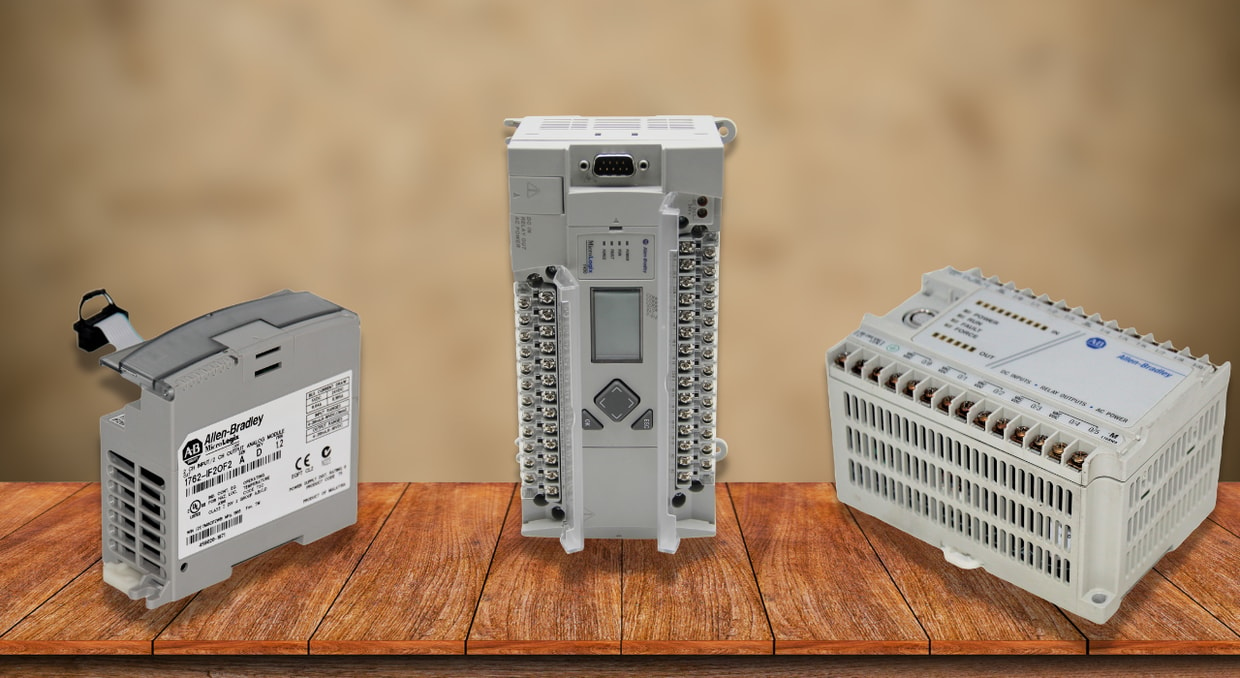
To provide reliable control for small automation systems, Rockwell Automation created the MicroLogix family of compact programmable logic controllers (PLCs). MicroLogix features flexible input/output (I/O) expansion, communication options, and core control functionality in a compact, affordable package that is designed for simplicity and dependability.
MicroLogix controllers are designed to perform automation functions for either standalone or networked equipment, including data handling, counting, sequencing, and network communication. With a consistent workflow compatible with other Rockwell Automation platforms, users can effectively manage I/O operations and design ladder logic. MicroLogix also gives engineers the means to automate smaller machines or subsystems without excess hardware or complexity. It fills the space between basic relay logic and large-scale control systems, delivering an ideal mix of performance and simplicity.
Why MicroLogix Remains Important?
Now, let’s discuss some of the parameters that make Micrologix Controllers still very important for smaller systems in industrial automation.
Dependability as a Base
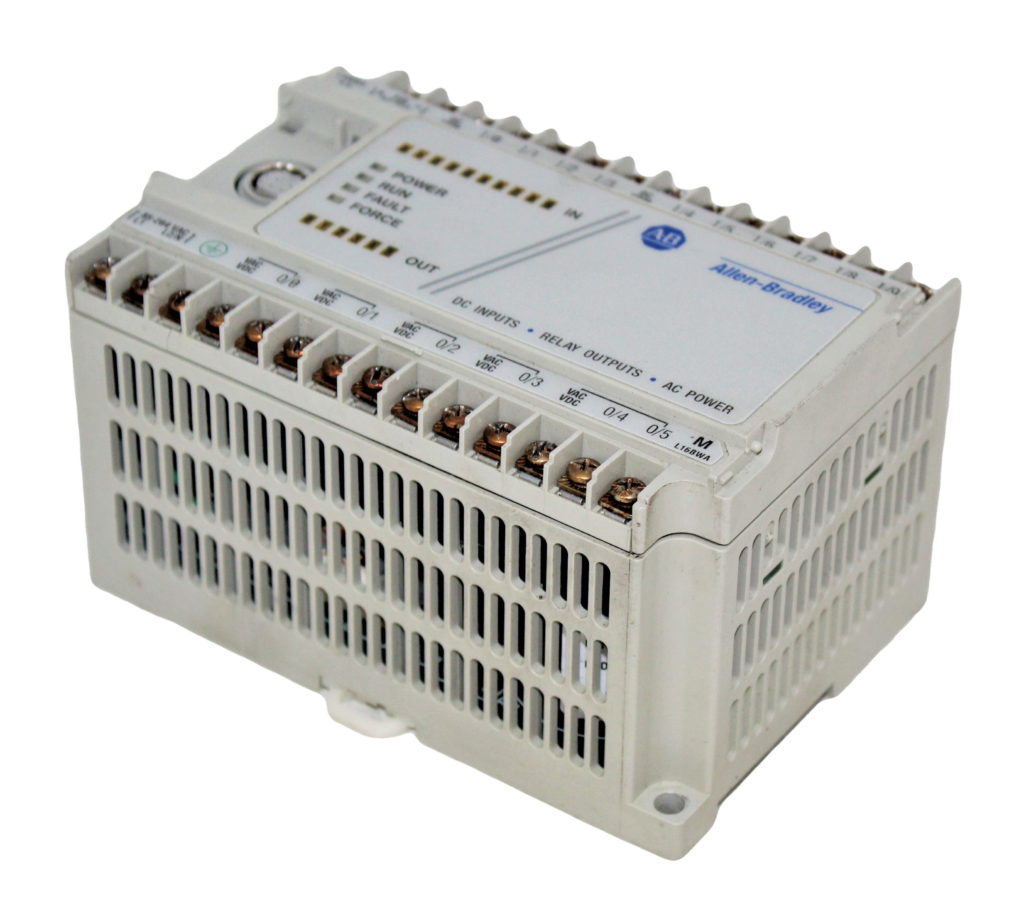
In automation applications, dependability is the most important feature a controller can provide, and this is where MicroLogix comes into play. These controllers are engineered to operate continuously in harsh industrial settings and smaller settings alike, while requiring minimal maintenance.
Unlike modern systems that depend on regular firmware upgrades or on sophisticated networking capabilities that can cause instability, MicroLogix provides a level of reliability that many facilities highly value. Once set up and commissioned, it simply operates, often for years without interruption.
For operations managers, that dependability means less downtime, fewer service requests, and steady productivity. It is common for MicroLogix controllers to operate continuously, 24 hours a day, in manufacturing settings for ten years or longer, carrying out identical control functions without any failure. This level of durability has become a standard for compact control systems, particularly when nonstop performance is essential.
Ease of Usage and Availability
Nowadays, these modern automation platforms are becoming more intricate, incorporating cloud links, SCADA integration (with IDEs), device analytics (connected in the field), and intelligent fault/failure alarms. While these capabilities may be advantageous for large‑scale enterprise initiatives, they often add unnecessary complexity to smaller setups that require only basic control logic, fewer I/O points, and simple wired communication.
MicroLogix is important because it simplifies automation. It provides a range of monitoring and control features, along with analog values from any field-deployed sensors. It links all devices and their attributes to its control logic through simple programming, without adding complexity.
This ease also applies to installation and configuration. MicroLogix needs only minimal setup, allowing straightforward integration with both new and existing systems. For maintenance crews, this translates to quicker commissioning, easier updates, and reduced time spent troubleshooting issues.
Economical Management
An important benefit of MicroLogix is its economical nature. Implementing industrial automation often incurs high costs, particularly when expanding intricate systems. MicroLogix enables companies to retain control functions without excessive spending on hardware or software.
As the MicroLogix is compact and self-contained, it reduces panel space, wiring complexity, and installation costs. It delivers all the core control features small machines need, including timers, counters, PID control, data logging, and Ethernet communication, at a fraction of the cost of larger platforms.
From a business perspective, this efficiency reduces the total cost of ownership (TCO). The upfront expense is modest, energy usage is low, and these controllers need minimal maintenance. Plants can install several MicroLogix controllers on smaller equipment or subsystems without substantially raising operating expenses.
In many cases, moving small automation setups to larger, more expensive PLCs provides little actual advantage. In such situations, MicroLogix remains the more economical option, offering solid control functions without unnecessary expense.
Consistency Amid a Shifting Environment
Industrial automation advances swiftly. New hardware families appear, while older ones are retired. Nevertheless, amid these shifts, companies still rely on existing systems to maintain production. MicroLogix remains important as it offers continuity in an evolving technological landscape.
Although newer Rockwell platforms, such as the Micro800 or CompactLogix, provide expanded capabilities, MicroLogix stays compatible and relevant. Ongoing support in documentation, software environments, and spare parts availability guarantees that organizations using these controllers can maintain operations without immediate migration pressure.
The underlying design approach of the MicroLogix, consistency, durability, and predictability, matches the priorities of many industrial settings. In plants where any interruption is expensive and system validation is thorough, swapping out a trusted MicroLogix controller without a compelling reason can pose more danger than benefit.
In that context, MicroLogix offers a dependable foundation for legacy equipment and long‑term dependability, ensuring smaller automation networks stay robust. At the same time, the rest of the plant progresses at its own pace.
Knowledge and Staff Continuity
Another major factor why MicroLogix remains relevant is its extensive embedding within the expertise of the worldwide industrial labor force. Engineers, technicians, and maintenance staff worldwide have decades of experience programming and servicing MicroLogix controllers.
That common familiarity allows organizations to readily locate competent assistance, whether from internal personnel or outside contractors.
Revised Features and Supervised Migration
Even though MicroLogix has become a mature platform, Rockwell still offers extensive documentation, including technical resources and migration tools for the MicroLogix 1400 and other modules still in use.
For organizations aiming for long-term modernization, this systematic migration approach ensures that current logic, wiring, and procedures can be incrementally migrated to newer controllers such as the Micro800 without a complete system redesign. The older version of such a controller can be migrated to the newer version for logic building.
This measured strategy enables companies to upgrade at their own pace, prolonging MicroLogix’s useful lifespan when suitable, and adopting newer technologies only when warranted.
Effectiveness in Upkeep and Problem Solving
Maintenance efficiency is another often‑ignored benefit of MicroLogix. Since the system’s hardware and software are straightforward and uniform, diagnosing problems becomes simple.
Error codes are simple to understand, diagnostics can be run locally via built‑in displays, and the software platform offers clear signals for I/O status and logic execution. This reduces downtime and helps technicians restore systems swiftly.
Numerous modern controllers have become so intricate that even minor problems may need vendor assistance. MicroLogix, on the other hand, remains a platform that maintenance personnel can fully understand and manage internally, a characteristic that keeps operations both effective and autonomous.
Still the Pragmatic Choice
The lasting relevance of MicroLogix comes down to practicality. In industrial automation, not every system must be state‑of‑the‑art. Many just have to operate reliably, predictably, and affordably.
MicroLogix delivers reliability. It’s a blend of dependability, ease of use, cost‑effectiveness, and familiarity that guarantees it remains the core of countless small automation systems globally.
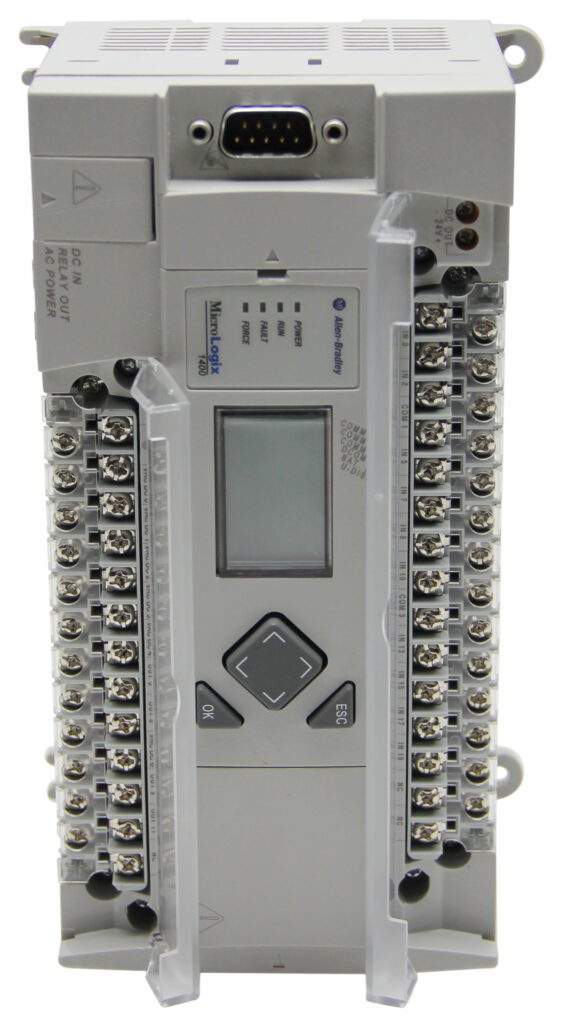
Of them all, the MicroLogix 1400 stands out as one of the most capable controllers in the MicroLogix family. It features built-in Ethernet connectivity for network communication, alarms, and data monitoring, along with tools for trending (often referred to as “historian” functions) and web server access. Despite its compact footprint, the MicroLogix 1400 can support up to 256 I/O points through expansion modules and includes useful built-in features such as a real-time clock, an LCD, and advanced communication options, including Modbus RTU and Ethernet/IP.
Final Thoughts
In conclusion, for companies that maintain legacy infrastructure or run equipment that doesn’t need sophisticated motion or analytics, MicroLogix offers an ideal mix of technology and practicality. The aim isn’t to swap it for a newer model; rather, it’s about acknowledging that a tried‑and‑true solution continues to do its job remarkably well for smaller systems. As businesses and automation needs increase and move toward digital transformation, MicroLogix continues to show that progress isn’t always about replacement; often it involves preserving and fine‑tuning what already functions well. In that regard, MicroLogix remains relevant because it still provides what the industry values most: reliable control, simple maintenance, and enduring value.
If you are in the market for a MicroLogix PLC, then we have you covered. Come visit our site and browse the hundreds of different MicroLogix PLC’s that we carry, ranging from the 1000 to the 1500. We offer free ground shipping on all orders and a two year warranty for an easy and stress free transaction. Still not convinced that the MicroLogix is right for your setup? We have an article here going over its different use cases.
DO Supply Inc. makes no representations as to the completeness, validity, correctness, suitability, or accuracy of any information on this website and will not be liable for any delays, omissions, or errors in this information or any losses, injuries, or damages arising from its display or use. All the information on this website is provided on an "as-is" basis. It is the reader's responsibility to verify their own facts.