PLC Brands Breakdown: Which Controller Families Are Worth the Investment?
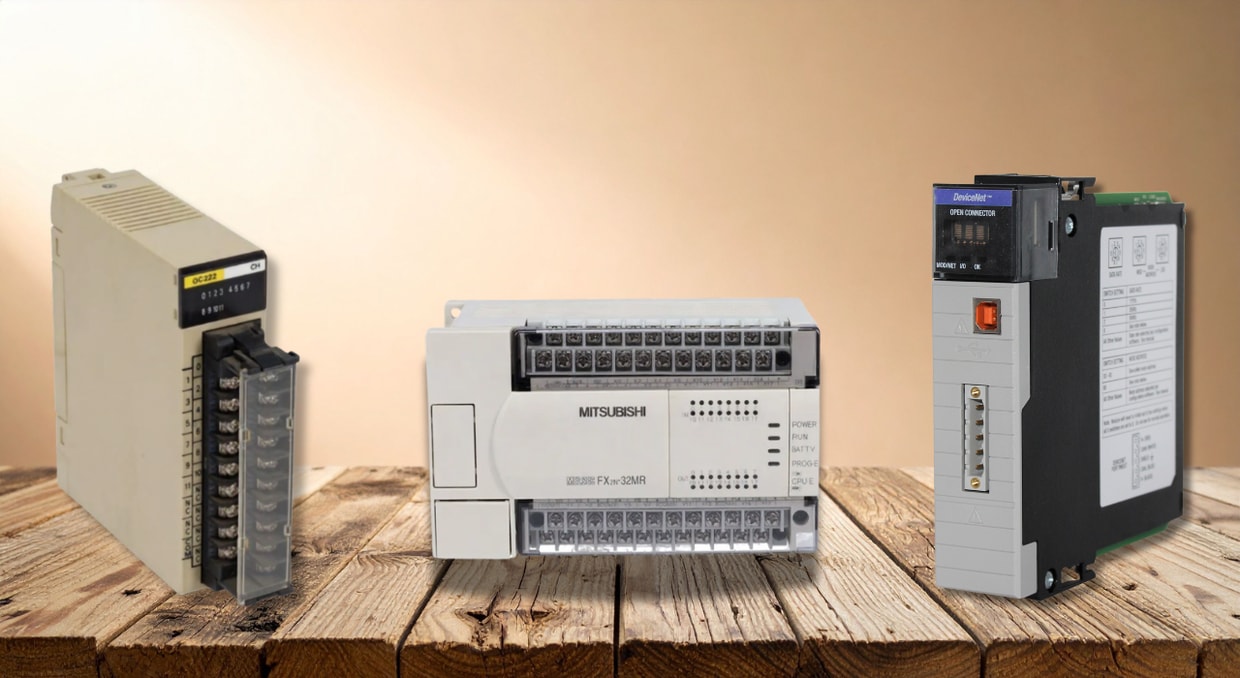
PLC Brands have a pivotal influence on the efficiency, scalability, and dependability of control systems. It is also true that not all PLCs are the same. Different manufacturers concentrate on different industries, environmental resilience, processing rates, and communication standards. Choosing the right PLC family has evolved from a normal buy to a strategic investment as the industry shifts toward Industry 4.0 and IIoT adoption. A manufacturing system’s ability to grow or the need for costly redesigns in the future can be determined by choosing the right PLC brand. This article outlines the most reputable PLC Brands and their premier controller families to assist you in making a well‑informed investment choice.
Allen-Bradley
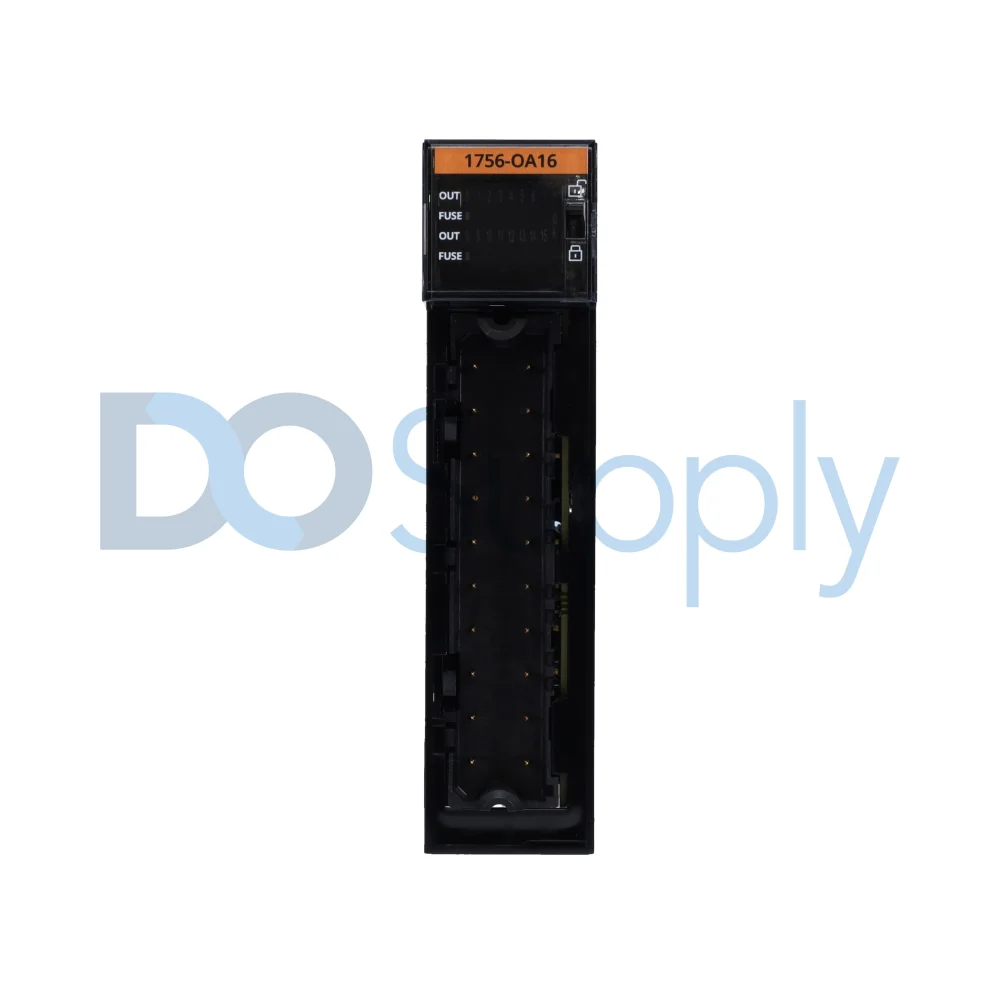
Allen-Bradley from Rockwell Automation consistently ranks #1 among top-tier PLC brands. Allen-Bradley now leads the Micro800TM family (Micro810, Micro820, Micro850, and Micro870), in addition to the advanced GuardLogix safety controllers, and continues to focus on ControlLogix and CompactLogix. These products cater to both compact equipment and highly protected industrial installations. The Micro800 series suits stand‑alone or smaller OEM devices, whereas GuardLogix is expressly tuned for integrated safety and SIL‑graded projects. Allen‑Bradley maintains its leadership in high‑performance architecture, cybersecurity adherence, and intelligent device‑level integration, representing a solid investment for automation systems ready for the future. We do have a comparison guide between the MicroLogix and CompactLogix here if you are interested in learning more.
Siemens
Siemens still stands as one of the most globally trusted PLC brands, yet recent industrial trends have moved slightly toward the SIMATIC ET 200SP, SIMATIC S7‑200 Smart, and the newly introduced S7‑1200 G2 controllers. These small yet high‑performance PLCs are designed for distributed automation and contemporary machine‑control settings. The ET 200SP PLC is especially favored in modular manufacturing setups for its compact size and robust processing capabilities. Consequently, Siemens is a strong option for expandable production lines, intelligent infrastructure initiatives, and plants requiring long‑term technological continuity.
Schneider Electric
Schneider Electric is still one of the top PLC brands driving the growth of industrial automation. However, many new installations are moving toward the process-expert Eco-Structure, along with Modicon M340, Modicon M262, and Modicon Momentum, for greater efficiency and backup-compatible solutions, rather than focusing solely on Modicon M221/M241/M251. The M340 series is ideal for process industries, including oil and gas and power generation, because it offers robust redundancy, real-time execution, and quick communication. Momentum PLCs are also very reliable in harsh and remote conditions. Schneider PLCs now provide advanced energy monitoring, strengthened cybersecurity layers, and seamless IIoT, establishing the company as a reliable long-term option for industrial digitalization projects.
Mitsubishi
Among the strongest precision-focused PLC brands, Mitsubishi remains at the forefront with its MELSEC iQ-F (FX5U/FX5UC) and MELSEC iQ-R (R04/R08/R16) series, superseding the older FX models. These controllers provide ultra‑rapid scan cycles, built‑in positioning control, and outstanding coordination with Mitsubishi’s servo and VFD product lines. The iQ‑F line is designed for compact, high‑speed equipment, whereas the iQ‑R targets complete production lines, sophisticated robotic cells, and intelligent factories. Mitsubishi’s refreshed series supports CC‑Link IE TSN communication, equipping systems for real‑time, time‑critical networking uses.
Omron
Omron’s standing among cutting‑edge PLC brands now centers primarily on its NX102/NX701/NX1P2 and NY5 industrial PC controllers. These contemporary PLC and IPC solutions deliver remarkable processing rates, featuring real‑time machine control, data gathering, and an IIoT framework integrated within the controller itself. The NX1P2 line, specifically, merges PLC, motion, safety, and networking into a single compact device.
Delta & LS Electric
Within the realm of budget‑friendly PLC brands, Delta Electronics now focuses on the AX‑5, AX‑3, and AH500 series for flexible industrial applications, supplanting the previous DVP’s prevalence in numerous applications. These controllers presently accommodate contemporary Ethernet‑based protocols, motion modules, and cloud‑grade monitoring. At the same time, LS Electric’s latest XEC Series and XMC Motion Controllers are gaining traction in mid‑range automation and CNC tasks. These platforms deliver strong performance at a competitive cost, making them ideal for startups, OEM machine makers, teaching laboratories, and small‑to‑medium enterprises seeking cost‑effective yet reliable control options.
Beckhoff
Beckhoff is one of the most technically advanced modern PLC brands, famous for its groundbreaking PC‑based control architecture that works with any automation system. Its CX (Embedded PCs), IPC series, and TwinCAT PLC runtime substitute conventional PLC hardware with robust industrial computers. The company’s greatest asset is EtherCAT, one of the fastest real‑time industrial Ethernet protocols currently available. This provides unrivaled performance in motion control, robotics, and synchronized automation systems. Beckhoff is suited for high‑tech sectors that require ultra‑fast data processing and flexible, scalable architectures.
B&R Automation
B&R (Bernecker & Rainer), currently integrated into ABB, ranks among the world’s most innovative PLC brands. Its robust X20, X90, and APROL controller series are designed for coordinated motion, rapid automation, and extensive process control applications. A distinguishing feature is its real‑time deterministic control, which is well-suited to robotics, packaging, bottling, and high‑speed production lines. B&R PLCs are extensively deployed across Europe and in advanced manufacturing settings, where timing accuracy and system performance are essential.
ABB
ABB is recognized as a worldwide leader among PLC brands, especially in the utilities, energy, marine, and industrial manufacturing fields. Its AC500, AC800M, and eCO PLC series deliver solutions for applications ranging from small‑scale machine control to comprehensive DCS systems. The AC800M finds widespread application in chemical plants, power stations, and water‑treatment plants. ABB’s PLCs seamlessly interface with ABB drives, motors, and robotics, forming a complete automation stack.
Panasonic
Panasonic is often underrated among PLC manufacturers, yet its FP‑XH, FP7, and FP0H lines provide very powerful control in very small packages. These controllers are especially favored in electronics manufacturing, clean‑room settings, and precision equipment. Featuring integrated high‑speed toggle counters, different pulse outputs, and strong motion‑control ability, Panasonic PLCs perform well in configuring devices related to Building Management Systems, pick‑and‑place devices, CCTV and surveillance stations, and inspection stations.
Making a Safe Automation Investment
Selecting the best PLC brands nowadays is about preparing your company for the next ten years of technological advancement, not just solving current production problems. Characteristics such as cloud connectivity, edge computing, cybersecurity layering, remote monitoring and control, and AI-driven fault diagnostics are quickly becoming standard requirements rather than optional extras as Industry 4.0 continues to transform modern production. Manufacturers of different PLCs, including Siemens, Allen-Bradley, Schneider Electric, Mitsubishi, and Omron, are actively developing smarter ecosystems that integrate with real-time analytical dashboards within their software, digital twins, and predictive maintenance systems.
Smooth data transmission across different SCADA systems is enabled by PLCs that support modern communication protocols, including Modbus, SNMP, BACnet, OPC DA, DDC Suitelink, OPC UA, MQTT, PROFINET, and EtherNet/IP. This level of connection provides improved visibility, faster problem-solving, and more accurate performance adjustment. Equally vital is a PLC series’ capacity for modular extensions, backward compatibility, and ongoing firmware upgrades. These capabilities significantly reduce the likelihood of technological obsolescence and eliminate the need for a complete system replacement as your operations expand or evolve. Ultimately, future‑proofing isn’t about picking the lowest‑priced PLC available. It requires making calculated investments in flexible, safe, and scalable automation systems that will expand with your business over the next ten to fifteen years, protecting both long-term capital expenditure and productivity.
Final Thoughts
In the final analysis, the most valuable PLC brands are those that match both your current needs and your future automation objectives. Allen‑Bradley justifies the cost for high‑performance, U.S.-based sectors. Siemens is a worldwide leader in scalable, intricate operations. Mitsubishi and Omron provide intelligent, compact, and inventive solutions for high‑speed settings. Schneider leads in the infrastructure and process sectors, whereas Delta and LS are strong choices for affordable, functional automation. The proper investment isn’t about picking the most famous brand; it’s about selecting the most “appropriate” controller family for your precise operational requirements. Decide wisely, and your PLC will become a robust long‑term asset, not merely a control unit.
If you would like more help finding out which brand might be best for you, feel free to give us a call. Our team is more than happy to help pick what PLC ecosystem is best suited for your system. We carry PLCs from majority of the brands listed here, all ready to ship same day and with our two year warranty backing it up. So stop on by our store today to see what we can DO for you!
DO Supply Inc. makes no representations as to the completeness, validity, correctness, suitability, or accuracy of any information on this website and will not be liable for any delays, omissions, or errors in this information or any losses, injuries, or damages arising from its display or use. All the information on this website is provided on an "as-is" basis. It is the reader's responsibility to verify their own facts.