MicroLogix and CompactLogix: A Breakdown of Both the Advantages and Disadvantages
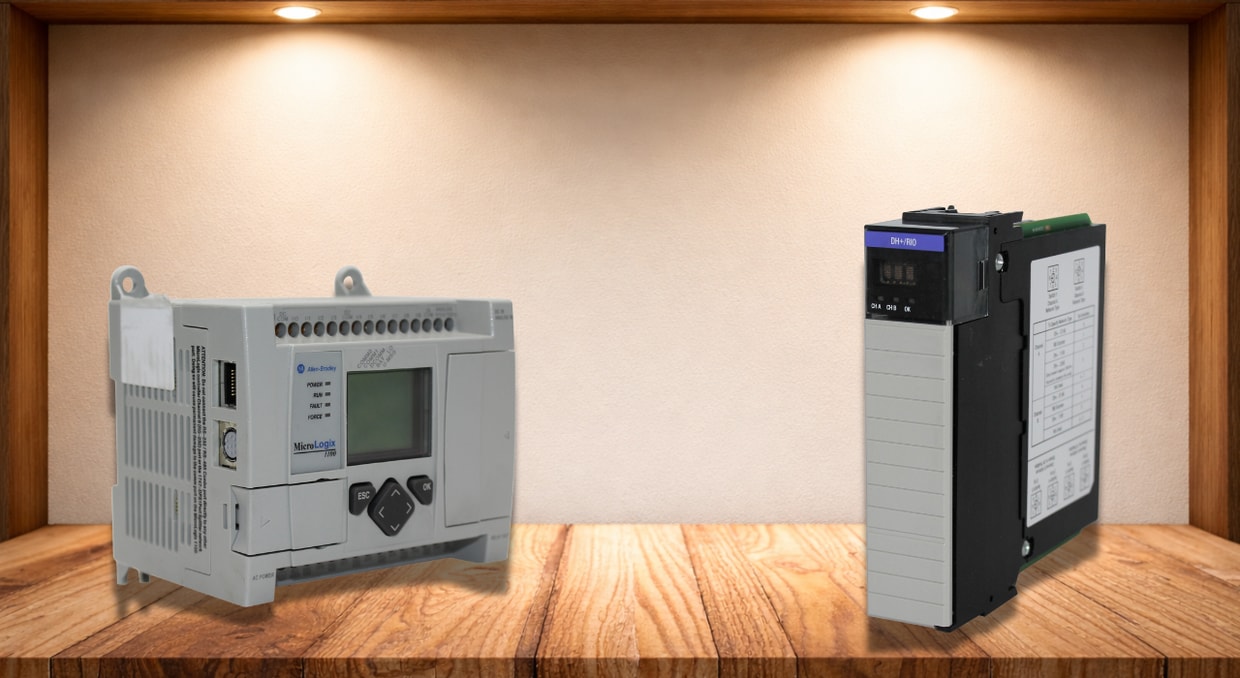
Choosing a programmable logic controller involves a realistic analysis of technology requirements versus expense and complexity considerations. On the Rockwell Automation platform, there are two different approaches to automation offered in the MicroLogix and CompactLogix series of programmable controllers. A detailed breakdown of the differences between these two will help analyze their advantages and disadvantages.
Architectural Foundations and Design Principles
The point of divergence between the two lies in their underlying architectures. The MicroLogix line is a hard-wired, cost-effective controller package for discrete, stand-alone processes. It follows a monolithic architecture, in which the processor, power supply, and a fixed number of I/O circuits are typically packaged together in a single device or module.
On the other hand, the CompactLogix architecture is based on the Logix platform, which is modular and scalable. It is rackless and modular, with a processor module package integrated with application-specific I/O, communication, and other specialty modules, all distinct from one another. As has been argued, this design is inherently flexible, capable of scaling and adapting with the machine it controls. The key tenets in this design are flexibility, capability, and, above all, scalability, even if it is expensive.
Hardware Design and System Scalability
Hardware configuration is a key area of differentiation. A MicroLogix controller is usually chosen as an integrated solution. The MicroLogix controllers have a fixed number of internally connected digital and, in some models, analog input/output points.
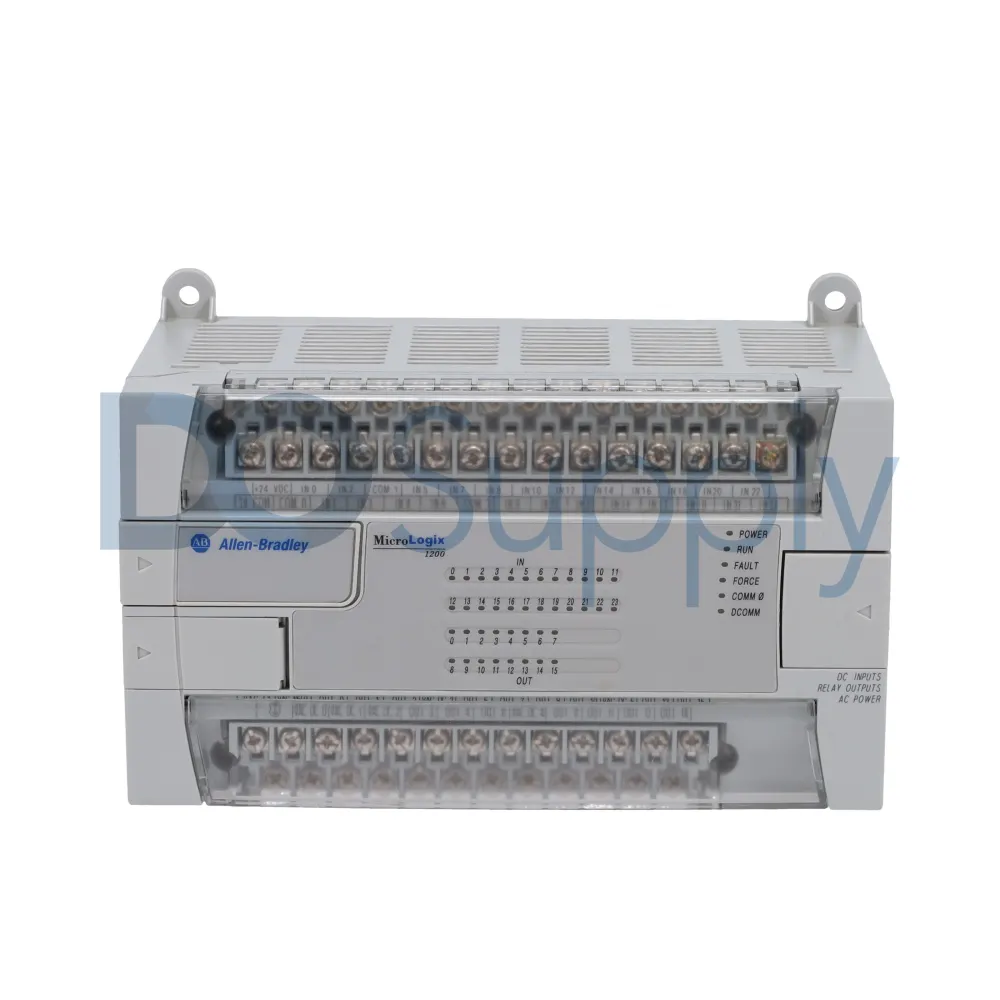
You can expect:
- MicroLogix 1000 has 10-40 fixed I/O points
- MicroLogix 1100 has 10-24 fixed, up to 144 total
- MicroLogix 1200 has 24-40 fixed, up to 256 total
- MicroLogix 1400 has 20-40 fixed, up to 256 total
- MicroLogix 1500 supports up to 512 discrete I/O points and up to 256 analog I/O channels
The MicroLogix is therefore well-suited to replace relay panels or machines with a fixed number of input/output points.
The CompactLogix’s modularity is what gives its brand strength. Beginning with the controller, one selects the appropriate I/O modules to meet a particular application—high-density digital, high-resolution analog, motion control, or specialty modules, including weigh scales and RFID cards. Modularity also allows the system to be expanded by simply adding modules to a DIN rail, while newer CompactLogix controllers support a much larger number of I/Os than the MicroLogix, which has a fixed capacity.
Processing Speed and Task Ability
Processing speeds and process execution differ greatly. Also, MicroLogix processors are normally suited for sequential logic execution and simple programming instruction sets. They support efficient execution of simple ladder logic, but may struggle with complex mathematical operations and with data and process operations that require small, fixed loop cycle times. They operate in a scan cycle that depends on program size, which may not be ideal for high-speed control processes.
The processors in CompactLogix controllers offer capabilities that far exceed those of the MicroLogix series, supporting structured text, function graphs, and control structures in addition to ladder logic. The capability enables the execution of complex control processes, data operations, and algorithmic operations, which are not available in the MicroLogix series. In addition, CompactLogix controllers support up to 32 multitasking tasks, excluding motion tasks that require critical operations, whereas the MicroLogix series does not.
Communication and Network Integration
Networking ability highlights the key trade-off. In the traditional MicroLogix family of controllers, the main connectivity options were RS-232 or RS-485 ports, suitable for either point-to-point or DH-485 networking. Later models introduced an integrated Ethernet port, enabling the controller to expand its connectivity beyond serial communication. While this Ethernet support enables programming access, HMI connectivity, and basic peer-to-peer data exchange, the MicroLogix was not designed to serve as a network coordinator or a large-scale data device.
The CompactLogix controller is designed for a fully networked industrial environment. The controller has built-in high-speed Ethernet/IP ports that enable it to act as both a sender and a receiver of CIP transactions on the network. The controller is also fully capable of handling remote I/O racks, transmitting data transparently to Logix controllers, and seamlessly communicating with PanelView graphic stations and PowerFlex drives.
Motion Control and Safety Integration
In applications that require coordinated motion or integrated safety, there is no contest. By definition, MicroLogix family products do not have motion control. Although basic drive stepping is provided, there is no coordinated multi-axis motion. Similarly, while safety relays may be integrated with a MicroLogix controller, the controller does not have safety-rated processors or provide safety logic.
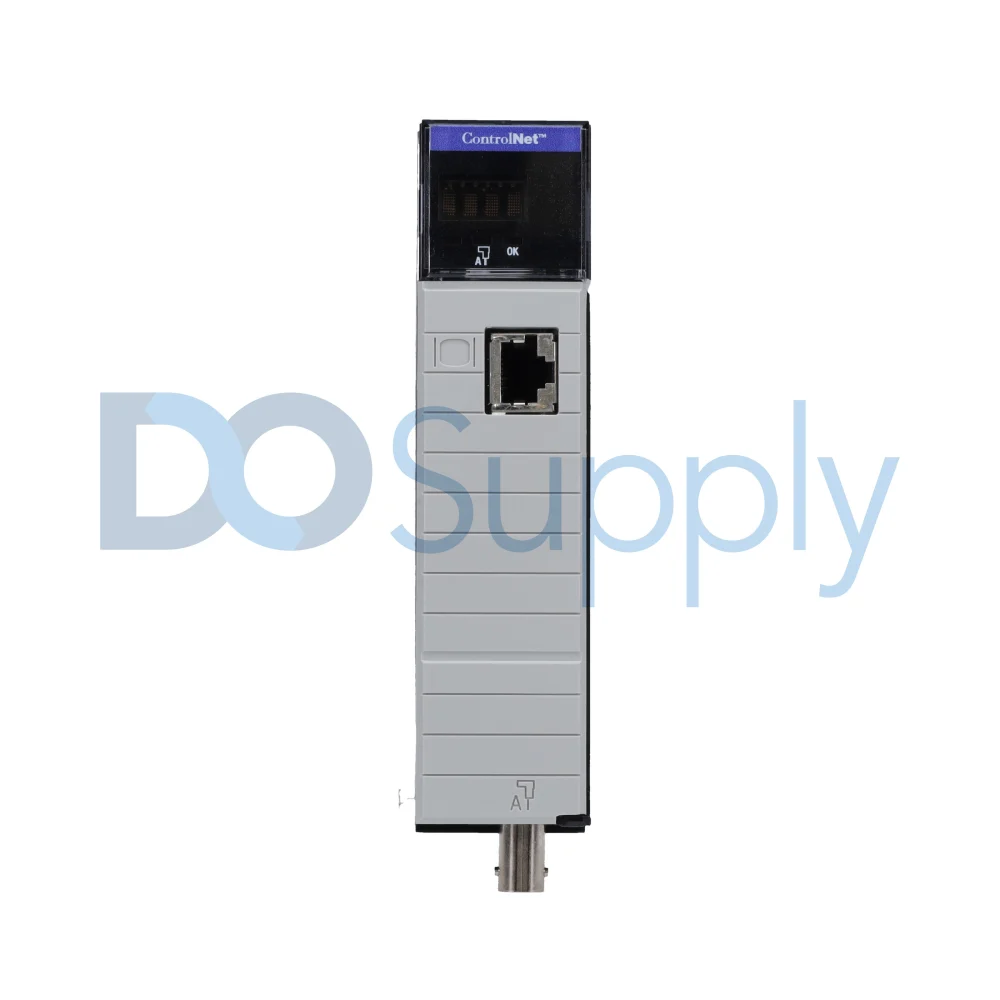
Motion control can be directly integrated by CompactLogix. Certain models support SERCOS or EtherNet/IP, thereby enabling motion control instructions to be executed within the standard logic program. Much more critical are the Compact GuardLogix controllers available on the same platform. These controllers integrate standard and safety logic in a single processor. Safety functions involving emergency stops, light curtains, and safety interlocks can be programmed together within the standard logic.
Selection Criteria
The benefits of using MicroLogix include cost savings on initial hardware and software, a smaller physical footprint, simpler installation and programming, and faster startup for generic operations. Costs associated with using MicroLogix include the loss of system scalability, high-performance processing, advanced communication, motion control, safety integration, and long-term flexibility.
By choosing CompactLogix, you will benefit from system scalability and flexibility, high-speed processing for demanding tasks, network and data integration, motion control and safety, and compatibility with Industry 4.0 trends. Choosing a CompactLogix controller entails higher initial capital and software costs, greater design complexity, greater expertise required to support the system, and a larger footprint than other logic controllers, despite the same base I/O points.
In practice, the MicroLogix family remains a viable and cost-effective option for fixed, low-I/O-axis systems where the control logic is unlikely to change, and network requirements are minimal. These requirements include simple conveyor lines, pump stands, or packaging lines. The CompactLogix family is the right choice for dynamic, high-speed, and/or data-intensive processes; multi-axis systems; processes that may expand in the near future; or systems that require safety and control.
All of these controllers and more can be found at our shop! You are currently one click away from browsing thousands of ready-to-ship controllers, accessories, drives, motors, and more, all backed by our two-year warranty. We also have our in-house repair service to refresh malfunctioning or old equipment! If you prefer to keep your PLCs running for as long as possible, we have a maintenance guidethe MicroLogix family. Thank you for reading!
DO Supply Inc. makes no representations as to the completeness, validity, correctness, suitability, or accuracy of any information on this website and will not be liable for any delays, omissions, or errors in this information or any losses, injuries, or damages arising from its display or use. All the information on this website is provided on an "as-is" basis. It is the reader's responsibility to verify their own facts.