PanelView vs Generic HMIs: What You Gain with Allen Bradley
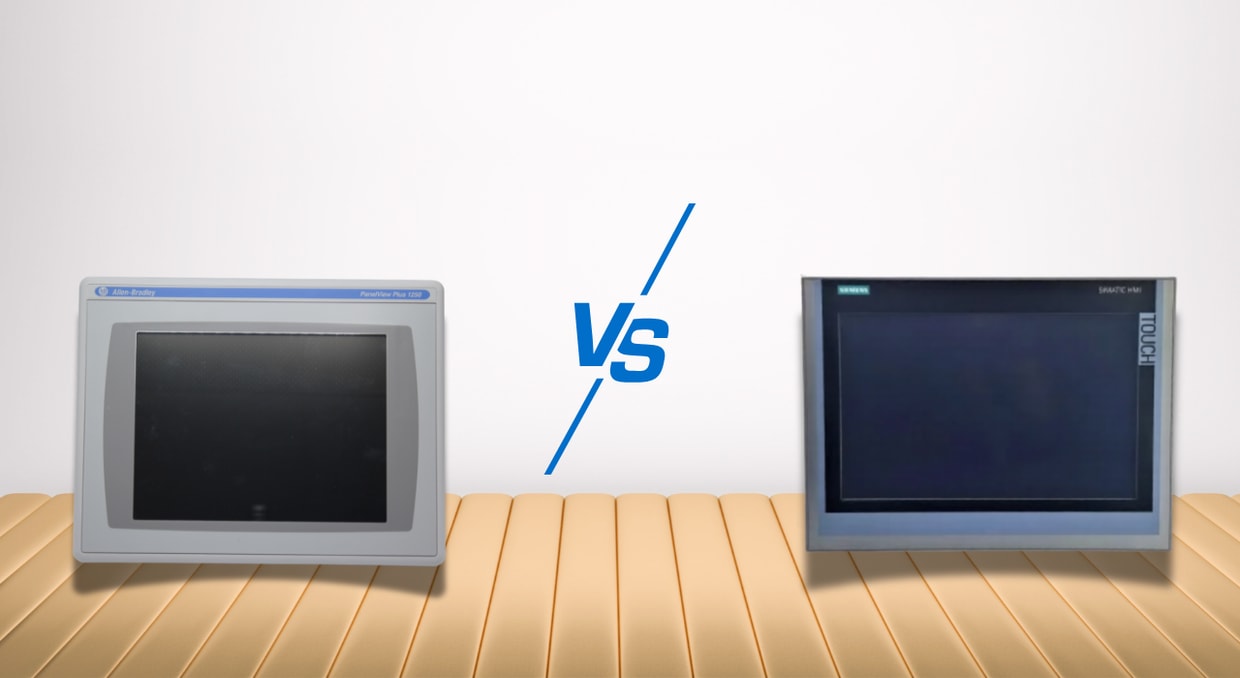
In industrial automation, the Human-Machine Interface (HMI) functions as a crucial link between human operators and complex control systems. The selection of an HMI platform is a critical decision with significant implications for operational efficiency, system integration, lifecycle costs, and long-term support. When selecting a suitable Human-Machine Interface (HMI), engineers frequently have to choose between a vendor-specific solution, such as the Allen-Bradley PanelView series, and a hardware-agnostic generic HMI.
The Allen-Bradley PanelView HMIs are premier operator interface terminals from Rockwell Automation designed to monitor and control devices that are connected to a controller, as well as display information as needed. They are available in different forms, ranging from small keypads to large, high-performance touchscreen LCDs. They are a key element of the Allen-Bradley Integrated Control Architecture for industrial automation, which allows seamless integration of Allen-Bradley Logix controllers, I/O modules, PowerFlex drives, Kinetix servo drives, and PanelView HMIs over Ethernet/IP or SERCOS Interface. This integrated control architecture enables smooth communication, advanced processing, and robust cybersecurity.
PanelView terminals have evolved from the original PanelView Standard units (small, monochrome, or simple color displays with keypads) to the modern PanelView 5000 series. For instance, the PanelView 5000 series provides Logix-based alarms, an intuitive navigation menu, automatic diagnostics, programmable screen update rates, and a modern design featuring a slim, aluminum bezel, consequently reducing configuration time and enabling enhanced visualization of high-speed operations. PanelView operator interfaces are designed to maximize operational efficiency within Allen-Bradley-centric control systems. In contrast, generic or third-party HMI panels (such as Siemens, Schneider Electric, AutomationDirect, Maple Systems, etc.) support a variety of other PLC brands and communication protocols, but they generally lack Rockwell-specific integration.
Allen-Bradley PanelView HMI Product Lines
The Allen-Bradley PanelView is not a single product but a comprehensive, integrated family of industrial operator terminals. Each PanelView model is designed for a particular niche based on performance needs (like small machines versus complex, high-speed applications), providing a tailored, tiered approach to machine and process visualization.
The PanelView family includes:
PanelView Plus 7
The PanelView Plus 7 series (Bulletin 2711P) offers a comprehensive portfolio of cutting-edge graphic terminals designed for demanding machine and process visualization applications. These terminals are available in two versions:
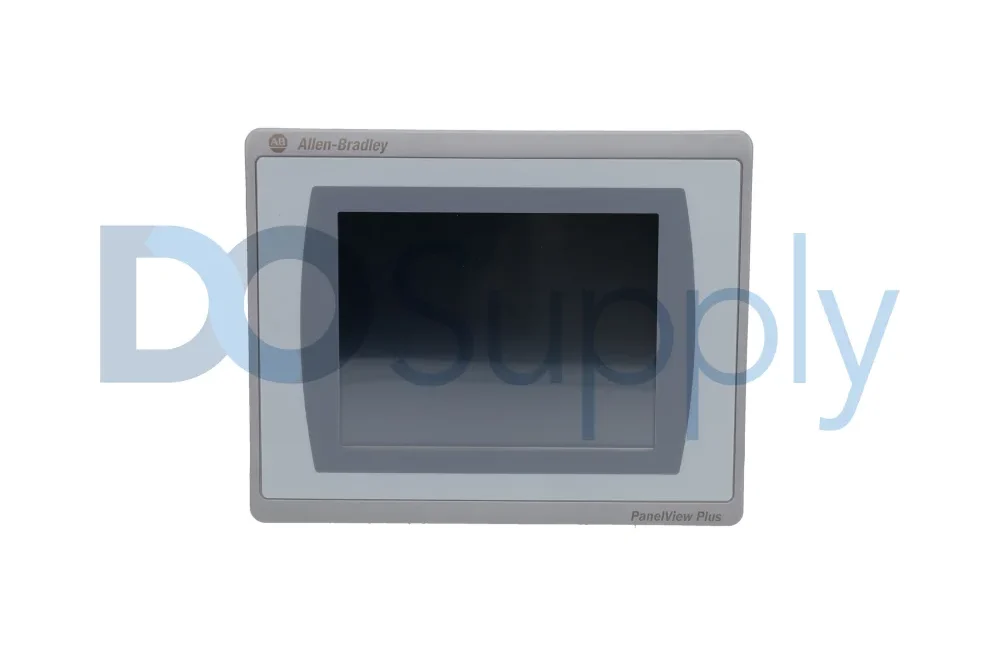
- PanelView Plus 7 Standard: These graphic terminals run on Windows CE 6.0, and are designed for robust, mid-range applications. They feature 18-bit color TFT LCDs, offering display sizes ranging from 4 to 15 inches, and 512 MB of RAM. Their support for single- or dual-Ethernet connections (with Device Level Ring capability on select versions) enables flexible network integration. A PanelView Plus 7 standard terminal can connect to a single controller, supporting up to 100 screens and 500 alarms.
- PanelView Plus 7 Performance: This version includes an 18-bit color TFT LCD and Windows 10 IoT Core operating system. It is designed for high-complexity tasks. It has superior hardware, including 4 GB of RAM, approximately 2 GB of free application storage, and can support larger displays up to 19 inches. A key differentiator is its standard dual Ethernet ports with inbuilt switch technology, which natively supports DLR, linear, or star topologies for robust network architecture.
These HMIs are suitable for integrated architectures that require advanced graphics, remote access, and flexible operation in standard, rugged (stainless/conformal coated), or on-machine configurations (ArmorView).
PanelView 5000
The PanelView 5000 product line is distinguished by its superior integration with the Allen-Bradley Logix control platform. This HMI family includes two primary series:
- PanelView 5310: This model is designed for smaller applications. It supports one Logix controller, up to 100 user-defined screens, up to 4000 Logix-based alarms, and has a single Ethernet port. Additional features and capabilities include automatic diagnostics, easy-to-configure screen navigation menu, conformal coating, and a fully integrated design and control environment that allows seamless communication between the Logix controllers and the PanelView 5310 terminals.
- PanelView5510: Designed for larger control systems, PanelView 5510 graphic terminals support up to four controllers, 500 user-defined screens, up to 4000 Logix-based alarms per Logix controller, and have two Ethernet ports with DLR capabilities. They feature an HTML5-compatible web browser, high-speed HMI control, and a tightly integrated design and control environment. All resistive touch PanelView 5510 terminals are conformal coated.
All PanelView 5510 and PanelView 5310 operator interface models include an innovative design, cutting-edge features such as customizable screen refresh rates of up to 100ms for high-speed visualization, a built-in VNC (Virtual Network Computing) server, and options for projected capacitive (PCAP) touchscreens up to 21.5 inches. They are also compatible with Allen-Bradley CompactLogix 5480, 5370, or 5380 controllers, and ControlLogix 5580 or 5570 controllers, all of which use firmware V27 or higher.
PanelView 800
The PanelView 800 is a compact, cost-effective graphic terminal engineered for seamless operation with Micro800, Compact GuardLogix, and CompactLogix 5380 L306x, CompactLogix 5370 L3, L2, and L1 controllers, supporting mid-sized applications. It is available with 4- to 10-inch high-resolution displays, offering touchscreen or keypad options for operator input. Key features include an 800 MHz processor, 256 MB of memory, LED backlights, built-in Ethernet, USB, and microSD ports for connectivity and data logging. It also provides remote monitoring via built-in VNC. Typical applications include food processing, material handling, adhesive labelers, stretch-wrap machines, and air-handling units.
PanelView Plus 6
The PanelView Plus 6 series (Bulletin 2711P) is a significant improvement over the PanelView Plus graphic HMIs, which come in 4- to 15-inch standard displays. Key features include a 1 GHz processor, 512 MB of flash memory, 256 MB of RAM, the Windows CE operating system, backlit LED displays with increased illumination, a faster transition rate (up to 70%), and greater connectivity to a range of peripheral devices, including keyboards, printers, and mice. They provide reliable functionality for a wide range of applications, including remote connectivity (VNC/FTP), data logging, and an integrated PDF viewer for context-sensitive information.
The PanelView Plus 6 Compact series (Bulletin 2711PC) has the same fundamental Windows CE architecture and performance specifications (1 GHz processor, 256 MB RAM) as the standard Plus 6 line, but is available in smaller 4-, 6-, and 10-inch form factors.
Generic HMIs
These include operator interface terminals from other major automation vendors and third-party OEMs.
Siemens SIMATIC HMIs
They include Basic Panels (4–12″ touchscreens) and Comfort Panels (7–15″). SIMATIC HMIs operate on Windows CE (Basic/Comfort) or SIMATIC Industrial OS (Unified) and are configured using Siemens’ TIA Portal (WinCC Basic/Comfort or WinCC Unified). They can connect to other controllers using standard industrial protocols (e.g., Ethernet/IP, Modbus, OPC UA), and are inherently compatible with Siemens PLCs (S7–1200/1500, S7–300/400, etc.) via PROFINET/PROFIBUS. Siemens HMI panels are widely used in industrial automation, machine building, and process control, where robust IP65-rated operator interfaces and features such as data logging, recipes, and multilingual support are essential.
Schneider Electric Harmony HMIs
Schneider Electric offers a range of Harmony (formerly Magelis) HMI terminals, each designed for specific application needs, from simple standalone machine control to sophisticated, data-intensive visualization. They have TFT color displays with LED backlighting, resistive touch on regular versions, and capacitive multi-touch on advanced models, as well as dual Ethernet ports and aluminum front bezels. These operator panels are intended to be used with Schneider Modicon PLCs and I/O modules via Ethernet or serial links, and they also support various industry-standard protocols (e.g., Modbus, CANopen, Profibus/Ethernet), enabling interoperability. Harmony HMIs are a cost-effective solution for water & wastewater management, food & beverage systems, machine control, and simple industrial processes. They are often combined with integrated PLC modules to save space.
Maple Systems HMIs
Maple Systems provides a diverse range of HMI solutions, including touchscreen displays ranging from 4.3″ to 15.6″ and headless (panel-computer) models. Most models employ 800×480 or 1024×600 LCDs with projected capacitive touch screens (resistive on certain older models). They provide common industrial interfaces: Some versions include Wi-Fi, Bluetooth, or built-in RFID, while others have 10/100 Mbps Ethernet, USB, an SD slot, and 2 serial ports. Maple HMIs are configured with MAPware-7000, a free Windows IDE that supports graphical programming. Typical applications of these HMIs include networking, data monitoring, and industrial automation.
Weintek HMIs
Weintek USA offers a variety of innovative and reliable HMI terminals under the “cMT” product line, plus a Basic iP series. The cMT X Standard series includes 4.3″ to 15.6″ screens with resistive touch and standard resolution (480×272 to 1024×600). The cMT X Advanced HMI series extends the capabilities of the Standard series with advanced IIoT features and protocols like SQL, MQTT, and CAN Bus, offering up to 21.5″ 1080p displays with capacitive multitouch. This Advanced series also features improved functionality, such as GUI-based drag-and-drop logic, and supports over 400 industrial networks, including protocols used by Mitsubishi, Omron, and Allen-Bradley controllers.
Weintek offers Class I Div 2-certified HMI models, such as the rugged cMT3072XH, and features such as MQTT/OPC UA, HTML5 WebView, and VNC for integration with higher-level systems. These HMIs are essentially designed for remote I/O systems and complex industrial automation applications.
Key Technical and Strategic Considerations
Outlined below are key factors to consider when choosing between an Allen-Bradley PanelView and a generic HMI.
Support, Lifecycle & Warranty
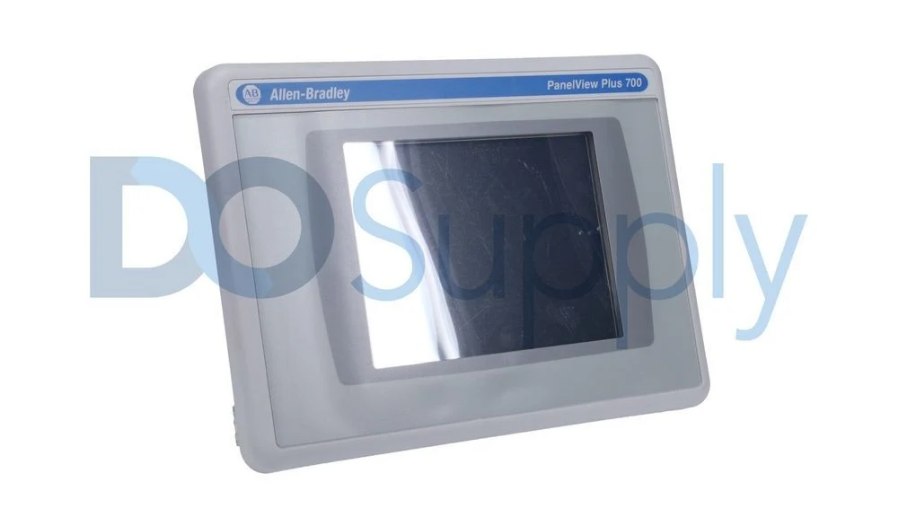
Rockwell Automation provides a formal, clear product lifecycle status to each PanelView model, defining it as Active, Active Mature, End of Life, or Discontinued. This allows for predictable migration planning. Most importantly, when you buy a PanelView, you are buying into this managed product lifecycle.
Generic HMIs also have comprehensive support ecosystems, but the support varies by HMI manufacturer. The lifespan of generic HMIs is also more unpredictable. Hardware and software support can be decoupled, particularly when running a software platform on commercial hardware. When problems arise, assistance may involve multiple vendors, such as the HMI hardware manufacturer, the software developer, and the driver provider, which can lead to “finger-pointing.”
Networking
From a networking perspective, most generic HMIs function as standard Ethernet endpoints, relying on external switches for topology design and resiliency. PanelView Plus 7 Performance terminals, by comparison, incorporate dual Ethernet ports with an embedded switch supporting Device Level Ring (DLR), enabling direct participation in resilient ring topologies. This capability simplifies network design and reduces the need for external hardware.
Cost and Total Cost of Ownership
PanelView terminals often have a higher initial hardware cost, but they often provide a lower total cost of ownership in Rockwell-centric systems. The integrated development environment saves engineers time by removing manual tag mapping and simplifying configuration and diagnostics through native Logix communication. Troubleshooting is more efficient without protocol translation layers, and maintenance technicians benefit from working in a single, consistent environment. Furthermore, Rockwell Automation’s specified product lifecycles and migration strategies help reduce the risk of long-term obsolescence.
Generic HMIs (Maple, AutomationDirect, etc.) aim to be low-cost, often by using simpler hardware or including free software. Generic HMIs may have a reduced initial cost, but this advantage can be offset by extra engineering time for configuration, driver management, and ongoing integration support. Changes in controller firmware or system architecture may require additional validation or rework, thereby raising lifespan costs and exposing the system to early obsolescence.
Conclusion
In conclusion, Allen-Bradley PanelView HMIs offer superior hardware choices, industrial robustness, and seamless integration within the Allen-Bradley ecosystem. These terminals use the same design tools as Allen-Bradley PLCs and automatically share tags and alarms with Logix controllers. They support large-scale applications (hundreds of user-defined screens, thousands of Logix-based alarms) and come in certified, rugged enclosures (IP66/69K, UL Div 2, food-grade). On the other hand, while generic HMIs offer lower upfront costs and robust multi-vendor connectivity, they may introduce limitations in environmental resilience and project size, and they require separate configuration tools.
Choosing the right HMI is a system-level decision rather than just a hardware purchase. If you are designing or upgrading a Rockwell-based control system and want help determining which model best fits your decision, then look no further than DO Supply. We have our team of specialists ready to help you find the right HMI for your application. On top of that, we also carry hundreds of different PLCs and automation accessories to be paired with your new HMI, all backed by our two-year warranty. If you already own a set of PanelViews and are weighing your options for keeping up with them, we have a PanelView maintenance guide here to help! Thank you for reading.
DO Supply Inc. makes no representations as to the completeness, validity, correctness, suitability, or accuracy of any information on this website and will not be liable for any delays, omissions, or errors in this information or any losses, injuries, or damages arising from its display or use. All the information on this website is provided on an "as-is" basis. It is the reader's responsibility to verify their own facts.