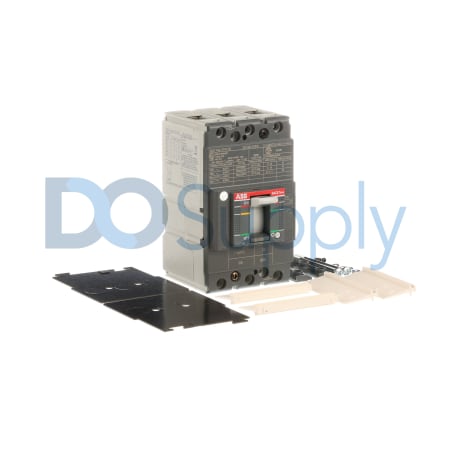
Product image is representative; revision or series may vary. Contact us to request a specific version.
XT1HU3040AFD000XXX
The ABB XT1HU3040AFD000XXX is a molded case circuit breaker from the Tmax XT Series. This device is rated for up to 600 VAC and can operate at a maximum current of 40 A across three poles in a three-phase setup.
-
We sell industrial automation parts backed by our free 2-Year DO Supply Warranty.
-
Same-day domestic and fast international shipping with UPS, FedEx, DHL, and more.
-
AMEX, Visa, MasterCard, Discover, wire transfer, net terms, and more.
-
Repairs and exchanges are available for all automation products.
- Reseller Options
Drop shipping, blind shipping, and account shipping with no extra fees.
Technical specifications for XT1HU3040AFD000XXX
| Manufacturer | ABB |
|---|---|
| Product Type | Molded Case Circuit Breaker |
| Product Line | Tmax XT Series |
| Part Number | XT1HU3040AFD000XXX |
| Rated Voltage | 600 VAC |
| Rated Current | 40 A |
| Number of Poles | 3 Poles |
| Phase Type | 3-Phase |
| Line Side | F front terminals no lugs installed |
| Load Side | KIT FC CuAl 10-2/0 AWG |
| AIC Rating | 25kA at 600V |
| Min. Operating Temperature | 0°C |
| Max. Operating Temperature | 40°C |
| Min. Storage Temperature | 0°C |
| Max. Storage Temperature | 40°C |
The ABB XT1HU3040AFD000XXX molded case circuit breaker belongs to the Tmax XT Series. This model is designed for three-phase systems and has a rated current of 40 Amps, accommodating voltages up to 600 VAC. Its three-pole configuration makes it suitable for various applications requiring robust circuit protection.
In terms of connectivity, the XT1HU3040AFD000XXX features front terminals for the line side, designed without installed lugs, simplifying installation and wiring. The load side uses a KIT FC, allowing connections for CuAl conductors ranging from 10 AWG to 2/0 AWG, enhancing its versatility.
This circuit breaker is equipped with an AIC rating of 25kA when operating at 600V, indicating its capability to handle significant fault conditions effectively. It is designed to operate within a temperature range from 0°C to 40°C, which aligns with common industrial environments. Storage temperatures must also be kept within the same limits, ensuring reliability during non-operational phases.
- XT1HU3040AFD00OXXX
- XT1HU3040AFD0O0XXX
- XT1HU3040AFDO00XXX
- XT1HU304OAFD000XXX
- XT1HU30A0AFD000XXX
- XT1HU3O40AFD000XXX
- XT1HU3O4OAFDOOOXXX
- XTIHU3040AFD000XXX
- XTIHU3OAOAFDOOOXXX