
Allen Bradley
MVI46-DNPSNET
This interface module operates effectively within temperature ranges of 0 to 60 degrees Celsius, with storage capability extending from -40 to 85 degrees Celsius. The product features LED indicators f
Available
Call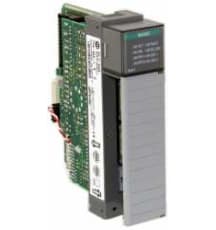
The SLC 500 programmable controller series combines power with flexibility by offering a wide range of communication configurations, features, and memory options at an affordable price. The controllers utilize ladder-logic and structured-text programming to provide exceptional productivity and a smooth user interface. The broad selection of I/O modules, along with Ethernet, DH+, DH-485, ControlNet, and DeviceNet communication capabilities, makes SLC 500 controllers some of the most versatile on the market. Additionally, the SLC 500 series boasts an advanced instruction set, including file handling, sequencer, diagnostic, shift register, immediate I/O, and program control instructions. The modularity of the series offers many customization and configuration options, including but not limited to: adding I/O, memory, or communication interfaces. The SLC 500 modules even include backup options for increased fault tolerance via the ControlNet Hot Backup module or the PLC-5 Backup Communication module. If you are looking for a programmable controller that seamlessly combines power, flexibility, and affordability, then the SLC 500 series is for you.
Browse available units in our catalog of SLC 500.
This interface module operates effectively within temperature ranges of 0 to 60 degrees Celsius, with storage capability extending from -40 to 85 degrees Celsius. The product features LED indicators f
This isolated circuit-type discrete input module features eight inputs, each capable of handling a voltage rating of 48 VDC. The nominal input current is rated at 10 mA for efficient operation, and th
This module has a backplane current load of 800 mA at 5V and includes several LED indicators for status monitoring. It provides an RJ45 RS-232 configuration connector type and operates in a temperatur
This flow computer supports various temperature ranges, operating between 0°C and 60°C and can be stored safely from -40°C to 85°C. It boasts a current load of 800 mA at 5V and includes three RJ45 con
This module requires a voltage supply of 5 to 24 volts DC and can function within an input frequency range of 50 to 60 Hertz. It draws a current of 0.5 amperes at 5 volts DC and features four LED indi
The 1747-OCEDEBA controller module is designed for versatility, supporting both machine control and PLC applications. It operates within a temperature range of 32 to 104 degrees Fahrenheit and has a m

This processor supports both indirect word-level and bit-level addressing, enabling versatile data manipulation within the control system. It is equipped with capabilities for various mathematical and
Designed with a maximum backplane input voltage of 5 Volts DC, this weigh scale module has a current load of 0.25 Amperes. The common-mode rejection ratio is impressive at 110 decibels at frequencies
This controller operates efficiently in a temperature range of 0 °C to 40 °C, both during operation and storage. It withstands maximum humidity levels of 80% (non-condensing) in operating conditions.
Designed for use with the 1747-PT1 handheld terminal, this memory pak incorporates a lithium battery, housed in a cylindrical shape for efficient power storage. It is UL and CSA-certified for safety a
The SLC 500 series is a series of Allen-Bradley programmable logic controllers that are used for a wide variety of applications. The SLC 500 series features Ladder-Logic with a structured text programming. The units are designed for addressing a broad range of applications that include file handling, sequencer, diagnostics, shift register, and immediate I/O and program control instruction applications. The SLC 500 controllers support built-in RS-232, 422, and 423 communication ports. The unit also comes with the DeviceNet and the ControlNet I/O on the selected processors. The SLC 500 series provides controllers that have powerful and affordable performance. These units are designed and built to provide excellent value.
The Allen-Bradley SLC 500 controllers feature modular processes, power supplies, I/O devices, memory options, and communication interfaces that allow the units to have configurable and expandable systems. The units feature an advanced instruction set that includes indirect addressing and a high level of performance capability for delivering computation instructions. The units are programmed to provide the users with a broad selection of the I/O devices. Therefore, the users can select from over 60 modules that help to control the discrete, analog, and temperature signals. The SLC 500 controllers are designed to deliver power and flexibility with a wide range of communication configurations. The SLC 500 modular hardware style controllers allow for the section of the processor, power supply, and I/O modules. The units also come with optional memory modules that provide a non-volatile memory in a convenient modular form. When using the commercial PROM programmers for programming and erasing the memory module, adapter sockets are required.
SLC 500 troubleshooting
Ensure the card is slid into the rack allowing both bottom and top clips to lock into place
Check that the entire rack has power
Allow a 1-5 min power cycle
Check pins on the back side of the card where a connection is made into the rack
Take the card out and do a visual inspection of the card outside of the rack, checking that resistors, capacitors, TRIACs and chips all look functional
Check to see that power supply is screwed into the rack and properly mounted
Make sure your RS-232 cable is making a good connection with both the computer and processor
Check that the proper COMM port and driver is being used in RS-Linx
For SLC 5/03 and up apply screwdriver across GND and VBB for 1 min, this will reset COMMS
Check to ensure you are reading the correct driver in rs-linx
Research error codes
Check power supply
Try inserting power supply into another rack
Check voltage going into power supply and ensure correct sumpers are selected if there any
Check pins on the back slide of the power supply that plug into the rack
Check manual for proper insulation and power requirements for multiple power supplies
Add your amperage rating for each device
If the rack is still not powering on, the application you are using could require more amperage than the supply is rated for
Example:
The 1747-L551 draws 1A at 5v DC
The 1746-OV16 requires 0.270 A according to documentation
The 1746-P2 supplies 5A at 5vDC to the backplane
Checking to see if our power supply can handle the load we would use the following formula:
IT=I1+I2+I3
Using this formula, we can see that since 1a + .27a = 1.27a ,
the 1746-P2 would handle this load no problem
If none of these solutions solve the problem, there could be a faulty card killing your whole rack
Remove each card one at a time to check if there is a card causing issues in the rack