
Allen Bradley
SLC501
This SLC 500 processor supports a maximum of 960 I/O points and has an analog I/O capability of up to 480. It operates with a program scan time of 8 milliseconds and an I/O scan time of 2.6 millisecon
Available
Call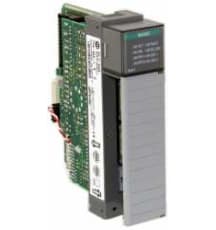
The SLC 500 programmable controller series combines power with flexibility by offering a wide range of communication configurations, features, and memory options at an affordable price. The controllers utilize ladder-logic and structured-text programming to provide exceptional productivity and a smooth user interface. The broad selection of I/O modules, along with Ethernet, DH+, DH-485, ControlNet, and DeviceNet communication capabilities, makes SLC 500 controllers some of the most versatile on the market. Additionally, the SLC 500 series boasts an advanced instruction set, including file handling, sequencer, diagnostic, shift register, immediate I/O, and program control instructions. The modularity of the series offers many customization and configuration options, including but not limited to: adding I/O, memory, or communication interfaces. The SLC 500 modules even include backup options for increased fault tolerance via the ControlNet Hot Backup module or the PLC-5 Backup Communication module. If you are looking for a programmable controller that seamlessly combines power, flexibility, and affordability, then the SLC 500 series is for you.
Browse available units in our catalog of SLC 500.
This SLC 500 processor supports a maximum of 960 I/O points and has an analog I/O capability of up to 480. It operates with a program scan time of 8 milliseconds and an I/O scan time of 2.6 millisecon
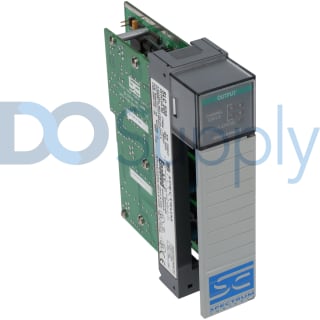
The 1746SC-INO4VI Analog Output Module is used with the Rockwell Automation SLC 500 series and has a 5 W max. Thermal Dissipation.

The Allen Bradley 1746-BLM is a SLC 500 Blow Molding Module. This Blow Molding Module has 4 Digital Inputs, 4 Digital Outputs, 4 Analog Inputs, 4 Analog Outputs. It operates using 1492-CABLE010H and 1

Specifically designed for the SLC type systems, this power supply accepts an input voltage range between 105 and 132 volts with a frequency of 50/60 Hz. It delivers a regulated output voltage of 23 VD
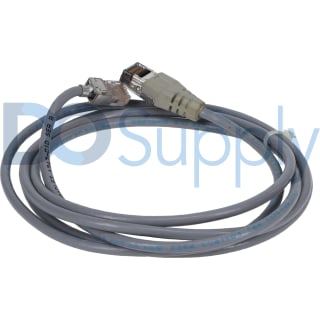
This programming and communication cable supports SLC 500 controllers, facilitating connections with various peripheral programming and communication devices. Its 6-foot length is designed for flexibl

The Allen Bradley 1747-L30B is a SLC 500 Fixed Controller. This Fixed Controller has (18) 120 V AC Inputs, 12 AC Triac Outputs and 120/240 Volts AC Line Power.

The Allen Bradley 1746-QV is a SLC 500 Open-Loop Velocity Control Module. This Open-Loop Velocity Control Module has a 1 Linear Displacement Transducer Input and a 1 Analog Output with an Input Freque

This isolated analog input module allows for selectable channel filtering to adapt to either noise rejection or fast update needs. With a resolution of 16 bits for both voltage and current inputs, thi

The 1746sc-NI8U Universal Analog Input Module is used with the Rockwell Automation SLC 500 series and has a 3 W max. Thermal Dissipation.

The Allen Bradley 1747-L20B is a SLC 500 Fixed Controller. This Fixed Controller has (12) 120 V AC Inputs, 8 AC Triac Outputs and 120-240 Volts AC Line Power.
The SLC 500 series is a series of Allen-Bradley programmable logic controllers that are used for a wide variety of applications. The SLC 500 series features Ladder-Logic with a structured text programming. The units are designed for addressing a broad range of applications that include file handling, sequencer, diagnostics, shift register, and immediate I/O and program control instruction applications. The SLC 500 controllers support built-in RS-232, 422, and 423 communication ports. The unit also comes with the DeviceNet and the ControlNet I/O on the selected processors. The SLC 500 series provides controllers that have powerful and affordable performance. These units are designed and built to provide excellent value.
The Allen-Bradley SLC 500 controllers feature modular processes, power supplies, I/O devices, memory options, and communication interfaces that allow the units to have configurable and expandable systems. The units feature an advanced instruction set that includes indirect addressing and a high level of performance capability for delivering computation instructions. The units are programmed to provide the users with a broad selection of the I/O devices. Therefore, the users can select from over 60 modules that help to control the discrete, analog, and temperature signals. The SLC 500 controllers are designed to deliver power and flexibility with a wide range of communication configurations. The SLC 500 modular hardware style controllers allow for the section of the processor, power supply, and I/O modules. The units also come with optional memory modules that provide a non-volatile memory in a convenient modular form. When using the commercial PROM programmers for programming and erasing the memory module, adapter sockets are required.
SLC 500 troubleshooting
Ensure the card is slid into the rack allowing both bottom and top clips to lock into place
Check that the entire rack has power
Allow a 1-5 min power cycle
Check pins on the back side of the card where a connection is made into the rack
Take the card out and do a visual inspection of the card outside of the rack, checking that resistors, capacitors, TRIACs and chips all look functional
Check to see that power supply is screwed into the rack and properly mounted
Make sure your RS-232 cable is making a good connection with both the computer and processor
Check that the proper COMM port and driver is being used in RS-Linx
For SLC 5/03 and up apply screwdriver across GND and VBB for 1 min, this will reset COMMS
Check to ensure you are reading the correct driver in rs-linx
Research error codes
Check power supply
Try inserting power supply into another rack
Check voltage going into power supply and ensure correct sumpers are selected if there any
Check pins on the back slide of the power supply that plug into the rack
Check manual for proper insulation and power requirements for multiple power supplies
Add your amperage rating for each device
If the rack is still not powering on, the application you are using could require more amperage than the supply is rated for
Example:
The 1747-L551 draws 1A at 5v DC
The 1746-OV16 requires 0.270 A according to documentation
The 1746-P2 supplies 5A at 5vDC to the backplane
Checking to see if our power supply can handle the load we would use the following formula:
IT=I1+I2+I3
Using this formula, we can see that since 1a + .27a = 1.27a ,
the 1746-P2 would handle this load no problem
If none of these solutions solve the problem, there could be a faulty card killing your whole rack
Remove each card one at a time to check if there is a card causing issues in the rack