We found 260 posts about Automation Technologies from DO Supply, a global automation parts
reseller focused on hard-to-find and obsolete industrial automation products.
Servo drives have revolutionized the industries by enabling precise control over motion and positioning. Whether it is for making simple to complex, smooth robotic arm movements or placing CNC operations with precision, servo drives are the enablers. Beyond robotics and CNC, these drives empower sophisticated motor control systems in automatic manufacturing processes, renewable energy production, the recreation industry, health care institutions such as hospitals, the farming sector, and transportation and space explorations, among many others. This article will introduce you to servo drives in detail, including how they work, where they are used, and technological advancements. It also aims to stimulate thought on their capacity to enhance creativity and efficiency across various industries, thus promoting further invention and progress. A servo drive is an electronic amplifier used to power electric servomechanisms. It monitors the feedback signal from the servomechanism and...
AC drives are essential components of industrial automation processes, especially when precise motor speed control is required. All modern electric trains or locomotive systems rely on AC drives for power. Robotics represents another significant domain where AC drives provide accurate speed and position control. An AC drive, also known as an adjustable frequency drive, is an advanced electronic device used to regulate the speed of an electric motor by changing the frequency and voltage of the electricity supplied to it. The primary function of an AC drive is to dynamically adjust the motor’s speed to match the workload, optimizing process control and conserving energy. This capability allows for precise modulation of motor speed in response to varying operational requirements, improving efficiency and reducing energy consumption. By effectively aligning motor speed with the application’s demands, AC drives contribute to enhanced productivity and operational flexibility while extending...
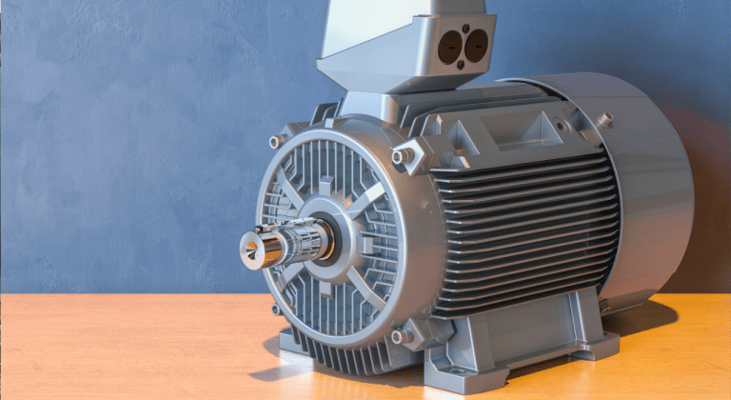
A motor is an electromechanical device designed to transform electrical energy into mechanical energy. Motors are widely used across various domains to serve diverse purposes, from energizing compact devices like electric razors and toys to propelling extensive industrial apparatus. There are several technological options for kicking off motor operation, such as soft starters like the Smart Motor Controller (SMC), variable frequency drives (VFDs), and contactors. Designed for different applications, each option has unique cost and performance characteristics. Conventional contactor methods include simple on/off operations and more complex designs like autotransformer starters, multi-speed starters, wye-delta starters, and similar setups. The traditional Direct On Line (DOL) method starts with a contactor and either a basic or an advanced overload relay. In contrast, VFD technology has undergone significant advancements over the past two decades, emerging as the preferred starting...
Ever watched a robot arm assemble a car with the precision of a master surgeon and wondered, “How on earth does it do that?” The secret lies in motion control, a key player in the industrial automation game. Motion control ensures that machinery moves exactly as intended, whether it’s positioning, velocity, or acceleration. At the heart of these systems are PLCs (Programmable Logic Controllers), the brains behind the brawn, orchestrating every movement with perfect timing. Motion control is all about getting things to move precisely and efficiently. From robots on the assembly line to CNC machines carving out intricate parts, motion control makes it all happen. It’s powered by key components like servo motors and encoders, all managed by robust PLCs. Allen Bradley, a trusted name in automation, offers a range of products that exemplify how effective motion control systems should function. When machines move with purpose and precision, industrial processes achieve new levels of...
The Allen-Bradley Kinetix 6200 servo drive series belongs to Rockwell Automation’s motion control solution. These servo drives, designed for industrial automation applications, provide unmatched flexibility, dependability, and performance. Many features within this servo drive series are worth explaining, and their importance cannot be denied. However, in this article, we will be discussing the top 5 features of the Allen-Bradley Kinetix 6200 series, which include Input Voltage Flexibility, Wide Power Output, Enhanced Safe Torque off (S0), and Safe Speed (S1), Modular Design and Communication Protocols, Multi-axes and Common Bus Architecture. We start by explaining these features and providing relevant examples of modules of this series. The input voltage flexibility feature of the Allen-Bradley Kinetix 6200 servo drive series refers to its ability to accept a wide range of input voltages. The servo drives of this series are specifically designed to operate within the range of 324-528...
Communication is a trait that can be studied not only in humans and animals but also in machines. Just like the people around you, machines, specifically automation equipment, talk to each other to pass vital information along. This information is then sent to equipment like robot arms to assemble pieces of a product or to PLCs to indicate that a conveyor has stopped. This communication is entirely in a new language developed specifically for the industrial environment: PLC communication protocols. These protocols serve as the foundation of industrial automation, enabling a diverse array of devices to understand each other and work together seamlessly. They dictate how data is formatted, transmitted, and interpreted across networks, ensuring that every message sent is accurately received and acted upon. Without these protocols, the precise choreography of movements and actions that we take for granted in automated systems would be impossible. PLC communication protocols vary widely in...
In this age of high-class vision technology, the Omron F150-3 series provides a complete vision sensor solution. This series is intended for accurate control and dependable performance in industrial automation. It offers precise visual sensing for effective operation, making it perfect for a range of applications, including manufacturing, robotics, and packaging. The F150-3 series offers an OFF current of up to 0.1 mA and an ON current range of 5 to 15 mA. The minimum OFF voltage of 4.5 V ensures correct deactivation, while the maximum ON voltage of 8.8 V ensures reliable sensor activation. The F150-3 series provides precise control signals for automation operations, making it ideal for item identification, location tracking, and quality inspection tasks. The reliability and consistency of this visual sensing technology make increased productivity and quality control possible. The F150-3 vision system focuses significantly on the Omron F150-A20, which offers reliable and adaptable...
Smart motor controllers are advanced electronic devices that precisely and smartly control the functioning of electric motors. In addition to improving motor performance and lowering energy consumption, smart motor controllers also help in proactive maintenance by interacting with other systems and adapting to changing circumstances. This article will discuss some of their features, including overload prevention, metering (measurement of various parameters), communication capabilities, LCD display, auxiliary contacts, and over- and under-voltage protection. Then we will move on to their certain benefits, such as their diagnostic ability, soft start/stop functionality, adaptive control, remote firmware updates, and fault logging. All these features will collectively show you the importance of smart motor controllers in our modern-day industry. After this, we will discuss some of their applications in our ongoing systems. One essential safety feature of smart motor controllers is...
An advanced computing device used to control electromechanical processes in industrial settings is called a programmable logic controller (PLC). Because of its primary purpose as a specialized industrial computing device, PLCs are frequently referred to as industrial PCs. By interfacing with sensors and input devices, the PLC gathers essential data, processes it, and executes predetermined commands to drive outputs efficiently. With its capability to analyze inputs and outputs, the PLC assumes various roles, such as monitoring and logging real-time data like machine productivity and operating conditions. It can autonomously initiate or halt processes and issue alerts in the event of machinery malfunction. Renowned for their adaptability, PLCs present a robust and flexible control solution that is suitable for a wide array of industrial applications. PLCs revolutionized industrial automation by replacing traditional electromechanical relay controls. In scenarios where relays...
Omron is a well-established player in the industrial automation space, having made significant contributions to the industry early on. Their specialized electronic devices, called programmable logic controllers, have a frequent role in automated production applications. These PLCs continually gather data from peripheral input devices such as push buttons, limit switches, and sensors. Since its founding in 1933, Omron has shaped the industrial automation sector, making it a trailblazer in the field. Omron’s dedication to technological advancements has made it a reliable choice in manufacturing and industrial processes, with a global network spanning 80 countries. The Omron 3G2 series is the foundation of Omron’s innovations. Its product line demonstrates dedication to flexibility and offers a user-friendly platform for a wide range of applications. Examining the details of its components, such as the Omron 3G2A6-LK201-EV1 and 3G2A6-PRO15-E, allows us to understand their functions in...
Mitsubishi Electric, a prominent force in manufacturing and technology on a global scale, meets essential industry requirements through its state-of-the-art Variable Frequency Drives (VFDs) within the FREQROL FR series. This article intricately examines how Mitsubishi’s FREQROL FR series empowers various sectors by delivering precise control and significant energy savings, establishing a harmonious balance between performance and sustainability. We will delve into the diverse models of VFDs within the FREQROL FR series, exploring their distinctive attributes and contributions to the automation industry regarding precision, energy efficiency, and accuracy. Mitsubishi Electric’s original anti-sway control technology redefines the standards for crane operations. This feature enhances operational efficiency by suppressing an object’s swinging during crane stops without requiring operator adjustments. This significantly reduces tact time, ensuring fast, robust, and smooth crane operations...
Programmable logic controllers (PLCs) are designed to automate and control industrial machinery and processes. A safety PLC incorporates all the applications of a standard PLC but is equipped with integrated safety functions, allowing it to control safety systems. The primary goal of a safety PLC is to ensure reliability by avoiding failures, and if a failure is unavoidable, the PLC ensures it occurs safely and predictably. This article will explore the workings of safety PLCs, including their principles, applications, benefits, and challenges. In safety programmable logic controllers (PLCs), two distinct programs exist, one dedicated to the normal operation of the process and the other solely focused on safety functions. Both of these programs operate simultaneously within the PLC. The safety program is executed multiple times during a single execution of the standard PLC code and occasionally pauses the normal operation to check and guarantee safety functions. After this check, it...
Imagine this scenario: You’re lying on your garage floor under your vehicle, tightening the last bolt on the shiny new part you’ve just replaced. As you apply pressure, striving for that perfect snug fit, the unexpected happens—the head of the bolt snaps off right past the snug point. This moment of frustration highlights the delicate balance of force and precision. It echoes a concept that has intrigued minds since the days of Archimedes, who famously claimed he could move the world with a lever if given a fulcrum to place it on. This ancient idea of leveraging force to manipulate the physical world lays the groundwork for understanding the complexities and nuances of torque in modern engineering and, by extension, the sophisticated realm of industrial automation. In today’s industrial landscape, the principles of force and torque have transcended the simple mechanics of levers and bolts to become fundamental elements of sophisticated automation systems. Force torque sensors...
Warehouse automation is the process of using advanced technologies, software, and machines to perform repetitive, time-consuming, and labor-intensive warehousing tasks traditionally carried out by human workers, such as receiving and stowing inventory, packing goods, sorting items, palletizing, picking orders, tracking inventory, data entry, and shipping products. It is a strategic approach for companies seeking to streamline their warehouse operations, optimize workflows, improve operational accuracy, save costs, boost overall warehouse productivity, and stay competitive in the rapidly evolving world of e-commerce and global trade. In recent years, warehouse automation, powered by innovative automation solutions and cutting-edge technologies, has emerged as a transformative force, revolutionizing how goods and materials are stored, handled, and distributed. In this article, we’ll look at several innovative technologies that are driving efficiency, accuracy, and productivity in...
Automation has become vital to improving recovery and response to disasters, completely changing how we handle these crucial stages. It is more important than ever to have quick, effective, and efficient response and recovery techniques in the face of more frequent and severe natural catastrophes. The disaster management field is changing significantly due to automation in all of its manifestations. Utilizing cutting-edge technology like robots, automated data processing systems, and drones characterizes the incorporation of automation in disaster response. For example, drones are now widely used to inspect regions affected by disasters. They offer real-time data and pictures for estimating damage and organizing rescue activities. Inaccessible to people in the early aftermath of a disaster, this airborne viewpoint enables a quicker and more thorough knowledge of the situation, resulting in a more efficient deployment of troops and resources. Another aspect of automation is robotics...