We found 171 posts about Comparison Guides from DO Supply, a global automation parts
reseller focused on hard-to-find and obsolete industrial automation products.
Starting and stopping seem like simple concepts. But when it comes to motor controls, not only the speed of the stop and start matter, but “how” they stop matters as well. Starting solutions come in a wide array of options. Across-the-line starters are the simplest style of motor starter. Here, full voltage is applied to the motor terminals for situations where the inrush current of the motor does not cause excessive voltage drops within the supply circuit. This is often the case for simple pumps, compressors and conveyors. For applications requiring greater loads and for high degrees of variation of the specific loads placed on motors, variable frequency drives (VFD) may be used. These drives consist of an AC motor, a main drive controller and an operator/drive interface. Because of their range of speed and control, VFDs are used for process control across a variety of industrial and commercial applications for speed, flow, pressure, temperature and torque, as well as many others...
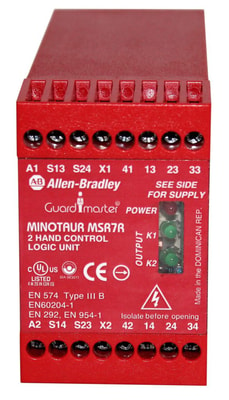
In today’s manufacturing environments, few companies can remain competitive without extensive industrial automation. Automation speeds processes, reduces errors, allows for precision manufacturing and ensures factory level control and maintenance over the system of production. It also reduces operator fatigue by eliminating manual tasks thus improving quality. Just as important as the automation functions are the safety features built into the controllers that drive this automation. These safety features are created by use of safety circuits within the automation control panels themselves and are first and foremost designed to provide safe operation for equipment operators and technicians. Aside from reducing risk of injury to those performing tasks on the equipment, safety circuits within control panels also reduce risk by allowing for safe operation to protect damage to expensive capital equipment and to reduce waste through loss of material caused by equipment malfunction. As a...
There are hundreds of Allen Bradley 1336 Drives, all of which are controlled by a microprocessor. We focus on comparing the technical specs of the Allen Bradley 1336 Drives, IMPACT Drives, and PLUS Drives in this post. Check out details on Allen Bradley 1336 Drives based on your desired specifications and see the link in each section for further insight. Allen Bradley 1336 Drives are adjustable frequency AC drives that feature handheld programming terminals. The drives are microprocessor-controlled and high-performance units that guide 3-phase industrial applications. The output voltage is determined as a function of the output frequency and adjusts for alignment with motor parameters. Catalog # Input Voltage Hz Phases Amps Out KVA Out @ 380V AC KVA Out @ 415V AC KVA Out at 460V AC Enclosure Type 1336-B003-EAD 380/415/460V AC 50/60 3 6 3.9 4.3 4.8 NEMA Type 1 (IP20) 1336-B005-EAD-FA2 380/415/460V AC 50/60 3 9.6 6.3 6.9 7.6 NEMA Type 1 (IP20) 1336-B007-EAD-FA2 380/415/460V AC 50/60 3...
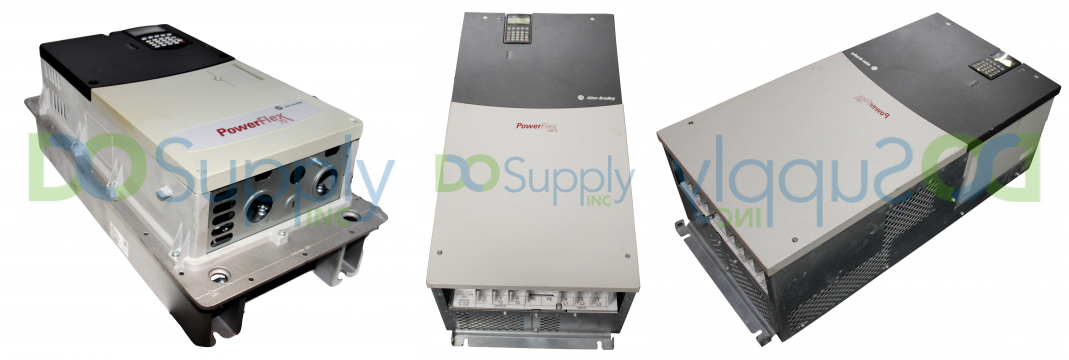
Allen Bradley has two classes of low voltage drives, their Compact Class and their Architecture Class. The PowerFlex 7x families are part of the Architecture Class of drive, with the 70/700 series being the previous generation to the current 75x series drives. First off, one note about these drives. They are the previous generation of drives from Allen Bradley, and while many of the various models are still being supported by AB as Active Mature products, many of these drives are no longer being offered or supported. If you’re looking to upgrade an existing drive and are looking at the 70/700 series, you should also look at the 753 and 755 series drives. A drives expert can help you with the corresponding drive in both families, a conversation that is definitely worth having. The Powerflex 70 drive is the baseline model of the 7x families of Architecture Class drives. With power ranges from 0.5 through 50HP, and voltage ranges of 200-600VAC, these drives can handle pretty much all but...
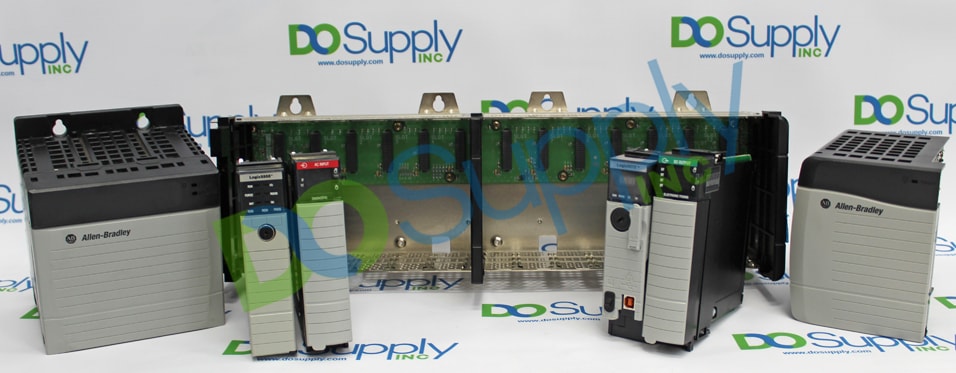
Before we dive into the specifics of this processor selection guide, it is important to bring up a few points about picking a controller. While the controller is the main piece to a control system, the best controller will fail if the remainder of the control system isn’t paired properly with it. The biggest, baddest controllers will cover for a lot of mistakes throughout the rest of your system, but they’ll expose just as many weaknesses as they make up for. This blog post will help you select the highest end family of Allen-Bradley’s controllers, the ControlLogix line. But, just as the article says, please sit down and converse with an expert. Plan the system, design it according to the plan, execute according to the design. With the knowledge you’ll gain from this article and the collaboration with those people who research these things on a daily basis, you’ll have more than a successful implementation, you’ll have a control system that will bestow great benefits upon you for...
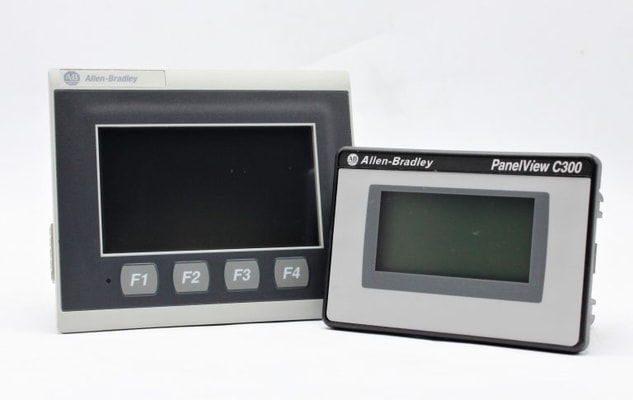
The Allen Bradley Panelview 800 family is the generational replacement for the Panelview Component family. As of July 2018, the Panelview Component family was discontinued and no longer from sale from the manufacturer, with the Panelview 800 as a functional replacement. For those applications currently using Panelview Component HMI’s, this comparison will help determine which Panelview 800 would be the appropriate replacement. The Panelview Component family debuted in 2010 and was designed for micro and small automation applications. Screen sizes ranged from 2” to 10”, with the 2” having additional function buttons and the 3” and 4” screens having options for additional function buttons. Screens were either monochromatic or up to 256 color RGB. Power requirements for the units was 24VDC and from 3.5W to 18W for the smaller to the largest screens. Connectivity was via Ethernet or serial communications. In general, these were simple, smaller, easy to use screens that utilized Panelview...
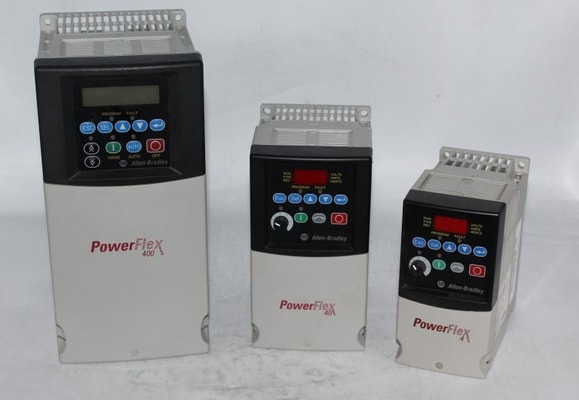
While Allen Bradley is most well-known for its Logix controllers, their PowerFlex drives have also been a large contributor to their growth in the automation market. Currently, the PowerFlex 520 and 750 series are the primary offerings for Allen Bradley drives but the PowerFlex 4/40/400 series is still supported by Rockwell and still is a great choice for certain applications. The PowerFlex 4 series is one of Allen Bradley’s low-cost, no-frills drive offerings, with the PowerFlex 4M drive being the primary offering in this group. With power ratings of up to 5HP in the PowerFlex 4 and 15HP in the 4M, these drives offer simple setup and control in a compact package with a low cost. The main features of this series are feed-through wiring on the 4M, volts per hertz control, and RS-485 communications (with others available through optional modules.) This drive series is a standard offering on most OEM delivered machines, based on the cost for performance. The feed through wiring...
With the current trend in machine safety being moving towards integrated control and safety functions, Allen Bradley (like most other major suppliers) offers two versions of its main control platforms, the Logix line of controllers. Based on application size and complexity, facilities will use either the CompactLogix or ControlLogix controller platforms for control. Adding safety features onto these controllers, Allen Bradley offers the Compact GuardLogix and GuardLogix (ControlLogix) functional safety rated controllers. As these controllers are updated and improved, there have been several generations of safety rated controllers. With a future trend towards integrating data, safety, and control into one unit for increased productivity, we will continue to see improvements, both evolutionary and revolutionary. The ControlLogix (1756 family) and CompactLogix (1768, 1769, and 5069 families) Programmable Automation Controllers are the primary controllers in Allen Bradley’s offering. The...
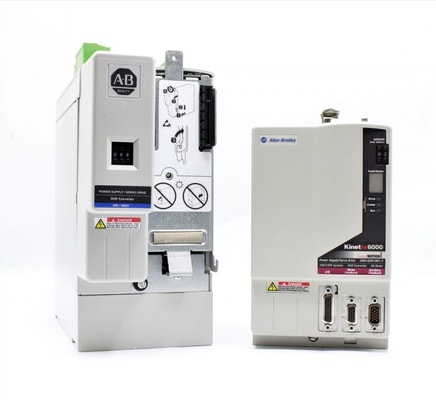
The Kinetix family of Motion drives is broken up into several series, each with different focuses. The Kinetix 6000 and its descendant 6200 series are both multi-axis systems utilizing the SERCOS interface for control. Generational improvements in the 6200 series include advanced safety options and a more modular design. Beyond these generational improvements the 6000 and 6200 series are very similar, as the 6200 is designed as a straightforward replacement for 6000 series drives. The Kinetix 6000 series motion drive is a modular, multi-axis, compact servo drive system that reduces required wiring and programming. It’s rated for 1.2 through 22 kW power output, and two nominal voltages – 240VAC and 480VAC in 3 phase configurations. Built-in hardwired Safe Torque Off is available, giving a PLd, SIL3 certification. The feature that separates the 6000 series from its predecessors is the SERCOS communications protocol, a system utilizing fiber optic hardware and high-performance...
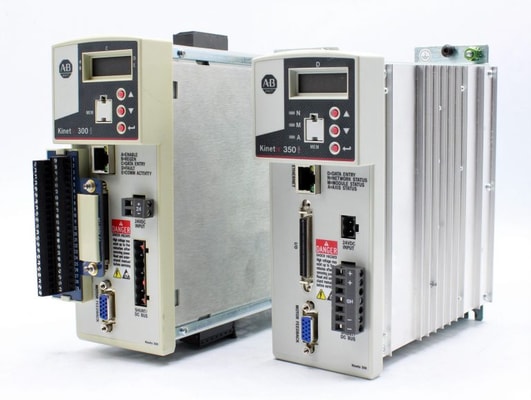
The Kinetix 300 and Kinetix 350 are both parts of Allen Bradley’s Kinetix Motion Control Family. Both components are motion drives, and they’re very similar in functionality, with some significant exceptions. Both the Kinetix 300 and Kinetix 350 are single axis motion drives. Both drives have been positioned as a low-cost solution for simple motion applications. Both drives accept either 120VAC, 240VAC, or 480VAC input power, and provide between 0.4 and 3.0 KW of output power. Both drives have a 2.0 – 12.0 amp continuous rated output current for all voltage ranges. Control is via Ethernet/IP with supplemental digital inputs. Both drives can run 240 volt motors at full speed using 120VAC input power. Basically, on the power side of the drives these drives are the same. Both drives utilize functional safety techniques, with Safe Torque Off functionality built in giving them a PLd or SIL2 rating. The differences on the control side for each drive are significant. Both the Kinetix 300 and...
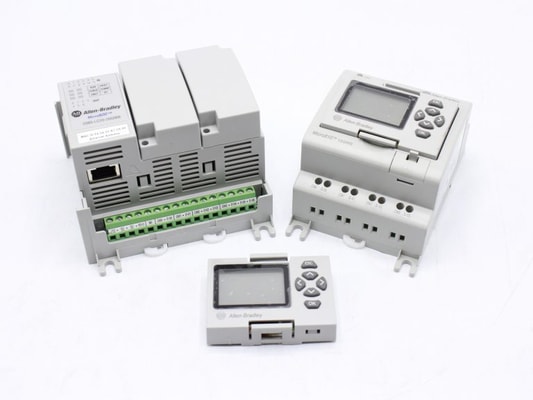
Allen Bradley introduced the Micro 800 family of controllers several years ago, and they are slowly taking over the low-end controller segment for the manufacturer. These controllers are meant for small stand-alone projects, and for OEM’s and machine builders who need a low cost but effective controller. Five series of controllers comprise this family, from the Micro 810 “Smart Relay” to the Micro 870 controller. Each series builds on the previous, with the Micro 820 and 830 series being the smallest of the two (and specialized siblings of each other) and the Micro 850 and 870 including higher functionality and capabilities. All five series in the Micro 800 family have some common benefits. One of the biggest benefits is being able to program and configure the controllers. From the Micro 820 up to the 870, onboard add-on modules allow for additional IO, memory backups, and numerous other higher feature capabilities. Except for the Micro 810, all are capable of some expansion from...
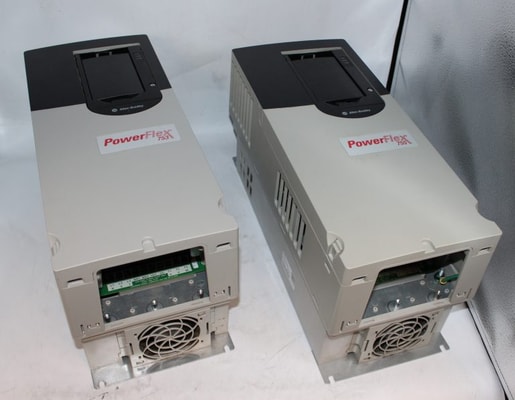
The Allen Bradley PowerFlex 750 series is part of their Architecture Class of drives, higher feature drives for automation projects. They complement the Compact Class drives (PF4x, PF52x) through additional capabilities, although at a higher cost. When looking for a drive solution, these are the Allen Bradley drives to look at when you’re saying terms such as “torque control”, “coordinated drives”, or “almost a servo application”. Both the PowerFlex 753 and PowerFlex 755 drives are capable of torque control, speed control, permanent magnet motor control, and integrated safety (through option modules.) Capability-wise, these drives can compete with any other drives on the market, and their engineering aspects can provide some excellent benefits to the people installing and using them. There are some common features worth noting in the 750 family of drives. Integration into the Studio 5000 programming environment is made easier and more straightforward through use of Add-On Profiles...
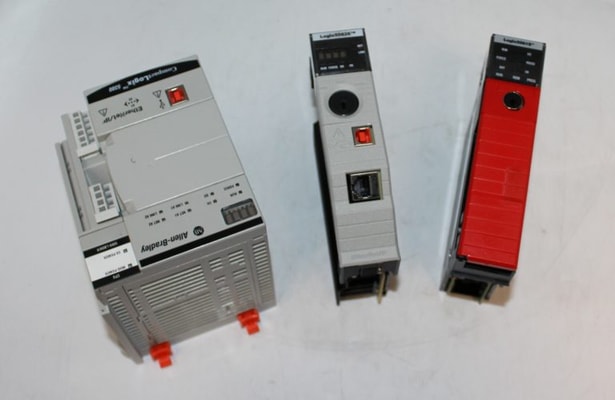
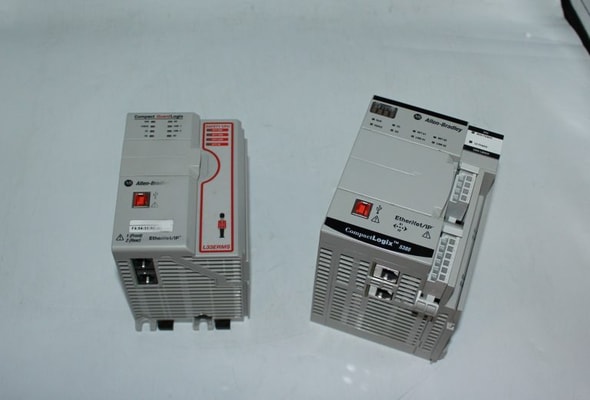
In 2016, Rockwell Automation announced an update to their small controller package in the Logix line of controllers, the 5069 CompactLogix controller family. Previously, the CompactLogix processors had been classified under the 1769 (and previously the 1768) family numbers. With the update came several changes, most notably in form factor and performance. The 1769 family of controllers started with the L1x, L2x and L3x, then continued with the 5370 series controllers. These controllers are part of the Logix line of Process Automation Controllers (PAC) from Allen Bradley and are designed to accommodate small to medium sized automation projects. Some common features of the 1769 series are dual RJ45 ports for Ethernet/IP (only a single IP address allowed), LED status indicators on the front of the processor, a USB and SD card port for programming and storage, and a program/run/remote mode switch. Options in the series allow for up to 48 Ethernet/IP nodes, 16 axes of motion, and...
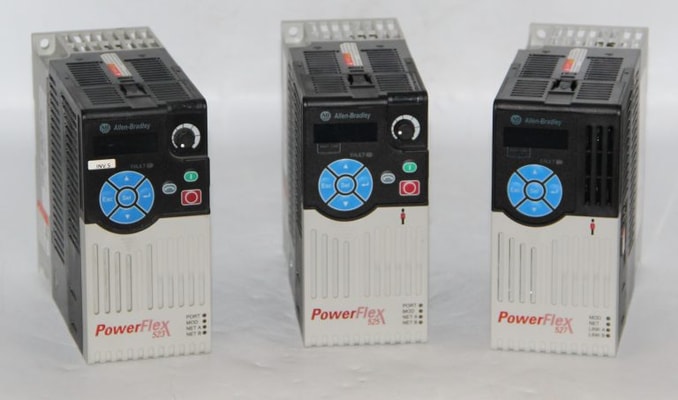
Allen Bradley Powerflex 520 series drives are an innovative take on modular drive configuration. Common power structures and form factors allow for interchangeability between 3 versions of the 520 series drive, the 523, 525, and 527. Each version adds to the performance options available and allows for easy upgrading of drive systems and reduces maintenance and spares requirements. There are some common features among the 520 series drives. Common frame sizes, 0.5-30HP power ratings, 100-600V voltage ratings, local HMI’s for programming, and the ability to zero-stack and mount either vertically or horizontally are just some of the more prominent ones. The 523 series drive is the baseline drive of the 520 series. Available in voltage ranges from 100-600 volts and power ranges from 0.25-30HP, these drives include a local HMI and the ability to add EtherNet/IP capability through a dual-port accessory module, among other things. This is the baseline drive of the family, typically...
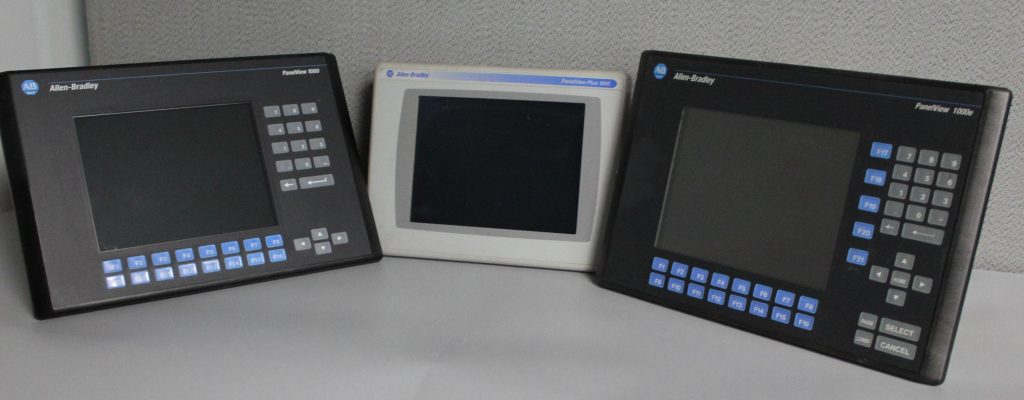
FAMILY: PanelView Standard PanelView Plus 6/ 7 PanelView Enhanced TERMINAL: PanelView 1000 PanelView Plus 7 1000E Catalog Number: 2711 2711P 2711E Through the years Rockwell has manufactured many different lines of PanelView HMI products. One of the most popular products was the PanelView Standard line of products which includes the PanelView 1000 , launched in 1998. The PanelView 1000, which replaced the PV 900 was available in both grayscale (orange) and color with both Keypad and Touch Input options. The PV 1000 (grayscale) utilized a 10.4” Electro Luminescent display with VGA resolution while the Color model had a similarly sized color VGA active matrix TFT display. Communications options depend on part number configuration but included the full range of protocols and interfaces (DH+, Remote I/O, DeviceNet, ControlNet and Ethernet/IP.) The PanelView Standard line has been discontinued by Rockwell at the end of 2012. Replacement of these HMIs requires engineering to adapt existing...