We found 171 posts about Comparison Guides from DO Supply, a global automation parts
reseller focused on hard-to-find and obsolete industrial automation products.
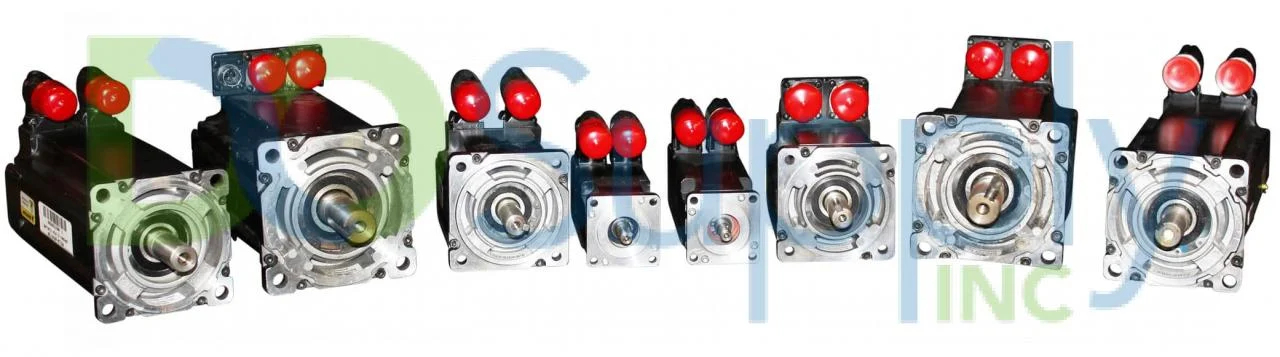
Today’s motion control systems require motors that do many different things, such as precise positioning or controlled torque. Servo motors allow for better control of these conditions by allowing a high rpm spin at low torque yet slowing down and increasing torque as states require. With position sensors, encoders, and gearing, microcontrollers can sense the actual versus the desired position and correct it to allow rotors to turn to the machine gear or wheel to the precise position required. These DC motors can be either positional, where precise rotor control is needed, or continuous, turning clockwise or counterclockwise at different programmed speeds. Servo motors are available in numerous sizes, and torque ranges and cost-effective to achieve control in high torque situations. They are best suited for speeds over 2000 rpm where high torque is needed. However, they are limited in positional rotation to 180 degrees. Allen-Bradley has a long history of quality, durable, and robust...
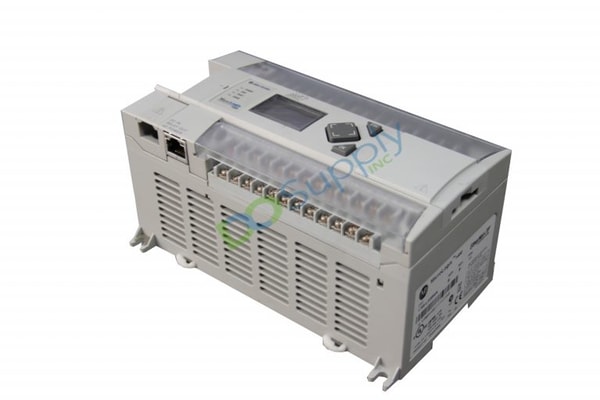
As the de facto standard for industrial programmable logic controllers, Rockwell Automation’s line of Allen-Bradley PLCs covers the full spectrum of application scales, from hobbyist to multi-site systems. In this article, we’ll examine one of the most popular and cost-effective PLC options in Allen-Bradley’s catalog: the MicroLogix 1400 family. MicroLogix Family Overview The MicroLogix series sits at the micro-scale end of Allen-Bradley’s PLC offerings, just under small-scale options such as the CompactLogix series, and farther yet under large-scale solutions including the flagship ControlLogix series. These series groupings aren’t meant to infer differences in quality or reliability – these names only refer to the scale of the applications each family is designed to serve. Where a ControlLogix PLC may control an entire plant, a MicroLogix PLC is a much better fit to control a single machine. The Allen-Bradley MicroLogix family of PLCs is based on two paramount features: compact size...
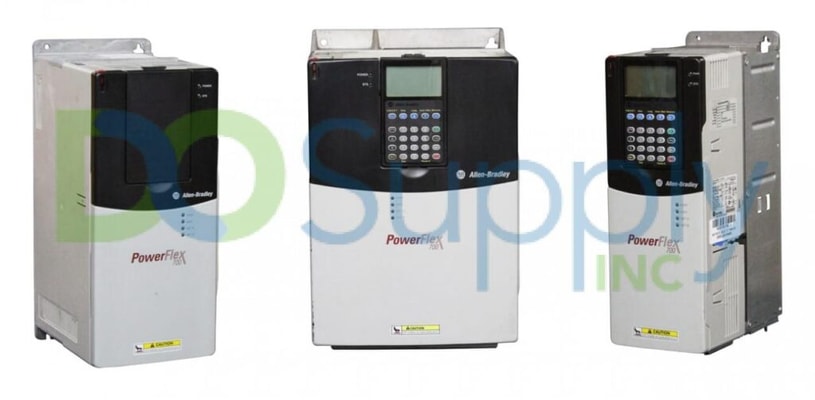
As factories and warehouses have become more connected to platforms for control and analysis of operating and production environments, equipment manufacturers have created OEM equipment to operate with more precision. This means that more than ever, reliable and efficient control of motor speed and performance is critical. When control systems require more than just stop and start or on and off applications, variable frequency drives (VFD) can be used to deliver the right amount of voltage and frequency to a motor so that it not only does what it is required to do, it also does so with precision and safety for both operators and equipment. Because using VFDs allows full control of operating motors, companies can reduce both cost and energy consumption while achieving very tight process control for their operation. Allen Bradley Low Voltage VFDs Allen Bradley’s VFD solutions cover a wide range of sizes and applications for any control and automation needs through its PowerFlex® VFD...
Each passing year brings greater and greater need for visualization within control systems. The ability to visualize machine states, errors, running conditions, quality, and other data is critical to today’s control environments within manufacturing, warehousing and other industries. Allen Bradley’s line of HMI solutions offers a wide range of products for end users or control system designers to build out the system that works best for their application. With state-of-the-art features, Allen Bradley’s current line of HMIs givers builders and users the tools to optimize any system. Here is a look at the differences and similarities between the PanelView Plus 7 and Allen Bradley’s newer solution, the PanelView 5500 . PanelView Plus 7 Standard and Performance Before looking at direct comparisons, it should be noted that there are some differences between the PanelView Plus 7 Standard and the PanelView Plus 7 Performance. Understanding these differences will also help inform users when...
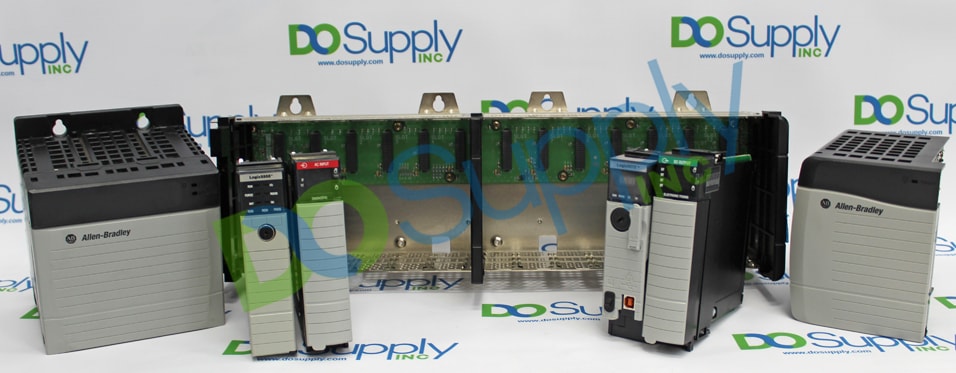
Every PLC manufacturer has their own way of presenting their line. And when comparing PLCs from different manufacturers, there is a lot of overlap between manufacturers. Some cover a wide range of automation system sizes with a dizzying array of offerings while others offer seemingly a smaller line that upon closer look covers the same territory as their competitor. Two of these manufacturers, ABB and Allen Bradley, both offer PLCs with strong feature sets that cover any range of automation needs. Swiss-based ABB offers a wide range of control products including PLCs, HMIs and is well known for its robotics offerings. While US based Allen Bradley is one of the most popular companies for control solutions in the US and the world. Here is a comparison of the two’s most popular PLC products and features: Large Control Systems Both Allen Bradley and ABB offer a full feature PLC line for large control systems. Allen Bradley offers the ControlLogix 5580 and 5570 line. These controllers are...
The PanelView 550 Standard Terminal HMIs have been in service for many years. Introduced by Allen Bradley to facilitate factory automation and provide real-time actionable data to users and technicians, the 550 Standard was a workhorse. The units were sturdy and reliable and were scalable across a wide range of applications. As automation capabilities have improved through more flexible communication, onboard capabilities provided by machine OEMs and further connectivity on broader networks, Allen Bradley introduced HMIs such as the PanelView 7Plus to provide a more flexible HMI platform to monitor and control devices for even more applications. Comparing the legacy PanelView 550 and the PanelView Plus 7 To fully understand the improvements in the PanelView Plus 7 over the PanelView 550 Standard, here is a direct comparison of the key features and capabilities of both. Screens The importance of HMIs in modern factories is undeniable. And screens and alarms on HMIs help monitor and...
The use of motors in modern society is staggering. It is estimated that motor systems alone account for as much as 47% of the world’s electricity usage. Further, within manufacturing environments, industrial motor systems account for 70% of all electricity used. Intersecting this reality is the fact that as technology in the form of software, AI, cloud-based systems and other advances continues to grow, opportunities exist to improve the performance and efficiency of industrial motor systems through monitoring, automation and more precise management of the entire system. Today, the norm is to link the control of these motors into entire ecosystems to run production lines on scale with better performance for the system overall. Two Approaches to Motor Speed Control To make these complex systems work and to leverage the benefits of an integrated control system, it is important for users to be able to control the most integral cog in the equipment itself – the motor. Performing the...
The Kinetix 5500 and 5700 series servo drives offer innovative responses to automation and motion control needs for any system. Combined with the right Kinetix VP servo motors, these systems optimize space and are easier and simpler to use. Because they integrate motion control on EtherNet/IP, a dedicated motion network is not required. This allows for as much as a 60% reduction in cabling and eliminates the requirement for gateways to send and receive data from far away networks. The 5500 comes in 6 sizes while the 5700 series comes in 18 sizes. The 5500 and 5700 work with Kinetix VP servo motors for optimal performance. Kinetix VP servo motors are designed for specific applications such as food grade, continuous duty, low inertia and others. This gives users a motion control system customized for their specific applications. Because Kinetix servo motors have unique winding technology and a DSL encoder onboard, they can connect to smart cable technology to allow communication to the...
PowerFlex low voltage AC drives can be used in a wide variety of control solutions. The PowerFlex family of controllers ranges from low end applications for more simple control needs to more advanced and feature rich models that increase capabilities such as precise positioning and advanced torque control. The PowerFlex family is also easy to program and configure and offers the familiarity of a common user experience regardless of the model selected. This is true for both compact PowerFlex drives used in simple applications at the machine level or in stand alone configuration as well as for architecture sized models with more advanced features and precision built for integration into a factory level or production line control system. The result of this level of flexibility and common software utilization means that the PowerFlex family offers many advantages such as: Low Cost – The range of functionality is so broad along the PowerFlex family that you can choose the right package of...
The GE Fanuc Series 90-30 has long been a workhorse PLC for GE automation control systems. Introduced in 1991, the 90-30 series has been a popular choice for industrial control professionals because of its versatility and modularity. By contrast, the RX3i CPU Programmable Automation Controller by GE Automation represents the move toward a more comprehensive view of automation and one that both builds on the foundation laid by the 90-30 series while offering even more advanced features and versatility. GE 90-30 Series General Specifications and Features That the 90-30 series lasted for the better part of 30 years is a testament to its popularity. By offering a platform that addressed space concerns as well as cost effectiveness, the 90-30 has been known for ease of programming and their ability to be operated through a variety of inputs. The versatility of the 90-30 series is due to its large variety of CPUs, and each of the 11 available CPUs can accept multiple expansion modules for...
The Allen-Bradley Logix family of controllers is considered the most popular programmable logic controller family in the US. It consists of numerous variants but for this comparison we will look at the ControlLogix, CompactLogix and MicroLogix PLCs. By comparison, Siemens is much more common in Europe where their extensive line of PLCs are used in automation control systems throughout industries. The Siemens PLC equivalents for Allen-Bradley’s Logix family members above are part of the Siemens SIMATIC controller family and consist of the S7-200, S7-300, and S7-400 as direct comparisons. General Differences Before diving into unit by unit comparisons, we can first discuss some general differences between the Allen-Bradley and Siemens PLC lines: Performance – Both Allen Bradley and Siemens PLC groups have similar speeds and reliability. Their outputs are also close in number as well. The main differences in performance comes in their ease of use and how they integrate into control...
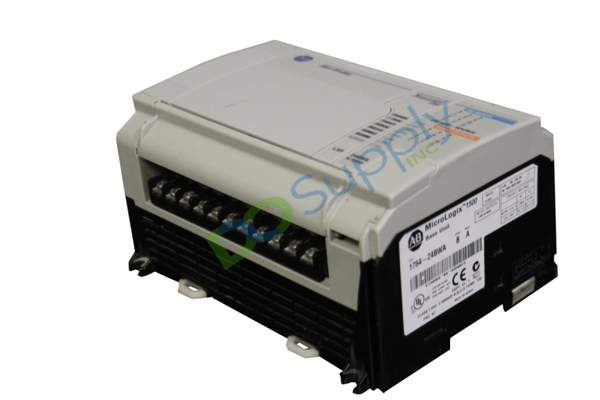
Like the other entrants in the MicroLogix series, the MicroLogix 1500 is small and can be expanded to fit a wide range of control and communication requirements. The 1500 is also expandable to 512 I/O points and is the most powerful in the MicroLogix family in terms of capabilities. As an addition to the MicroLogix 1100 and 1200 series family members, The MicroLogix 1500 has three base options with a removable processor and an updateable flash OS. With its numerous embedded as well as expandable I/O, the 1500 is a workhorse within the MicroLogix family. Main differences between the 1500 and other MicroLogix family members include: Central Processing Unit – Perhaps the biggest distinction between the MicroLogix 1500 and the other members of the MicroLogix Family is that the 1500 is a two-part system. One component consists of the controller, of which there are three base models, the 1764-24BWA, the 1764-24AWA and the 1764-28BXB. The second component is the central processing unit...
In today’s connected factory, visualization and interaction through human machine interfaces (HMI) are critical components of any control system. The PanelView family of HMI devices from Allen-Bradley is ideal for small, medium and large HMI systems. By leveraging the power of these devices, HMIs become scalable, adaptable and perfect for managing critical data and machine level inputs. Before you can determine whether the PanelView 700 or PanelView 1000 is best suited for your needs, one must understand that there are several families within the PanelView ecosystem. Each of these family groups have a 700 and 100 series, but there are differences in the two programming platforms that should be considered. An older offering from the Allen-Bradley line, the PanelView 6 consists of the PanelView Plus 6 and the PanelView Plus 6 Compact. The PanelView Plus 6 platform is used for applications with a larger footprint that connect with many controllers. This platform supports older...
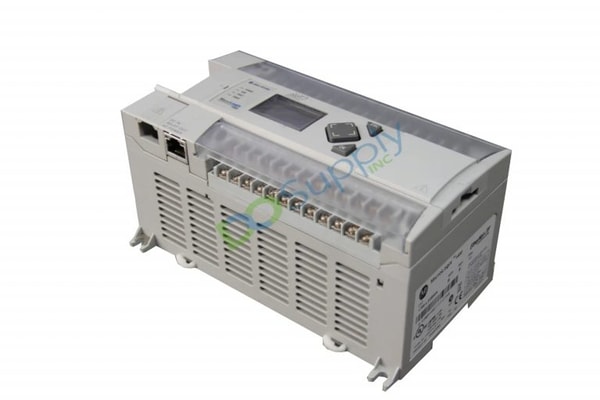
The MicroLogix 1400 series was designed to be small, versatile and expandable to suit a variety of control and communication needs. These controllers offer EtherNet/IP, as well as online editing of programming. They also feature a larger number of I/O compared to other MicroLogix family members. And the MicroLogix 1400 series can enhance network functionality and offer a range of features to help build a customized control solution for a wide range of applications. As part of a family of small programmable logic controllers, the MicroLogix 1400 offers a step up with an expansion of capabilities over other members in this family. Built upon the successful capabilities of the MicroLogix 1100, the 1400 series offers many of the same features but with a more robust feature set on some functionalities including: Increased I/O – The 1400 increases the embedded digital I/O count from 16 in the 1100 to 32. It also doubles the embedded analog I/O on some versions from the 2 offered by the 1000...
We are living in an ever-connected world. It is expected that by 2025, there will be over 75 billion connected devices worldwide. And while personal gadgets, smart homes and smart cities account a large part of those devices, there is an equally fervent push to digitize and automate factories as well. One estimate states that by the end of 2020, 80% of manufacturing companies will adopt some type of IoT technology. And the same urgency of adoption is taking place in utilities, transportation and logistics. In the industrial, warehousing and utilities sectors, much of this control is aimed at empowering the automation of equipment to perform tasks at a faster, more accurate and more productive rate. And this equipment needs control systems and ever improving control technology to adapt to these new requirements. It is easy to assume that these requirements involve large and complex buildouts connecting an entire factory or enterprise. And while that is certainly the case for larger...