Recent advancements in industrial automation have led to the development of more powerful and more flexible control systems, which are easier to program, configure and communicate with. Modern industrial controllers are characterized by higher processing power and better interconnectivity in comparison to traditional controllers. Today, many industrial control applications utilize Human Machine Interfaces (HMIs) and Industrial Personal Computers (IPCs) to acquire raw data, process, visualize or store the processed data. You’ll often find both HMI and IPC on the factory floor, and it is almost impossible to distinguish them at first glance; as they resemble each other in physical appearance. Even many plant operators usually call an IPC an HMI, which adds to potential confusion. However, there are technical and functional differences between an IPC and an HMI that go beyond their outward physical design. These differences include processing and connectivity capabilities, feature set...
PowerFlex 755 20G11ND186JN0NNNNN PowerFlex 755 is a variable-frequency AC drive designed by Allen-Bradley/Rockwell Automation, for ease of integration, high motor control performance, advanced safety and application flexibility. This high-power drive (power rating of up to 1500kW) builds on the common user experience and application flexibility of PowerFlex 750-Series, providing heavy industries with an option for state-of -the-art power control. It is well suited for a wide variety of applications ranging from simple variable torque and variable speed control in demanding industrial systems that require constant torque control. Target applications for PowerFlex 755 AC drives include pumps, conveyors, fans, extruders, compressors and mixers control, as well as process control applications in tire and rubber, metals and mining, oil and gas, and refining industries. The PowerFlex 755 drives are configured with instructions embedded in Allen-Bradley CompactLogix Programmable Automation...
Programmable Logic Controllers (PLCs) are rugged and lightweight computers used to automate industrial processes such as wastewater treatment plants, ore processing plants, and manufacturing plants assembly lines. They are designed to perform logical decisions for different electro-mechanical control applications and to operate reliably in harsh industrial environments like in extreme low or high temperatures, and dusty conditions. Also, PLCs are capable of automating an entire production line or a specific machine function, or a given process. All Programmable Logic Controllers consist of four basic components. These components include the Processor section, an Input/Output(I/O) section, a programming section, and the power supply. The power supply provides the appropriate voltages levels required to power on the PLC and its internal components. It accomplishes this by converting a line voltage, mainly 120V or 240V AC (Alternating Current), into the required DC (Direct Current)...
In designing industrial automation systems, half of the challenge is how you wish to control a system, and the other half is in how to connect the system’s components together. Specifying input, output, and communication methods can be a huge undertaking, as all other devices up- and downstream have to be both compatible with, and reliable when using, your selected technologies. To aid in your selection of PLC connectivity modules, we’ll start with this article discussing the differences between discrete output types – namely, the design, functionality, and comparative details between Relay and Solid-State Output modules. PLC CompactLogix Controller We’ll set the stage for our discussion by first outlining a number of key terms involved with discrete PLC output modules. Said in plain English, we have an industrial computer referred to as a PLC, or Process Logic Controller, that uses electrical signals to turn other, separate devices on and off. These separate devices might be pumps...
Generally, a FLEX I/O line is a Distributed Input/Output System that connects to several Networks including EtherNet/IP, ControlNet, and DeviceNet. Being a bus coupler, the Flex I/O allows you to add different modules consisting of bases and I/O cards along the DIN rail. In particular, Flex I/O systems are flexible and modular providing all the functions of vast, rack-based I/O at a low cost and without the space requirements. They are available via a variety of communication modules, depending on the protocol of the lead module. The FLEX 5000™ I/O is the most recent release of Allen-Bradley’s popular Flex I/O line. Its architecture offers a variety of I/O modules to meet a wide range of your operational needs, with its applications spanning from high-speed digital control to process control. These I/O modules are designed for use with the Logix 5000™ controllers. Their architecture uses Consumer/Producer network communication models, an intelligent data exchange technology between...
In 1969, Programmable Logic Controllers (PLCs) were first introduced into manufacturing processes, and today, they are most widely used for automation and industrial process control. In an industrial setup, PLCs are used to control conveyor systems, to sequence automated devices such as robots, and to capture data and communicate information. Almost any machine function, process or production line is greatly enhanced whenever a PLC control system is used. A PLC system is modular, this allows you to mix and match different types of Output and Input devices to best suit your applications. Nevertheless, the greatest benefit of utilizing a PLC is its ability to replicate and change a given process or operation, while collecting and disseminating essential information. Typically, any PLC has a Central Processing Unit, the CPU, which contains an internal program. The program tells the PLC how to perform various functions such as Execute user defined control instructions that are contained...
In any automation system design: cost, functionality, space, and interoperability are always on the mind of the engineer designing the system. This is true of small control builds and complex, factory-wide control environments with numerous machines connected to the system. For many decades, PLCs have been the workhorse of such automation and control systems, providing an effective and reliable way for engineers to get the job done. But within the last decade, microcontrollers have come to the forefront of numerous applications leading many to wonder if they can be considered a more cost-effective and smaller substitute for PLCs. As the “maker” culture arose with small automation applications such as desktop 3D printers, an entire ecosystem of accessories grew with them until many have reached a comparable feature set and list of capabilities of PLCs. Why then can’t they be used in place of traditional PLCs? The answer lies in a few important distinctions between the two. Benefits of...
According to ISA, automation is defined as “the technique of making an apparatus, a process, or a system operate automatically”. In a more practical sense, it is a system that operates with minimum or no human intervention at all. It has been part of the development of mankind all along however, the concept was further realized after the mass production system was finally implemented. With automation in the mass production setup, consistent and uniform outputs may be produced. Absolutely, this cannot be achieved with manual and traditional automation. Fast forward today, a control system – whether commercial or industrial scope, meets the modern automation requirements if it is programmable. With the birth of the 1st programmable controller and the enhancement in the succeeding years, most control systems are now being governed by programmable controllers. Programmable controllers can be used in both home and industrial setup. They are also the core components of automation. They...
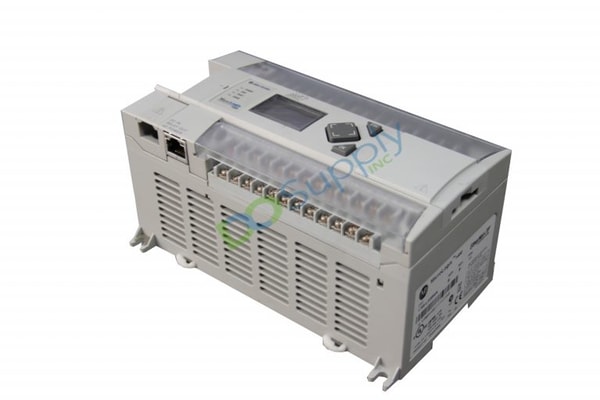
Continuing our article series on Programmable Logic Controller selection, we’ll look next at Rockwell Automation’s line of Allen-Bradley Micro800 PLCs. These controllers are particularly well positioned to tackle basic single-machine control, offering a versatile range of form factor, expansion, and connectivity options. Despite their modest cost and size, the Micro800 series is packed with advanced features that you’d normally expect only of much larger platforms. The Micro800 (and sister MicroLogix) series sits at the micro-scale end of Allen-Bradley’s PLC offerings, just under small-scale options such as the CompactLogix series, and farther yet under large-scale solutions including the flagship ControlLogix series. These series groupings do not translate into differences in quality or reliability – these names only refer to the scale of the applications each family is designed to serve. Where a ControlLogix PLC may control an entire plant, a Micro PLC is a much better fit to...
As the de facto standard for industrial programmable logic controllers, Rockwell Automation’s line of Allen-Bradley PLCs covers the full spectrum of application scales, from hobbyist to multi-site systems. In this article, we’ll examine one of the most popular and cost-effective PLC options in Allen-Bradley’s catalog: the MicroLogix 1400 family. MicroLogix Family Overview The MicroLogix series sits at the micro-scale end of Allen-Bradley’s PLC offerings, just under small-scale options such as the CompactLogix series, and farther yet under large-scale solutions including the flagship ControlLogix series. These series groupings aren’t meant to infer differences in quality or reliability – these names only refer to the scale of the applications each family is designed to serve. Where a ControlLogix PLC may control an entire plant, a MicroLogix PLC is a much better fit to control a single machine. The Allen-Bradley MicroLogix family of PLCs is based on two paramount features: compact size...
Every PLC manufacturer has their own way of presenting their line. And when comparing PLCs from different manufacturers, there is a lot of overlap between manufacturers. Some cover a wide range of automation system sizes with a dizzying array of offerings while others offer seemingly a smaller line that upon closer look covers the same territory as their competitor. Two of these manufacturers, ABB and Allen Bradley, both offer PLCs with strong feature sets that cover any range of automation needs. Swiss-based ABB offers a wide range of control products including PLCs, HMIs and is well known for its robotics offerings. While US based Allen Bradley is one of the most popular companies for control solutions in the US and the world. Here is a comparison of the two’s most popular PLC products and features: Large Control Systems Both Allen Bradley and ABB offer a full feature PLC line for large control systems. Allen Bradley offers the ControlLogix 5580 and 5570 line. These controllers are...
A high-speed counter (HSC) is a functional capability within particular PLCs. HSCs count the frequency of the pulse of processes from systems with elements such as high-speed encoders. In these cases, special input modules ensure the count’s accuracy and deliver the output to the system element within the latency criteria that optimizes machine or system uptime to meet throughput requirements. Normal counters are adequate unless the pulses you are counting will arrive faster than 2 times the scan time. HSC Overview and Application An HSC is a select type of counter. Counters used in systems with lower pulse frequencies (CTU/Ds) can be implemented as a software-defined PLC element. Thus, it only exists virtually. The HSC requires a hardware input module that can operate reliably in the harsh environmental conditions experienced on a factory floor. The engineering design is a simple input/output device that uses ladder logic to develop the output signal from the inputs provided. After...
The GE Fanuc Series 90-30 has long been a workhorse PLC for GE automation control systems. Introduced in 1991, the 90-30 series has been a popular choice for industrial control professionals because of its versatility and modularity. By contrast, the RX3i CPU Programmable Automation Controller by GE Automation represents the move toward a more comprehensive view of automation and one that both builds on the foundation laid by the 90-30 series while offering even more advanced features and versatility. GE 90-30 Series General Specifications and Features That the 90-30 series lasted for the better part of 30 years is a testament to its popularity. By offering a platform that addressed space concerns as well as cost effectiveness, the 90-30 has been known for ease of programming and their ability to be operated through a variety of inputs. The versatility of the 90-30 series is due to its large variety of CPUs, and each of the 11 available CPUs can accept multiple expansion modules for...
With the growing complexity and connected nature of today’s manufacturing and warehousing environments, control systems are being asked to do more and more to improve efficiency and performance. When adding or upgrading a control system, the proper selection of the right variable frequency drive (VFD) for your motor is crucial. While there are many options for VFDs from a variety of manufacturers, there are many things to consider when choosing a new VFD. These include motor considerations, VFD selection and how the VFD can or should integrate with PLCs. What Do You Need from the Motor? Before diving into the VFD itself, it is helpful to understand as much information as possible from the motor itself. Most of the critical information is included on the nameplate and should be easily accessible. This information will inform the buyer and provide a foundation for selecting the proper VFD by helping narrow down options for the optimum sized unit. Horsepower – Even though it is not the...
The Allen-Bradley Logix family of controllers is considered the most popular programmable logic controller family in the US. It consists of numerous variants but for this comparison we will look at the ControlLogix, CompactLogix and MicroLogix PLCs. By comparison, Siemens is much more common in Europe where their extensive line of PLCs are used in automation control systems throughout industries. The Siemens PLC equivalents for Allen-Bradley’s Logix family members above are part of the Siemens SIMATIC controller family and consist of the S7-200, S7-300, and S7-400 as direct comparisons. General Differences Before diving into unit by unit comparisons, we can first discuss some general differences between the Allen-Bradley and Siemens PLC lines: Performance – Both Allen Bradley and Siemens PLC groups have similar speeds and reliability. Their outputs are also close in number as well. The main differences in performance comes in their ease of use and how they integrate into control...