Fieldbus vs Industrial Ethernet: What’s Changing in Modern Plant Communication
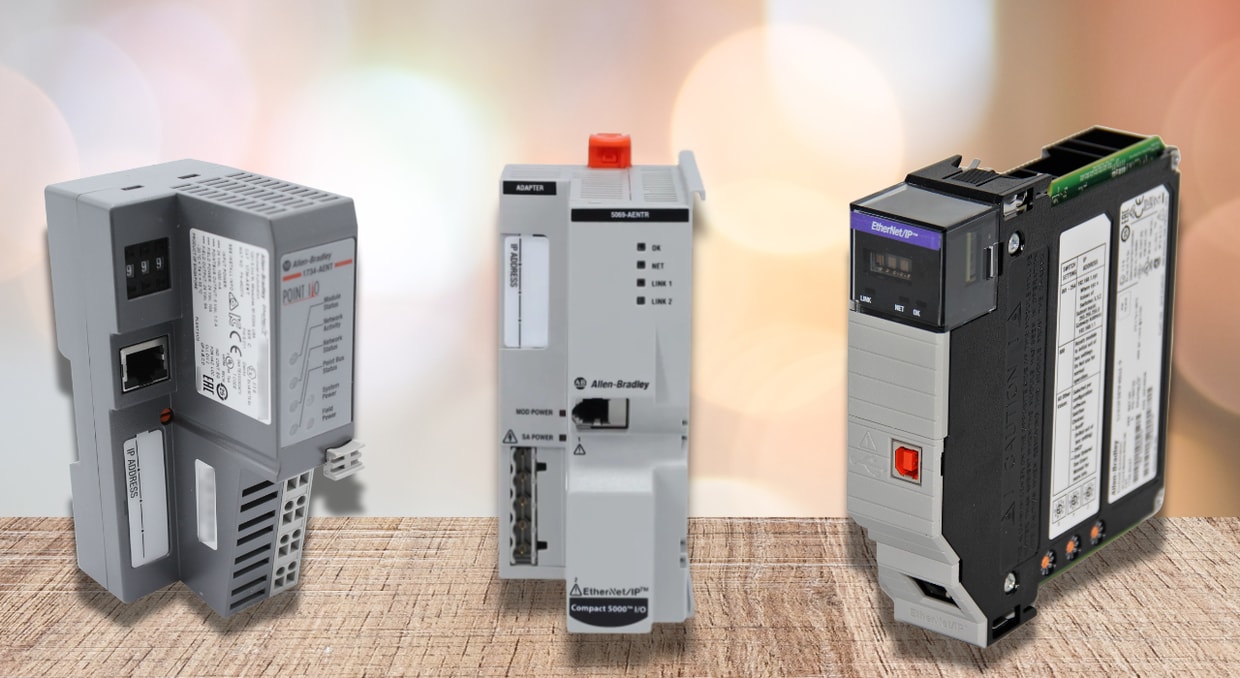
Industrial Connectivity constitutes the operational backbone of manufacturing and process plants, where the demands of reliability, determinism, and performance under challenging conditions are critical. The underlying theme of the discussion on network infrastructure is the continued use of legacy Fieldbus solutions alongside increasingly important Industrial Ethernet solutions. It’s a transformation, not just a migration, with layered complexities.
The Hierarchical Basis of Industrial Networks
Industrial networks span multiple layers, each with its own specific expectations. Fieldbus and Industrial Ethernet were shaped by different layers of this hierarchy, which explains why both persist.
Field Level
At the field level, you will observe your sensors and actuators interact directly with the physical process. These devices are plentiful, simple, and often installed in harsh industrial environments. Here, wiring efficiency, rugged connectors, and predictable timing matter far more than bandwidth.
Control Level
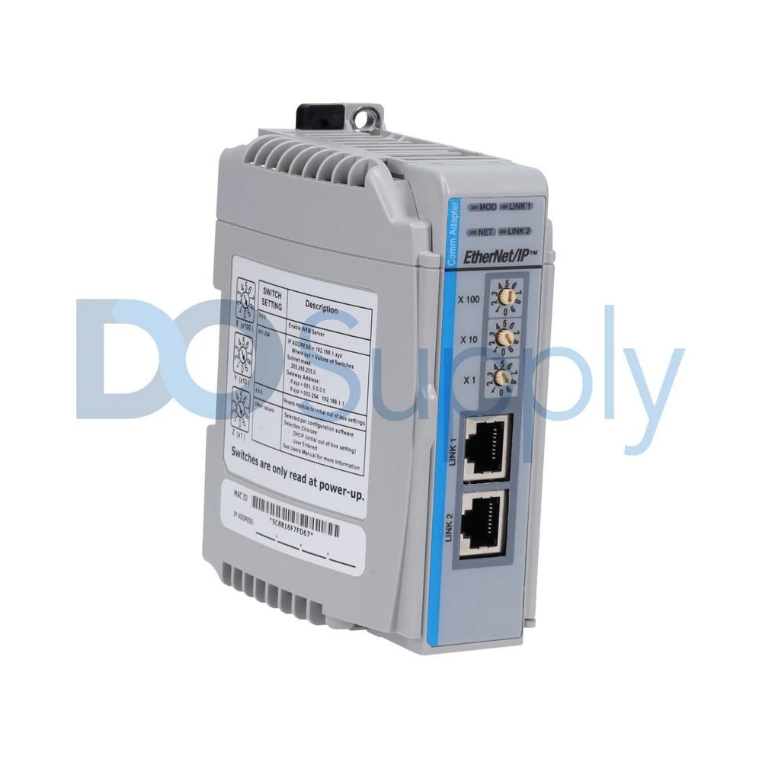
Above this is the control level, where PLCs and distributed control systems gather field data and execute real-time control logic. This layer relies heavily on deterministic communication, as late data is often just as bad as no data.
Supervisory Level
Next is the supervisory level, which introduces SCADA systems and operator interfaces, such as HMIs. Communication here is less time-critical, but data volume increases, and network flexibility becomes more important.
Execution and Planning Level
Finally, at the Execution and Planning Level, MES and ERP systems are used and serve as the interface between operational and business applications. Bandwidth considerations are more important at the latter level than at the former because of the differing demands of determinism and latency.
Important Variables Driving the Choice of Protocol
Selecting a network protocol is never a single variable decision. Technical criteria play an important role in the Fieldbus versus Ethernet decision-making process, and each must be carefully considered.
Power Delivery at End Devices
One of these considerations is power delivery. Power at end nodes is basic, but some networks require higher power, which, in applications such as battery-powered nodes, isn’t feasible.
Wiring Costs and Topology Flexibility
Wiring costs and topology flexibility are also great considerations. Fieldbus reduced the need for point-to-point wiring by allowing many devices to share a single trunk. This alone is a justification in many plants. Scalability and flexibility are criteria for the ease of modifying a network to accommodate changes and expansions; some Fieldbus and wireless networks provide self-healing functionality.
Environmental Tolerances
Environmental tolerances are just as important. Heat, vibration, electromagnetic interference, and long cable runs aren’t as much of a priority in office settings, but are unavoidable on the plant floor.
Bandwidth and Performance Requirements
The performance parameters of packet loss rate and throughput vary widely: a simple digital sensor requires only a small amount of bandwidth, whereas a vision system is a high-volume data generator. The requirement for a real-time and deterministic communication process has arguably been the most defining criterion in the past, and it rules out the use of standard information technology protocols in control-related activities. Aspects of network architecture, such as range, node count, and traffic load, affect scalability and traffic handling.
Security and System Integrity
Security concerns now extend beyond data protection to include physical safety and process integrity. Industrial networks must prevent unauthorized access while maintaining reliable operation.
The Established Domain of Fieldbus Protocols
Fieldbus is a shorthand term for a set of standardized industrial network communication protocols (IEC 61158) developed specifically for applications involving distributed, real-time control. Its most notable past success has been displacing complex point-to-point cabling configurations, enabling communication among hundreds of digital and analog instrumentation nodes via a centralized trunk line, thereby significantly lowering cabling costs.
Fieldbus operates in daisy-chained, star, or ring topologies, providing design flexibility. Its established advantages are well known: simplicity, demonstrated competence in critical applications, and institutional expertise developed over many years.
In process automation, network communication standards such as PROFIBUS PA, FOUNDATION Fieldbus, and HART are well established. These are well-suited to the slowly moving, asset-rich industries here, due in particular to the very high, de facto barriers (cost, in particular) associated with systematically re-cabling basic process controls, as would be required in order to move from these networking standards to any new network protocol that might emerge in the future. The existing base of nodes on a typical Fieldbus network is enormous, and, combined with adequate functional performance in most applications, this base ensures its continued use well into the future.
The Rise of Industrial Ethernet
Industrial Ethernet leverages the industry-wide Ethernet standard for industrial applications by adding determinism and synchronization capabilities and enhancing ruggedness and robustness. While Filedbus still dominates in many installed factories, newer systems are quickly adopting Industrial Ethernet, and for good reasons. Ethernet supports substantially higher bandwidth, making it suitable for diagnostics, condition monitoring, and data-intensive applications.
This will enable seamless connectivity from the field to the cloud in Industry 4.0 and smart manufacturing applications, with fully integrated safety protocols, PoE types, and advanced Network Manager solutions.
Ethernet-APL: A Catalyst for Change in Process Fields
One of the most significant emerging forces driving the entry of Ethernet into more traditional Fieldbus domains is Ethernet-APL (Advanced Physical Layer). Ethernet-APL is a revolutionary technology in process field instrumentation.
Ethernet-APL is a physical-layer standard based on 10BASE-T1L Single-Pair Ethernet. Ethernet-APL provides 10 Mbps data communication and power transfer over a single twisted-pair cable for distances up to 1000 meters, thereby satisfying the primary benefit of traditional Fieldbus: ease of wiring.
Nevertheless, Ethernet-APL is about 300 times faster than Fieldbus technology.
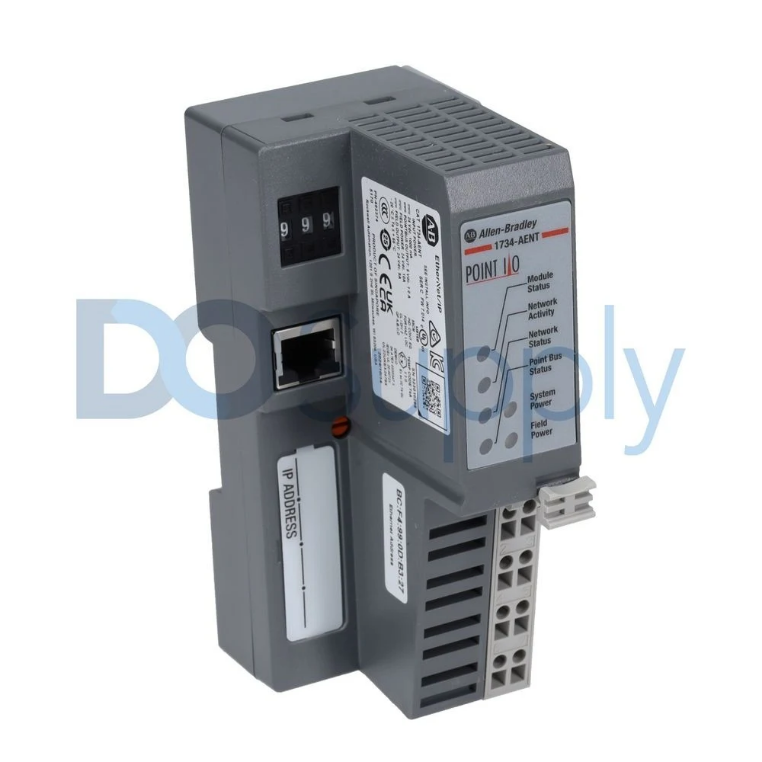
An important aspect of Ethernet-APL is that it’s suitable for hazardous zones and has intrinsic safety capabilities. The technological leap enables field devices to function as Ethernet devices, exchanging data using protocols such as PROFINET, EtherNet/IP, and/or OPC UA. The Ethernet APL enables transparent data access for control and asset management systems. Ethernet APL preserves the installation advantages of the Fieldbus physical layer while leveraging Ethernet technology. It is marketed as a stable technology that addresses the long-term challenge of process-industry digitalization, namely the physical-layer problem that has so far excluded Ethernet from field applications.
Coexistence and Strategic Migration
It is not a binary on/off condition, but a state of coexistence. The enormous installed base of Fieldbus technology is a huge investment that will not be abandoned soon. The robustness and simplicity of Fieldbus make it suitable for most existing installations. At the same time, the direction of strategy for new initiative projects and upgrades is increasingly toward either Industrial Ethernet or a hybrid approach.
This is a generation change, often driven by the enthusiasm of the newer generation of engineers who understand IT, while more experienced personnel retain the existing systems with Fieldbus. The bottom line: where improvements in data speed, level of automation, and analytic benefits deliver direct benefits of improved efficiencies and greater uptime, Industrial Ethernet makes the jump worthwhile. In more straightforward control or more sensitive environments, however, Fieldbus remains a viable and cost-effective option.
Conclusion
Fieldbus is not obsolete, and Industrial Ethernet is not a universal replacement. Although Fieldbus still has a strong installed base and rooted reliability, with Ethernet-APL as an enabling technology, it is creating a whole new reality for the future of plant communication. This transition is also incremental with technological advances in response to increased needs for bandwidth, convergence of IT and OT, and data models in Industry 4.0. In this case, advanced plant communication in the coming years is going to experience a heterogeneous mix of both technologies with selection based on inherent application needs.
Field communication doesn’t need to be a guessing game. Here at DO Supply, we stock a wide range of communication adapters for various PLC platforms. We also ship same day and with our two year warranty to ensure you get the best experience. Come visit our site today to find the right communication adapter or platform for your needs! If you would like to see what Fieldbus options are available for drives, we have an article here going over the PowerFlex 750s Fieldbus options and their pros and cons.
DO Supply Inc. makes no representations as to the completeness, validity, correctness, suitability, or accuracy of any information on this website and will not be liable for any delays, omissions, or errors in this information or any losses, injuries, or damages arising from its display or use. All the information on this website is provided on an "as-is" basis. It is the reader's responsibility to verify their own facts.