DC Drives vs Servo Drives: Precision vs Power
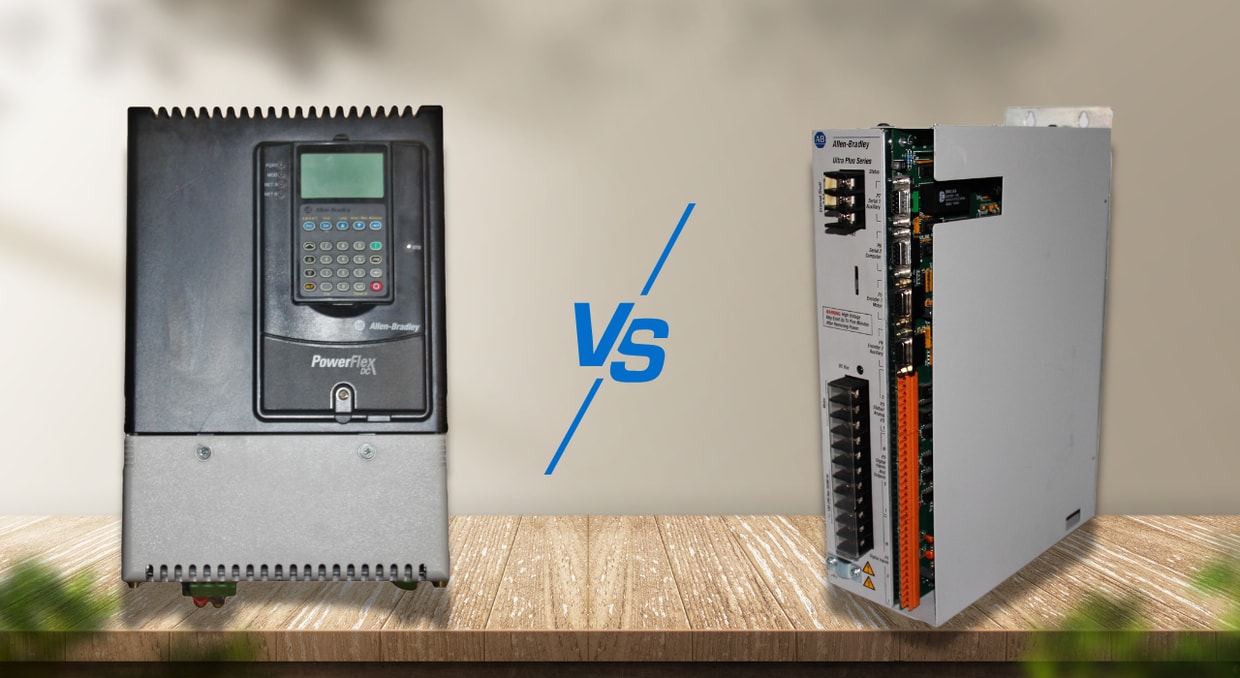
DC drives and servo drives are two distinct types of motor control devices. DC drives are commonly used for steady-speed and torque control, while servo drives are designed for precise, responsive control of position, speed, and torque. If you want to really get what sets them apart, you have to dig into how they work, what motors they run, and the sorts of things they’re actually used for.
DC Drives and their operation
A DC drive converts incoming AC power into DC, ensuring the motor receives the correct voltage and current. In many cases, the controller and drive are combined, so commands and motor output go hand in hand.
Inside, it all comes down to how the drive handles AC. Many traditional DC drives use SCR-based rectifier circuits to convert incoming AC power into a controlled DC output for the motor armature. Smaller drives may use single-phase rectifier designs, while larger industrial DC drives often use three-phase, six-pulse SCR bridges for smoother and higher-power DC output. This is why you will see DC drives in both small machines and large industrial equipment.
DC motors are commonly used where reliable motion control is required. By tweaking the voltage, they manage the shaft speed, so you get steady torque and smooth acceleration, which is ideal if you need things to start, stop, or run at set speeds. That’s why you’ll sometimes hear people call them “variable speed drives.
Types of DC Motors used with DC Drives.
DC drives work with different kinds of DC motors, each suited to its own use. But they all work off the basic idea: current meets magnetic field, and you get motion.
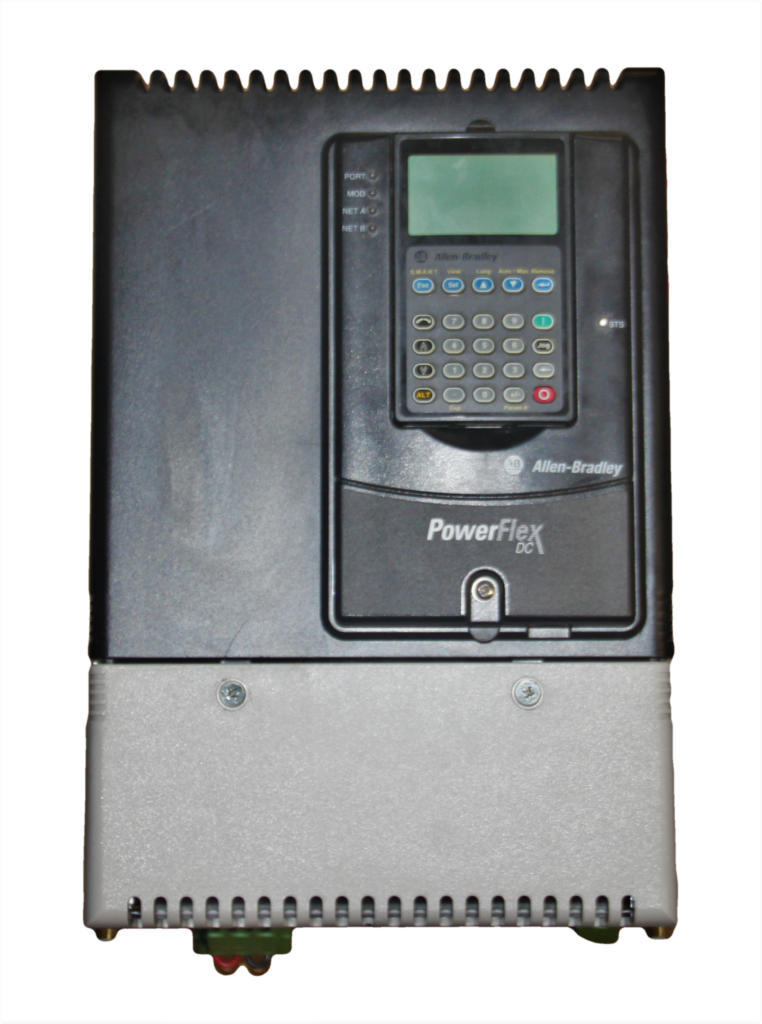
- Linear motors go one-way only. They use strong magnets for fast starts, tight positioning, and high speed. You’ll see them in places where quick movement really matters—think sliding doors at the airport, baggage systems, looms, or even roller coasters.
- Brushed motors are the older, classic type, using actual brushes to keep the current flowing to the spinning part. These are cheap, reliable, high-torque motors commonly found in car windows, windshield wipers, and heavy-duty gears.
- Brushless motors use electromagnetic forces instead of brushes. They’re more efficient, last longer, and don’t wear out as fast. If you’ve opened up a computer fan, washing machine, or modern air conditioner, you’ve probably seen one of these.
Servo Drives and Their Precision Advantage
Now, servo drives do things differently. A servo drive controls a motor in a closed-loop system. Instead of simply applying power and hoping the motor follows, it compares the commanded position, speed, or torque against feedback from an encoder, resolver, or similar device, then corrects the output in real time.
This setup is so accurate, you can get position control down to a fraction of a degree—something a standard DC drive can’t touch without a lot of extra gear. Servo systems are built from the ground up for jobs where repeatability and fine movement are non-negotiable.
You can get servo motors in everything from compact sizes (that fit into cramped spaces) to heavy industrial models designed to move serious loads. They’re always designed to be nimble, able to change speed or direction in a snap.
Dynamic Performance: The Core Difference
The real dividing line between servos and DC drives is dynamic performance. Servo motors have low-inertia rotors—meaning, you don’t have to shove around a lot of mass every time you start or stop, so they respond incredibly fast, sometimes in under 50 milliseconds.
Servo systems are still preferred when the application requires precise position control, high-speed indexing, or coordinated motion, as they are engineered for snap torque rather than continuous operation. However, modern AC drives with advanced control methods can respond very quickly in torque control applications. What matters at the end of the day is if the application needs continuous speed control, torque control, or precise closed-loop positioning.
Inertial Matching and System Efficiency
One thing that doesn’t get talked about much is inertia matching. Servo systems are generally set up so the motor’s inertia lines up with the load’s inertia. This keeps everything running more smoothly, puts less strain on bearings or couplings, reduces heat, and lets you get more out of your equipment.
If you run a DC drive, you might need gearboxes to get this matching just right. The wrong match means wasted energy, more wear, and less efficiency.
Where DC Drives Excel
Don’t write off DC drives. They’re still big players when you want power, simplicity, and you’re watching the budget. DC drives are ideal for situations where you’re fine with steady speeds and don’t need split-second reaction times. If your job requires continuous operation and response times between half a second and a second are acceptable, a DC drive is hard to beat.
In applications with horsepower exceeding 1000 HP, DC or standard AC drives are usually the go-to choice, since servo systems at that power level are just too expensive. You will see DC drives installed in some conveyors, pumps, and general machinery because they’re tough, straightforward, and keep costs down.
Servo Applications in Industry
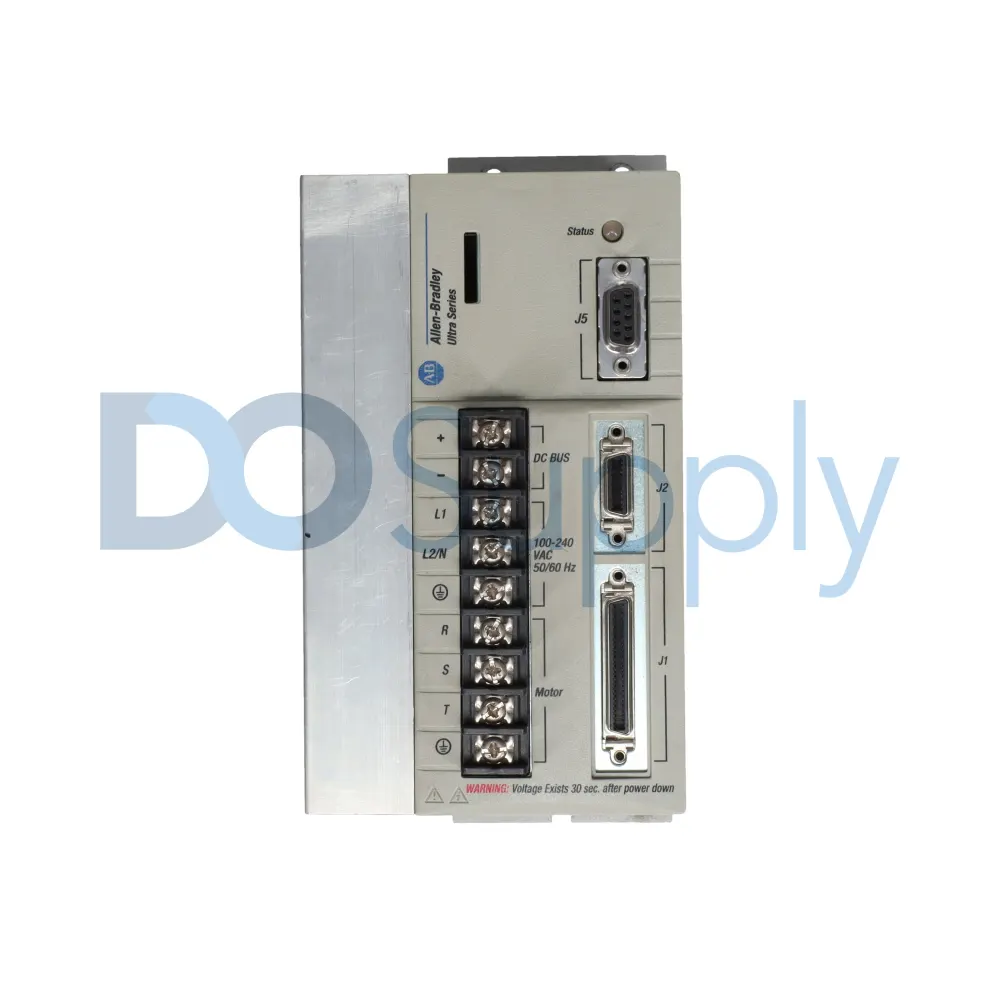
Servo systems come into play wherever you need ultra-precise, lightning-fast motion. They are especially useful when a machine has to start, stop, reverse, index, or follow a programmed motion profile with very little room for error.
Robotics is a common field where you will find servo motors employed, such as in pick-and-place equipment, CNC machines, and even automated assembly systems. There is also packaging, where a servo-driven sealing jaw, labeler, or cartoner can adjust its motion to match product spacing and line speed more accurately than a basic speed-control drive.
AC Drives as a Middle Ground
It’s also worth a quick mention that AC drives sit somewhere in the middle. They convert AC to DC and back again to adjust frequency and speed, with no feedback needed. Modern versions with sensorless vector control can get almost as good as DC drives for certain uses, but they still fall short on the dynamic responsiveness and fine control of a servo. AC drives make the most sense when you need steady operation and don’t need precise positioning.
How to Pick: It All Comes Down to What You Need
In the end, choosing between a DC drive and a servo should be about what the application actually calls for. If you’re looking at high-speed indexing, robotics, or pinpoint precision, servos are your best bet. If the job is about constant speed, big power, or saving money, go with a DC drive.
So if you’re running a conveyor or a basic machine, the rugged simplicity of a DC drive is a plus. But if you’re programming a robot or running a CNC machine, only a servo will cut it. Sometimes, like in web tension control, you might use both, depending on just how picky you need to be about the results.
If you are interested in servo or DC drives for industrial applications, we invite you to browse our selection at DOSupply.com. We carry a wide range of motors, drives, controllers, accessories, and more from brands you can trust. Need recommendations? No problem, give us a call today, and our team can help you find the right drive for the right project. If you would like to learn more about servo drives, we made a comparison article like this, but with AC drives here!
DO Supply Inc. makes no representations as to the completeness, validity, correctness, suitability, or accuracy of any information on this website and will not be liable for any delays, omissions, or errors in this information or any losses, injuries, or damages arising from its display or use. All the information on this website is provided on an "as-is" basis. It is the reader's responsibility to verify their own facts.