Choosing the Right PowerFlex Drive for Harsh Environments
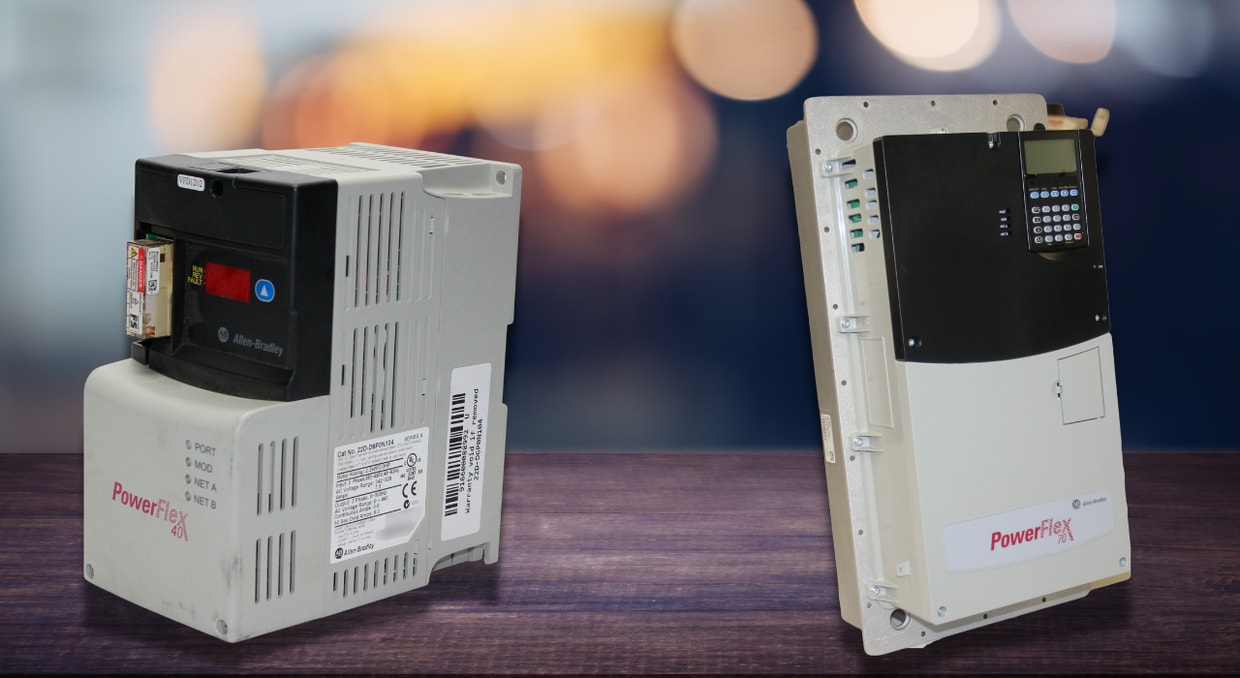
Selecting a Variable Frequency Drive for a harsh environment application is not simply a matter of matching horsepower and voltage. Ambient temperature, particulate contamination, corrosive atmospheres, moisture exposure, hazardous area classification, and physical installation constraints all impose requirements that eliminate drives from consideration before a single control parameter is evaluated. The Allen-Bradley PowerFlex family spans a wide range of drive architectures, enclosure ratings, and environmental specifications. Understanding which PowerFlex variant is engineered for a given harsh environment determines whether the installation delivers a decade of reliable service or becomes a recurring maintenance liability.
What Defines a Harsh Environment in Drive Selection?
A harsh environment for a VFD is any installation condition that exceeds the standard assumptions of a clean, temperature-controlled indoor panel:
- Ambient temperatures above 40°C or below 0°C
- Relative humidity approaching saturation
- Airborne conductive or corrosive particulates
- Chemical vapor exposure, outdoor or unenclosed installations
- Classified hazardous areas
Each of these conditions attacks a drive through a different failure mechanism.
Ambient Temperature Limits Across the PowerFlex Family
Temperature tolerance varies meaningfully across the PowerFlex lineup and must be matched to the actual worst-case installation temperature, not the average.
The PowerFlex 40 and 40P specify a maximum ambient temperature of 50°C for standard enclosures, with the 40P achieving this in its Zero Stacking mounting configuration. These are adequate for most indoor panel installations with reasonable ventilation, but provide no margin for high-ambient environments such as outdoor enclosures in tropical climates or panels mounted near process heat sources. The PowerFlex is a great option for OEM designs as well, and if you would like to know more, check out our article here!
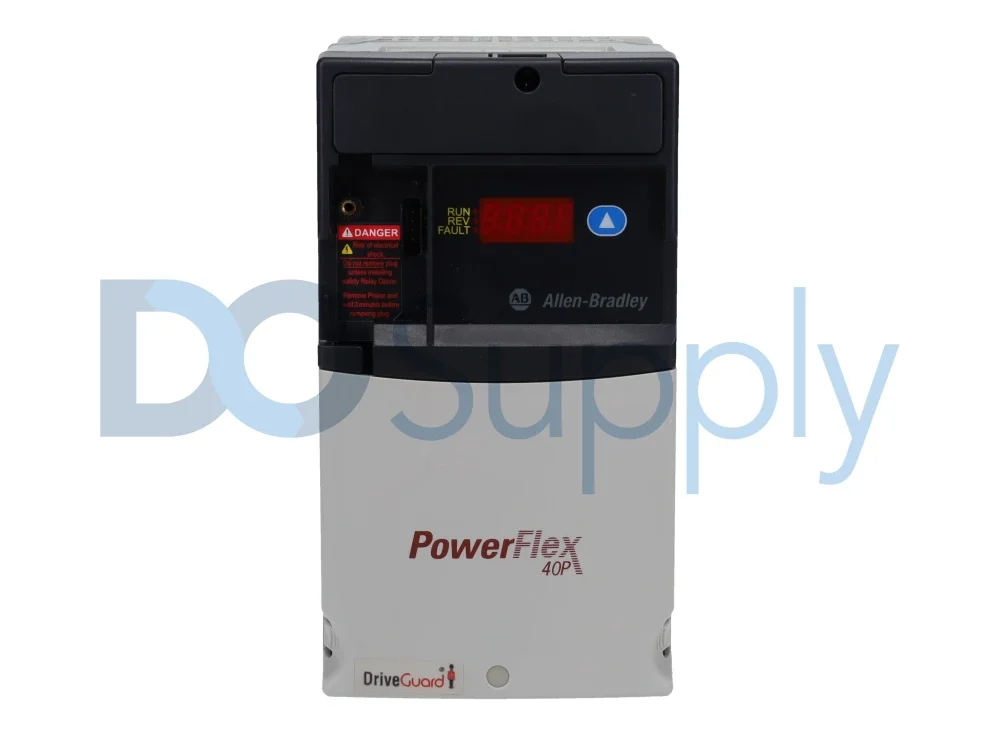
The PowerFlex 70 and 700 operate within 0 to 50°C for open and IP 20-rated enclosures. Still, the PowerFlex 70’s IP 66 variant derates to a maximum of 40°C, a critical constraint when specifying washdown-rated drives for food and beverage applications in high-ambient production areas. The PowerFlex 700S specifies 0 to 50°C for open and IP 20 drives, narrowing to 0 to 40°C for IP 56 and NEMA Type 1 enclosures.
The PowerFlex 525 offers the most flexibility for elevated ambient conditions in the compact drive range, depending on mounting, enclosure, frame size, and derating requirements. With standard operation supported to 50°C and derating capability extending to 70°C, the 525 can be applied in high-ambient machine enclosures where competing drives require supplementary cooling. The PowerFlex 523 similarly supports up to 140°F (60°C) with derating and up to 158°F (70°C) with an optional control module fan, a significant advantage for confined installation spaces with poor natural convection.
Enclosure Ratings and Their Real-World Meaning
IP and NEMA enclosure ratings define the drive’s resistance to solid and liquid particle ingress, and selecting the correct enclosure rating for the installation environment is as important as the electrical specification.
The PowerFlex 40 is available in IP 20, IP 66, open, plate drive, and flange-mounted configurations. IP 66 provides dust-tight protection and resistance to high-pressure water jets from any direction, the appropriate rating for washdown environments in food and beverage and pharmaceutical production. The PowerFlex 70 offers IP 66 (NEMA/UL Type 4X/12) for indoor washdown use, with the Type 4X rating providing additional corrosion resistance beyond Type 4.
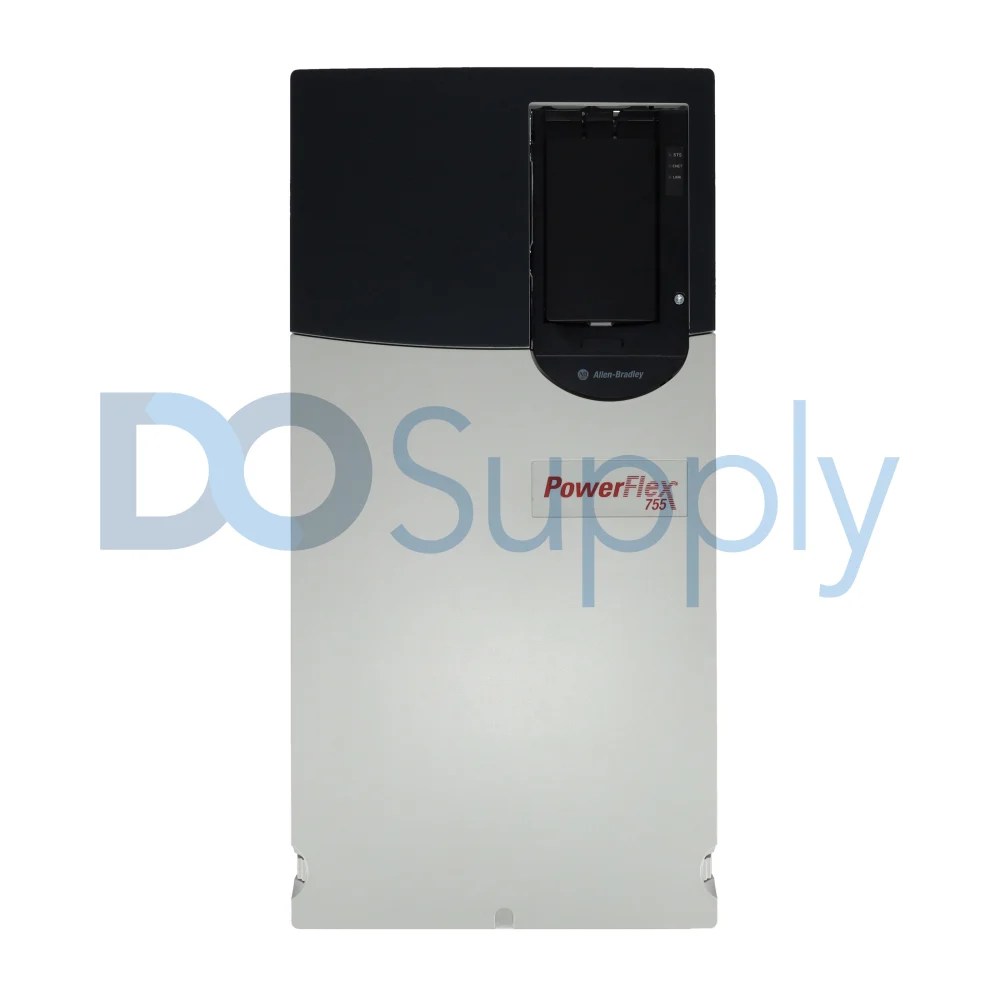
The PowerFlex 753 and 755 offer IP 54 enclosures, dust-protected and splash-resistant, suitable for industrial environments with airborne particulates and incidental liquid exposure, but not for direct washdown. The IP 54 wall-mounted and flange-mounted options on the PowerFlex 700 serve similar environments. Flange mounting on these larger drives, where the heatsink protrudes through the back of the panel, allows the heat-generating components to be cooled by ambient air outside the enclosure. At the same time, the control electronics remain inside a sealed panel, an effective architecture for dusty or chemically contaminated atmospheres.
The PowerFlex 40P’s IP 30 enclosure provides finger-safe protection against solid objects but no protection against liquid ingress. This makes it appropriate for a clean, dry panel interior but unsuitable for environments with dripping condensation or incidental washdown exposure. Its plate drive and IP 66 options extend applicability to more demanding conditions.
Conformal Coating for Corrosive Atmosphere Protection
Enclosure rating alone does not protect drive electronics from corrosive gas exposure in environments where hydrogen sulfide, chlorine, sulfur dioxide, or ammonia are present. These types of environments include:
- Wastewater treatment
- Oil and gas processing
- Chemical manufacturing
- Pulp and paper facilities
In these environments, corrosive gases permeate cable entries and ventilation paths, attacking uncoated copper traces on PCBs and causing electrochemical corrosion that leads to intermittent faults and premature board failure.
Conformal coating, a thin polymeric film applied to control boards, power boards, and gate driver circuits, provides the primary defense against corrosive gas attack. Within the PowerFlex family, conformal coating availability varies by product line and must be explicitly specified at the time of order by selecting the appropriate catalog number.
For harsh-environment process environments, engineers should verify the availability of conformal coating for the specific PowerFlex variant under consideration. The PowerFlex 755 is available with conformal coating for protection in corrosive environments. For the PowerFlex 70 and 700, conformal coating options exist for specific board assemblies. In corrosive environments where the drive is housed in a purged or pressurized enclosure, coating may be secondary to enclosure integrity. Still, for drives in non-purged enclosures in Zone 2 or Div 2 classified areas, conformal coating is a minimum requirement.
Hazardous Area Applications and Drive Architecture Choices
Classified hazardous locations, areas where flammable gases, vapors, or combustible dusts may be present, impose regulatory requirements on electrical equipment that standard industrial drives do not meet by design. In North American classifications (NEC Article 500), Class I Division 1 areas require intrinsically safe or explosion-proof equipment. Division 2 areas permit standard equipment housed in appropriate enclosures or equipment certified for Division 2 use.
No PowerFlex drive is rated for Class I Division 1 installation without housing in a certified purge-and-pressurization enclosure. The PowerFlex 700S has ATEX-approved configurations for use with ATEX-approved motors in Group II Category 2 applications, but the certification conditions matter. Rockwell’s documentation describes the motor as being located in a hazardous environment, while the drive is not, with the drive acting as part of a protective system that removes current when motor overtemperature is detected. Engineers should verify the exact certificate, motor requirements, enclosure strategy, and installation conditions before applying it in a classified area.
Communication Architecture in Remote and Harsh Installations
Harsh environment installations are frequently remote, such as pump stations, outdoor compressor skids, mine ventilation systems, and offshore process modules, where drive-to-controller communication reliability is as critical as the drive’s physical environmental tolerance.
The PowerFlex 525 includes an integrated dual-port EtherNet/IP option that supports a Device Level Ring (DLR) topology using a 25-COMM-E2P adapter, providing network-level redundancy without a managed switch. In a ring topology, a single cable fault does not interrupt communication; the ring reconfigures around the break within milliseconds. For remote installations where cable routing through industrial environments creates vulnerability to physical damage, DLR on the PowerFlex 525 provides communication resilience that a linear EtherNet/IP topology cannot.
The PowerFlex 755 supports integrated motion on EtherNet/IP and connects to linear, star, and ring topologies. Its Automatic Device Configuration (ADC) feature, which automatically downloads configuration parameters from the Logix controller onto a replaced drive, is particularly valuable in harsh environment applications where drive replacement may be performed by maintenance technicians rather than commissioning engineers. Eliminating manual parameter re-entry reduces the risk of configuration errors after emergency drive replacement in a difficult-access installation.
Moisture, Condensation, and Storage Temperature Considerations
Condensation is a more common cause of drive failure in harsh environments than sustained high humidity. When a drive in a cold installation is powered up after an extended shutdown, moisture that condensed on cold power components during the shutdown period can cause a ground fault or an insulation breakdown upon energization. This is particularly relevant for seasonal or intermittent-use equipment, irrigation pump stations, outdoor HVAC drives, and standby process drives.
The PowerFlex 525, 523, and 527 all specify storage temperatures down to -40°C, ensuring the drives are not damaged during cold storage or shipping to northern installation sites. The PowerFlex 700, 753, and 700S similarly specify -40°C storage minimums. For installations where extended cold-soak periods before startup are anticipated, panel heaters on thermostatic control, set to maintain the panel interior above the drive’s minimum operating temperature, are standard practice regardless of the PowerFlex variant selected.
Humidity limits across the PowerFlex family are generally specified at 0 to 95% non-condensing. The non-condensing qualification is critical; it means the drive is not designed to tolerate liquid water on its surfaces, only elevated vapor-phase humidity.
Selection Summary
Harsh environment PowerFlex selection resolves to matching the specific environmental stressor to the drive capability that addresses it. High ambient temperature above 50°C points to the PowerFlex 525 or 523 with derating. Washdown environments require IP 66 variants of the PowerFlex 40 or PowerFlex 70. Corrosive gas atmospheres require conformal-coated boards and appropriate enclosure integrity. ATEX-classified areas in the applicable power range point to the PowerFlex 700S. Communication reliability in remote installations is best addressed by DLR-capable drives such as the PowerFlex 525 or 755. For large-horsepower applications in harsh general-purpose environments above 30 HP, move to the PowerFlex 753 or 755 with IP 54 enclosures and a slot-based I/O architecture.
Final Thoughts
In conclusion, the PowerFlex family provides genuine coverage across the full spectrum of harsh environment requirements, but only when the selection process begins with the environment rather than the horsepower. Each PowerFlex variant has a defined environmental envelope, and operating within that envelope, accounting for ambient temperature, enclosure rating, corrosive atmosphere protection, hazardous area classification, and communication architecture, is what determines whether the drive performs reliably across its operational life or becomes a chronic failure point in an otherwise sound process installation.
If you are looking for a new drive to endure the harsh environment of your workplace, then look no further than DO Supply. We carry the drives you’ve read about here, as well as replacement parts, accessories, communication modules, and more. We also offer our repair services for drives that have seen better days, all backed by our two-year warranty. Give us a call today and let us know what we can do to help!
DO Supply Inc. makes no representations as to the completeness, validity, correctness, suitability, or accuracy of any information on this website and will not be liable for any delays, omissions, or errors in this information or any losses, injuries, or damages arising from its display or use. All the information on this website is provided on an "as-is" basis. It is the reader's responsibility to verify their own facts.