We found 63 posts about Communication & Networking from DO Supply, a global automation parts
reseller focused on hard-to-find and obsolete industrial automation products.
Distributed control systems, essential to modern industrial automation, need distinct hardware components to communicate seamlessly across large facility floors. The Programmable Logic Controller (PLC) is at the core of this system. PLCs execute control logic, process sensor and I/O data, command field devices, and exchange information with HMIs, SCADA systems, drives, remote I/O, and higher-level systems. But a PLC’s effectiveness depends on the communication networks that connect it to company databases, input/output (I/O) modules, human-machine interfaces (HMIs), and supervisory control and data acquisition (SCADA) systems. Over the last several decades, simple proprietary serial lines have given way to sophisticated, high-speed Ethernet-based protocols. Determinism, bandwidth, distance, setup complexity, and cybersecurity must all be balanced to choose the best protocol, which is seldom a simple technical task. Automation engineers must understand these trade-offs to build...
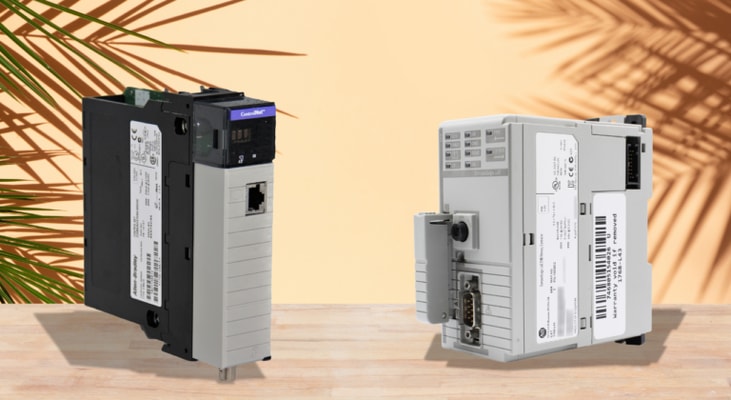
ControlLogix communication delays are often not the fault of a single component. In most field situations, the culprit is not a broken device but a design misalignment among the controller’s capacity, the choice of communication module, and the network built around it. A ControlLogix system is modular, and delays often trace back to a specific design decision: too many nodes on the I/O bus, the use of an antiquated bridge module, or a backplane routing configuration stretched beyond its performance envelope. Getting a strong grip on these mechanics and moving away from thinking of delay as just a generic “network problem” is what will distinguish a permanent fix from a temporary workaround. Every ControlLogix controller has an upper limit on the number of nodes and connections it can support, and exceeding that limit is one cause of communication lag. A node is any device added to the I/O configuration, and pushing a network beyond that count can cause delays that no amount of...
Variable frequency drives and programmable controllers have evolved from loosely connected hardware communicating via hardwired I/O to tightly integrated systems that share tag-based data, diagnostic information, and motion commands over a single industrial Ethernet network. The main point of this architecture in Rockwell Automation environments is the ControlLogix platform, and its integration with the PowerFlex drive family defines how modern Allen-Bradley-based control systems handle motor control from simple pump speed regulation to coordinated multi-axis positioning. This article covers the full integration architecture across hardware, communication protocols, Auto-Device Replacement, CIP Motion, and diagnostic practices. Order PowerFlex 755 Drives Here The PowerFlex drive portfolio spans several product lines, each with distinct integration characteristics when paired with ControlLogix. The PowerFlex 525 (catalog 25B series) is a compact drive rated from 0.5 to 30 HP and...
Industrial automation systems depend on PLCs exchanging data reliably and on time. When communication delays enter that chain, whether between PLCs and an HMI, between controllers on a network, or between PLCs and field devices, the consequences extend well beyond a sluggish screen update. In process-critical environments, even a few milliseconds of unexpected latency can cascade into equipment damage, unsafe states, or production loss. Delays in PLCs communication originate from multiple layers of the system. At the physical layer, cable quality, termination integrity, and media type set the baseline. At the network layer, excessive node counts, improper topology, and bandwidth saturation introduce queuing delays. At the application layer, message scheduling, packet fragmentation, and polling intervals determine how frequently data is actually refreshed. Order CompactLogix PLCs Today In EtherNet/IP-based systems, the dominant protocol on Allen-Bradley ControlLogix and CompactLogix...
If you have spent any time reading about automation equipment and how they work, you would come across phrases such as: “Real-time control”, “real-time monitoring”, “operates in real-time”, or “real-time deterministic behavior”. It becomes one of those things that you might be afraid to ask about because it’s thrown around so much that it seems like it’s common knowledge. Alas, we at DO Supply don’t judge and encourage learning opportunities, so let’s get you up to speed on what ‘real-time’ actually means. In the world of industrial control, “real-time” is a more precise engineering term. It means predictable, rather than “fast”. A real-time system isn’t defined by how quickly it responds, but by whether it responds within a guaranteed, bounded window of time, every single time. That guarantee is what engineers call determinism, and it’s the whole reason the phrase gets used so often around PLCs, drives, and industrial networks. To put it in perspective, say a video game you’re...
Modern industrial facilities do not stop when the network drops. A refinery keeps processing crude oil. A water treatment plant keeps dosing chemicals. A conveyor line keeps moving parts through assembly stages. This stability is not accidental; it is the result of deliberate engineering decisions built into every layer of automation systems, from the controller firmware to the field instrument logic. Communication failure is not an edge case in industrial automation. It is a known, expected condition that every well-designed system must handle without losing process stability, safety state, or data integrity. This article breaks down the exact mechanisms, hardware, and protocol-level details that keep automation systems stable when communication degrades or fails. Industrial environments are electrically hostile. Variable-frequency drives inject high-frequency noise into power lines. High-voltage switchgear generates radiated electromagnetic interference during switching transients...
Programmable Logic Controllers continue to be the backbone of present-day industrial automation, providing deterministic, scalable, and reliable control across diverse sectors, such as chemical processing, oil & gas, pharmaceuticals, manufacturing, and water/waste treatment facilities. Originally designed to replace hard-wired relay logic systems, PLC technology has advanced into sophisticated embedded control platforms capable of handling advanced computational tasks, real-time data analytics, network communications, and predictive diagnostics. In response to the demands of digital transformation, industry 4.0 integration, and smart manufacturing, PLC manufacturers are continually developing robust PLCs with increased processing power, built-in safety options, advanced networking protocols, and integrated cybersecurity. In essence, modern PLC hardware continues to bridge the gap between industrial-grade robustness and advanced computing, taking on complex, data-intensive automation...
PLCs are the main part of industrial automation systems, providing the real‑time control required for manufacturing, process systems, infrastructure networks, and different building management systems. PLCs help in managing the automation ecosystems. Nowadays, the leading PLC brands do more than just supply simple hardware; they build full‑scale ecosystems encompassing software, communication protocols, add‑on input/output modules, cloud services, engineering software, different partner networks, and digital platforms that enhance performance, connectivity, and lifecycle value. In this technical overview, we investigate how top PLC brands create ecosystems surrounding their controllers. We analyze the functions of hardware modularity, programming platforms, communication protocols, digital twins, edge and cloud integration, cybersecurity, analytics, partner initiatives, and deployment assistance demonstrating how ecosystems facilitate scalability, optimization, and future‑proofing in...
When it comes to industrial networking, the hardware has to be built for a completely different world than that of commercial equipment. Take temperature ranges as a good example: industrial devices must operate between -40°C and +85°C, while commercial units are typically rated only from 0°C to 45°C. Physical environment matters just as much, with ingress protection ratings indicating how well a device can withstand dust, moisture, and oily conditions. If the hardware is going anywhere near active machinery, vibration resistance deserves careful attention, too, since it can cause real problems over time if it’s overlooked. This guide walks through the key hardware categories, including switches, gateways, and media converters, to help you make confident, informed decisions for your application. Industrial switches form the backbone of industrial networks for most plant floors. They connect controllers, drives, sensors, HMI, and supervisory systems while maintaining the deterministic...
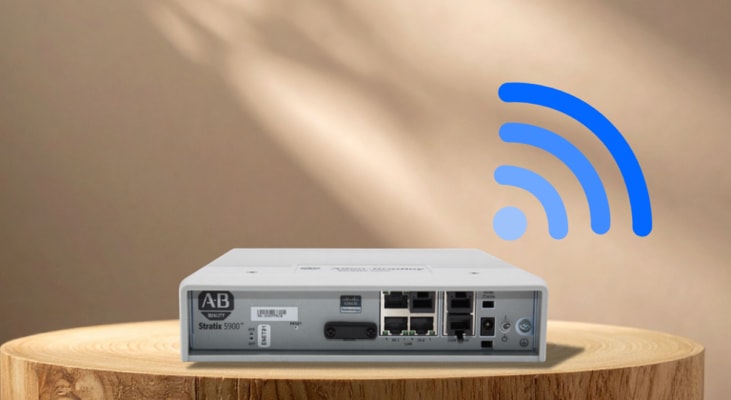
Industrial automation has historically depended on hardwired communication infrastructure. Field devices, controllers, drives, and supervisory systems have been interconnected using copper cables, fiber-optic cables, and structured wiring systems, which require significant installation labor, conduit routing, and ongoing maintenance. While wired communication remains the dominant architecture in most facilities, wireless communication technologies have matured to a point where they are now viable, and in many cases preferred, for specific automation applications. This article examines the wireless communication technologies applicable to industrial automation, the protocols and standards governing their operation, the engineering challenges associated with deployment, and the application domains where wireless communication delivers measurable advantages over traditional cabling infrastructure. The shift toward wireless communication in industrial settings is not driven solely by...
In industrial automation, Programmable Logic Controllers (PLCs) are the central processing units for calculations that require precise, error-free data transfer to support determinism. A packet not received during the data transmission of process variables is considered a serious nondeterministic event. This has consequences beyond an incident and extends through a technological chain of effects on scan cycles, control, and networks. These consequences are dependent on protocol, programming, and processes, and hence require in-depth knowledge. A PLC finds missing data via mechanisms integrated into its communication stack and application logic. Industrial networks built on standard Ethernet, such as EtherNet/IP or Profinet, have integrated sequence numbering, timestamping, or heartbeat signals into their frame structure. The PLC looks for these integrated signals, and a missing sequence or the expiry of the periodic “heartbeat” packet triggers the missing packet detection algorithm...
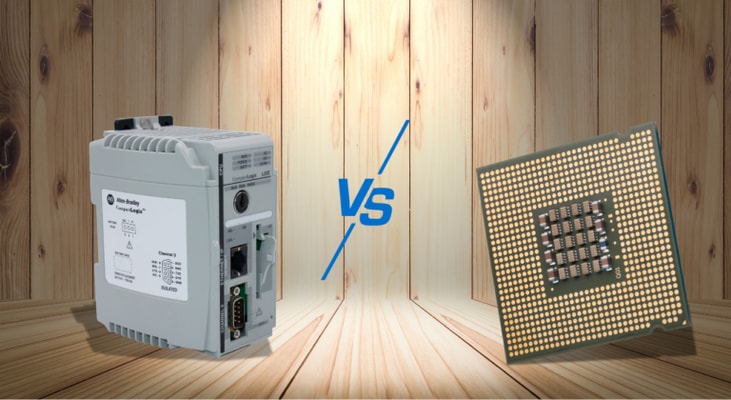
Accuracy in terminology is very critical in industrial automation. In deterministic control networks, where fault, sequence, and timing handling are verifiable and predictable, Programmable Logic controllers operate these systems. The fundamental system architecture may be obscured, as many engineers often use the processors and CPUs interchangeably. As contemporary PLCs evolve to feature visualization technologies, integrated safety, distributed intelligence, and multicore CPUs, the distinction is essential. Faults may occur in cybersecurity, task configuration, redundancy planning, system design, and procurement due to a misunderstanding of the distinction between CPU and processor. This article explores the primary differences between CPUs and Processors. Featuring technical descriptions, architectural tasks, performance factors, maintenance implications, and future shifts in industrial control networks. Engineers can determine more precise design and functional decisions by...
Communication protocols are the rules that control how machines communicate with each other in factories. These rules directly determine two critical things: how fast production lines can run and how easily and safely they operate. When machines can communicate quickly and reliably, factories produce more products with fewer accidents. When communication is slow or unreliable, production suffers, and safety systems may fail to meet required standards. Modern factories organize their communication systems in hierarchical layers. At the bottom (Level 0) are the physical devices: sensors that measure temperature or pressure, motors that move conveyor belts, and valves that control fluid flow. The next level up (Level 1) contains PLCs (Programmable Logic Controllers), which are specialized industrial computers that control these devices. PLCs run control programs in continuous cycles, making decisions every few milliseconds. A typical PLC scan cycle ranges from 0.1 milliseconds to 100...
Industrial Connectivity constitutes the operational backbone of manufacturing and process plants, where the demands of reliability, determinism, and performance under challenging conditions are critical. The underlying theme of the discussion on network infrastructure is the continued use of legacy Fieldbus solutions alongside increasingly important Industrial Ethernet solutions. It’s a transformation, not just a migration, with layered complexities. Industrial networks span multiple layers, each with its own specific expectations. Fieldbus and Industrial Ethernet were shaped by different layers of this hierarchy, which explains why both persist. At the field level, you will observe your sensors and actuators interact directly with the physical process. These devices are plentiful, simple, and often installed in harsh industrial environments. Here, wiring efficiency, rugged connectors, and predictable timing matter far more than bandwidth. Source 1769 AENTR EtherNet/IP Adapters Here...
Within industrial automation frameworks, HMIs (Human–Machine Interfaces) serve as the essential link between human operators and the control logic executed by PLCs (Programmable Logic Controllers). Although PLCs handle deterministic, real‑time regulation of equipment and processes, HMIs deliver visual displays, operational command, alarm handling, and system diagnostics. Reliable and sturdy HMI–PLC communication isn’t a matter of chance. It demands thoughtful network layout design, prudent protocol selection, effective tag handling, fine‑tuned update intervals, and solid error‑management techniques. This piece examines tested communication suggestions and best‑practice guidelines that automation engineers can use to achieve lasting stability when linking HMIs and PLCs in industrial settings. HMIs act as the operator‑oriented interface of an automation system. They convert intricate control logic and live process data into user‑friendly graphical displays that operators can readily...