What Nobody Tells You About Migrating SLC 500 Systems
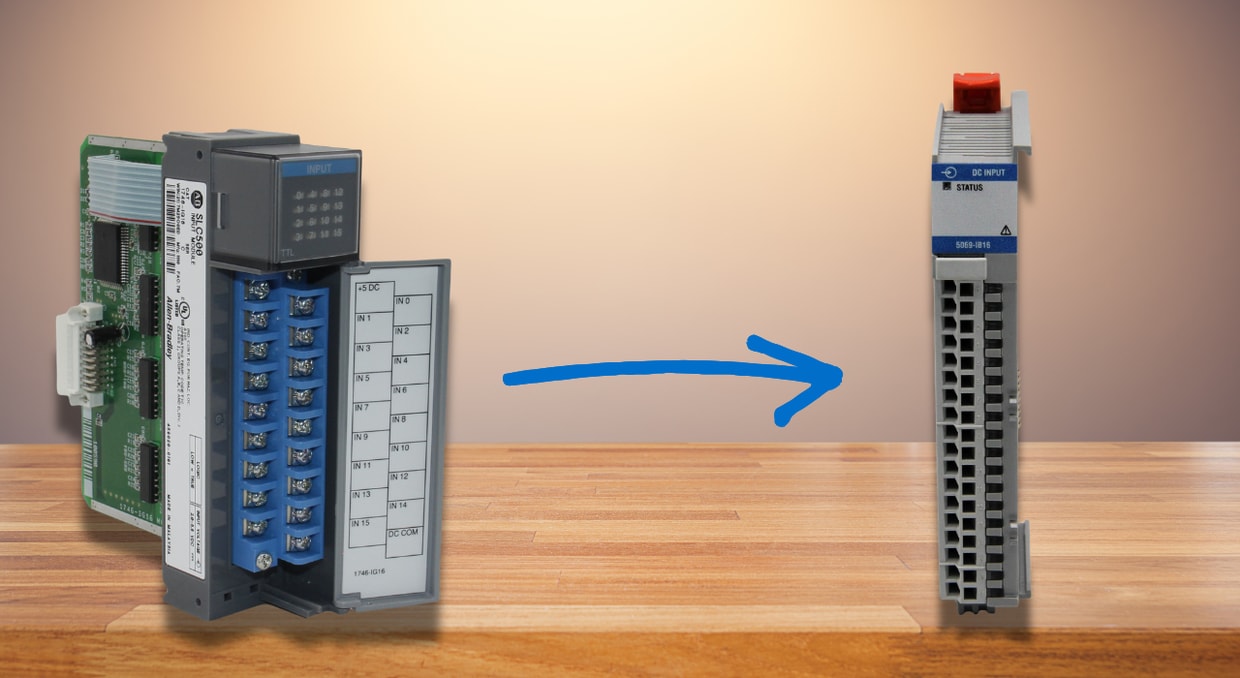
After 35 years of service in industrial automation, Rockwell Automation has officially discontinued the SLC 500 platform. For facilities still running SLC 500 hardware, the question is no longer whether to migrate but how to execute the transition without disrupting production. The recommended migration path leads to the CompactLogix 5380 control system, and understanding both the available tools and the process’s technical realities is essential before any project begins. Here, we will discuss migrating SLC 500 Systems to the CompactLogix 5380 as the latest upgrade.
Why the CompactLogix 5380 Is the Designated Successor?
Rockwell’s designation of the CompactLogix 5380 as the SLC 500 successor is grounded in architectural advancements in performance, security, and networking capabilities. The platform is equipped with dual Gigabit Ethernet ports that support fast, reliable I/O and motion control over EtherNet/IP, with motion capability up to 32 axes. Optimized firmware ensures maximum efficiency under demanding industrial conditions. Local I/O capacity supports up to 31 modules, with controller memory options ranging from 0.6 MB to 10 MB, depending on application requirements. The onboard display provides real-time diagnostics and troubleshooting capability, reducing dependence on programming software for routine operational checks.
Network Architecture Improvements
Network flexibility is one of the defining characteristics of the CompactLogix 5380 platform. The dual Gigabit Ethernet ports support Dual-IP configurations, Device-Level Ring (DLR), and linear topologies, accommodating networks of up to 180 nodes. This represents a fundamental departure from the serial and Data Highway Plus communication architecture that characterizes most SLC 500 installations. DLR topology provides network resiliency through a ring architecture that tolerates a single cable or device failure without loss of I/O communication. This capability did not exist in the SLC 500 environment.
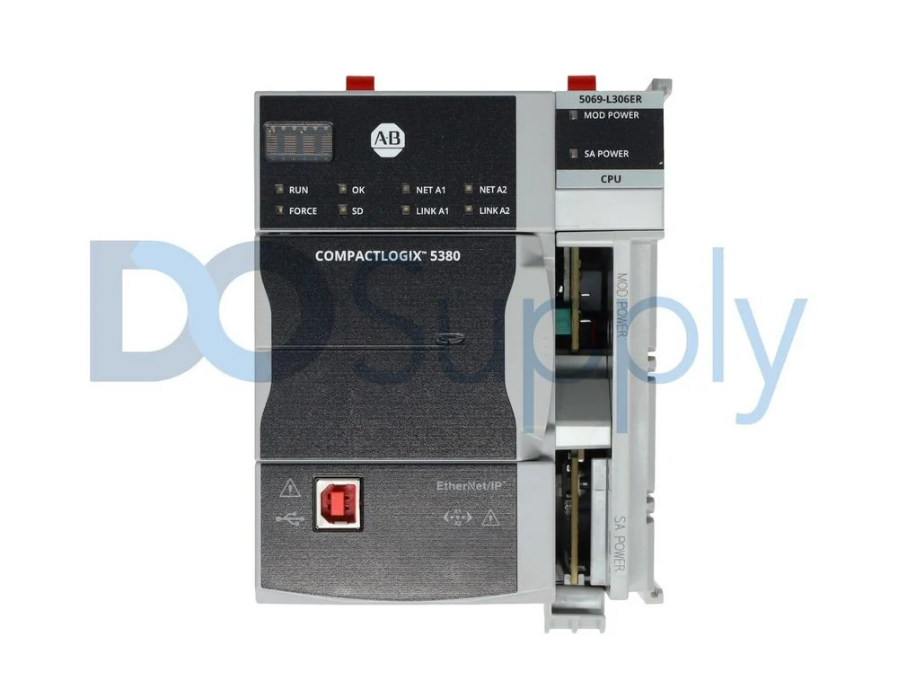
For critical processes, DLR should be evaluated during the network design phase rather than retrofitted after commissioning. Managed switches with appropriate QoS settings and proper VLAN segmentation for control traffic are prerequisites for a stable Ethernet/IP deployment, and existing plant network infrastructure should be assessed before the new controller is commissioned.
Cybersecurity Capabilities
The CompactLogix 5380 carries IEC 62443-4-2 certification at Security Level 1, establishing a formal cybersecurity baseline that the SLC 500 platform was never designed to meet. Encrypted firmware protects system integrity against unauthorized modification. Change detection and logging provide a continuous audit trail of modifications to the controller configuration and program. Role-based access control is implemented at the routine and Add-On Instruction level, allowing administrators to assign differentiated permission levels to operators, maintenance technicians, and engineers based on specific functional requirements. Users can selectively enable or disable the embedded Ethernet ports, providing granular control over network exposure. For facilities operating under industrial cybersecurity frameworks or subject to OT audit requirements, these capabilities represent a substantive improvement in compliance over the legacy platform.
Migration Planning Overview
Rockwell provides a structured migration path to help reduce the engineering workload involved in moving from SLC 500 systems to CompactLogix 5380. The process is usually divided into several major phases:
- Reviewing the existing control system
- Converting the control strategy
- Selecting replacement hardware
- Building a bill of materials
- Planning the final cutover
Each phase addresses a different part of the migration, and treating them as separate steps helps prevent the project from becoming a rushed controller swap.
Control Logic Conversion
Migrating the control logic from an SLC 500 system to a CompactLogix 5380 is a bit more involved than a copy-and-paste process. The SLC 500 uses a fixed file structure, while CompactLogix controllers use a tag-based architecture. That difference alone means the converted logic needs to be reviewed carefully before anyone trusts it with real equipment.
The migration path can support systems built around the main SLC 500 processor family, including the 5/01, 5/02, 5/03, 5/04, and 5/05. Simpler programs may come across with relatively few headaches, especially if the logic is straightforward and well-documented. Older programs with heavy indirect addressing, unusual data file usage, custom fault routines, or lots of communication logic usually need more attention.
That does not mean the conversion process is unreliable. It just means the result should be treated as a strong starting point, not a finished system. The more creative the original SLC program was, the more time should be set aside to verify how that logic behaves in the new controller.
Code Validation Requirements After Conversion
Validating converted logic needs to be checked against the actual machine or process before the system goes live. The biggest trouble spots are usually the parts of the program that depend heavily on the SLC 500’s fixed memory structure. Indirect addressing, integer file manipulation, status file references, custom fault-handling routines, timers, counters, and old communication logic all deserve a close look. These are the areas where a program can look fine at first glance but behave differently once the machine starts cycling.
Memory mapping is especially important. The SLC 500 organizes data into fixed files for outputs, inputs, status bits, binary data, timers, counters, control data, integers, and floating-point values. A CompactLogix system handles that information through named tags instead. During migration, those old file references need to be correctly mapped to the new structure. That mapping should be checked for anything tied to interlocks, alarms, permissives, startup logic, shutdown logic, and process values.
Finally, the system should be tested in a staged environment whenever possible. At minimum, the team should verify I/O mapping, startup behavior, shutdown behavior, alarms, faults, permissives, safety-related interactions, communication with connected devices, and recovery after a fault or power cycle. Even a small addressing issue can turn into a big problem when the wrong output energizes or an interlock does not behave as everyone expects.
System Design and Hardware Selection
The hardware side should be based on more than just matching the old I/O count. It’s a good starting point, but an integrator must also consider the following:
- Memory requirements
- Scan time expectations
- Communication needs
- Environmental conditions
- Spare parts strategy
- Future expansion
This is usually where the team should decide if it’s worth keeping and what should be replaced. Keeping some existing I/O or field wiring can reduce downtime and make the project easier to stage. On the other hand, dragging every old component forward can defeat part of the purpose of the upgrade. A module or adapter that is already difficult to source today is not going to become easier to support five years from now.
The selected CompactLogix 5380 controller should match the actual application. A small machine with basic discrete I/O does not need the same hardware as a larger process system with multiple networks, higher memory demands, and motion requirements. Good hardware selection keeps the project from being undersized, overbuilt, or awkward to maintain later.
Phased Migration Strategy Using the 1747-AENTR
One of the most strategically valuable elements of the SLC 500-to-CompactLogix 5380 migration path is the option for a phased I/O cutover rather than a single extended plant shutdown. The 1747-AENTR SLC EtherNet/IP communication module enables communication between a CompactLogix 5380 controller and existing SLC 500 remote I/O infrastructure over Ethernet. In a phased upgrade, the new CompactLogix 5380 processor is brought online while the existing remote I/O network remains fully operational. Engineering teams can validate converted control logic against live process conditions and migrate I/O chassis incrementally during scheduled maintenance windows, rather than executing a simultaneous cutover of controller and field I/O. Critically, the ability to revert to the previous configuration is preserved throughout the transition, which significantly reduces commissioning risk on high-availability processes.
Security Configuration Before Go-Live
The cybersecurity features of the CompactLogix 5380 require deliberate configuration to be operationally effective. Role-based access control must be designed and implemented before the controller goes live, assigning appropriate permission levels to operators, maintenance technicians, and engineers based on the routines and Add-On Instructions they require access to. Leaving access control at default settings negates the security value the platform provides. Change detection and logging should be enabled from commissioning onward, with log archiving incorporated into the site’s standard operating procedures. In environments subject to functional safety review or formal OT security audits, these records constitute part of the compliance evidence base. The ability to enable or disable embedded Ethernet ports should also be reviewed at commissioning, with unused ports disabled to minimize network attack surface.
Hardware Availability for Sites Deferring Migration
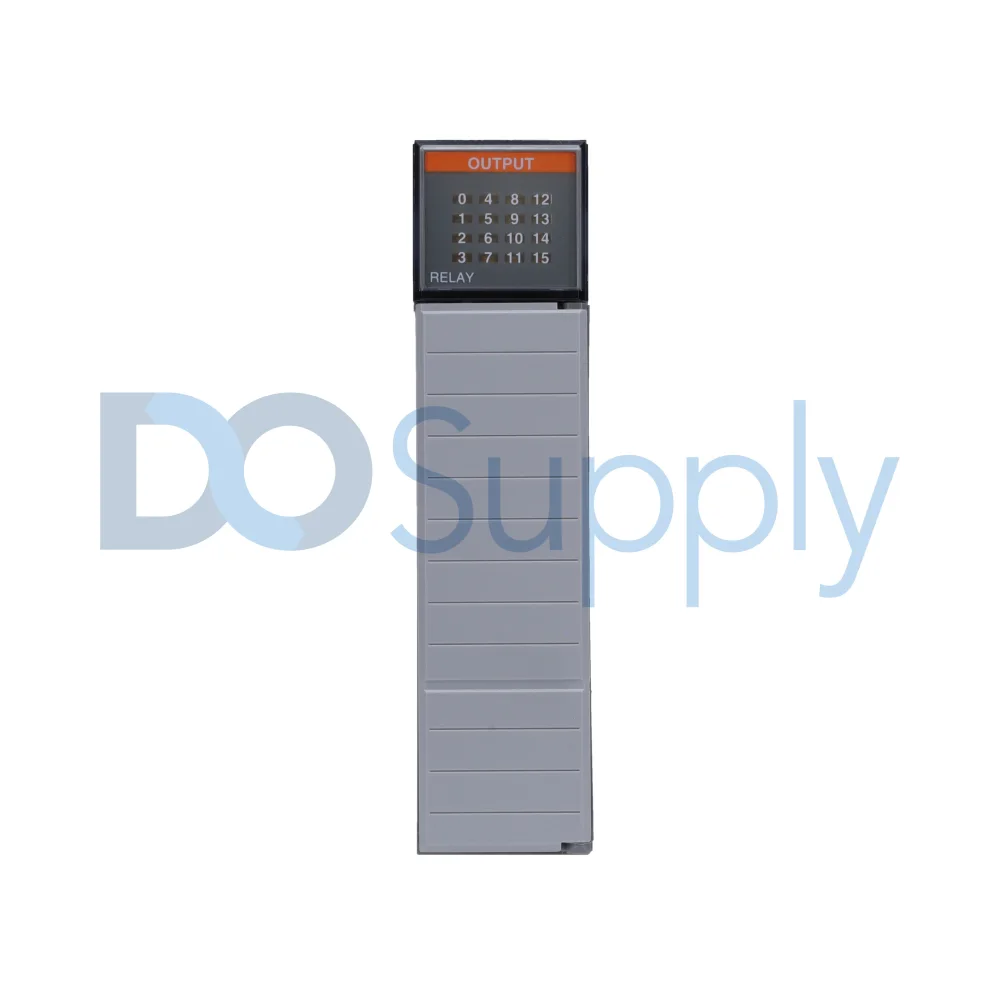
For facilities where a full migration is not immediately feasible due to capital budget constraints, planned turnaround schedules, or engineering resource availability, genuine SLC 500 components can still be sourced through specialist suppliers with access to global automation supply chains. This provides operational continuity for critical systems while a migration project is properly planned and resourced. Deferring migration should be treated as a deliberate, time-bounded decision made with full awareness of the support and obsolescence risks involved, rather than an indefinite default position.
Final Thoughts
In conclusion, migrating from SLC 500 is a well-supported transition with mature tooling, a defined hardware path, and a phased cutover option that materially reduces project risk. The engineering work required, code validation, network infrastructure assessment, security configuration, and I/O cutover planning, is substantial and must be scoped and resourced accordingly. Facilities that begin with a complete as-built audit of existing hardware, adopt a phased cutover strategy using the 1747-AENTR, and validate converted code thoroughly before live commissioning will be best positioned to execute the transition without production impact. We also have an article comparing the CompactLogix 5380 to the ControlLogix 5580 here.
Whether you are preparing for a CompactLogix 5380 upgrade or deciding to keep your existing SLC 500 system running until the right shutdown opportunity arises, we at DO Supply can help! We carry a wide range of Allen-Bradley SLC 500 components, CompactLogix hardware, I/O modules, communication adapters, replacement parts, and more to support both short-term maintenance and long-term modernization planning. Stop by our site and browse our inventory today, or even give us a call!
DO Supply Inc. makes no representations as to the completeness, validity, correctness, suitability, or accuracy of any information on this website and will not be liable for any delays, omissions, or errors in this information or any losses, injuries, or damages arising from its display or use. All the information on this website is provided on an "as-is" basis. It is the reader's responsibility to verify their own facts.