ControlLogix Integration with PowerFlex Drives
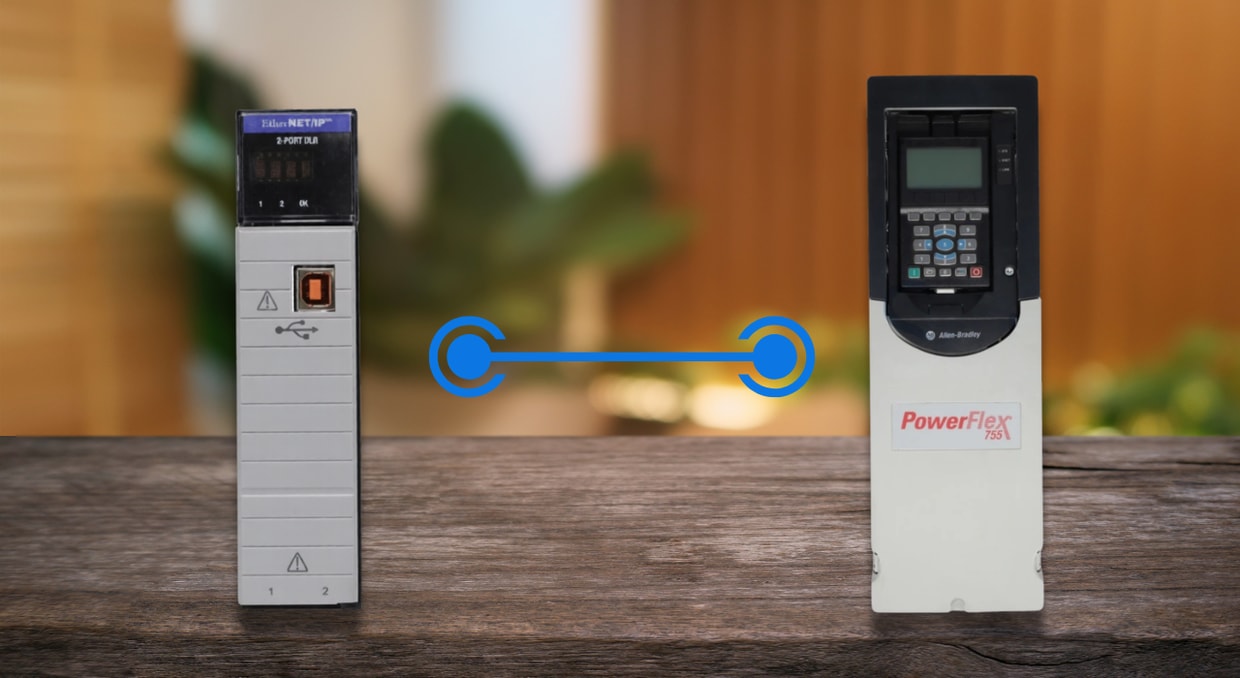
Variable frequency drives and programmable controllers have evolved from loosely connected hardware communicating via hardwired I/O to tightly integrated systems that share tag-based data, diagnostic information, and motion commands over a single industrial Ethernet network. The main point of this architecture in Rockwell Automation environments is the ControlLogix platform, and its integration with the PowerFlex drive family defines how modern Allen-Bradley-based control systems handle motor control from simple pump speed regulation to coordinated multi-axis positioning. This article covers the full integration architecture across hardware, communication protocols, Auto-Device Replacement, CIP Motion, and diagnostic practices.
PowerFlex Drive Family and ControlLogix Compatibility
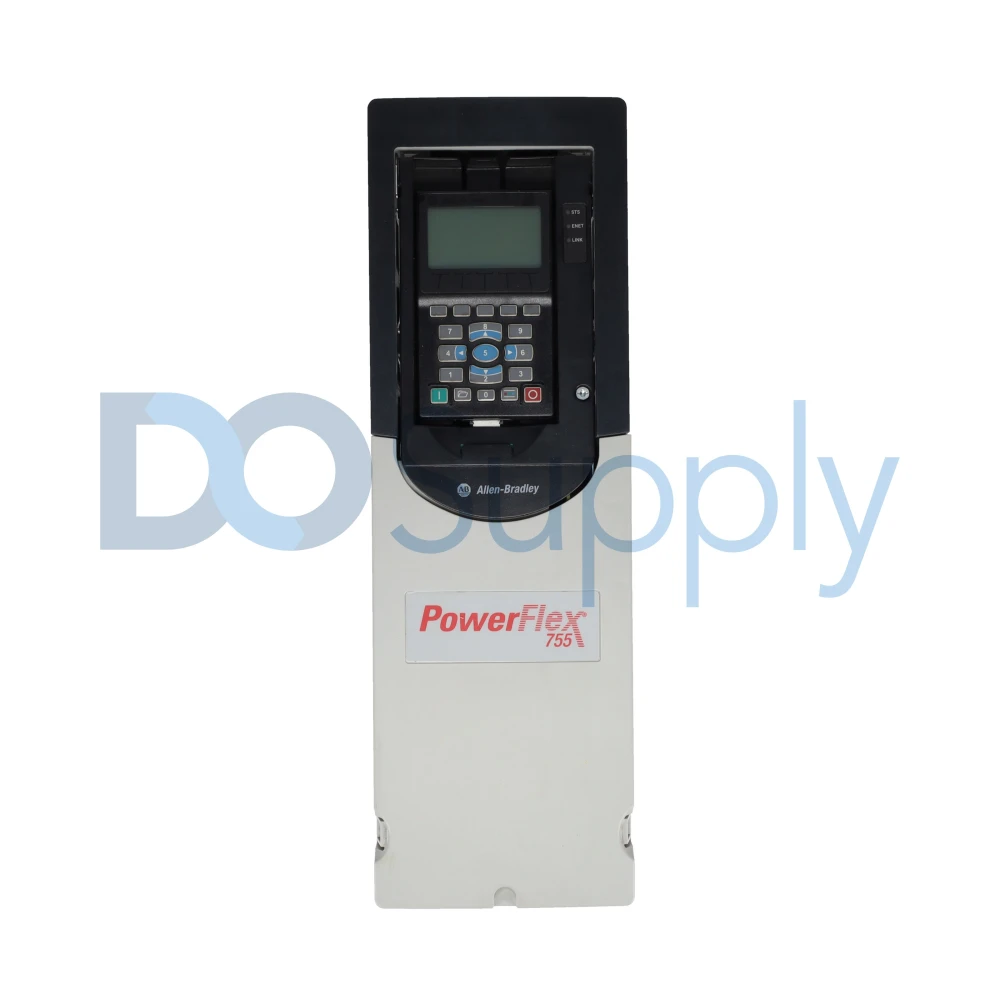
The PowerFlex drive portfolio spans several product lines, each with distinct integration characteristics when paired with ControlLogix. The PowerFlex 525 (catalog 25B series) is a compact drive rated from 0.5 to 30 HP and capable of supporting a dual-port EtherNet/IP adapter, making it suitable for standalone machine-level motor control. The PowerFlex 753 includes basic onboard I/O but requires the 20-750-ENETR communication card for EtherNet/IP connectivity, making it the preferred choice in cost-sensitive installations where extensive diagnostic networking is not critical. The PowerFlex 755 (catalog 20G series) integrates up to five option modules in dedicated drive ports, feedback, I/O, safety, and communication cards, with a native embedded EtherNet/IP port, supporting both standard vector control and CIP Motion servo-class positioning. The PowerFlex 755TS (TotalFORCE technology) adds active front-end harmonic mitigation, regeneration capability, and common bus configurations, fully supported within the Integrated Motion on EtherNet/IP framework documented in Rockwell publication MOTION-UM003P-EN-P (January 2025).
Standard ControlLogix or CompactLogix controllers (non-motion versions) provide complete EtherNet/IP control of PowerFlex drives via Add-On Instructions. Motion-capable PLCs are required only when the application uses CIP Motion servo positioning.
EtherNet/IP Communication Architecture
All current PowerFlex drives interface with ControlLogix through EtherNet/IP using the Common Industrial Protocol (CIP). The ControlLogix chassis communicates via a 1756-EN2T or 1756-EN3TR Ethernet bridge module. The 1756-EN2T supports 128 CIP connections and provides dual Ethernet ports, allowing port 1 to connect to the corporate or plant network while port 2 connects to the machine-level drive network, a standard architecture for isolating process control traffic from enterprise IT.
EtherNet/IP connections between ControlLogix and PowerFlex drives operate as Class 1 implicit I/O connections, cyclic, time-critical data exchanges established at controller startup and maintained throughout the control program’s execution. The Requested Packet Interval (RPI) for drive connections is configurable; an RPI of 10ms is typical for real-time control applications, while EtherNet/IP parameters such as static IP addressing, subnet mask, and gateway are set directly on the drive through parameter groups or BOOTP utility.
For installations with large drive counts, static IP addressing is mandatory in production environments; DHCP-assigned addresses can change, causing drive communication loss, intermittent faults, and unplanned downtime. Each PowerFlex drive requires a unique IP address on the EtherNet/IP subnet.
Parameter Management and Drive Replacement
Drive replacement is one area where ControlLogix and PowerFlex integration can help minimize downtime. In a hardwired system, replacing a failed drive usually means manually entering parameters, checking jumper settings, confirming I/O behavior, and more. Now, in a networked ControlLogix and PowerFlex system, parameter management is easy to handle. You will still need to find a replacement drive with the same model, voltage, horsepower, communication type, and firmware range for the application, but the system can be structured so that the correct parameters are restored as part of the replacement process.
For this to work properly, the drive must be correctly identified on the network, assigned the proper IP address, and matched as closely as possible to the original unit. Ideally, you want to be exact with hardware matching, especially if it’s in a regulated or safety-related install.
CIP Motion Integration with PowerFlex 755 and 755T
CIP Motion elevates PowerFlex 755 and 755T drives from variable-speed drives to servo-class motion axes within the ControlLogix Integrated Motion framework. CIP Motion-capable hardware requires a ControlLogix processor with motion support (1756-L7x or later), a PowerFlex 755 with firmware supporting CIP Motion, typically version 4.001 or later, an encoder feedback card (20-750-ENC-1 or Universal Feedback Card), and an EtherNet/IP connection.
In these applications, the drive is treated less like a standalone VFD and more like an axis in a coordinated control system. Because of this, encoder feedback is important, as the controller and drive need position and velocity information rather than just a speed command. ControlLogix Integrated Motion framework.
The PowerFlex 755T adds further capabilities for demanding systems by supporting regeneration, common bus configurations, and harmonic mitigation options. That makes it especially useful in applications where energy flow, braking behavior, and line-side power quality matter as much as motor control.
Network Topology and Scalability
Large-scale ControlLogix-to-PowerFlex installations, conveyor systems, water treatment stations, and process plant motor control centers use Device Level Ring (DLR) topology to achieve network fault tolerance. DLR operates as a single EtherNet/IP ring with a supervisor node (typically the 1756-EN2TR dual-port module) that monitors ring integrity and switches to linear fallback topology within 3ms of detecting a cable fault. PowerFlex 755 drives with embedded dual-port EtherNet/IP adapters participate natively in DLR rings without requiring additional switch hardware at each drive drop.
For installations where IP address allocation is constrained by customer IT policy, installing a second Ethernet communication module (1756-EN2T) in the ControlLogix chassis provides dual-network isolation, one port connecting to the corporate network, the other to the machine-level drive subnet, with the PLC routing between networks without requiring special routing configuration if subnets differ.
Fault Diagnostics and Drive Health Monitoring
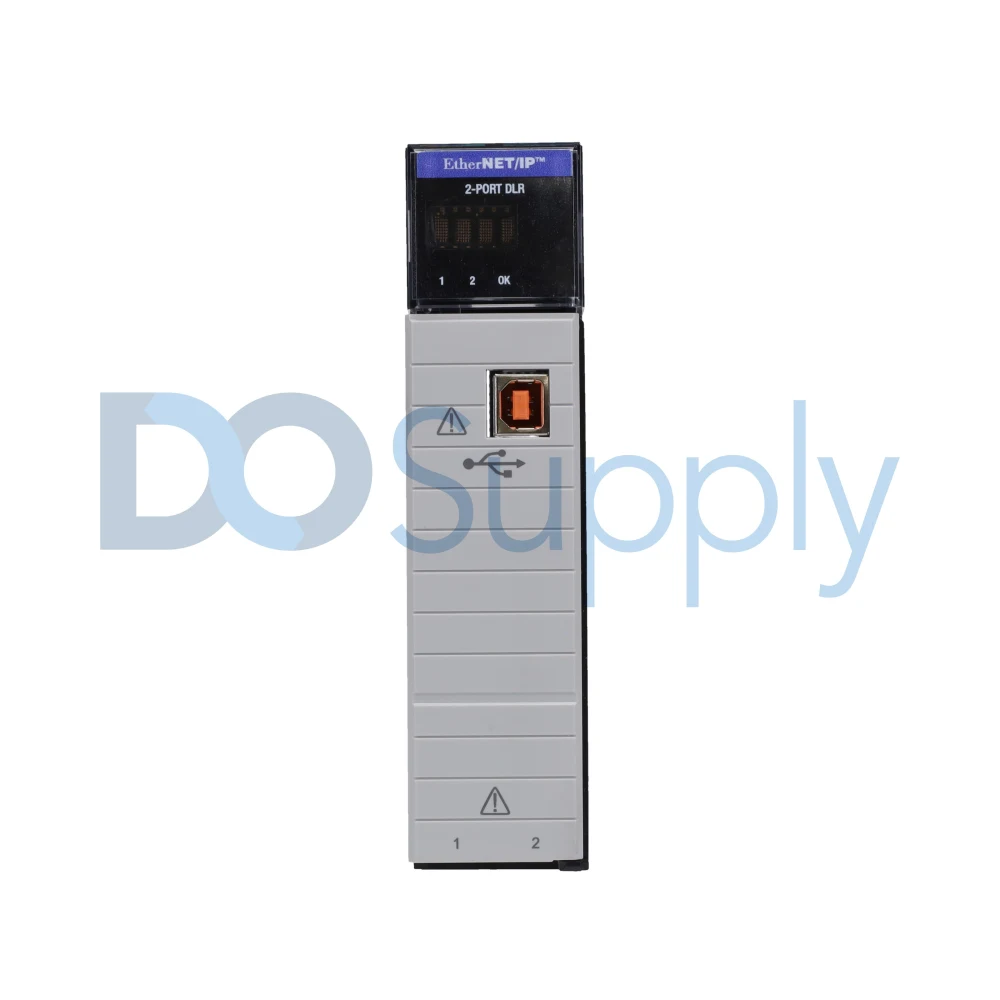
The ControlLogix-PowerFlex integration delivers diagnostic depth that hardwired I/O-based drive control cannot approach. Drive fault codes returned in the input assembly status word are accessible as controller tags in real time, enabling ladder logic to execute fault-specific responses, automatic restart on transient faults, immediate e-stop interlock on protection faults, without operator intervention. Firmware compatibility and network parameters, including VLAN configuration and firewall settings, must be verified during commissioning, as corporate firewalls may block EtherNet/IP UDP traffic on port 2222, causing connection timeouts that appear as module faults in the ControlLogix I/O tree.
For the PowerFlex 755, the embedded web server accessible via the drive’s IP address provides parameter browsing, fault history, and trend data viewable from any networked workstation without a connected laptop on the plant floor.
Application Engineering Considerations
Translating the ControlLogix-PowerFlex integration architecture into reliable application deployments requires engineering discipline at each layer. Electronic keying selection, Exact Match, Compatible Module, or Disable Keying must be set to Exact Match for drives in safety-critical or regulated process applications to prevent unauthorized drive substitution. RPI values must also be selected based on application response requirements: 10ms for closed-loop speed-control applications; 20–50ms for monitoring-only connections, where scan-rate demands on the Ethernet module must be managed across large drive counts.
Final Thoughts
In conclusion, ControlLogix integration with PowerFlex drives spans a range of capabilities, from basic EtherNet/IP speed control of a single pump motor to multi-axis CIP Motion coordination of high-power induction motors in synchronous production machinery. Selecting the correct PowerFlex variant, configuring communication parameters precisely, and structuring the application code around the drive’s UDT interface ensure reliable integration across the full production lifecycle. For more information on PLCs, we have an article here going over PLC communication delays and their impact on your system.
At DO Supply, we carry an extensive catalog of PowerFlex drives and ControlLogix controllers to support your automated system. We also carry accessories, such as communication modules, all tested and ready to be shipped with our two-year warranty. If you’re unsure about compatibility or even what drive might fit, no problem, give us a call and our team will be more than happy to help!
DO Supply Inc. makes no representations as to the completeness, validity, correctness, suitability, or accuracy of any information on this website and will not be liable for any delays, omissions, or errors in this information or any losses, injuries, or damages arising from its display or use. All the information on this website is provided on an "as-is" basis. It is the reader's responsibility to verify their own facts.