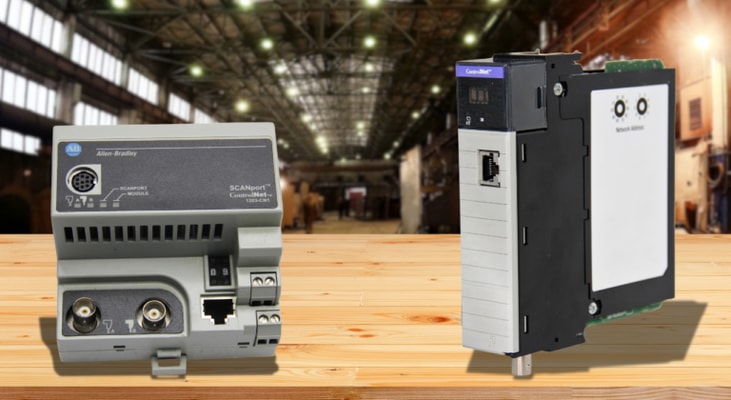
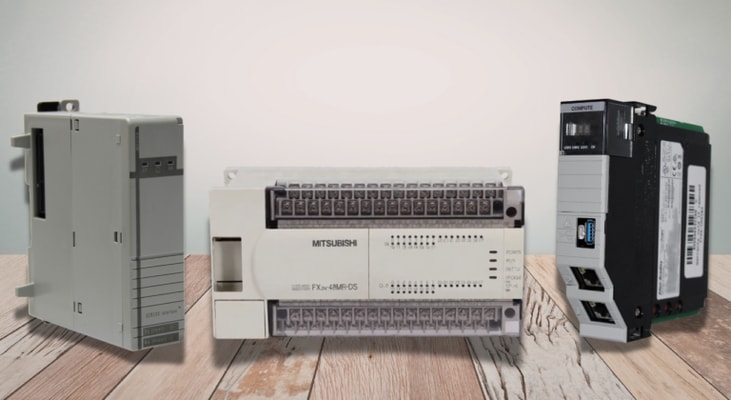
Distributed control systems, essential to modern industrial automation, need distinct hardware components to communicate seamlessly across large facility floors. The Programmable Logic Controller (PLC) is at the core of this system. PLCs execute control logic, process sensor and I/O data, command field devices, and exchange information with HMIs, SCADA systems, drives, remote I/O, and higher-level systems. But a PLC’s effectiveness depends on the communication networks that connect it to company databases, input/output (I/O) modules, human-machine interfaces (HMIs), and supervisory control and data acquisition (SCADA) systems. Over the last several decades, simple proprietary serial lines have given way to sophisticated, high-speed Ethernet-based protocols. Determinism, bandwidth, distance, setup complexity, and cybersecurity must all be balanced to choose the best protocol, which is seldom a simple technical task. Automation engineers must understand these trade-offs to build...
A variable frequency drive (VFD) rarely fails suddenly. Instead, before a VFD stops reliably operating a motor, it will begin to show signs of degradation, starting with symptoms like increasing fault counts, distinct noises, or thermal stress. These eventually culminate in signs of the drive’s aging internal components. If maintenance crews spot those early warnings, they may have time to install a new VFD before failure, keeping production running. A VFD’s service life is mainly controlled by two wear-limited parts with documented, temperature-dependent life expectancies: the electrolytic capacitor that forms the DC bus, and the cooling fan. Aging in both components is slow — they don’t fail on a fixed date but degrade gradually, so assessing age means understanding behavior, not just install date. ABB’s ACS550 documentation (page 67, section 4) and the ACSM1 VLT FC 302 documentation (page 4, section 2) describe this best. Electrolytic capacitors on the DC-link circuit smooth the...
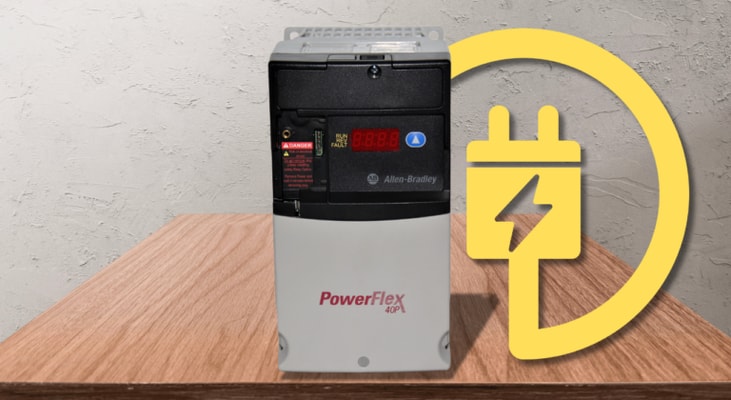
One of the most annoying diagnostic situations in industrial drive maintenance is a nuisance overcurrent issue. When the PowerFlex trips, production stops, the operator resets it, and it functions normally for many hours before tripping again for no apparent reason. Nuisance overcurrent faults are condition-dependent, sporadic, and seldom self-explanatory from the fault code alone, in contrast to a hard fault brought on by an obviously malfunctioning component. An overcurrent fault is a precise diagnostic signal intended to prevent damage to the motor, drive, and related equipment. It shows up as a strong, abrupt current spike that exceeds the drive’s hardware limits. Diagnosing any PowerFlex model, from the tiny 525 to the architecture-class 755T, depends on understanding what causes these spikes and distinguishing between hardware-level and software-level overcurrent detection. When diagnosing a PowerFlex overcurrent problem, the first thing to consider is whether the event is...
One of the most important decisions in industrial motor control is choosing the right Variable Frequency Drive (VFD), or AC drive, to match your motor and application requirements. Proper AC drive selection begins with understanding the mechanical load characteristics because the load type determines the current and torque requirements the selected AC drive and connected motor must meet across all operating speeds. An appropriately sized AC drive provides adequate continuous and overload current capability to generate the required motor torque while operating reliably. Selecting an incorrectly configured or improperly sized AC drive often results in insufficient starting or accelerating torque, excessive drive or motor heating, reduced efficiency, nuisance trips, and premature equipment failure. In contrast, an AC drive that is correctly matched to the specified load type helps improve motor performance, operation reliability, energy efficiency, and overall system lifespan. Because of...
When choosing a PLC, the system’s architecture affects all subsequent engineering work, from how control panels are drawn to the cost of maintaining the system over years of service. Most PLCs fall into one of two competing design philosophies: modular architecture, where the I/O, CPU, and power supply are separate elements on a common backplane, or fixed architecture, where all of these are combined in a single housing. Every major PLC vendor offers product lines that follow both designs, and understanding how each platform is laid out helps an engineer pair architecture to application rather than defaulting to whatever solution is already sitting on the shelf. Comparing the five largest control vendors in Europe, North America, and Asia – Rockwell, Siemens, Schneider Electric, Mitsubishi, and Omron – all of which market modular and fixed models side by side – shows which factors vendors weigh when dividing fixed and modular I/O architectures. The real tradeoffs come down not to...
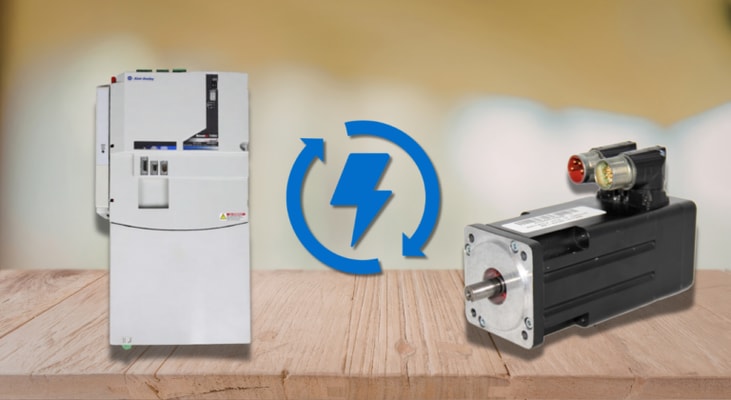
Rockwell Automation’s high-power servo drive platform, the Kinetix 7000, is intended for large-frame motion applications. Commonly paired with MP-Series motors, the drive was available in power ratings from 22 to 149 kW, making it well suited for applications involving high inertia, large mechanical loads, and demanding acceleration and deceleration cycles. One challenge that arises with these applications is managing regenerative energy. When a servo motor decelerates or is driven by its mechanical load, it can operate as a generator and return excess energy back to the drive’s DC bus. However, if that energy has nowhere to go, the rising bus voltage can cause an overvoltage fault. How the Kinetix 7000 handles this energy depends on the system’s power configuration. A drive can operate from its own AC line connection, while systems with greater regenerative demands can incorporate external shunt equipment or a regenerative power supply such as the 8720MC-RPS . Kinetix 7000 drives can...
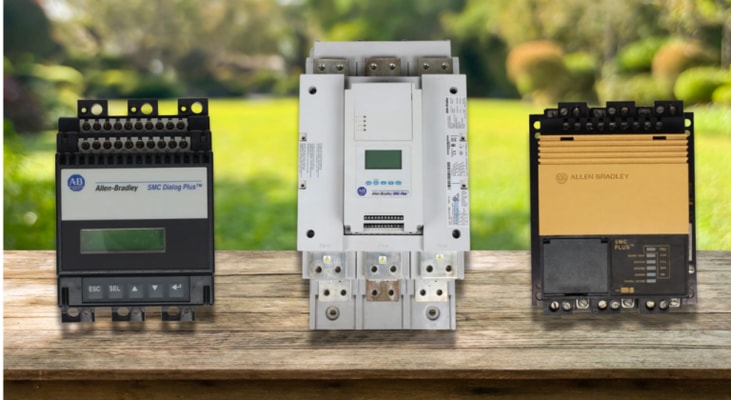
When selecting a soft starter for your motor control application, it helps to know what each setting does and how it affects your motor’s behavior. However, as different modes and features are added to a soft starter, it can be a bit overwhelming to determine the optimal choice for your application. After all, there is kick start, current ramp, torque control, linear acceleration, full-voltage start, and more. Today we will narrow down this list and go over the two more popular starting modes, voltage ramp and current limit start, explain what makes them different, and even why they might be used together. Order SMC Flex Soft Starters Here Before we dive into how these soft starter features work, it helps to first briefly go over what a soft starter is and does. If you would like a much more in-depth explanation and overview, we encourage you to read our full guide to soft starters here . The general idea of a soft starter is to place this device between an induction motor and its...
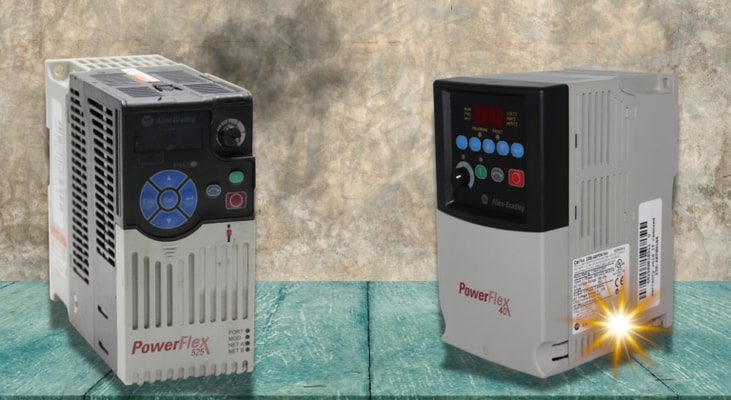
When it comes to PowerFlex drives, the gap between the most cost-effective model and the most technologically advanced unit is quite significant. From the humble PowerFlex 4M and 520-series controllers offering simple and dependable motor control, to the flagship PowerFlex 755T family built with smart features in mind for demanding applications. Technically speaking, both ends of the lineup are doing the same basic job. They take incoming electrical power and control how it’s delivered to the motor. But that’s like comparing a 20-year-old work truck and a newer, fully equipped heavy-duty model. Sure, both can get you down the road, but one is designed to handle a much wider range of conditions, loads, and specialized tasks. It’s this gap that makes the PowerFlex line interesting to compare. Moving from an entry-level drive to a high-performance model doesn’t just add a few settings or a larger enclosure, but rather more sophisticated motor control, beefed-up hardware, and a suite of...
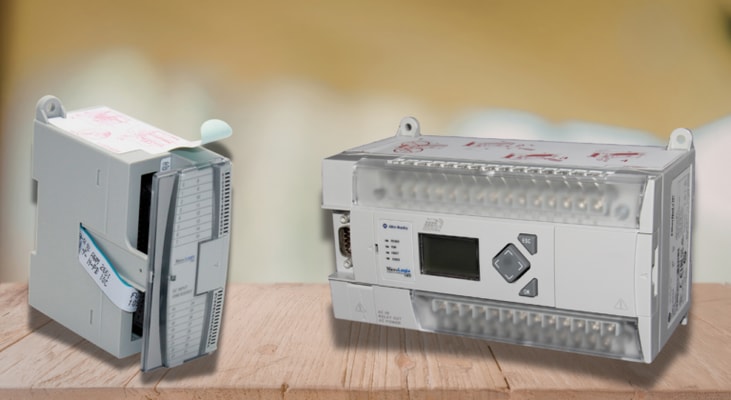
For more than 20 years, one of the most extensively used programmable logic controller (PLC) platforms in small and medium-sized industrial facilities has been the MicroLogix family, which includes the 1000 , 1100 , 1200 , 1400 , and 1500 series. Each MicroLogix controller combines the CPU, power supply, communication interfaces, and fixed or semi-modular input/output (I/O) into a single chassis, making it a small, self-contained automation system. MicroLogix streamlines installation, minimizes cabinet space, and reduces overall system complexity compared to modular PLC systems like CompactLogix and ControlLogix, which distribute these components across a backplane. By enabling modest extension with Bulletin 1769 Compact I/O modules, the MicroLogix 1500 further increases versatility. MicroLogix controllers have enough processing power for a variety of industrial applications, while being small by today’s standards. They handle 16 to several hundred discrete I/O points, provide between...
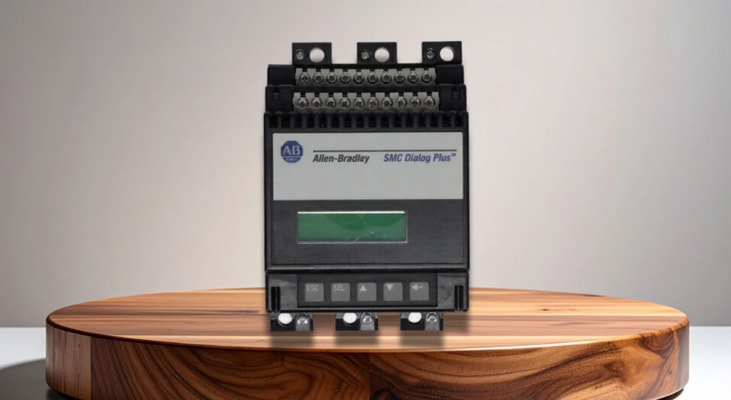
Automation equipment gets phased out all the time. We see it with PLCs, drives, and everything in between. However, obsolescence doesn’t mean the equipment is unusable or should be replaced immediately. This is the case for the SMC Dialog Plus soft starter family. Discontinued in 2014 as Rockwell phased out the mature product family, the successor to this soft starter family is the SMC-3 , SMC Flex , or the SMC-50 . The question is now whether the SMC Dialog Plus is still worth using or if its newer replacements are a better buy. There are many reasons why someone would want a legacy product over a newer offering. Sometimes it’s just easier to get the same product you know will be reliable and work for your system. Other times the cost of upgrading might not be worth the potential productivity increase of a newer system. Often, a facility needs a direct replacement as soon as possible when their old one breaks. There is no time to fit, program, and upgrade to newer hardware when every...
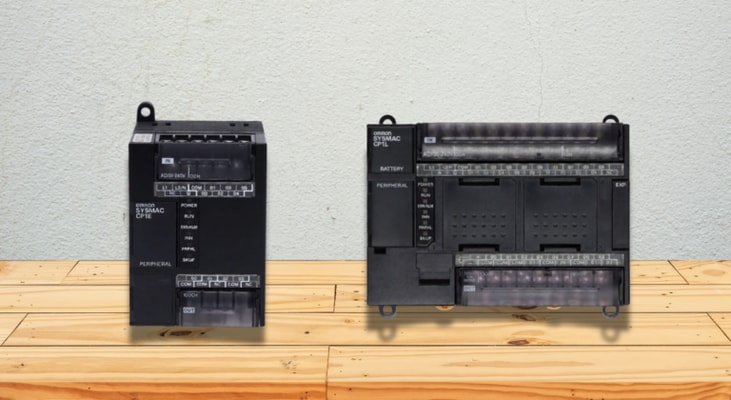
The problem that every OEM machine builder faces is what hardware to buy that will help power and control their system. For PLCs, they may face constraints with controller memory size, communication options, motion capabilities, and the size of the PLC. For many compact to moderately complex OEM machines, an Omron CP1 controller may already provide everything the design requires. Designed for machine level automation, the CP1 families capabilities range from basic control tasks to more capable applications involving communications, analog signals, and positioning. Omron has split the CP1 controller family into three different performance levels: The CP1E, CP1L, and CP1H. The CP1E is the most cost effective solution for simpler machines, the CP1L offers a middle ground between the three, and the CP1H is the high end model with additional speed and positioning capabilities. Order Omron CP1 CPU Units Here The Omron CP1E is the entry level controller in the CP1 family. It is designed to...
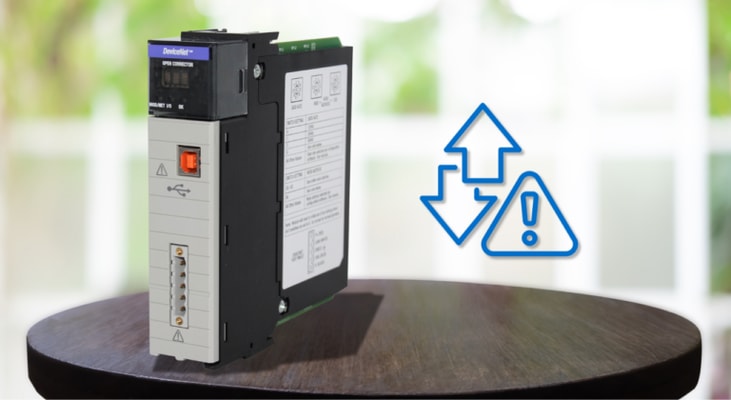
ControlLogix communication delays are often not the fault of a single component. In most field situations, the culprit is not a broken device but a design misalignment among the controller’s capacity, the choice of communication module, and the network built around it. A ControlLogix system is modular, and delays often trace back to a specific design decision: too many nodes on the I/O bus, the use of an antiquated bridge module, or a backplane routing configuration stretched beyond its performance envelope. Getting a strong grip on these mechanics and moving away from thinking of delay as just a generic “network problem” is what will distinguish a permanent fix from a temporary workaround. Every ControlLogix controller has an upper limit on the number of nodes and connections it can support, and exceeding that limit is one cause of communication lag. A node is any device added to the I/O configuration, and pushing a network beyond that count can cause delays that no amount of...
In PowerFlex variable-frequency drives (VFDs), the DC bus functions as the internal power bridge and electrical reservoir between the AC input rectifier and the output inverter stage. Once the incoming AC line voltage is rectified, the DC bus capacitors smooth and stabilize the resulting DC bus voltage by reducing voltage ripple, thereby delivering a steady DC supply to the inverter. They also temporarily absorb the regenerative energy produced during overhauling-load conditions or motor deceleration, reducing rapid voltage fluctuations and improving energy efficiency. This article provides a comprehensive overview of the fundamentals of DC bus voltage in Allen-Bradley PowerFlex drives. Knowledge of pre-charge drive operation, DC bus capacitors, shared DC bus configurations, DC bus regulation, regenerative energy management, and common DC bus-related faults enables engineers and maintenance personnel to maximize the reliability of PowerFlex drives, improve overall system performance...
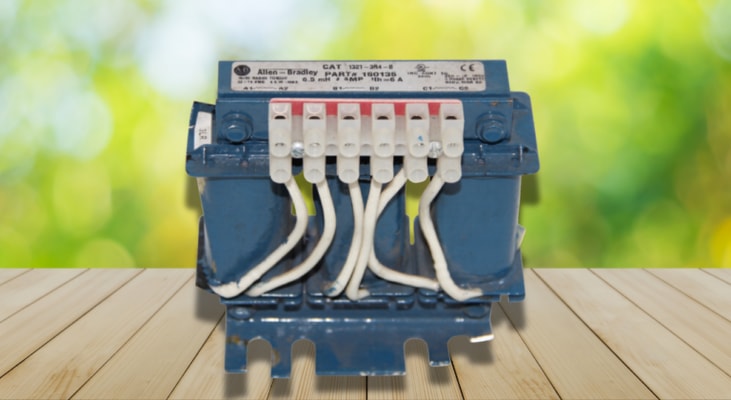
Modern motor control relies heavily on variable frequency drives, yet the components that safeguard them are often the first to suffer budget cuts. Line reactors, also known as input reactors, are often seen as optional add-ons rather than necessary safety measures. The electrical mechanics underlying reactor protection, the failure types that reactors avoid, and the cost justification for implementing them on each drive installation are all discussed in this article. In simple terms, an input reactor is a three-phase inductor placed between a drive’s input terminals and the incoming AC power source. Its purpose is surprisingly straightforward: it increases the line’s impedance. In a drive environment, this impedance smooths out the abrupt current spikes that occur each time the drive’s rectifier bridge charges its DC bus capacitors, as it resists rapid current changes. Drives convert incoming AC to DC using an SCR bridge rectifier or diode. Because the current is drawn in brief...
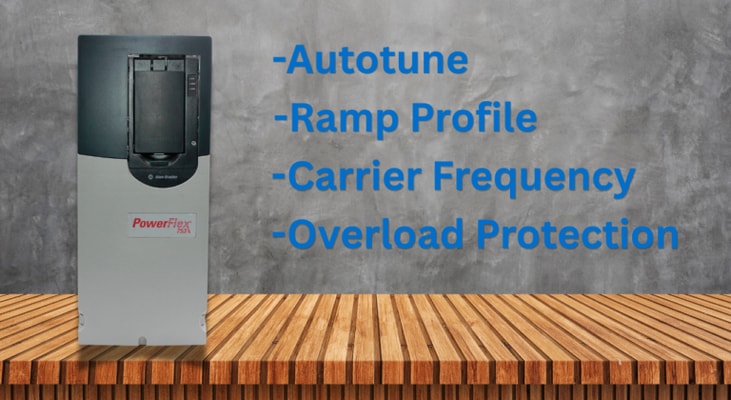
Teams with short timeframes set up Rockwell’s PowerFlex drives every day, and most of that work only touches the handful of parameters needed to make a motor spin: voltage, frequency, and a start reference. Once the motor turns, the commissioning checklist gets signed off, and everyone moves on to the next job. But PowerFlex drives feature dozens of secondary parameters that regulate efficiency, thermal load, fault tolerance, and lifespan. When these are left at their defaults and never reviewed, the drive still runs, but often well below its capabilities. Factory settings on a PowerFlex drive exist for one reason: broad compatibility. They are built to work across a wide range of motors and applications, which means they are rarely ideal for any single fixed installation. A default acceleration ramp, carrier frequency, or stall timer is enough to get a drive running. Still, it won’t match the thermal properties of a specific motor, the inertia of a specific load, or the electrical...