How Communication Standards Impact Machine Safety and Speed

Communication protocols are the rules that control how machines communicate with each other in factories. These rules directly determine two critical things: how fast production lines can run and how easily and safely they operate. When machines can communicate quickly and reliably, factories produce more products with fewer accidents. When communication is slow or unreliable, production suffers, and safety systems may fail to meet required standards.
Understanding Factory Communication Layers
Modern factories organize their communication systems in hierarchical layers. At the bottom (Level 0) are the physical devices: sensors that measure temperature or pressure, motors that move conveyor belts, and valves that control fluid flow. The next level up (Level 1) contains PLCs (Programmable Logic Controllers), which are specialized industrial computers that control these devices.
PLCs run control programs in continuous cycles, making decisions every few milliseconds. A typical PLC scan cycle ranges from 0.1 milliseconds to 100 milliseconds, depending on the program’s complexity and the number of input/output points it must handle. These controllers connect to sensors and actuators through industrial networks.
Above the PLCs sits Level 2, which contains SCADA systems. SCADA stands for Supervisory Control and Data Acquisition. These systems collect data from multiple PLCs across the facility and display it to human operators. SCADA systems typically update their displays every 100 milliseconds to several seconds (depending on the SCADA software and vendor), which is fast enough for people to monitor operations and respond to problems. However, when alarms occur, they must appear on operator screens within 100 milliseconds to meet safety standards.
Level 3 connects the factory floor to business computer systems that handle orders, inventory, and scheduling. Each of these levels requires different communication speeds and reliability levels. The protocol choices at each level determine how well the entire system performs.
How Communication Delays Affect Production Speed
Every communication system introduces delays from multiple sources: the time it takes sensors to measure, the time required to transmit messages across the network, the time controllers need to process information, and the time actuators need to physically move.
Think of a high-speed bottling line that fills 600 bottles per minute. That means one bottle every 100 milliseconds. If the communication system adds 20 milliseconds of delay at each decision point and there are five decision points per bottle, the system adds 100 milliseconds of total delay. Suddenly, the theoretical maximum speed becomes impossible to achieve, not because the mechanical equipment is too slow, but because the machines cannot talk to each other fast enough.
Older communication protocols demonstrate these limitations clearly. Modbus RTU, a serial protocol that has been used for decades, runs at speeds up to 115,200 bits per second. In practice, a typical Modbus transaction often takes tens to hundreds of milliseconds in real installations, depending on baud rate, message length, and device response time. This happens because of protocol overhead, the time required for devices to process messages, and the way multiple devices share the same communication wire.
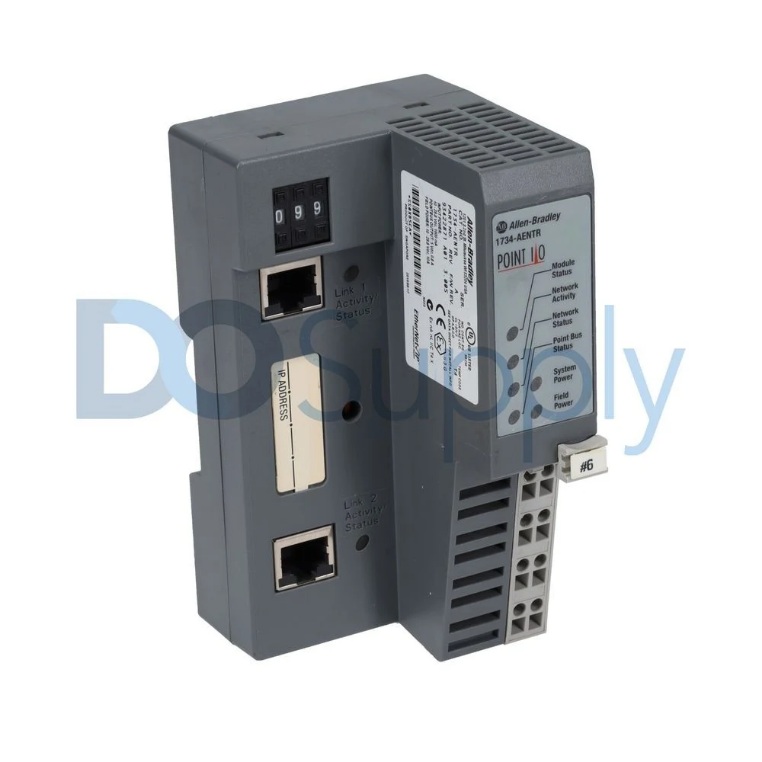
Modern industrial Ethernet protocols achieve better performance. PROFINET IRT (Isochronous Real-Time) uses time-division multiplexing and specialized computer chips to achieve cycle times as short as 31.25 microseconds. EtherCAT uses a clever approach in which a single message passes through all devices in sequence, with each device reading and writing data as it passes. This enables cycle times of 50 to 100 microseconds with timing variations (jitter) less than 1 microsecond across more than 100 devices.
These speed improvements matter tremendously for precision motion control. Servo motors that control robot arms or coordinate multi-axis machines need position updates 1,000 to 4,000 times per second to maintain stable control. Only communication protocols that can guarantee delivery times of less than 1 millisecond with minimal jitter can support these applications.
Safety Communication Requirements
Safety functions require even more communication performance than speed control. When a worker steps into a robot’s danger zone or an emergency stop button is pressed, the communication system must reliably deliver the safety message within guaranteed time limits.
International safety standards define exactly how reliable these systems must be. The standards use Safety Integrity Levels (SIL) that specify the probability of dangerous failures. SIL 3, commonly required for machinery safety functions, means the system can have no more than one dangerous failure per 10 million to 100 million operating hours.
Achieving this reliability over communication networks requires multiple protection mechanisms working together. Safety protocols use sequence numbers on every message to detect if messages get lost, duplicated, or arrive out of order. They use cyclic redundancy checks (mathematical checksums) to detect data corruption with extreme accuracy. They include timestamps and timeout monitoring to catch messages that arrive too late. They verify sender and receiver addresses to prevent messages from going to the wrong destination.
PROFIsafe, a widely used safety protocol, demonstrates this approach. Every PROFIsafe message includes a 40-bit sequence number, a 16-bit error-checking code, source and destination addresses, and control information. The receiving safety controller checks all these fields before accepting the data. If any check fails, the system immediately transitions to a safe state, typically stopping dangerous motion or shutting off power.
Safety response time requirements add another challenge. Many protective functions must respond within 100 milliseconds or less. After accounting for sensor detection time (5 to 20 milliseconds), controller processing time (5 to 15 milliseconds), and actuator response time (10 to 100 milliseconds depending on the mechanism), the communication system might have only 10 milliseconds to guarantee message delivery. The protocol must ensure worst-case delivery times stay within this budget with very high confidence.
Real-Time Ethernet Protocol Categories
Standard office Ethernet does not work well for factory control because it is non-deterministic, and message delivery times vary unpredictably. Industrial protocols modify Ethernet in three different ways to achieve the deterministic behavior that control systems require.
The first approach modifies the software stack while using standard Ethernet hardware. Protocols like Modbus/TCP optimize their application and transport layers to reduce delays. These protocols achieve cycle times of 10 to 100 milliseconds, which suffices for simple discrete input/output and basic process control but falls short for motion control applications.
The second approach bypasses the TCP/IP software stack and implements direct Ethernet frame handling with priority mechanisms. PROFINET RT and EtherNet/IP use this method, achieving cycle times of 1 to 10 milliseconds with jitter under 1 millisecond. This approach requires Ethernet switches that support priority queuing but use standard Ethernet network interface cards.
The third approach implements hardware-based deterministic scheduling using specialized integrated circuits. PROFINET IRT uses switches with FPGA-based processors that forward frames according to precise time schedules. EtherCAT uses specialized slave controller chips that process data on the fly as frames pass through. POWERLINK uses time-sliced medium access, where a managing node coordinates when each device can transmit. These hardware-based protocols achieve cycle times from 31.25 microseconds to a few milliseconds with jitter under 1 microsecond.
Precision Time Synchronization
Many applications require extremely precise time synchronization across all network devices. Coordinated motion control provides a clear example: when multiple motors must move together to process continuous material such as paper or film, timing errors between the motors create position errors that damage products.
Standard computer time synchronization using Network Time Protocol achieves accuracy of 1 to 50 milliseconds. This works fine for logging events or coordinating business applications, but it is completely inadequate for motion control.
Industrial time synchronization using the IEEE 1588 Precision Time Protocol relies on hardware timestamping that captures the exact moment messages enter the physical network. This eliminates timing variations from software processing and achieves synchronization better than 1 microsecond across switched networks. With enhanced features like boundary clocks in switches, it can achieve sub-100-nanosecond performance.
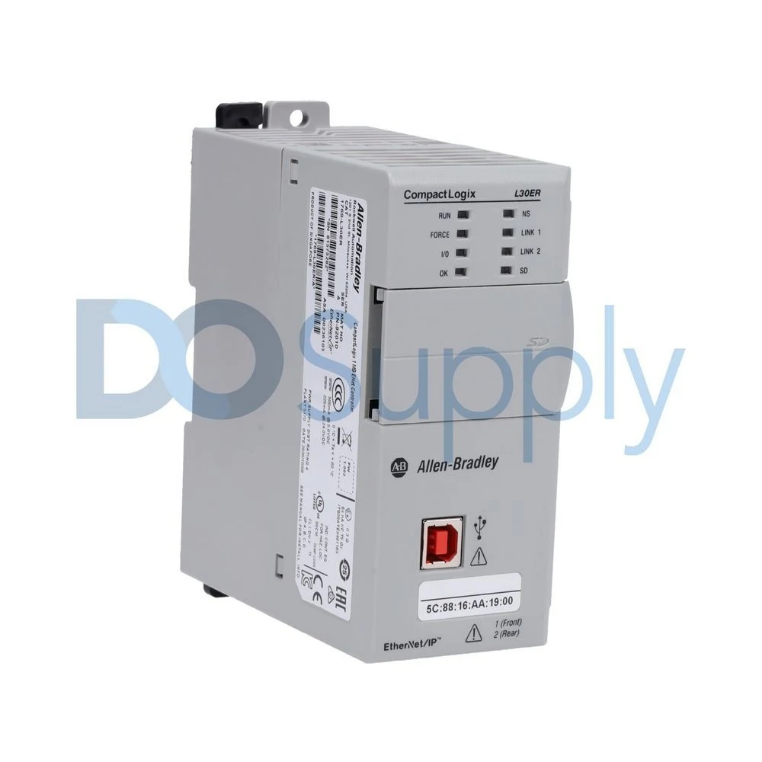
EtherCAT’s Distributed Clock system achieves even tighter synchronization, better than 50 nanoseconds, by propagating timing signals through the network with FPGA-based compensation for processing delays at each device. This level of precision allows motors to be synchronized within billionths of a second.
The synchronization accuracy required depends on the application. For a system moving material at 100 millimeters per second, where position must be accurate to 1 micrometer, the required time synchronization is 10 nanoseconds. Otherwise, timing errors translate directly into position errors that exceed tolerance.
Future Directions
Industrial communication is evolving toward greater convergence and standardization. OPC UA (Unified Architecture) provides a platform-independent framework with built-in security, rich information models, and both client-server and publisher-subscriber communication patterns. When combined with Time-Sensitive Networking, OPC UA promises to unify information technology and operational technology on a common network infrastructure.
Time-Sensitive Networking represents a suite of IEEE standards that add deterministic behavior to standard Ethernet. TSN includes sub-microsecond time synchronization, time-aware traffic scheduling that reserves bandwidth for critical messages, frame preemption that allows high-priority messages to interrupt lower-priority ones, and frame replication for redundancy. TSN enables converged networks that carry real-time control, video, and office data traffic over the same infrastructure, with guaranteed quality of service.
Edge computing architectures are distributing intelligence closer to field devices, reducing dependence on centralized controllers. OPC UA PubSub over TSN enables peer-to-peer device communication where local devices implement control loops autonomously and coordinate directly with neighboring devices.
Cybersecurity requirements are driving protocol enhancements, including TLS 1.3 encryption for data confidentiality, certificate-based authentication, role-based access control, and protocol behavior monitoring to detect cyberattacks.
Final Thoughts
In conclusion, the selection of a communication protocol fundamentally determines the performance and safety levels an automation system can achieve. Protocol speed characteristics, cycle time, jitter, and determinism establish hard limits on control loop bandwidth and coordinated motion precision. Safety protocol mechanisms determine whether protective functions meet required reliability targets. Diagnostic capabilities affect how quickly problems can be identified and resolved.
Selecting the right protocols requires careful analysis of application requirements: required response times, safety integrity levels, network topology constraints, device count, vendor ecosystem, legacy system integration needs, and cybersecurity requirements. Getting these decisions right ensures the automation system operates safely and efficiently throughout its operational life. If you would like to read more about industrial communication, we have a blog explaining how HMIs, CPUs, and PLCs work together in an industrial environment here!
Communication devices come in many different shapes and sizes, whether they’re PLC-specific or paired with motor drives. Here at DO Supply, we offer network adapters from popular brands, including Mitsubishi, Omron, Allen-Bradley, and more. Need spare cables, sensors, or even backup PLCs? We have you covered there as well! All of our products ship the same day and come with a two-year warranty to top it off. Come visit our site or give us a call today to see what we can DO for you!
DO Supply Inc. makes no representations as to the completeness, validity, correctness, suitability, or accuracy of any information on this website and will not be liable for any delays, omissions, or errors in this information or any losses, injuries, or damages arising from its display or use. All the information on this website is provided on an "as-is" basis. It is the reader's responsibility to verify their own facts.