ControlLogix for Large Conveyor Networks
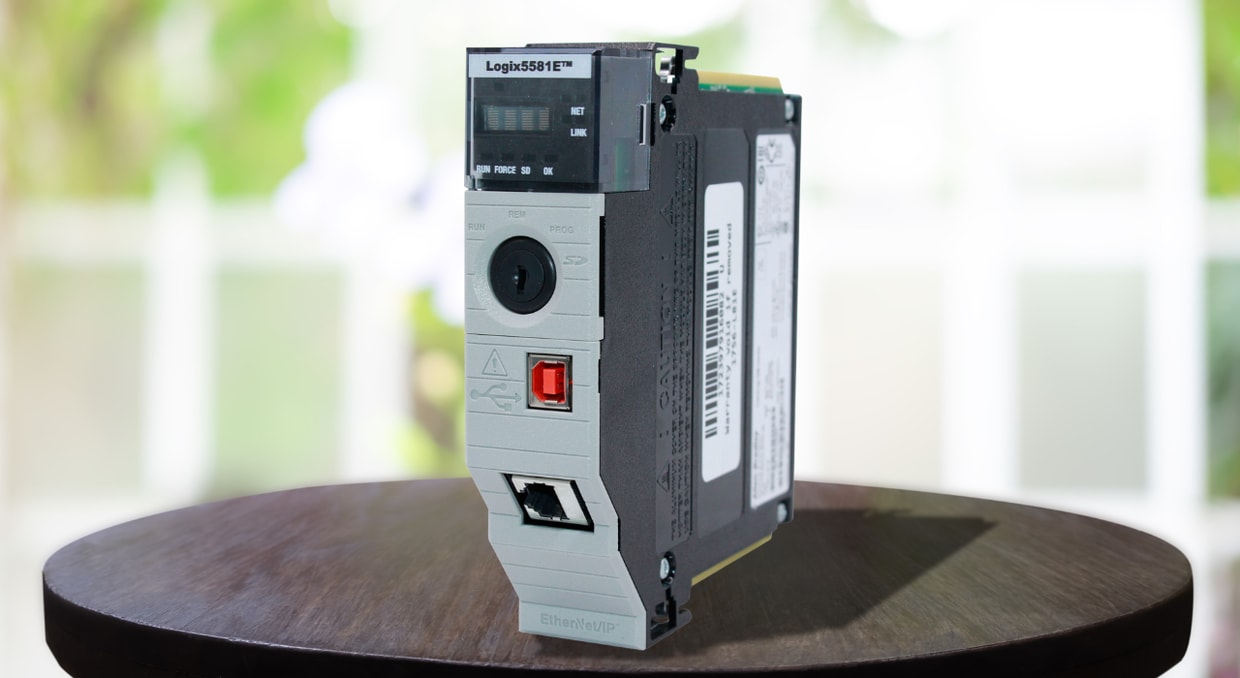
Reliability of control architecture is essential for large material handling systems. ControlLogix, part of the Rockwell Automation Logix family, has become a backbone for high-speed conveyor networks in distribution centers, parcel hubs, and manufacturing systems worldwide, owing to its reliability and adaptability. However, designing a ControlLogix conveyor system goes beyond the controller itself. A conveyor network running numerous divert mechanisms, hundreds of conveyor zones, and thousands of I/O points depends heavily on how the ControlLogix platform sits alongside distributed I/O, drives, industrial Ethernet, safety circuits, and PC-level systems. Below is a breakdown of the architecture that makes ControlLogix suitable for large conveyor networks, and the technologies engineers must account for.
Why ControlLogix Anchors Large Conveyor Architectures
The ControlLogix platform, with its established 5580 family and the newer 5590 controllers from Rockwell Automation, is built for large conveyor solutions that need the performance and scale for numerous diverts and accumulation points, handled either on a single controller or on multiple redundant controllers communicating over a high-speed network. Due to Rockwell’s Integrated Architecture strategy, ControlLogix controllers are designed to network easily and without translation layers with other parts of the ecosystem, including distributed I/O, PowerFlex drives, and Stratix managed networking. Communication speed and I/O and motor count scale are paramount when one processor must control hundreds of conveyor points and sensors.
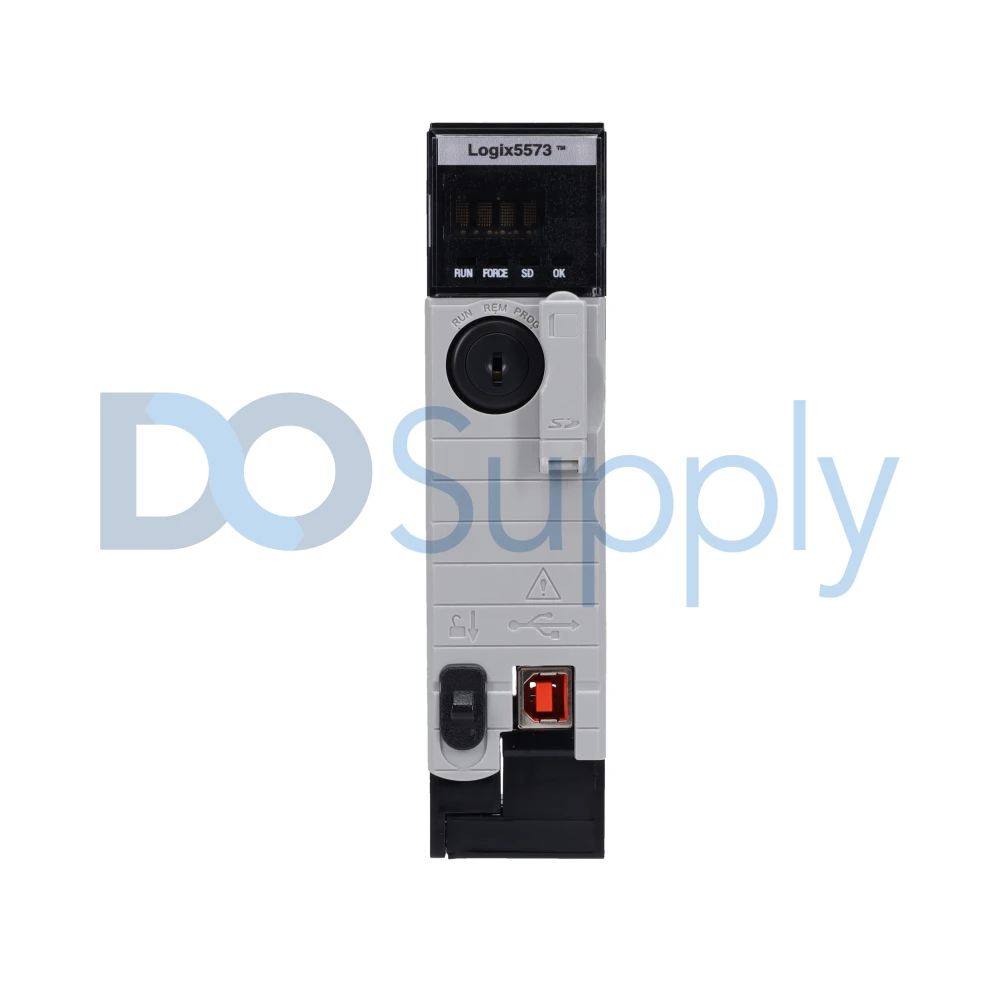
Useful controller features include integrated motion control, on-board and expandable memory for data logging and diagnostics, a selection of communication protocols, and hot-standby redundancy that can switch between primary and secondary controllers in a few seconds with zero downtime.
Distributed I/O Strategy for Long Conveyor Runs
Distance is another key characteristic of large conveyor networks. Running a cable from every photoelectric sensor, motor starter, and safety device back to a central cabinet is impractical on a line that runs for hundreds of feet or across multiple buildings, which is why remote I/O is critical to any ControlLogix deployment.
Local Chassis I/O
For installations where control cabinets are concentrated rather than distributed along the conveyor’s length, high-density 1756 ControlLogix I/O modules can be mounted directly in the controller chassis.
Distributed Remote I/O
Distributed I/O setups are far more common across the width and length of larger conveyor installations. To reduce field wiring, POINT I/O modules (1734 series) are installed next to the sensors, encoders, and actuators they operate, rather than running every wire back to a central panel. FLEX I/O modules, an alternative, along with FLEX 5000, can be used in larger or more modular installations, giving engineers flexibility to zone the system as needed. These setups cut cable costs and reduce troubleshooting time by isolating faults to the nearby node rather than the controller itself.
Drives and Motor Control on ControlLogix Conveyor Networks
VFDs widely control conveyor motors, so the PowerFlex 525, 755, and 755TS are native options for direct use with ControlLogix. These drives allow integrated diagnostics and communication over EtherNet/IP for drive speed, status, and faults without field bus gateways.
PowerFlex drives also provide detailed reporting. Some sections of a conveyor won’t require speed sensing, unlike high-resolution encoder-driven conveyors with accumulation zones, and may instead use simpler fixed-speed conveyors with PowerFlex VFDs that don’t offer the same motion control. Installations will therefore often combine accumulation and full speed-matching VFD sections alongside simpler conveyors with basic start-stop operation and separate sensors.
Multi-vendor environments are common, so SEW Eurodrive units connected through EtherNet/IP are frequently seen as well, with the same principle applying: the drives become part of the network without physical gateway cards linking the different field devices.
Networking the Conveyor: EtherNet/IP and Industrial Switching
While not the sole option, EtherNet/IP is the dominant industrial Ethernet protocol connecting ControlLogix ecosystems, bridging PLCs, drives, HMIs, remote I/O, barcode readers, and safety devices along miles of conveyor. Underlying all of this is CIP (Common Industrial Protocol), the framework that defines device-agnostic data communication and structure.
One crucial feature for ControlLogix controllers to exchange data efficiently is the Producer/Consumer tag architecture. This lets multiple controllers and devices share a single data point without point-to-point messaging, greatly reducing network load, especially in facilities with diverse conveyor zones managed by various ControlLogix processors.
Managed Switching and Network-Wide Resilience
Beneath this logical layer, Stratix managed switches (Cisco-derived) provide the physical interconnectivity for conveyor network segments, facilitating VLANs, quality-of-service prioritization, and troubleshooting. This matters where high-priority I/O or safety messages share bandwidth with HMI or supervisory traffic.
For conveyor systems where redundancy is critical, Device Level Ring (DLR) topology is a great asset for network resilience, as any segment failure results in near-instant traffic rerouting without loss of communication to the remaining devices, which is essential in large installations. Combined with redundant ControlLogix controllers in an HA array, DLR topology can avoid full-line stoppages if a cable fails or a switch goes down somewhere along the installation.
Safety Integration Across the Conveyor Line
Large conveyor systems pose constant safety risks: pinch points and movement zones run along long distances and contain access locations where personnel are regularly present during maintenance. GuardLogix is Rockwell’s safety PLC platform, running inside the same Logix architecture — the standard ControlLogix program and the safety program run separately, processing the outputs required for emergency stop circuits, local gates, and zone-based safety interlocks.
Additionally, CIP Safety integrates safety into the network protocol; devices such as CIP Safety light curtains and interlock switches can run along the same EtherNet/IP infrastructure as system status and process data, instead of requiring a separate, parallel wire-based safety network. This means fewer wires running the length of large-scale conveyor systems while still connecting safety communication between personnel protection zones.
Field Devices and Material Handling Equipment
Photoelectric sensors for detecting packages, encoders for position and speed feedback, barcode scanners and RFID readers for tracking material, and weigh scales are all field-level devices installed on conveyor lines that ControlLogix and its distributed I/O manage. These include hardware from SICK, Keyence, Banner Engineering, Turck, and Pepperl+Fuchs for detection, tracking, and zoning—illustrating the wide assortment of devices and the common presence of multiple vendors working together under a single ControlLogix PLC.
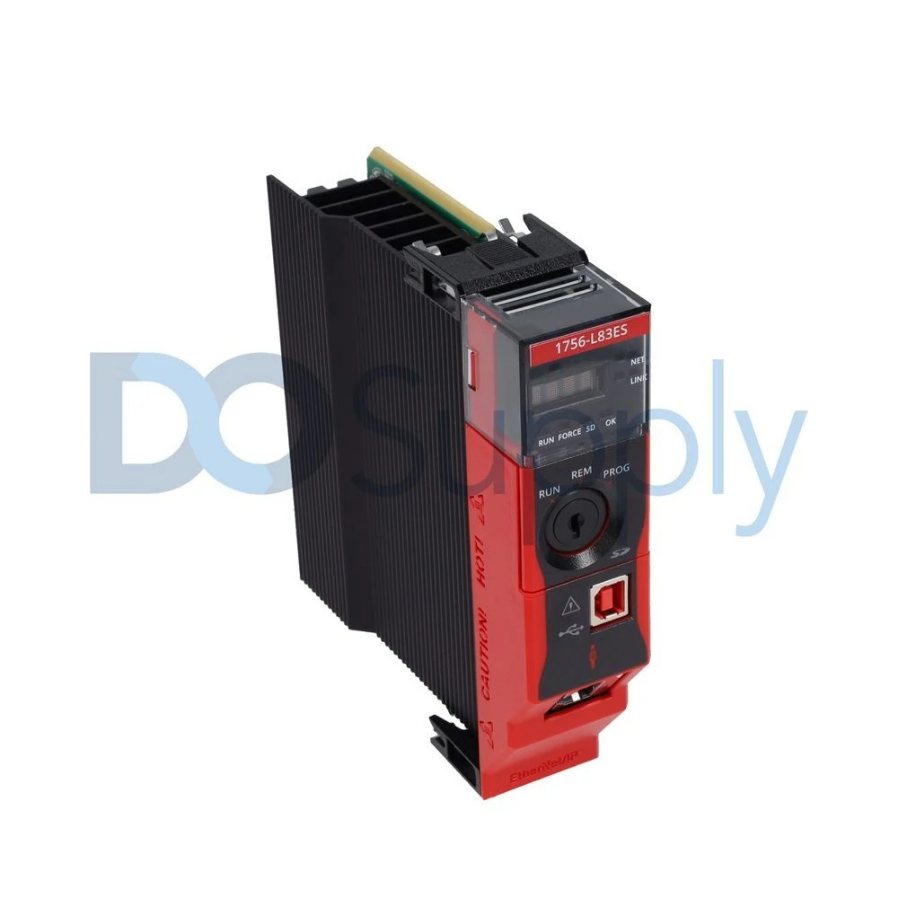
Diverters, sorters, and zero-pressure accumulation devices are the more logic-intensive elements on conveyors, needing precise timing with sensors, motor control, and routing decisions for moving material forward. CIP Motion becomes more relevant for synchronized conveyors, sorters, and accumulation systems that require more than simple ON/OFF zoning — namely, synchronized timing of multiple-axis devices communicating in real time over EtherNet/IP, natively supported by ControlLogix.
Conclusion
Specifying ControlLogix for a large conveyor network is not really about which controller is best suited. What makes it powerful is how tightly it integrates with POINT I/O and FLEX I/O for distributed field connections, PowerFlex drives for motor control, Stratix switches and EtherNet/IP DLR topology for robust plant-floor networking, as well as GuardLogix and CIP Safety for safety PLCs that are part of the network. Engineers designing or maintaining these systems need to view ControlLogix as the core of an Integrated Architecture, not just a standalone controller. The reliability of a large conveyor network depends not just on ControlLogix, but on how the I/O, drives, networking, and safety layers are engineered around it. For those planning on designing PLC systems in harsh environments, we have a blog post here that may help you out.
We at DO Supply are a one-stop shop for all things MicroLogix for those who need it now. We carry the ControlLogix lineup, its accessories, and supporting hardware for those looking to build their own ControlLogix focused system. Need motor control to go with your ControlLogix system? PowerFlex and Kinetix drives are fantastic fits for the Allen-Bradley ecosystem. Give us a call today and let’s help you find the right controller for your system!
DO Supply Inc. makes no representations as to the completeness, validity, correctness, suitability, or accuracy of any information on this website and will not be liable for any delays, omissions, or errors in this information or any losses, injuries, or damages arising from its display or use. All the information on this website is provided on an "as-is" basis. It is the reader's responsibility to verify their own facts.