When and Why DC Drives Still Matter in Modern Automation
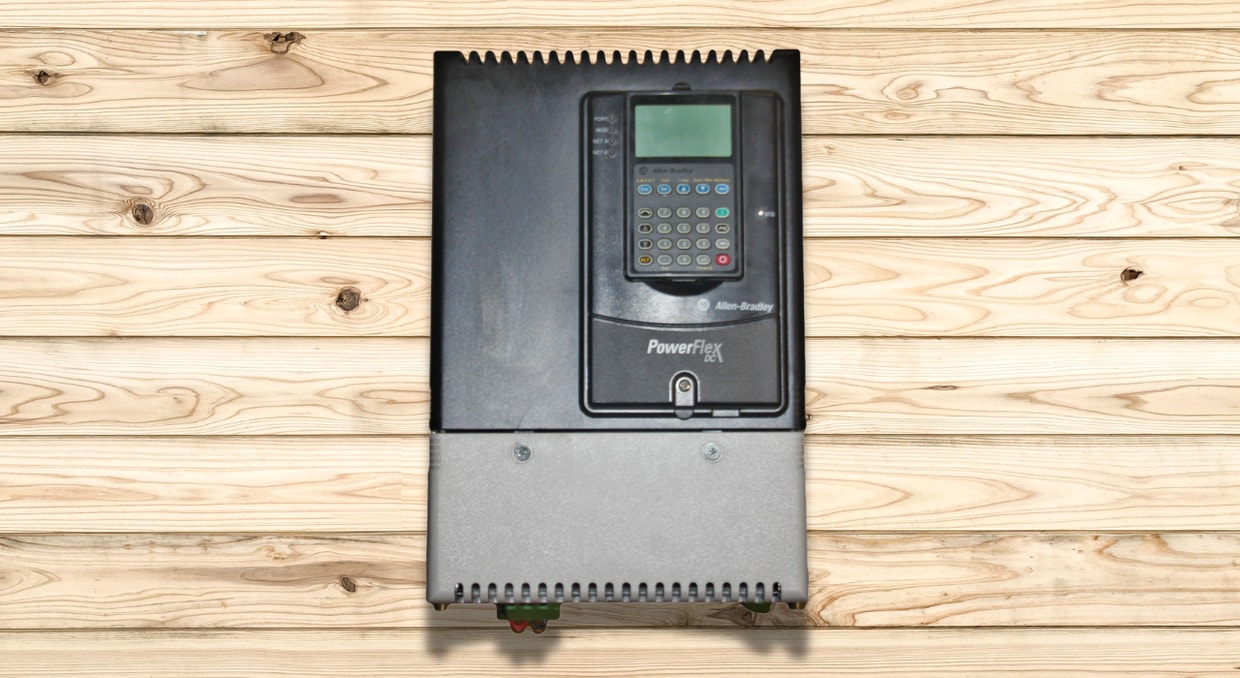
Industrial automation is evolving rapidly, with many modern factories using AC motors paired with variable-frequency drives to maximize energy efficiency and reduce maintenance costs. While it may seem that DC drives are an obsolete technology and no longer useful, that’s far from the truth. Despite the dominance of AC drives, DC drives remain a critical, high-performance technology in modern industrial automation, offering specialized functionality and exceptional high-torque control that AC drives struggle to match.
For engineers and plant managers, knowing when to leverage DC drives —instead of defaulting to AC drives — can yield optimal system performance and significant cost efficiencies. This article explores key application scenarios of DC drives, providing industry examples and practical insights that demonstrate why DC drives remain a valuable technology in modern industrial automation.
Maintaining Legacy Industrial Systems
Legacy equipment in many industrial facilities, such as textile plants, steel mills, mining operations, and paper factories, are built around the distinct characteristics of DC motors. DC motors require DC drives for precise control of torque, direction, and speed, which is why DC drives are still deployed in modern industries. Replacing legacy DC systems with AC solutions can be expensive, cause re-engineering problems, and sometimes be unnecessary. Instead, upgrading the old DC drives to cutting-edge digital DC drives is a more efficient and cost-effective alternative, delivering improved performance and extending equipment lifespan.
Modern DC drives are microprocessor-based, digital solutions that offer enhanced control precision, improved energy efficiency, and seamless integration with present-day industrial automation systems without the need for a complete plant overhaul. For example, a 30-year-old rolling mill can continue to use legacy DC motors to regulate speed precisely with only a simple upgrade to a digital DC drive. Replacing the legacy DC motor and drive system with an AC solution would require significant system downtime, new electrical wiring, and major mechanical overhauls. Instead, upgrading to a digital DC drive that integrates with SCADA systems, uses less energy, and improves control precision can be done while maintaining the DC motor setup.
High Torque at Low Speeds
Many industrial processes require motors that can provide high torque at standstill or low speeds. DC drives are naturally good at this because they allow for precise torque regulation through independent control of armature voltage and current over a wide speed range. As such, they can deliver full-rated torque even when the machine is nearly at a standstill.
Applications leveraging the high torque at low speeds of DC drives include:
- Hoists and cranes: When you are moving heavy loads with a hoist or crane, you need to be able to regulate the high torque very carefully, particularly when you are lowering or lifting something slowly.
- Material handling conveyor systems: When using a conveyor belt to move bulk materials, it is important to ensure steady/consistent belt speed despite fluctuating loads. This helps prevent material surges, energy loss, or stalling. DC drives are ideal for these applications as they offer exceptional torque at low speeds, excellent performance under fluctuating motor loads, and responsive speed control through voltage control.
- Extrusion processes in plastics or metals: When manufacturing metal tubes and plastics, one requires precise and robust motor torque regulation at low speeds to ensure defect-free and consistent quality production. DC drives are well-suited for such applications because they offer superior high-torque control at low speeds, particularly under heavy, slow-moving motor loads.
- Precision Speed Control
While most people normally choose AC motors and drives due to their high-power capability and ruggedness, AC drive systems can be expensive and pretty complex to implement in industrial applications requiring precise speed control. This is the reason why DC Drives are often a great choice. DC Drives excel in precise motor torque regulation at low speeds. They are also easy to use, making them perfect for many heavy-duty industrial automation applications.
In today’s manufacturing, precision is essential for ensuring high-quality output and maximizing profitability. To maintain production quality, processes such as wire drawing, textile processing, and printing require exceptionally precise speed regulation. DC drives excel at superior torque control and precise, wide-range speed regulation for DC motors, making them ideal for the aforementioned applications.
DC drives provide high-accuracy motor control because the speed of the connected DC motor is directly proportional to the applied armature voltage. At the same time, the torque output is directly proportional to armature current. This linear relationship enables DC drives to independently regulate current and voltage, delivering flexible, precise control of motor speed and torque. This allows operators to easily and quickly adjust the motor speed and torque as needed, ensuring consistent, high-quality output.
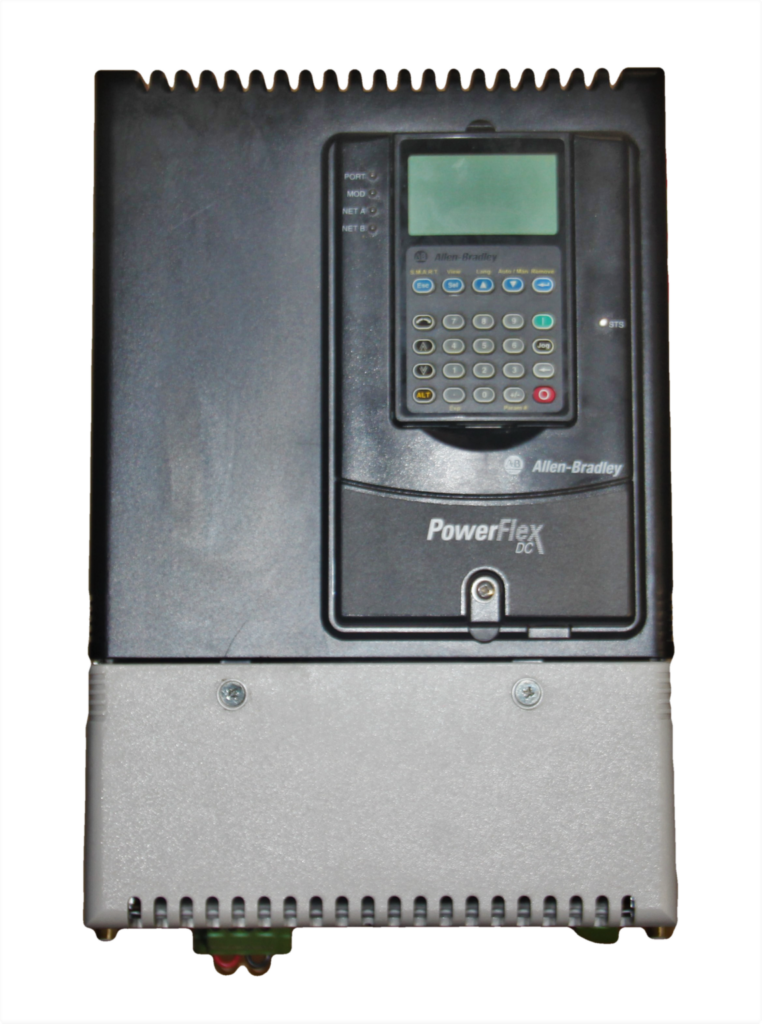
For example, industrial printing presses require all the rollers to operate at a specified synchronized speed to prevent page misalignment and ink smearing. In such a case, a DC drive would ensure the required precision by maintaining a steady motor speed, regardless of load fluctuations during manufacturing. Similarly, in wire-drawing processes, DC drives are used to maintain constant wire tension despite fluctuating motor loads. Essentially, using DC drives in these applications helps prevent production errors.
Fast Dynamic Response
Some machines require motors that can respond quickly to control inputs. They need to be able to change direction fast, slow down, or speed up. DC Drives are a good fit for such applications as they can directly regulate the current and voltage of the connected DC motors, providing superior responsiveness compared to conventional AC drive systems.
Applications that require fast dynamic response include:
- Automated Packaging Lines: These lines demand the ability to start and stop very quickly as well as seamless operational coordination of all components. All their components need to be high-performance, synchronized, and capable of rapid cycle times.
- Robotic Assembly Systems: For high-precision part placing, these systems require advanced motion control that supports real-time, dynamic path adjustments.
- Test Rigs and Dynamic Machinery: To accurately simulate operating conditions, these machines require instantaneous response to changes. DC drives are well-suited for this because their low-lag performance enables smooth transitions between specified operating points. While AC drives can manage some of these functions, DC drives provide superior motion control with reduced delays, which is crucial in high-performance automation.
Frequent Start-Stop Operations
In systems that start and stop constantly, durability and motor control are very important. This is the case with batch processing lines, automated assembly processes, and material handling systems. DC drives are efficient at handling frequent start-stop cycles, providing high initial torque without overloading the electrical system or the connected motor. DC drives can also precisely control acceleration and deceleration, minimizing energy loss and mechanical stress.
For example, a bottling plant conveyor may start and stop multiple times per hour to facilitate precise capping or filling. In such a case, a DC drive would ensure smooth starts and stops, reducing mechanical wear on conveyor components and, at the same time, product spillage. DC drives are critical in these applications for maintaining the required production speed.
Robustness in Harsh Industrial Environments
Some industrial settings are very tough with chemical exposure, humidity, heat, or dust. DC drives are often more robust and simpler compared to AC drives, making them well-suited for these environments. Industries like pulp and paper, steel production, and mining often face adverse operating conditions. DC drives perform well in these settings, minimizing downtime. They are robust. Have routine maintenance schedules, which makes them a perfect choice for applications where equipment dependability is crucial. DC drives are highly reliable.
Seamless Integration with Modern Automation
A common misconception is that DC drives are not compatible with automation systems. This is not the reality. Modern DC drives have diagnostic capabilities, communication protocols, and interfaces that enable them to work with PLCs, digital monitoring tools, and SCADA systems. This indicates that industries can combine the benefits of DC motor control. Dynamic response, torque stability, and precision. With features such as energy optimization, predictive maintenance, and remote monitoring. Facilities can enhance their control capabilities without abandoning their DC motor technology.
Cost-Effective Upgrades and Retrofitting
System replacement can be very costly. Many facilities find it more practical to retrofit or upgrade DC drives than replace the entire AC drive system. This option is cost-effective. DC drives can be retrofitted, which is better than a complete AC system replacement. Upgrading DC drives allows for:
- Enhanced energy efficiency
- Efficient performance when integrated with computer-controlled systems
- Extended motor lifespan
For instance, a steel rolling mill can upgrade its old control systems to new digital DC drives while still using its DC motors. This can really enhance manufacturing accuracy and minimize energy consumption without replacing the entire system, which can be very costly.
Reliability and proven track record
DC drives have been deployed in industries for decades. The maintenance teams are used to working with DC motor systems. The spare parts are easily available, and fixing issues is well-established. This is particularly significant when DC drives are used in situations where downtime can lead to safety issues and financial losses. DC drives consistently perform under many conditions, making them a good choice for essential systems.
Energy Regeneration and Braking Efficiency
In industrial applications, motors often lift heavy loads or slow them down, which generates extra energy. Instead of wasting this energy as heat, DC drives can send it back to the power system. This is extremely useful in applications such as conveyor belts, cranes, and elevators, where slowdowns are significant. During production slowdowns, DC drives conserve energy and enhance system performance. For instance, when a hoist is lifting a load, the motor can generate energy. A DC drive returns this energy to the power grid. Using it within the system, which minimizes heat loss and saves electricity. While other types of drives can also conserve energy, DC drives are often less expensive and easier to use. DC drives are also simple to manage. Despite automation getting more enhanced, simplicity remains significant in industrial applications. DC drives are easier to manage than other types of drives, which can be very complex. This simplicity is very beneficial because it indicates that DC drives are easier to handle.
This simplicity translates into several practical benefits:
- Easier setup and commissioning
- Faster diagnostics and troubleshooting
- Decreased necessity for highly specialized expertise
- Reduced training needs for maintenance personnel
In many facilities, particularly those operating in resource-limited or remote environments. Having a system that operators can quickly repair and understand is crucial. DC drives enable engineers to implement efficient motor control without relying on tuning procedures or highly complex programming. For instance, in developing industrial regions or smaller manufacturing plants, the ability to repair equipment without enhanced software can significantly reduce operational costs and downtime.
Better Performance in Constant Load Applications
In applications where the load remains fairly steady over time, DC drives function exceptionally well. In such cases, they can deliver torque and maintain a stable speed without intricate feedback mechanisms. This becomes a significant advantage. Applications that benefit from this include:
- Paper production lines
- Constant load rolling mills
- Textile processing machines
In these settings, maintaining stable operating conditions is more important than handling quick variations. DC drives provide reliable performance with limited control overhead. This ensures that production remains predictable. For instance, maintaining consistent speed across rollers is crucial in a paper mill. To avoid inconsistencies or tearing in the final product. A DC drive can reliably deliver stable performance without the advanced tuning typically required for AC systems.
Lower Initial Investment for Targeted Use Cases
Although AC drive systems are often highlighted for their long-term efficiency, DC drives can provide a lower initial investment in specific applications. This is especially true when:
- Already installed DC motors are in place
- Infrastructure is designed for DC systems
- Application needs do not warrant advanced AC control features
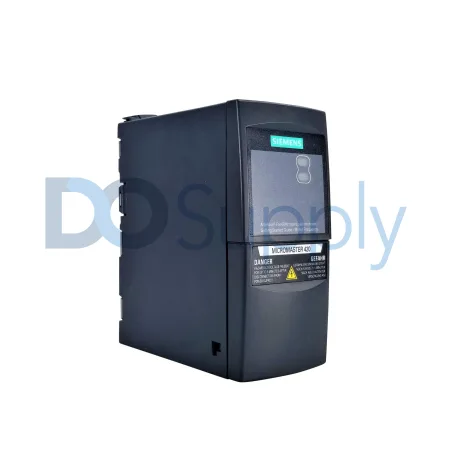
In situations like these, switching to an AC system can be expensive. You must replace the motor, add cabling, reconfigure the system, and redesign the mechanics. On the other hand, installing or upgrading a DC drive is a more cost-effective option that still satisfies performance needs.
For example, a mid-sized factory that wants to improve its production line might find that upgrading old analog DC drives to new digital ones provides a bigger performance boost at an affordable cost than changing to a full AC system. This cost advantage makes DC drives attractive for small improvements, upgrades, and projects with budgets where getting a good profit on investment is a priority.
Specialized Applications
Despite advances in AC drive technology, various motion control applications still require DC drives. These applications include:
- Ultra-precise Motion Control: Manufacturing processes that require repeatable and precise positioning movement.
- High Torque at Low or Zero Speed: Equipment that must initiate under load without stalling.
- Immediate Response to Control Commands: Robotics, high-speed assembly lines, and test equipment.
Conclusion
DC drives continue to play a critical role in modern automation, offering unique features and capabilities that outperform AC drives in certain applications. They remain essential for applications that demand precise speed regulation, rapid response to load fluctuations, and superior low-speed torque, such as in paper mills, hoists, and cranes. Their integration with automation tools, along with cost-effective retrofitting options and a demonstrated track record of high reliability, makes them an optimal solution for specialized applications.
Modern digital DC drives provide a balance of robustness, high-performance motion control, and design simplicity, which makes them highly relevant in present-day industrial automation applications that demand exceptional precision, efficiency, and reliability, particularly where high starting torque and robustness are critical.
If you’re working with legacy equipment, high-torque applications, or systems that demand precise low-speed control, DC drives may still be the most practical solution. Upgrading or replacing an existing unit doesn’t have to mean a full system overhaul. At DO Supply, we stock a wide range of DC drives and replacement parts, all backed by a 2-year warranty, so you can keep your systems running without unnecessary downtime.
DO Supply Inc. makes no representations as to the completeness, validity, correctness, suitability, or accuracy of any information on this website and will not be liable for any delays, omissions, or errors in this information or any losses, injuries, or damages arising from its display or use. All the information on this website is provided on an "as-is" basis. It is the reader's responsibility to verify their own facts.