PLC Applications in Food & Beverage Systems
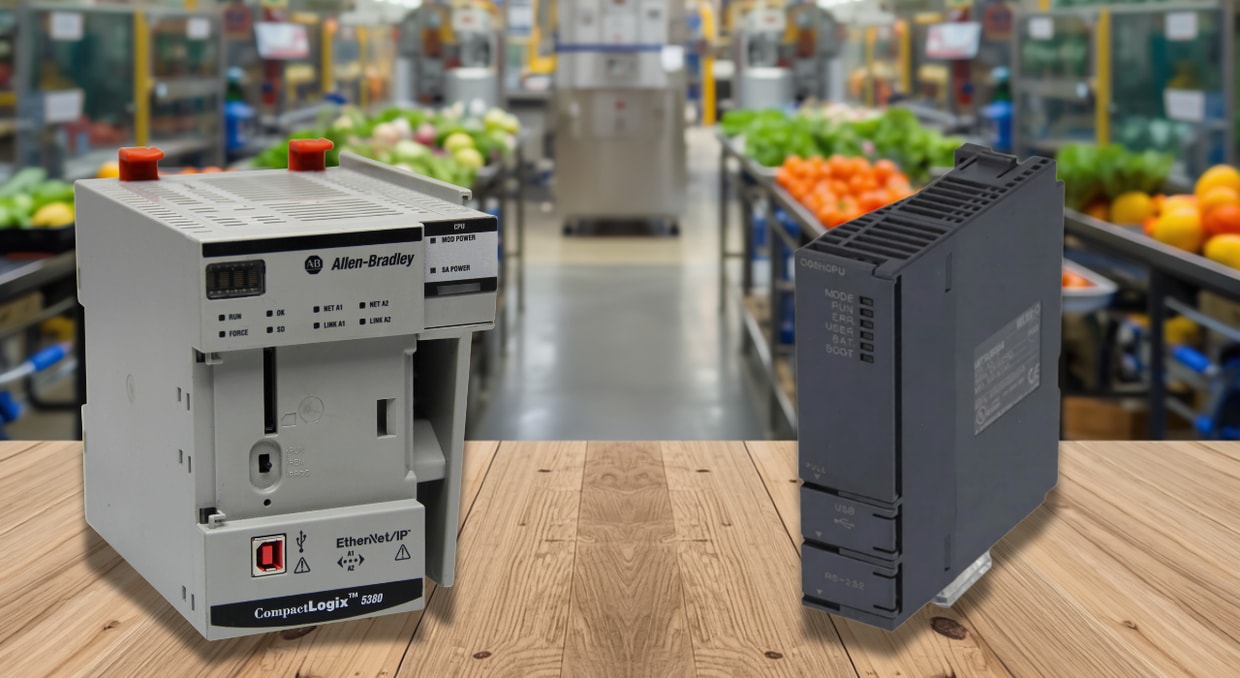
A bottle of water or a frozen dinner may look simple and unassuming on the outside. You pick it up, toss it into your cart, and go about your day. Yet, behind the scenes lie a choreographed dance of machinery and control systems that cook, pack, and label your next easy meal or bottled beverage.
Food and beverage automation comes in many different flavors, from motors to run conveyor lines to robot arms that sort packages to make palletizing easier. Today, we will highlight one of the most important pieces of the system: the PLC, the glue that holds together an industry that relies on consistency, sanitation, uptime, and quality control.
Why PLCs Matter in Food and Beverage Production
The Food and Beverage industry is one of the largest manufacturing sectors in America, accounting for 16.8% of all U.S manufacturing sales and 15.4% of U.S. manufacturing employment as of 2021, according to the USDA. That’s over 1.7 million workers ensuring that the quality of your next meal or drink is as you would expect it to be. On top of that, food manufacturing alone reached $904.1 billion in shipments, making it the largest U.S. manufacturing subsector by shipment value that year.
This scale is why PLCs matter so much. A modern food or beverage facility isn’t one machine doing one job, but rather a chain of industrial equipment, such as:
- Conveyors
- Pumps
- Valves
- Fillers
- Heaters
- Chillers
- Sealers
- Labelers
- Packagers
This scratches the surface of the machinery running these plants, and most facilities have multiple “lines” producing different products that may require their own specialty equipment. Yet if a conveyor runs out of sync, a filler misses its timing, or a package isn’t sealed correctly, the result can be a wasted product, failed inspection, downtime, or safety concerns. PLCs are designed to help mitigate these failures by providing plants with a reliable way to coordinate equipment and monitor process conditions, so small problems do not turn into line-wide issues.
How PLCs Are Used Across the Food Industry
Step into a bottling plant and you will see a wealth of processes, from plastic pucks being blown into the signature bottle shape to those freshly made bottles being filled and labeled. Here, PLCs work in the background to ensure the process remains smooth and error-free. While we won’t be able to go over every system in the food and beverage industry (because you will be reading all day long), here are some of the more common types you will see and how PLCs play a role.
Ingredient Handling and Batching
Before a product can be mixed, cooked, chilled, or bottled, the system needs to move the right ingredients to the correct place in the right amount. In the food industry, this is usually accomplished by:
- Pumps and valves moving liquids
- Augers feeding powders
- Load cells weighing bulk ingredients
- Hoppers delivering material to a mixer or tank
Accuracy here is vital as the rest of the process relies on the batch starting correctly. PLCs help control this stage by monitoring measuring devices, such as flow meters and valve positions. In a beverage line, a PLC may open a valve, start a pump, measure flow, and stop the transfer once the target volume is reached. In a bakery or prepared-food line, it may control flour feeders, oil pumps, water dosing, or ingredient hoppers so that each batch starts with the same foundation.
That consistency helps keep each batch as close to the last one as possible. After all, a sauce that is too thin or a dough that’s too dry can create quality issues or messes before the product ever reaches packaging. So, by following their set sequence, PLCs help reduce variation and prevent steps from occurring out of order.
Mixing, Blending, and Process Timing
Once the ingredients are measured and added, the next challenge is making sure they come together the same way every time. Cooking and baking are a mix of science and chemistry, where the right weights of ingredients interact with the right amount of mixing. A beverage may require ingredients to be blended evenly without over-aeration. In contrast, a sauce, batter, or dairy product may need a specific texture, viscosity, or consistency before it can move to the next stage. This is usually accomplished with agitators, ribbon blenders, and high-shear mixers.
PLCs help manage these processes by controlling motor speeds, mixing times, start-and-stop sequences, and equipment interlocks. They ensure that a mixer doesn’t start until the tank reaches the proper level, or that a transfer valve doesn’t open until the blend cycle is complete. An HMI will also help the operator visualize what is happening within the tanks and allow them to make decisions based on what information the PLCs are feeding it.
Timing also plays a huge role, as a few small changes can affect the final product, just as keeping your cookies in the oven for a few extra minutes can be the difference between a soft, chewy texture and a harder, more brittle one. This also applies to mixing the product, as too much or too little will dramatically alter the final product. Pro tip: this also applies to making boxed desserts from your local market.
Temperature Control and Thermal Processing
Temperature is one of the less forgiving parts of food and beverage production. Cooking, chilling, pasteurization, fermentation, and refrigeration all depend on staying within the right range. Too little heat can affect process requirements or make certain foods dangerous to eat, while too much heat can change texture, flavor, color, or consistency. Specific cooling procedures are extremely important in the food industry to comply with regulations set by the FDA, HACCP, FSSAI, and USDA.
PLCs get involved in managing these processes by reading:
- Resistance thermometers (RTDs)
- Thermocouples
- Pressure sensors
- Flow meters
Once a PLC receives this information, it can control valves, pumps, and other equipment to maintain ideal conditions. An example of this for beverage plants is regulating pasteurization or chilling systems, as improperly cooled products could lose flavor, texture, freshness, and nutrients. In a food-based factory, meat and seafood need to undergo rapid chilling to prevent spoilage and to preserve taste.
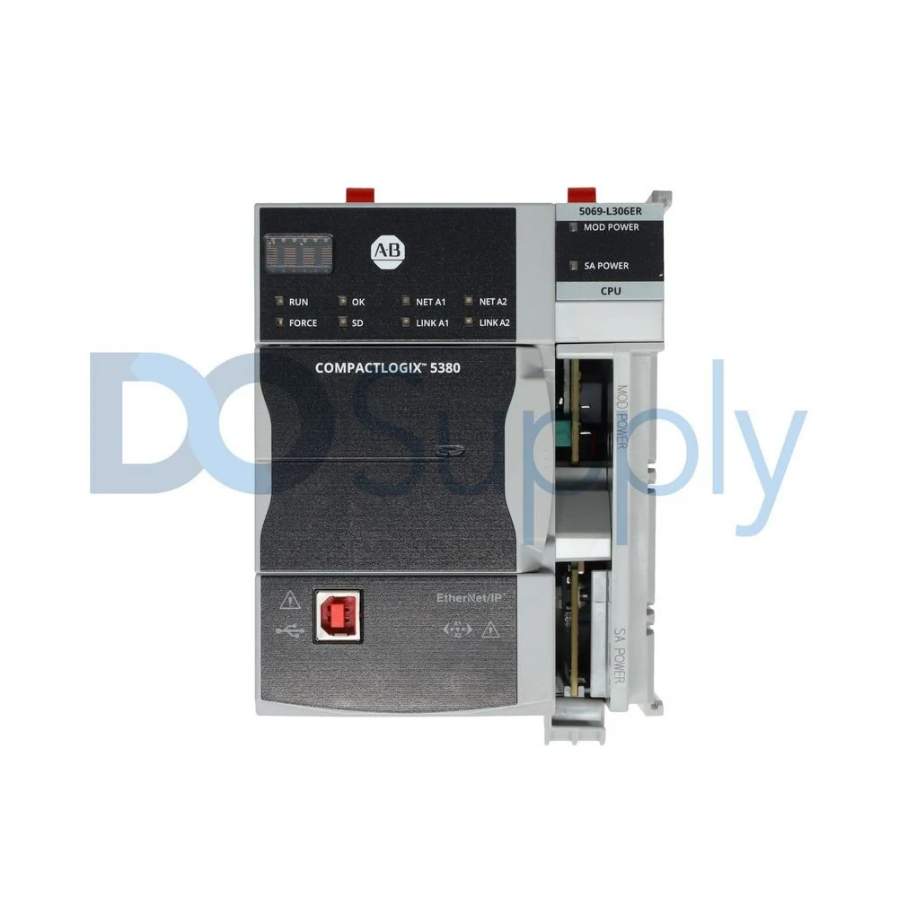
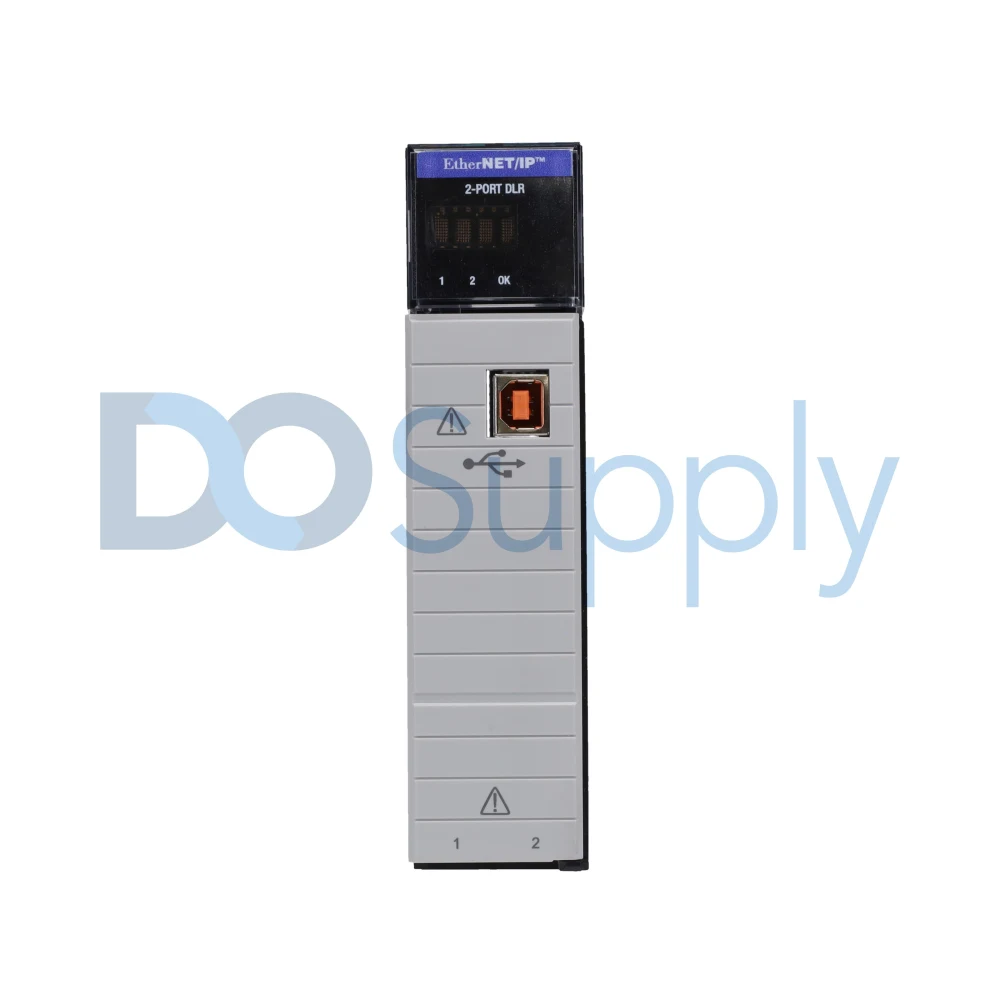
Some of the more common PLC controllers found in these systems are Allen-Bradley ControlLogix and CompactLogix paired with temperature and analog I/O modules. For example, a ControlLogix system may use temperature input modules to read RTDs or thermocouples, while a CompactLogix system may be used on smaller machines or distributed process skids.
Filling, Sealing, and Packaging
This is the step where timing becomes especially important. If a bottle isn’t in its correct position before it’s filled, a mess quickly ensues. Likewise, when a tray needs to be sealed but the film is pressed on too early, half the contents remain exposed.
Due to its deterministic design, PLCs step in to help these systems by controlling fillers, conveyors, sealers, labelers, and more. For example, on a beverage line, a PLC can use sensor input to confirm bottle position, trigger the fill cycle, control the capper, and release the bottle to the next station. On a frozen meal or snack line, it may coordinate tray indexing, film sealing, checkweighing, date coding, and case packing.
Allen-Bradley products are also a good fit for this section of the factory, as packaging requires a mix of logic control, motor control, motion control, and operator interaction. For example, a CompactLogix 5380 controller can support high-speed machine control and integrated motion over EtherNet/IP, while PowerFlex 525 drives can handle conveyor and motor speed control. For packaging equipment that needs tighter positioning, such as labelers, cartoners, or servo-driven sealing jaws, Kinetix servo drives and motors may be used to control motion more precisely. This all allows one standard ecosystem to coordinate motion, logic, and other meaningful data.
Inspection, Rejects, and Quality Control
Automated inspection, quality control, and rejection systems are amusing to watch on their own, especially if the reject machine knocks bad products out at absurd speeds. When working together, they can rapidly check finished goods at blistering speeds and make decisions within milliseconds with the help of PLCs.
In this section of the factory, you will often see PLCs working in tandem with the following support equipment:
- Photoeyes
- Fill-level sensors
- Barcode readers
- Cap detection sensors
- Metal detectors
- Checkweighers
These all help support the system by rapidly checking each product as it passes, verifying that it has the correct amount of food or liquid inside, the package isn’t visibly skewed, the labels are free of defects, and the product is in the correct orientation. If these sensors detect something they don’t like, the PLC will use that signal to coordinate the reject sequence. This may include stopping the conveyor, triggering a reject arm to slap it out of the way, diverting a package, sounding an alarm, or simply tracking reject counts for troubleshooting. This saves time when compared to manually checking the products.
Cleaning and Sanitation Cycles
Cleaning and sanitizing industrial equipment in the food and beverage industry is not only a necessary task that prevents contamination, but also a traditionally labor-intensive ordeal. Thankfully, it doesn’t need to be. Automated cleaners have been making their way into factories, reducing the amount of water and detergent used and the time required to do so. These systems typically use PLCs to sequence the entire cleaning cycle by controlling water valves, chemical dosing pumps, spray nozzles, and more. They can also be used for fault detection, such as a rinse that doesn’t run long enough or a water temperature that drops too low.
Final Thoughts
The food and beverage industry, while simple-looking from the outside, remains an intricate web of machinery, and we haven’t even touched on palletizing. PLCs find their place here comfortably, helping connect these many different moving pieces. More importantly, they help make each step repeatable. In an industry where one small mistake can lead to wasted product, downtime, or quality issues, that kind of control is hard to overlook. Downtime can come with a multitude of hidden costs, find out more about it here.
However, a failed controller, a faulty I/O module, a weak power supply, or an aging drive can quickly disrupt any of the systems we just discussed. Keeping the right automation components on hand can make the difference between a short maintenance stop and a production headache. That’s why we at DO Supply carry a wide range of industrial automation equipment, including PLCs, I/O modules, drives, sensors, and more. We always recommend keeping spares for high-value equipment, and if you happen to use them, we offer repair services to bring that failed PLC or drive back to life. Give us a call today and let our team help you find the parts, replacements, or repair options your system needs.
DO Supply Inc. makes no representations as to the completeness, validity, correctness, suitability, or accuracy of any information on this website and will not be liable for any delays, omissions, or errors in this information or any losses, injuries, or damages arising from its display or use. All the information on this website is provided on an "as-is" basis. It is the reader's responsibility to verify their own facts.