We found 260 posts about Automation Technologies from DO Supply, a global automation parts
reseller focused on hard-to-find and obsolete industrial automation products.
Newton-meters Foot-pounds Inch-pounds Newton-meters Foot-pounds Inch-pounds Torque is a measure of the force which can make an object rotate about an axis. In linear kinematics, the force causes an object to accelerate linearly, similarly, torque is what causes an object to acquire an angular acceleration. It’s a vector quantity, meaning it has both magnitude and direction. The direction of the torque vector depends on the direction of force acting on the rotational axis. In physics, torque is simply a twisting or a turning force. Different terminologies are used interchangeably to describe torque such as Moment or Moment of Force. We can say torque is a special case of Moment, as it relates to the rotational axis driving the rotation. On the other hand, for Moment to cause rotation, a driving external force is required. For any object to experiences torque, it must have a pivot point. If you have ever opened a door, then you have an intuitive understanding of torque. Torque is what...
Resistor 1 Ohms (Ω) Ohms (Ω) Resistor 2 Ohms (Ω) Ohms (Ω) Add Results Equivalent Resistance Resistance is defined as the measure of opposition to charge flow (current flow) in an electrical circuit. It is measured in ohms and symbolized by (Ω)-a Greek letter omega. Naturally, all materials oppose current flow to some extent, and they are classified as either conductors or insulators. Conductors are materials that have very little resistance to electrons flow, they include aluminum, silver, gold, copper, and many more. Insulators, on the other hand, are materials that present very high resistance to electrons flow; examples are rubber, plastic, wood, and glass. Basically, a resistor is an ohmic device that limits the flow of current in a circuit. Most electrical circuits consist of more than one resistor. The relationship between voltage, resistance, and current in an electrical circuit with resistors is given by Ohm’s Law. Ohm’s law is expressed as: I = V/R , where I is the circuit...
In manufacturing, costs of production and speeds of finished goods to the market can make or break a company. Traditionally, an inventory of raw materials and of finished products was considered assets. Today, such inventories are considered dead investments or waste, which incur additional capital costs. To eliminate dead investment and optimize their productivity, many manufacturing industries are adopting the Just-In-Time (JIT) philosophy. Originally, JIT manufacturing referred to the production of goods in an effort to meet the exact customer demands with regards to quantity, quality, and delivery time; whether the customer required the final product or a part of it. But with time the meaning of JIT manufacturing has changed to the production of goods with minimum waste. In this case, “waste” is defined in terms of time, raw materials, and resources. Simply, Just-In-Time (JIT) production is a workflow methodology that focuses on reducing flow times for raw materials and products...
In 1969, Programmable Logic Controllers (PLCs) were first introduced into manufacturing processes, and today, they are most widely used for automation and industrial process control. In an industrial setup, PLCs are used to control conveyor systems, to sequence automated devices such as robots, and to capture data and communicate information. Almost any machine function, process or production line is greatly enhanced whenever a PLC control system is used. A PLC system is modular, this allows you to mix and match different types of Output and Input devices to best suit your applications. Nevertheless, the greatest benefit of utilizing a PLC is its ability to replicate and change a given process or operation, while collecting and disseminating essential information. Typically, any PLC has a Central Processing Unit, the CPU, which contains an internal program. The program tells the PLC how to perform various functions such as Execute user defined control instructions that are contained...
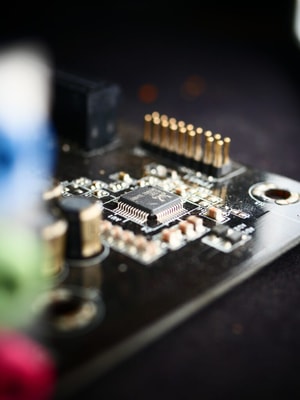
The printed circuit board (PCB) invention ushered in a radical change in electrical and electronic technology. This success has led to the continued improvement of many devices and smaller and even miniature profiles for others. It has also resulted in entirely new classes of products across almost every industry. And it isn’t easy to imagine a powered device or appliance without a PCB. As the technology has matured, two distinct methods for producing PCBs emerged. The first is surface mount technology (SMT). Because PCB components became smaller over time, SMT became the dominant technology by volume. In SMT, components are mounted directly onto the bare board surface. Instead of wires, tabs and connectors are used with solder to complete the board circuitry. Through-hole technology (THT), holes are drilled in the bare board, and wires are run through the holes to connect the components. One side of the board will have “trace holes” to mark the path of the wiring. Wires are soldered...
According to ISA, automation is defined as “the technique of making an apparatus, a process, or a system operate automatically”. In a more practical sense, it is a system that operates with minimum or no human intervention at all. It has been part of the development of mankind all along however, the concept was further realized after the mass production system was finally implemented. With automation in the mass production setup, consistent and uniform outputs may be produced. Absolutely, this cannot be achieved with manual and traditional automation. Fast forward today, a control system – whether commercial or industrial scope, meets the modern automation requirements if it is programmable. With the birth of the 1st programmable controller and the enhancement in the succeeding years, most control systems are now being governed by programmable controllers. Programmable controllers can be used in both home and industrial setup. They are also the core components of automation. They...
In recent years, machine learning has found applications in new and often unexpected areas. With the novel coronavirus outbreak in 2019 and 2020, it makes sense that many have tried to apply machine learning and artificial intelligence to various problems relating to the disease. From modeling the spread of the disease to searching for possible drugs and vaccines, machine learning has been integral to understanding many of the problems caused by the COVID-19 pandemic. Case Study – Disease Dynamics A simple internet search will lead you to hundreds of dashboards showing the current number of coronavirus cases around the world. This stems from how easy it is to access data relating to the virus, especially from reputable sources like Kaggle or Johns Hopkins . This data, along with sophisticated models for disease dynamics has, for example, enabled predictive modeling for the number of people who actually have the virus and the risk of hosting an event in any county in the US . Some...
The position of a shaft within a machine can affect several concerns including safety, quality, volume and other variables. To monitor and control information that can be obtained from the shaft position and rotation, encoders were devised to measure and control the data and motion of the machine along the shaft. There are two types of rotary encoders used today – incremental and absolute. The most common, the incremental encoder, provides position information in real-time. These encoders can measure up to 10,000 counts per revolution and transmit position changes quickly. As a result, they are used in applications that require highly accurate position and velocity measurements. Incremental encoders are available in a variety of technologies depending on applications. These may include mechanical, optical or magnetic sensors which help determine precise positions. They may act as a potentiometer, volume control, and other applications where fine tuning is required. Absolute Encoder...
In part 1, we discussed general safety terms and categories and covered the concept of risk. By understanding risk, we can determine a structure for the architecture needed to manage that risk. That structure will result in a controller that accomplishes all the tasks involved with the lowest acceptable risk to equipment and staff. In part 2, we will dig deeper into terms and categories to understand their impact on machine safety. The concept of building this structure is called Functional Safety Engineering. Here, functional safety means that the automation protection protocols correctly operate in response to inputs. According to the International Electrotechnical Commission 61508 (IEC): “Functional safety is the detection of a potentially dangerous condition resulting in the activation of a protective or corrective device or mechanism to prevent hazardous events arising or providing mitigation to reduce the consequence of the hazardous event ”. Functional safety is achieved by...
You want to improve machine safety at your facility, but you don’t even know where to start. Not only do you not know where to start, but you don’t even know what words to use to describe the things you want to do. Hopefully, by the time you get done reading this, you’ll feel more comfortable talking about machine safety and confident in starting your safety journey. What is machine safety? You’ll hear a lot of terms thrown about – categories, performance levels, safety integrity levels, diversity, redundancy, diagnostics – and those are just some. What it boils down to is machine safety (or functional safety) is using technologies to prevent harm to people and equipment. This can come in many forms, and doesn’t just have to utilize one philosophy. It could mean fences around machines, or sensors and “safe” controls. It could mean PPE like gloves, or it could mean signs that say “DANGER!” Machine safety is an overarching concept, but in the end it’s all about making the machine as...
The world’s first software program to be denied inventor credit on a patent has a winding past, and immense goals set before it. Stephen Thaler is hoping DABUS can make him immortal. We have all contemplated at least once what it might mean to control someone’s mind. Steven Thaler, however, has been experimenting with the idea for the last 30-plus years. His keystone project over that time has been in pursuit of an advanced AI that can reason and create autonomously. A polymath of the highest order, Thaler’s AI has trained hard to excel at stock picking, product design, and even creating art. To achieve these outcomes, Thaler relied on a discovery made early on in his work with neural networks: seeded with mental instability and pushed to the edge of death-inducing madness. These applications produced some of their best creative association right before locking up and ‘dying.’ As Thaler shifted focus from corporate work to independent consulting and his own company, he had a rich well...
A Real-Time Clock (or RTC) is, as the name suggests, a clock which keeps track of “Real Time” That is, calendar time, expressed in Hours, Days, Years, etc. This is in contrast to the internal time keepers of many small electronics, which keep track of only the amount of time that has passed since the unit was last powered on. Some automation products include a built-in Real-Time Clock Module , but many require a separate RTC in order to keep track of time over long...
We are living in an environmentally conscious time where Sustainability movements are gaining traction and the younger generation is using social engagement to boost awareness and inspire action. We are also living in the age of AI and robotics, watching the world transform around us as huge advances are made in these fields. It only makes sense then, that these two efforts can come together to give us robots that are tasked with cleaning up the environment. Let us take a look at the companies and their robots driving this innovation. Urban Rivers, a non-profit company made up of ecologists and entrepreneurs, have created a robot to clean up the trash in the Chicago River. This robot is called TrashBot and is essentially a small remote-controlled boat that is used to collect trash and deposit it as specific locations along the river bank, where it can later be collected and sorted. Part of the appeal of the TrashBot is in the fun and gamified nature of its operation. The TrashBot was...
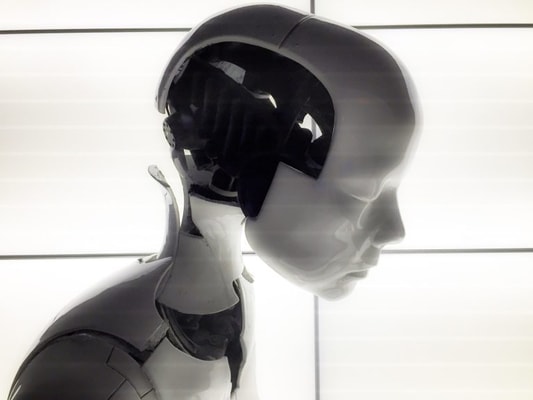
The terms artificial intelligence (AI) and machining learning are used interchangeably by many, and sometimes even tech professionals and enthusiasts find it hard to draw a line between the two. There is a good reason for this; Machine Learning is a subset of AI, specifically a derivative branch of study that deals with large sets of data. Machine learning is a specialized branch of AI. If you have read about AI and machine learning in the news you may have come across the phrase, “all machine learning is AI but not all AI s machine learning.” AI is defined as a broad aspect of computer science and engineering that aims at ultimately enabling computers to do things in a similar way as a human and even surpass them. AI is, therefore, acquisition of knowledge and using it intelligently. The main component of AI is artificial neural networks which are modeled to work similarly to a human brain. On the other hand, machine learning is a more specific field about teaching machines how to...
Thirty years ago, smart technology and home automation were relegated to the realms of science fiction, or the homes of the extremely wealthy. Yet, with the advent of smart home products and systems that are also smart on the wallet, a rise of consumers buying into smart gadgets is at the forefront of the home market. Smart home technology has increasingly been adopted by Millennials and baby boomers. Starter homes, to senior communities, to apartment complexes must have home automation at an affordable price. The smart home market is set to reach $114 billion by 2025, according to Fortune Business Insights Home Automation Market Report. The market for Home Automation has been increasing steadily and is projected to continue The National Association of Realtors trend report states that among the smart home automation makeup, 43 percent are Millennials, 33 percent between the ages of 33-54, and 24 percent are baby boomers (55+). In the National Association of Home Builders (NAHB)...