We found 63 posts about Communication & Networking from DO Supply, a global automation parts
reseller focused on hard-to-find and obsolete industrial automation products.
In the architecture of modern industrial automation, the common thread that ties everything together is synchronization. This ensures everything operates in real time. The regular and consistent exchange of data among the main control elements, namely Programmable Logic Controllers (PLCs), Human-Machine Interfaces (HMIs), and motor drives, is the nervous system of any automation system. The communication efficiency of the manufacturing, energy, and transport systems determines their impact on intelligence, safety, and efficiency. This article explains the technical nature of this interaction by examining the role of each device, the language they speak, and the physical and logical paths that must be in place for it to work properly. At the center of any control system is the PLC, which is undoubtedly the brain of the operation. These are computer systems that are designed for industrial use. The main task of these devices is to run logic control and deterministic logic control. The...
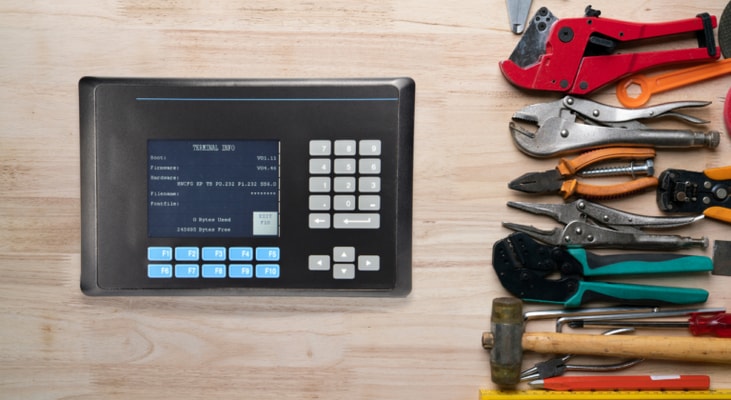
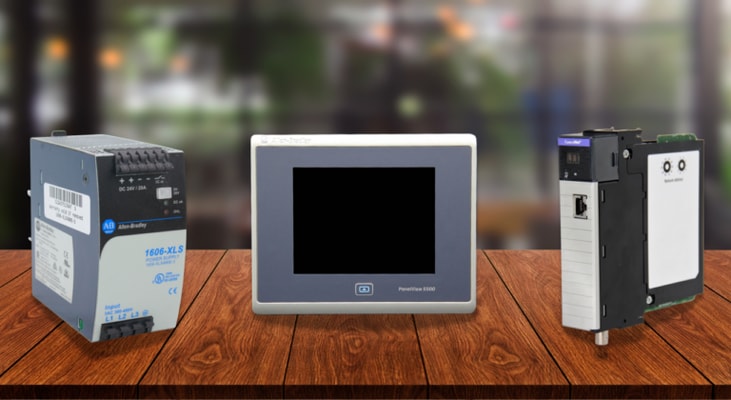
Human-machine interface (HMI) equipment is constantly challenged in industrial settings. Even the most robust components may be affected by dust, temperature changes, electrical noise, and constant use. For operators who rely on Rockwell Automation panel view terminals, a proactive, informed maintenance plan is not merely a suggestion but also a significant factor in ensuring the greatest availability of operational time and the security of a substantial automation investment. This overall manual provides step-by-step technical guidance and best practices to greatly extend the functional life of your PanelView displays, from daily cleaning to end-of-life component maintenance. The main interaction point on every PanelView terminal is the display window, and thus its responsiveness and readability are of paramount importance. A very important though seemingly quite simple maintenance activity is proper cleaning. The wrong method may cause irreparable damage, whereas a responsible...
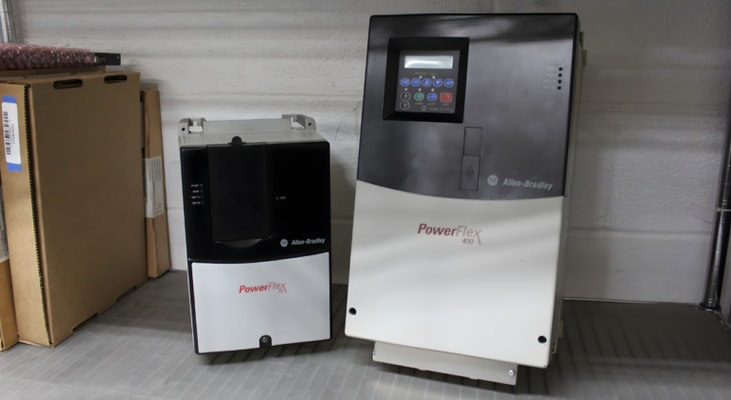
Rockwell Automation offers a comprehensive portfolio of industrial automation products under the Allen-Bradley brand name. The product lines range from motion control solutions, motor drives, power supplies, sensors and switches, Human Machine Interfaces (HMIs), motor controls, circuit and load protection devices, Input/Output (I/O) modules, relays and timers, and safety modules to programmable controllers and networking infrastructure. Allen-Bradley products have a long-standing reputation for robust design, premier integration, exceptional reliability, and advanced features, making them a perfect fit for a wide range of industrial applications. This article features the most commonly used Allen-Bradley products. The Allen-Bradley lineup of PowerFlex Variable Frequency Drives (VFDs)/AC drives provides cutting-edge motor control technology. These drives enable precise control of motor speed and torque, resulting in significant energy savings, reduced mechanical stress, and enhanced...
Allen-Bradley is a renowned brand of industrial automation technologies owned by Rockwell Automation, a company that offers a wide variety of digital transformation and factory automation solutions. The Allen-Bradley product line features a broad portfolio of industrial automation and control products like Human-Machine Interfaces (HMIs), Programmable Logic Controllers (PLCs), sensors, DC drives, Variable Frequency Drives (VFDs), and safety devices. All these products are designed for optimal performance, robust, and reliable operation in harsh industrial settings. They enable real-time system monitoring, precise control over machinery, and improved safety within manufacturing and other industrial environments. The PowerFlex DC drive family is a complete collection of high-performance DC motor control technologies. It includes Allen-Bradley PowerFlex DC field controllers, PowerFlex DC drives, and PowerFlex DC stand-alone regulators (SARs). PowerFlex DC drives provide cost-effective...
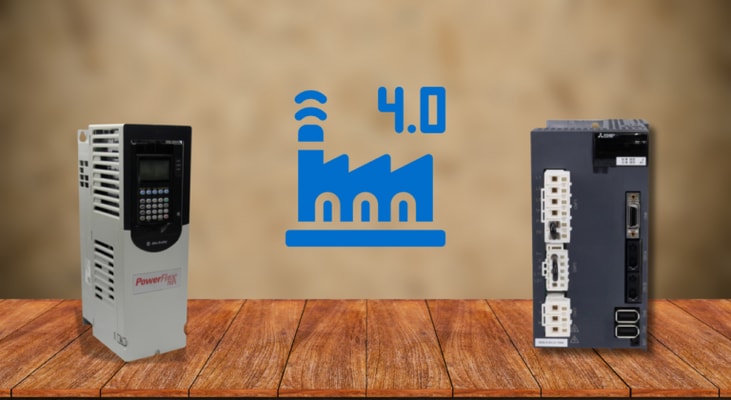
PLCs are the foundation of industrial automation systems. Smart technologies in Industry 4.0 are reshaping the production criteria, and different PLC brands are in this race. These controllers now provide real-time data analytics, monitoring, control, predictive maintenance, different in-built alarms and trends, and smooth machine communication by integrating with cloud, AI systems, and IOT devices. There is severe rivalry between these PLC brands, and market captivity is based on features, innovation, dependability, and scalability. Selecting the best PLC brand is essential for businesses to keep their smart factory journey on the right track. Here, we will discuss different PLC brands and how they come up with their solutions and features. Siemens is among the most well-known PLC brands worldwide, particularly in Europe and the Middle East. Because of its reliable performance and compatibility with PROFINET and OPC UA protocols, the Simatic S7 series is extensively used in various...
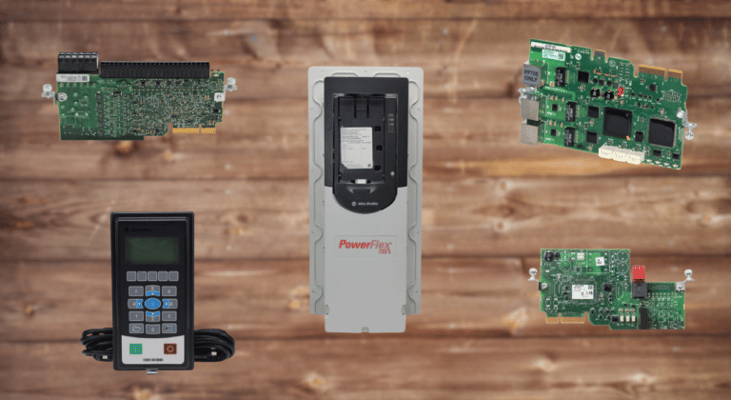
As a wise person once said, “Communication is key.” While you may have heard that this is the case for various reasons, it rings true when discussing automation equipment, specifically the fieldbus. Some plants speak EtherNet/IP while others may stick with Profibus. Some even still shout in DeviceNet, as if it were 2004. The PowerFlex 750, being the multilingual powerhouse that it is, will listen, translate, and keep everything running smoothly. With a lineup of swappable communication modules and native Ethernet/IP on board, it fits in whether your plant is state-of-the-art or still catching up. Let’s take a look at just what the 750 series can do. Shop for PowerFlex 750 Series Drive Accessories Here The 755 includes an Ethernet port out of the box, providing native support for topologies such as Device Level Ring (DLR) and CIP protocol. This makes Ethernet/IP the easiest way to get a 755 talking to a Logix controller. It handles everything from speed reference to status monitoring...
When a drive in a system goes down, the clock starts to tick. Every minute of downtime is a minute lost in productivity, money lost, frustrated operators, and production schedules sliding off track. Allen-Bradley understood this issue well and designed its PowerFlex 750 series drives with an interchangeable parts approach. The idea was that instead of scrambling for model-specific replacements, you could swap in components across the 753, 755, and even 755T drives. This isn’t just convenient, but a deliberate choice that turns a maintenance headache into a quick fix. By incorporating so many interchangeable parts into the 750 platform, Allen-Bradley has made it possible to keep more spares on hand, reduce stocking costs, and get machines running faster than it would take to fill out a downtime report. It’s not just a couple of token parts either. The interchangeable parts list for the PowerFlex 750 series is extensive, covering everything from control and power modules to cooling...
Maintaining a secure and efficient network in modern manufacturing plants is critical for operational continuity and cybersecurity. As industrial systems become more connected, the need for robust network segmentation grows—allowing manufacturers to isolate critical assets, control data flow, and minimize the risk of cyberattacks. The Stratix 5900 services router plays a pivotal role in this process, offering advanced features that support precise segmentation and secure communication across industrial environments. From VLANs and firewalls to VPN and access control, this router is purpose-built for industrial automation. In this article, we explore how Stratix 5900 enables effective network segmentation in manufacturing facilities. Network segmentation involves dividing a computer or industrial network into multiple smaller, isolated zones. In manufacturing plants, this helps isolate critical systems such as PLCs, HMIs, and SCADA from general business traffic. The Stratix 5900...
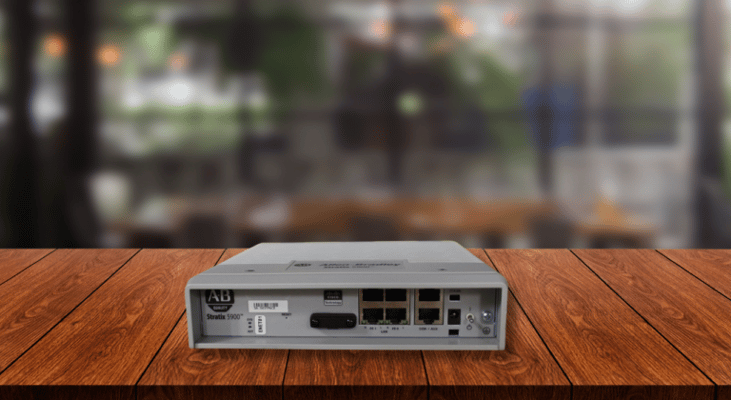
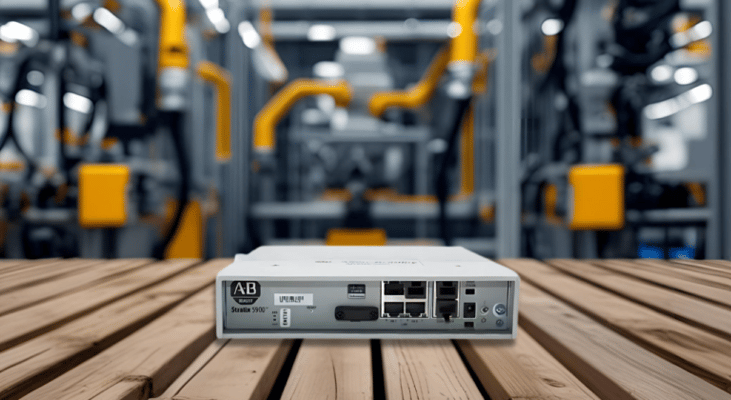
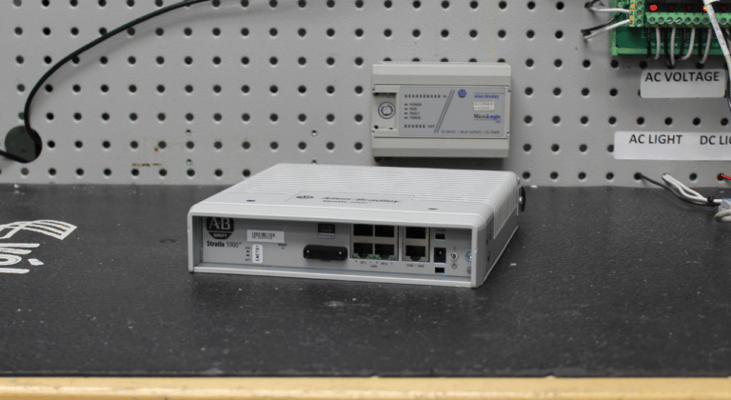
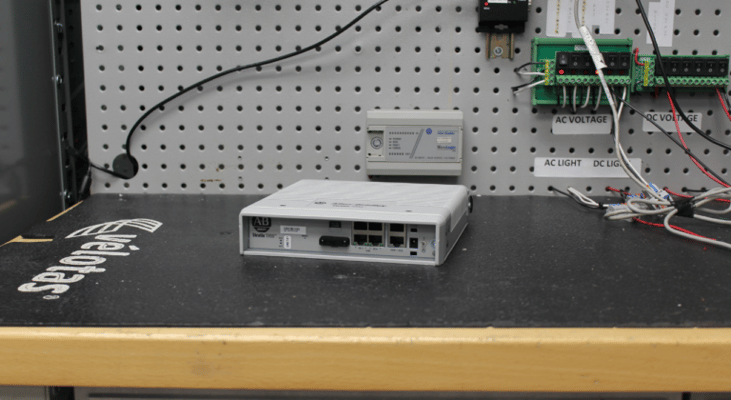
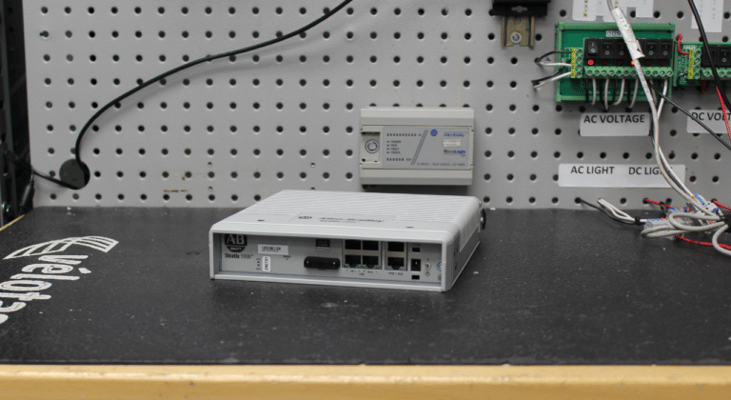
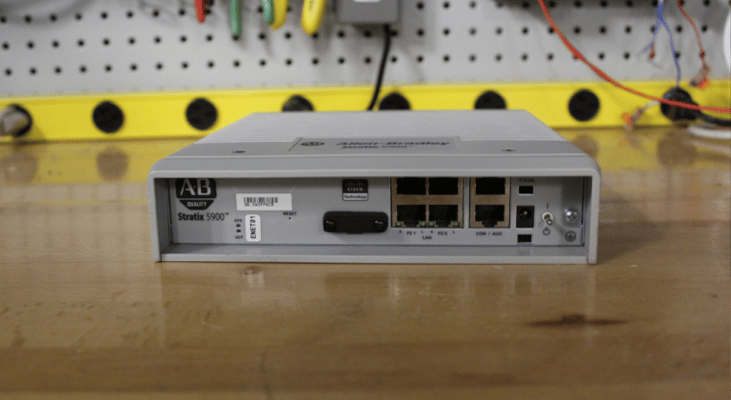
Allen-Bradley’s Stratix 5900 Services Router is an industrial networking technology milestone that provides functions that are much superior to those of conventional industrial routers. This comparison of the two types of networking devices scrutinizes their technical details, environmental hardness, security attributes, and conformity standards for professionals to make sound judgments on industrial networking infrastructure. The Stratix 5900 Services Router has an industrial-designed hardware platform that differentiates it from standard routers. A fixed configuration avoids the complexity of modular systems, enabling out-of-the-box functionality upon deployment. The hardware has an extensive connectivity solution with four Fast Ethernet (10/100) connections for area networking, one Gigabit Ethernet connection for high-speed uses, and one specific WAN port for wide-area networking. This integration of ports supports versatile architectures for both remote and local communications...
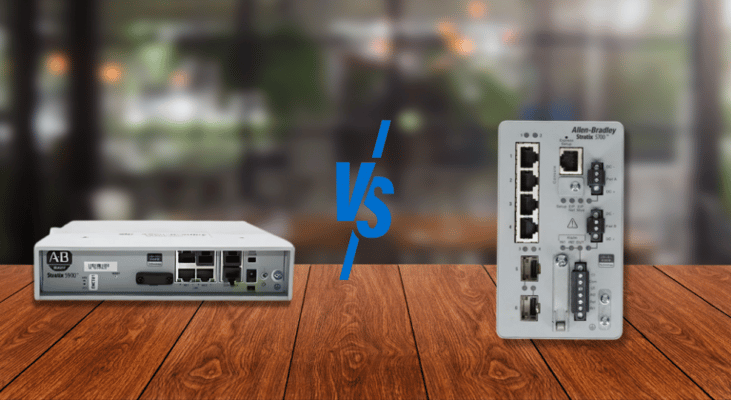
In any industrial setting, getting two machines to talk to each other is only half the battle. The real challenge is keeping that conversation organized, secure, and flowing in the right direction. This is where networking hardware comes into play. If you’re already invested in the Allen-Bradley environment, then the Stratix family might be familiar to you. Like other families of automation tech from AB, the Stratic models serve different purposes. While the 5900 and 5700 may sound like cousins, they’re built for entirely different jobs. While the 5700 keeps online traffic flowing smoothly, the 5900 stands guard to keep out bad actors from entering the network. That being said, which one belongs on your panel? Starting with our industrial-grade managed switch, the Stratix 5700 is designed to control the flow of traffic in industrial settings. It’s designed to make sense of the chatter between drives, controllers, and operator interfaces. With configurations ranging from six to twenty...
As we approach the golden age of automation and Industry 4.0, processes that were once manual or repetitive are being phased out with robotics and PLCs. This shift to the next generation of manufacturing and processing comes with the reliance on the Internet to program, run, and troubleshoot, leaving the door open for vulnerabilities that can result in cybersecurity attacks. Due to this, the demand for industrial routers has made its voice heard, and Allen Bradley has answered with their Stratix line. While several generations of Stratix routers exist, we will focus on the 5900. While some routers were designed for carpeted offices or quiet server rooms, the Stratix 5900 was not. Instead, it was built to feel at home in environments prone to dust, vibrations, and temperature swings. Its passively cooled, IP41-rated chassis is designed to operate in temperatures ranging from -13 to 140F (-25 to 60C), meaning it could keep cool next to stamping presses or welding bays. Added to this is...
When running any operation, whether it’s a small business or a large automation company with many satellite sites, cybersecurity is a gear in the main machine that isn’t to be left out. Network security comes in all forms, such as VPNs, firewalls, and even your local IT personnel telling you to stop clicking on those phishing emails. However, that is mainly due to the dangers an unsecured network can impose. This is where the Stratix 5900 comes in, a device that does a lot more than route packets from point A to point B. The main idea for the Stratix 5900 is to build an industrial VPN router that is meant to withstand the harsh environments that factories will inevitably subject them to with speed and connectivity. Speed and connectivity are also top priorities to ensure as little downtime as possible and proper integration with industrial control systems. A conventional office-grade router might bring high speeds, but it’s like comparing a single-blade pocketknife to a Swiss Army...
Modern network devices must secure, protect, and ensure operational continuity while simply facilitating the network. Cybersecurity is paramount, even in industrial environments. The Stratix 5900 from Allen-Bradley is one such drive that answers these questions. It is not just another managed switch—it’s a secure and intelligent network device for protecting and optimizing the industrial automation system. This article provides a brief summary of this product’s potential role in industrial networks. The Stratix 5900 is an industrial-grade router for secure and reliable data transmission. The router supports various Ethernet protocols and can bridge or route multiple protocols into local area networks (LANs) and wide area networks (WANs). The device has increased network connectivity with several Fast Ethernet (10/100) and Gigabit Ethernet ports. However, the ultimate selling point of the Stratix 5900 is its emphasis on security. It has integrated VPN (Virtual Private Network) and...
A factory with perfect efficiency, uptime, and productivity is one bad actor away from utter failure if it never pays any mind to its network security. Many routers are built for office environments, but automation demands more. Harsh conditions, strict security requirements, and seamless integration with industrial control systems make traditional IT equipment and software less effective. That is where the Stratix 5900 comes in. This security appliance is designed specifically for industrial networks, combining firewall protection, secure remote access, and advanced traffic control into a single package. But how does this all lead to safeguarding your factory? Shop for Stratix 5900 Routers Here Firewalls control which traffic is allowed into and out of a network. In industrial settings, this is especially important because unauthorized access can lead to production slowdowns or system failures. The Stratix 5900 firewall is tailored for automation environments, allowing it to filter...
Wireless Sensor Networks, or WSNs, are infrastructure-less wireless networks that use thousands of spatially distributed sensors to monitor environmental and physical parameters, like temperature, motion, pressure, etc. Each sensor node collects data and transmits it to a sink node or a central hub using radio frequency. At this main location, it is processed, stored, and analyzed by a computer or a human. These smart sensors are self-configured, meaning that they can automatically supervise processes without any manual intervention. WSNs have several key components: A sensor node comprises of a sensing unit (or a transducer) that measures physical parameters, a micro-controller that processes the data, an ADC, a transceiver for wireless communication, and a power source which is usually a battery. WSNs come in three main structures for radio communication. Radio Telescopes In Star Topology, the sink node can send or receive information from various remote sensors. However...