Stratix 5900 vs Traditional Industrial Routers: A Comprehensive Technical Comparison
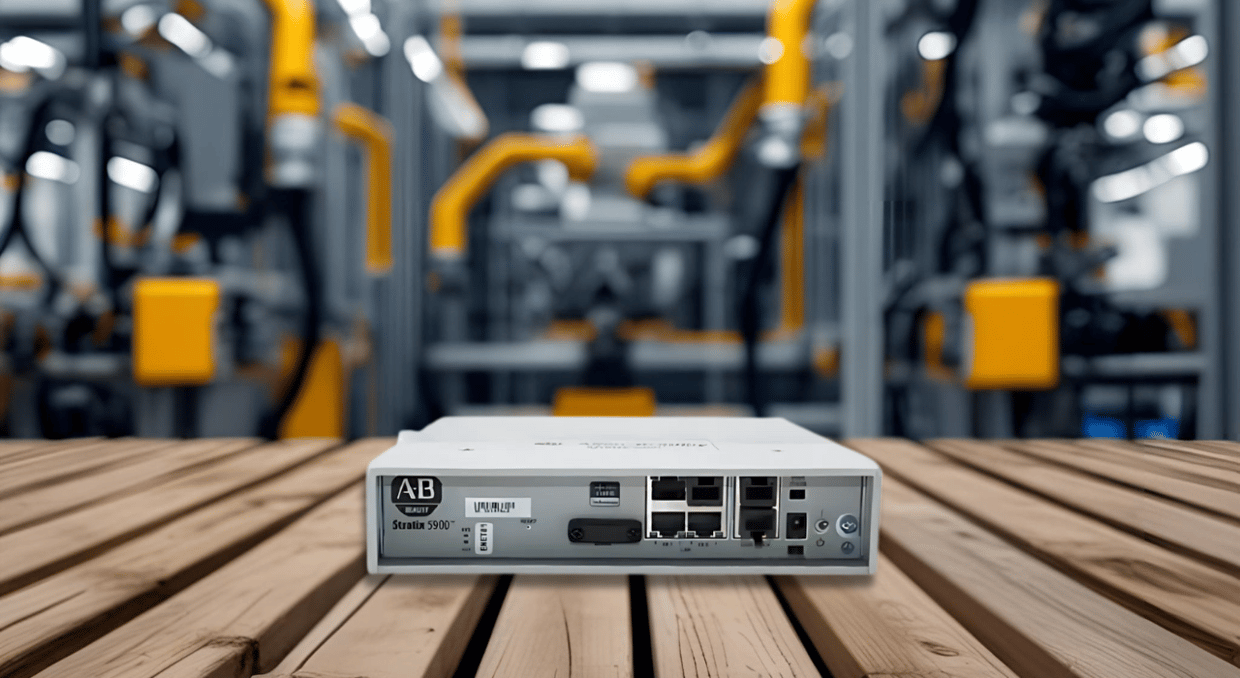
Allen-Bradley’s Stratix 5900 Services Router is an industrial networking technology milestone that provides functions that are much superior to those of conventional industrial routers. This comparison of the two types of networking devices scrutinizes their technical details, environmental hardness, security attributes, and conformity standards for professionals to make sound judgments on industrial networking infrastructure.
Hardware Design and Configuration
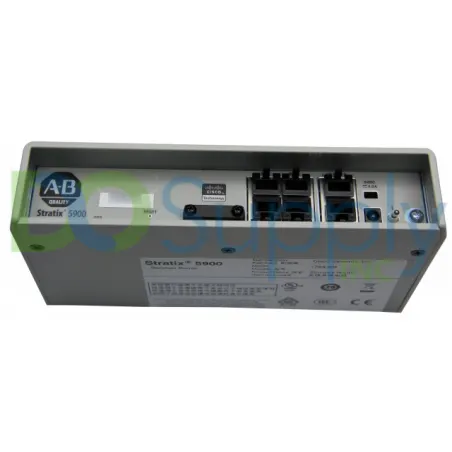
The Stratix 5900 Services Router has an industrial-designed hardware platform that differentiates it from standard routers. A fixed configuration avoids the complexity of modular systems, enabling out-of-the-box functionality upon deployment. The hardware has an extensive connectivity solution with four Fast Ethernet (10/100) connections for area networking, one Gigabit Ethernet connection for high-speed uses, and one specific WAN port for wide-area networking. This integration of ports supports versatile architectures for both remote and local communications.
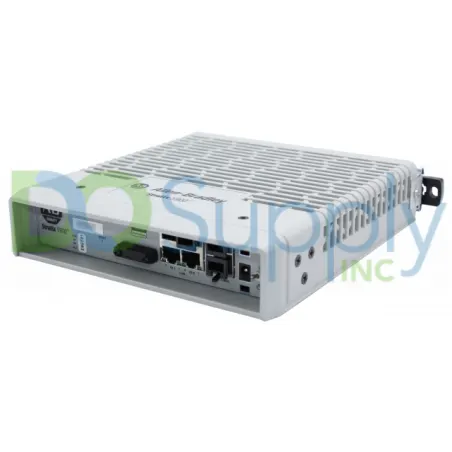
Another area where Stratix 5900 stands out is in power efficiency. At just 11 watts maximum power for the router itself (and 25 watts for the included power adapter), the unit highlights its high energy efficiency. The power adapter LITEOIN PA-1200-35A4 has an input of 100-240V AC at 50/60Hz for global deployment. The adapter’s output is steady at 5V DC at four amps to power the router. Weighing at 1.5 kg (3.2 lb), Stratix 5900 has a lightweight profile with strong functionality coupled with multiple mounting options such as DIN rail, wall, or floor mounting.
Traditional industrial routers typically need to add extra modules to match the functionality of the Stratix 5900, requiring higher system costs and more complicated installation. These routers’ power draw is also less efficient, consuming more energy. Traditional routers’ physical configurations also tend to be less mountable than the Stratix 5900’s, which can make them difficult to deploy in space-restricted industrial locations.
Environmental Resilience and Durability
The Stratix 5900’s environmental ratings uncover its actual industrial heritage. Engineered to function reliably in harsh environments, the router functions fully in temperatures from -25°C to +80°C (-13°F to +140°F), as validated by EC 60068-2-1, -2, and -4 standard certifications. Even in non-operational modes, the unit can survive from -40°C to +85°C (-40°F to +185°F), offering ruggedness during storage or shipping in extreme climates. Humidity tolerance is also noteworthy through guaranteed function during 5-95% relative humidity (noncondensing) environments.
Another prominent aspect is its mechanical resilience. The Stratix 5900 can withstand vibration of as much as 0.5 Grms during operation (per EC 60068-2-64) and survive 5g shocks in both operating and non-operating environments (EC 60068-2-27). Its enclosure has an IP41 rating for protection against 1mm solids and drips of water and an environmental rating of IP30 for protection against larger 2.5mm solids. The specifications render the router appropriate for deployment in demanding industrial environments where dust, moisture, and mechanical shocks are persistent issues.
Traditional industrial routers tend to have much narrower operating temperature ranges, usually between 0°C and +60°C, which can be limiting for use in harsh environments. They also tend to have lower vibration and shock ratings, usually 3g maximum, and are not as suitable for usage with heavy plant equipment or high-motion environments. Enclosure protection in standard routers is usually just basic IP20, giving little protection against dust ingress and none against significant exposure to water.
Advanced Security and Networking Capabilities
The most distinguishing factor of the Stratix 5900 may be its extensive security feature set. The router has both Virtual Private Network (VPN) and firewall support built in, allowing for strong protection of industrial control systems. The VPN support creates secure tunneling for communications between machines that have a security-isolate topology and segmentation of critical cell or area zones from other network segments. This is especially useful for remote connectivity protection of equipment at distances of 100 feet or 1,000 miles. The built-in firewall uses high-end policy-based monitoring to control and limit communications across security boundaries and protect against intrusion and potential manipulation of industrial processes.
In addition to these security features, the Stratix 5900 has a range of sophisticated networking features. Network Address Translation (NBAR) protocol filtering allows for accurate traffic classification and management, and Access Control Lists (ACLs) allow for detailed control of network permissions. Quality of Service (QoS) functionality ensures priority for vital industrial traffic, keeping it at optimal performance for time-critical applications. These functions all run on the established Cisco IOS software platform, which ensures the reliability of enterprise-grade networking in an industrial enclosure.
Traditional industrial routers do not normally have such built-in security integration. Although some have basic firewall support, VPN support is not usually part of standard fare. Traffic management functions tend to be relegated to simple ACLs without the higher-level classification and priority support present in the Stratix 5900. Most standard routers must use third-party software packages for added security, which can pose compatibility problems and new points of vulnerability.
Compliance and Certification Standards
The Stratix 5900’s wide range of certifications highlights its readiness for worldwide industrial deployment. In the North American region, the router has C-UL-us certification (UL File E136709), which testifies to its compatibility with the information technology equipment criteria of both the United States and Canada. For the European markets, the product complies with the requirements of several directives, such as the R&TTE Directive (1999/5/EC), and meets the stipulations of EN 55022 for emissions, EN 55024 for immunity, and EN 60950 for safety. The product also complies with the requirements of the RoHS Directive (2011/65/EU) regarding EN 50581 technical documentation.
The product also boasts additional certifications of Australian C-Tick approval (compliance with ACMA EMC Std 08) and Chinese CCC testing (adherence to GB 4943.1, GB 9254, and YD/T993 standards). The performance of the router’s emissions satisfies demanding Class B requirements (CISPR22/EC 60000-6-4), and the same can be said of its immunity features. Electrostatic discharge protection is as much as 8kV for contact discharges and 15kV for discharges in the air (EC 60000-4-2). Radiated RF immunity is as wide as 80-2700 MHz at 10V/m, and the unit tolerates ±500kV electrical fast transients on Ethernet.
Traditional industrial routers usually have less extensive portfolios of certifications, usually centered on regional standards, in contrast to worldwide standards. Those routers’ emissions and immunity qualifications tend not to be as strong and can create performance problems in noisy industrial electrical environments. The Stratix 5900’s extensive certification profile ensures its reliability for a wide range of industrial uses worldwide.
Industrial Application Suitability
The Stratix 5900’s ruggedness, security features, and performance reliability make it ideally suited for harsh industrial environments. In the oil and gas industry, its ability to create secure communications across long distances makes dependable communication between geographically remote equipment possible. Its environmental hardiness and secure tunneling features benefit water and wastewater operations by enabling communications between remote monitoring stations and central control. Manufacturing plants value their ability to establish protected cell/area zones with essential communications to enterprise systems.
Traditional industrial routers are satisfactory for simple connectivity functions but tend to fall short in fulfilling the multifaceted requirements of today’s industrial networks. Whatever environmental tolerances they do possess can limit mounting options, and their absence of built-in security features can necessitate extra hardware and setup to attain equivalent levels of protection. The all-in-one Stratix 5900 eliminates all of these trade-offs as it presents an entire industrial networking solution in one ruggedized unit.
Conclusion
The Stratix 5900 Services Router is a major leap in industrial networking technology, providing features well beyond those found in standard industrial routers. Its high-performance hardware blends power efficiency with flexible connectivity capabilities, and its superior environmental ratings ensure reliability in the toughest environments. The built-in VPN and firewall functions deliver enterprise-level security without requiring separate devices, and its extensive certification options assure worldwide compliance.
If this is the kind of protection you need, we have you covered! Stop on by our site and check out our Stratix 5900 routers. We also carry drives, PLCs, and controllers for all of your automation needs. If you are looking for something more specific, why not call our experts or email them? Regardless, we aim to ensure you get what you need to support your automation solution. We also have an article going over the differences between the 5900 and 5700 here!
DO Supply Inc. makes no representations as to the completeness, validity, correctness, suitability, or accuracy of any information on this website and will not be liable for any delays, omissions, or errors in this information or any losses, injuries, or damages arising from its display or use. All the information on this website is provided on an "as-is" basis. It is the reader's responsibility to verify their own facts.