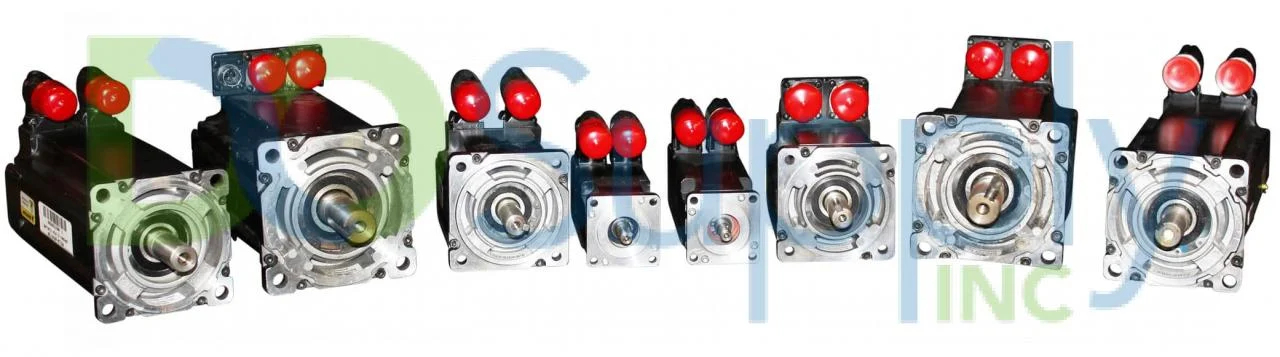
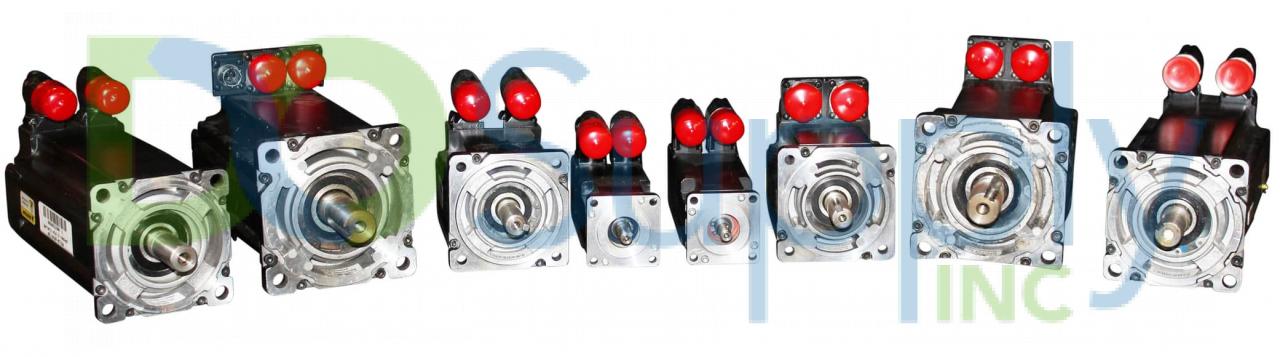
Today’s motion control systems require motors that do many different things, such as precise positioning or controlled torque. Servo motors allow for better control of these conditions by allowing a high rpm spin at low torque yet slowing down and increasing torque as states require. With position sensors, encoders, and gearing, microcontrollers can sense the actual versus the desired position and correct it to allow rotors to turn to the machine gear or wheel to the precise position required. These DC motors can be either positional, where precise rotor control is needed, or continuous, turning clockwise or counterclockwise at different programmed speeds. Servo motors are available in numerous sizes, and torque ranges and cost-effective to achieve control in high torque situations. They are best suited for speeds over 2000 rpm where high torque is needed. However, they are limited in positional rotation to 180 degrees. Allen-Bradley has a long history of quality, durable, and robust...
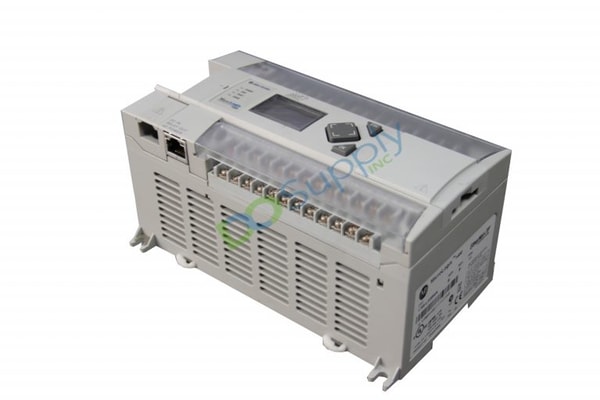
As the de facto standard for industrial programmable logic controllers, Rockwell Automation’s line of Allen-Bradley PLCs covers the full spectrum of application scales, from hobbyist to multi-site systems. In this article, we’ll examine one of the most popular and cost-effective PLC options in Allen-Bradley’s catalog: the MicroLogix 1400 family. MicroLogix Family Overview The MicroLogix series sits at the micro-scale end of Allen-Bradley’s PLC offerings, just under small-scale options such as the CompactLogix series, and farther yet under large-scale solutions including the flagship ControlLogix series. These series groupings aren’t meant to infer differences in quality or reliability – these names only refer to the scale of the applications each family is designed to serve. Where a ControlLogix PLC may control an entire plant, a MicroLogix PLC is a much better fit to control a single machine. The Allen-Bradley MicroLogix family of PLCs is based on two paramount features: compact size...
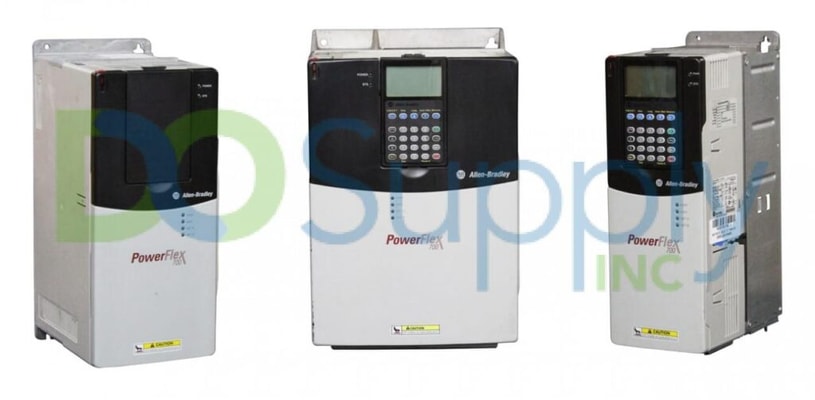
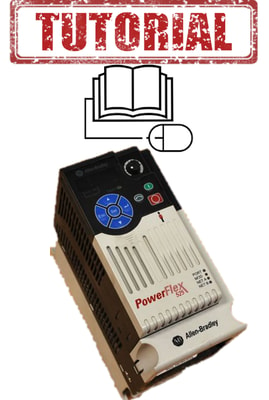
As factories and warehouses have become more connected to platforms for control and analysis of operating and production environments, equipment manufacturers have created OEM equipment to operate with more precision. This means that more than ever, reliable and efficient control of motor speed and performance is critical. When control systems require more than just stop and start or on and off applications, variable frequency drives (VFD) can be used to deliver the right amount of voltage and frequency to a motor so that it not only does what it is required to do, it also does so with precision and safety for both operators and equipment. Because using VFDs allows full control of operating motors, companies can reduce both cost and energy consumption while achieving very tight process control for their operation. Allen Bradley Low Voltage VFDs Allen Bradley’s VFD solutions cover a wide range of sizes and applications for any control and automation needs through its PowerFlex® VFD...
Motion control sits at the heart of most manufacturing and warehousing applications. With accurate motion control, system designers can create closed loop, efficient systems that optimize performance across a wide range of industries. One common requirement for many systems is for low inertia servo motors. Depending on the final product or application, low inertia servo motors are used in a variety of applications. These applications range from packaging and converting where consistent, high speed high torque requirements drive the value of the system. They are also used for electronics assembly, as well as in big ticket items such as automotive and metal forming where consistent performance and reliability are key. The Value of Low Inertia Motors Simply stated, low inertia motors are small and have a small spindle inertia. In high volume environments when the motor is operated almost continuously, a low inertia motor will impart both low inertia and heat to the system. In systems...
Each passing year brings greater and greater need for visualization within control systems. The ability to visualize machine states, errors, running conditions, quality, and other data is critical to today’s control environments within manufacturing, warehousing and other industries. Allen Bradley’s line of HMI solutions offers a wide range of products for end users or control system designers to build out the system that works best for their application. With state-of-the-art features, Allen Bradley’s current line of HMIs givers builders and users the tools to optimize any system. Here is a look at the differences and similarities between the PanelView Plus 7 and Allen Bradley’s newer solution, the PanelView 5500 . PanelView Plus 7 Standard and Performance Before looking at direct comparisons, it should be noted that there are some differences between the PanelView Plus 7 Standard and the PanelView Plus 7 Performance. Understanding these differences will also help inform users when...
Every PLC manufacturer has their own way of presenting their line. And when comparing PLCs from different manufacturers, there is a lot of overlap between manufacturers. Some cover a wide range of automation system sizes with a dizzying array of offerings while others offer seemingly a smaller line that upon closer look covers the same territory as their competitor. Two of these manufacturers, ABB and Allen Bradley, both offer PLCs with strong feature sets that cover any range of automation needs. Swiss-based ABB offers a wide range of control products including PLCs, HMIs and is well known for its robotics offerings. While US based Allen Bradley is one of the most popular companies for control solutions in the US and the world. Here is a comparison of the two’s most popular PLC products and features: Large Control Systems Both Allen Bradley and ABB offer a full feature PLC line for large control systems. Allen Bradley offers the ControlLogix 5580 and 5570 line. These controllers are...
The PanelView 550 Standard Terminal HMIs have been in service for many years. Introduced by Allen Bradley to facilitate factory automation and provide real-time actionable data to users and technicians, the 550 Standard was a workhorse. The units were sturdy and reliable and were scalable across a wide range of applications. As automation capabilities have improved through more flexible communication, onboard capabilities provided by machine OEMs and further connectivity on broader networks, Allen Bradley introduced HMIs such as the PanelView 7Plus to provide a more flexible HMI platform to monitor and control devices for even more applications. Comparing the legacy PanelView 550 and the PanelView Plus 7 To fully understand the improvements in the PanelView Plus 7 over the PanelView 550 Standard, here is a direct comparison of the key features and capabilities of both. Screens The importance of HMIs in modern factories is undeniable. And screens and alarms on HMIs help monitor and...
The use of motors in modern society is staggering. It is estimated that motor systems alone account for as much as 47% of the world’s electricity usage. Further, within manufacturing environments, industrial motor systems account for 70% of all electricity used. Intersecting this reality is the fact that as technology in the form of software, AI, cloud-based systems and other advances continues to grow, opportunities exist to improve the performance and efficiency of industrial motor systems through monitoring, automation and more precise management of the entire system. Today, the norm is to link the control of these motors into entire ecosystems to run production lines on scale with better performance for the system overall. Two Approaches to Motor Speed Control To make these complex systems work and to leverage the benefits of an integrated control system, it is important for users to be able to control the most integral cog in the equipment itself – the motor. Performing the...
The PowerFlex family of variable frequency drives gives system builders many options to fit both architecture and budget needs. The PowerFlex 525 is part of Allen Bradley’s compact class of AC drives. These drives are modular and are used for stand-alone control applications or for simple control systems. Of the entrants in the 500 series of compact drives, the 525 offers embedded EtherNet/IP and a modular design that helps in tight spaces and easier installs. The 525 also carries standard safety features and can be programmed via USB. Because it is rated to run in temperatures as high as 158 degrees, the PowerFlex 525 can handle harsh environments. The 525 also has the Safe Torque-Off feature for added safety. Setting the IP Address Parameters for the 525 There are two ways to set the IP address in the 525. The first is through using the keypad on the unit itself. The second is using the USB connection and programming from a PC or laptop. Setting the IP Address with the Keypad Step...
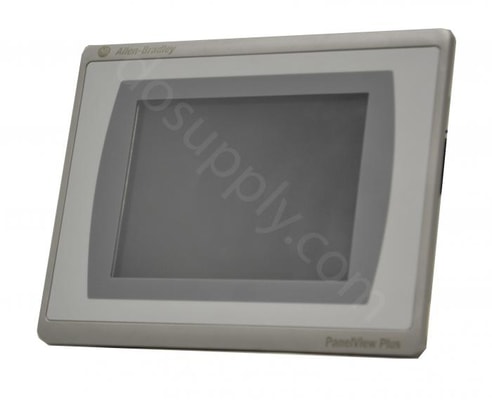
Automation and control systems run the gamut from both simple to complex as well as small to large. Allen Bradley’s PanelView Plus 7 was introduced to better visualization for larger and more complex applications. In addition to best-in-class functionality, the PanelView Plus 7 offers a larger screen and much more processing power. In today’s complex manufacturing environments, visualization is critical to manage production or process flow. To do this, companies rely on multiple terminals as well as many PCs for both remote monitoring as well as programming. The PanelView Plus 7’s embedded Ethernet capability and two Ethernet ports allow it to function in a number of complex control solutions such as device level ring topology. The Ethernet connectivity is key to the PanelView Plus 7’s success in allowing managers and technicians direct as well as remote access to configure devices, troubleshoot process issues and review and address alarms. Because of its importance to the PanelView...
The Kinetix 5500 and 5700 series servo drives offer innovative responses to automation and motion control needs for any system. Combined with the right Kinetix VP servo motors, these systems optimize space and are easier and simpler to use. Because they integrate motion control on EtherNet/IP, a dedicated motion network is not required. This allows for as much as a 60% reduction in cabling and eliminates the requirement for gateways to send and receive data from far away networks. The 5500 comes in 6 sizes while the 5700 series comes in 18 sizes. The 5500 and 5700 work with Kinetix VP servo motors for optimal performance. Kinetix VP servo motors are designed for specific applications such as food grade, continuous duty, low inertia and others. This gives users a motion control system customized for their specific applications. Because Kinetix servo motors have unique winding technology and a DSL encoder onboard, they can connect to smart cable technology to allow communication to the...
PowerFlex low voltage AC drives can be used in a wide variety of control solutions. The PowerFlex family of controllers ranges from low end applications for more simple control needs to more advanced and feature rich models that increase capabilities such as precise positioning and advanced torque control. The PowerFlex family is also easy to program and configure and offers the familiarity of a common user experience regardless of the model selected. This is true for both compact PowerFlex drives used in simple applications at the machine level or in stand alone configuration as well as for architecture sized models with more advanced features and precision built for integration into a factory level or production line control system. The result of this level of flexibility and common software utilization means that the PowerFlex family offers many advantages such as: Low Cost – The range of functionality is so broad along the PowerFlex family that you can choose the right package of...
Graphic terminals are an essential part of most modern operating systems. They provide solutions for human machine interface issues where access at the point of need by an operator, manager or technician is critical. By providing access where needed, users can achieve visualization of the process they seek to manage and allows them to make changes quickly and accurately. Today’s HMIs are also built for shock, vibration and other harsh conditions found in a manufacturing environment. And they are built to work with modern communication protocols such as DeviceNet, ControlNet, EtherNet/IP, and others. One superior family of solutions for automation and interface applications is the PanelView Family by Allen Bradley. The PanelView family offers the above solutions and has all the hardware, software, and communication needs built in. But which PanelView is right for your application? And how do you choose the right model, or mix of models, for your automation system. Here are some...
In recent years, machine learning has found applications in new and often unexpected areas. With the novel coronavirus outbreak in 2019 and 2020, it makes sense that many have tried to apply machine learning and artificial intelligence to various problems relating to the disease. From modeling the spread of the disease to searching for possible drugs and vaccines, machine learning has been integral to understanding many of the problems caused by the COVID-19 pandemic. Case Study – Disease Dynamics A simple internet search will lead you to hundreds of dashboards showing the current number of coronavirus cases around the world. This stems from how easy it is to access data relating to the virus, especially from reputable sources like Kaggle or Johns Hopkins . This data, along with sophisticated models for disease dynamics has, for example, enabled predictive modeling for the number of people who actually have the virus and the risk of hosting an event in any county in the US . Some...
A high-speed counter (HSC) is a functional capability within particular PLCs. HSCs count the frequency of the pulse of processes from systems with elements such as high-speed encoders. In these cases, special input modules ensure the count’s accuracy and deliver the output to the system element within the latency criteria that optimizes machine or system uptime to meet throughput requirements. Normal counters are adequate unless the pulses you are counting will arrive faster than 2 times the scan time. HSC Overview and Application An HSC is a select type of counter. Counters used in systems with lower pulse frequencies (CTU/Ds) can be implemented as a software-defined PLC element. Thus, it only exists virtually. The HSC requires a hardware input module that can operate reliably in the harsh environmental conditions experienced on a factory floor. The engineering design is a simple input/output device that uses ladder logic to develop the output signal from the inputs provided. After...