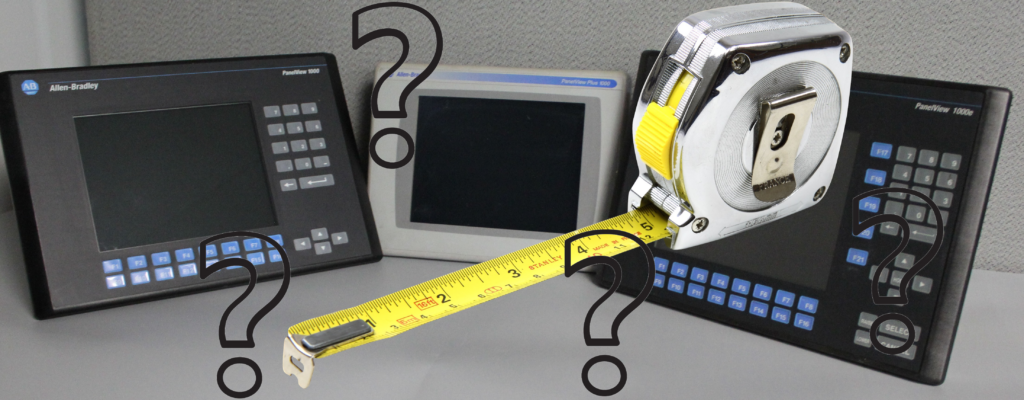
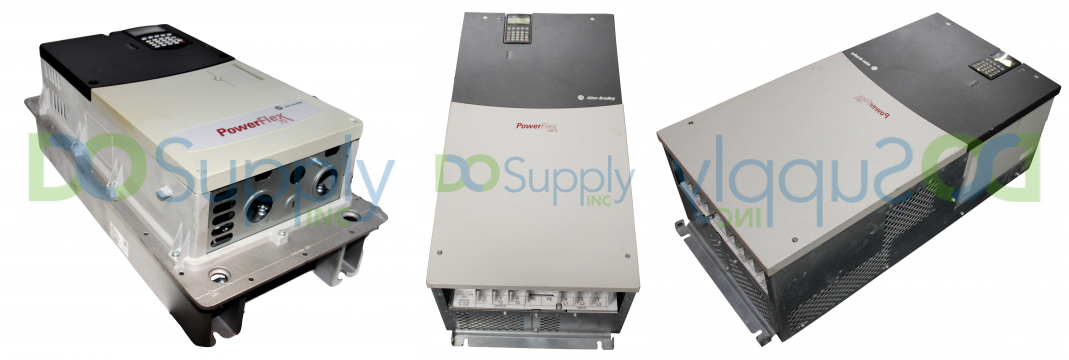
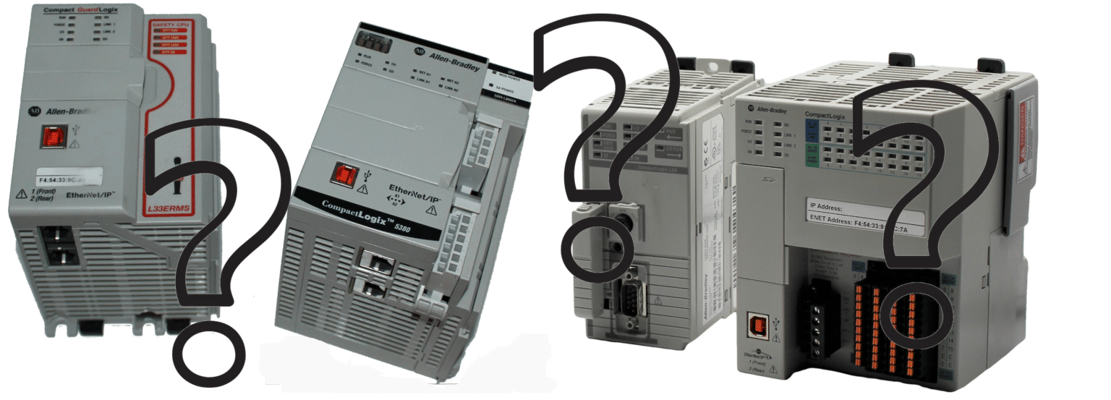
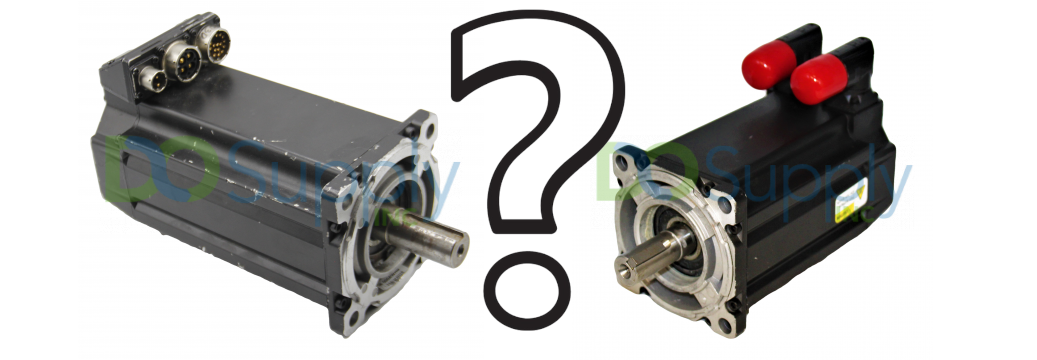
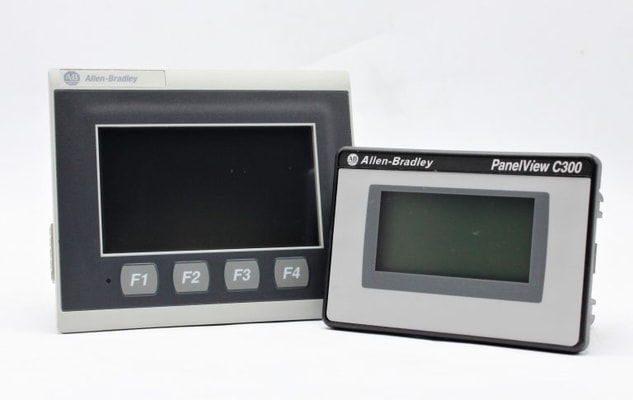
Display resolution are the pixels that can be displayed and is shown in width and height measurements. The higher the numbers, the crisper the image will be. Larger screens are able to display more pixels than smaller screens. VGA in the display resolution is a standard introduced in the 1990’s referring to Video Graphics Array. Higher resolution screens show WVGA, XVGA, and more. Refer to a standard chart for an explanation of pixels in each array. Each PanelView section contains a comprehensive specifications document. Always consult this before finalizing your purchase or installation plan. Here are the terminal dimensions display resolutions and other available display data for each series of PanelView in the Allen-Bradley line. The PanelView 5000 series contains the 5510 and the 5310 models. These graphic terminals offer modern design and Logix Integration for easy engineering configuration. Color depth – 24-bit color graphics (16.7 million colors) Backlight – light-emitting...
You want to improve machine safety at your facility, but you don’t even know where to start. Not only do you not know where to start, but you don’t even know what words to use to describe the things you want to do. Hopefully, by the time you get done reading this, you’ll feel more comfortable talking about machine safety and confident in starting your safety journey. What is machine safety? You’ll hear a lot of terms thrown about – categories, performance levels, safety integrity levels, diversity, redundancy, diagnostics – and those are just some. What it boils down to is machine safety (or functional safety) is using technologies to prevent harm to people and equipment. This can come in many forms, and doesn’t just have to utilize one philosophy. It could mean fences around machines, or sensors and “safe” controls. It could mean PPE like gloves, or it could mean signs that say “DANGER!” Machine safety is an overarching concept, but in the end it’s all about making the machine as...
The world’s first software program to be denied inventor credit on a patent has a winding past, and immense goals set before it. Stephen Thaler is hoping DABUS can make him immortal. We have all contemplated at least once what it might mean to control someone’s mind. Steven Thaler, however, has been experimenting with the idea for the last 30-plus years. His keystone project over that time has been in pursuit of an advanced AI that can reason and create autonomously. A polymath of the highest order, Thaler’s AI has trained hard to excel at stock picking, product design, and even creating art. To achieve these outcomes, Thaler relied on a discovery made early on in his work with neural networks: seeded with mental instability and pushed to the edge of death-inducing madness. These applications produced some of their best creative association right before locking up and ‘dying.’ As Thaler shifted focus from corporate work to independent consulting and his own company, he had a rich well...
The first entry in our new Safety First! series of articles, is a guide to the sometimes-confusing realm of NEMA Ratings for electrical enclosures. NEMA stands for the National Electrical Manufacturers Association. This nationwide group represents electrical equipment and medical imaging manufacturers. One of its main purposes is to set and publish agreed-upon standards for industrial manufacturers. Markets NEMA supports include building systems and infrastructure, lighting systems, transportation, utility products, industrial products and medical imaging. Electrical enclosures used in industrial applications service particular purposes depending on whether they are installed inside or outside, what elements or conditions it is exposed to. These enclosures are assigned a rating by NEMA. These ratings ensure continuity across the industry, and ensure that the correct level of protection is enabled for safety and security purposes. This chart defines the ratings, the environment where...
Allen Bradley has two classes of low voltage drives, their Compact Class and their Architecture Class. The PowerFlex 7x families are part of the Architecture Class of drive, with the 70/700 series being the previous generation to the current 75x series drives. First off, one note about these drives. They are the previous generation of drives from Allen Bradley, and while many of the various models are still being supported by AB as Active Mature products, many of these drives are no longer being offered or supported. If you’re looking to upgrade an existing drive and are looking at the 70/700 series, you should also look at the 753 and 755 series drives. A drives expert can help you with the corresponding drive in both families, a conversation that is definitely worth having. The Powerflex 70 drive is the baseline model of the 7x families of Architecture Class drives. With power ranges from 0.5 through 50HP, and voltage ranges of 200-600VAC, these drives can handle pretty much all but...
In the world of machine safety, most people think about the things that are out in the open – guards, emergency stops, light curtains, etc. The most important components are usually out of sight, however. Safety relays (really small safety controllers today) are the brains of the safety system. Whether they’re yellow, red, or gray, the safety relay is the component that controls how the safety system works, and is part of what makes the system certified to protect people and equipment. In the past few years, advances in technology have allowed for great improvements in these components, and new lines of safety relays are being rolled out by all manufacturers. If you’re looking at installing or replacing an existing safety relay, these new components are definitely worth a look. One important note to start this conversation, we’re talking about safety. If you’re not talking to an expert about what you’re doing, then you’re doing it wrong already. Even if you’re just going to verify...
Recently we discussed selecting a new ControlLogix platform and the questions you need to ask yourself, and the expert you discuss them with, before you choose the right controller. For some, the answer will not be a ControlLogix, but a CompactLogix platform, based on system size and complexity. This article will delve into how to separate out the various versions of this controller line and give you a foundation for the conversation about which CompactLogix controller is best for your application. The CompactLogix line currently comes in a much larger range of options than the ControlLogix. Because of its popularity and the wide range of applications it can serve, there are several legacy versions of the CompactLogix that are still (and will continue to be) supported by the manufacturer. Currently, Allen Bradley offers three families of CompactLogix controllers, the 1768, 1769, and 5069 families. Inside this, the 1769 family is broken down into the L3x controllers and the 5370...
Installing a PanelView requires forethought and planning. Once you’ve decided which PanelView fits your particular needs with size, ease of use, and protocol requirements. PanelView’s by Allen Bradley range in screen side from 2-inches to 15-inches, and keyboard options including touch, keypad and function key. Your particular application will dictate which panel type. Then you can decide whether the PanelView will fit in the space. Each PanelView section contains a comprehensive specifications document on how to install the screen. Always consult this before finalizing your purchase or installation plan. Here are the cutout dimensions as well as the terminal dimensions for each series of PanelView in the Allen-Bradley line. The PanelView 5000 series contains the 5510 and the 5310 models. These graphic terminals offer modern design and Logix Integration for easy engineering configuration. The 5510 is for larger applications, 100 screens are supported per controller and there are 4000...
Servo motors come in a wide variety of models, differentiated by their requirements and capabilities. Here are a few things to look for and which one is right for you to choose will vary greatly, depending on your application. Motor type: The motor can be either DC or AC, and this is a basic classification based on the type of electrical current that powers the unit. The ability to control speed is the main consideration. If you are using robotics, inline manufacturing or industrial applications where high precision and performance are required, the AC motor is an advantage. For simpler units, DC may work just fine. Brushed or Brushless: Motors can either be brushed or brushless. Brushed motors are cheaper and simpler to operate, while brushless motors are more reliable, efficient and quieter. On brushless units, the brushes are replaced with an encoder and magnets. AC and DC units both have brushed or brushless options. A Universal servo motor can run AC or DC power and has brushes...
Before we dive into the specifics of this processor selection guide, it is important to bring up a few points about picking a controller. While the controller is the main piece to a control system, the best controller will fail if the remainder of the control system isn’t paired properly with it. The biggest, baddest controllers will cover for a lot of mistakes throughout the rest of your system, but they’ll expose just as many weaknesses as they make up for. This blog post will help you select the highest end family of Allen-Bradley’s controllers, the ControlLogix line. But, just as the article says, please sit down and converse with an expert. Plan the system, design it according to the plan, execute according to the design. With the knowledge you’ll gain from this article and the collaboration with those people who research these things on a daily basis, you’ll have more than a successful implementation, you’ll have a control system that will bestow great benefits upon you for...
1968 – The concept of the PLC was born as the Standard Machine Controller. 1969 – Richard Morely of Bedford Associates launches the Modicon 084 Model, kickstarting the race to refine this new technology. 1970 – Parallel to MODICON was Allen-Bradley, releasing the Bulletin 1774 PLC. This was the first time the tern PLC was used. 1971 – General Electric unveils the first design of their general-purpose programmable controller, Logitrol. 1973 – Bedford Associates upgrades the 084 to the Modicon 184, the first commercial success and the first PLC designed to meet the market’s needs. 1975 – Modicon introduces the Modicon 284, the first controller with a microprocessor and distributed control. 1975 – In the same year, the Modicon 384 is released as the first PLC with digitized process algorithms for continuous control. 1977 – The Modicon brand is sold to Gould Electronics 1977 – Allen-Bradley launches the PLC2- based on the Intel 8080 microprocessor 1979 – Allen-Bradley introduces Data...
When you talk about industrial communications these days, two terms tend to show up more than others, EtherNet/IP and ProfiNet. The reasons for this familiarity are simple, these two communication protocols are two of the most common in industry. They are two of several Industrial Ethernet based communication protocols and share the market with other Fieldbus protocols as well. As Ethernet based communications are gaining market share each year, these two protocols will become more prevalent. Both protocols utilize and add on to standard Ethernet technology. One benefit to this is that, with some care in selection, Ethernet/IP and ProfiNet networks do not require specialized equipment for their infrastructure. Standard Cat(x) copper cabling or fiber optic cable, network switches, patch panels, and other standard network devices can be used to build the control network. Care does need to be taken in product selection when designing the control network. Higher capability cabling, such...
A Real-Time Clock (or RTC) is, as the name suggests, a clock which keeps track of “Real Time” That is, calendar time, expressed in Hours, Days, Years, etc. This is in contrast to the internal time keepers of many small electronics, which keep track of only the amount of time that has passed since the unit was last powered on. Some automation products include a built-in Real-Time Clock Module , but many require a separate RTC in order to keep track of time over long...
The Allen Bradley Panelview 800 family is the generational replacement for the Panelview Component family. As of July 2018, the Panelview Component family was discontinued and no longer from sale from the manufacturer, with the Panelview 800 as a functional replacement. For those applications currently using Panelview Component HMI’s, this comparison will help determine which Panelview 800 would be the appropriate replacement. The Panelview Component family debuted in 2010 and was designed for micro and small automation applications. Screen sizes ranged from 2” to 10”, with the 2” having additional function buttons and the 3” and 4” screens having options for additional function buttons. Screens were either monochromatic or up to 256 color RGB. Power requirements for the units was 24VDC and from 3.5W to 18W for the smaller to the largest screens. Connectivity was via Ethernet or serial communications. In general, these were simple, smaller, easy to use screens that utilized Panelview...
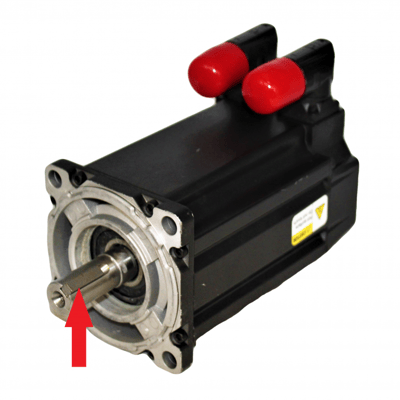
Sometimes you will come across two Allen Bradley servo motors which seem identical except for one feature: one motor is marked “shaft key” and the other is marked “smooth shaft”. This can be confusing if you are unfamiliar with the terminology. So what is a shaft key? A Shaft Key is a small element used in a joint to connect the motor more securely to a shaft, preventing the two elements from rotating relative to each other, and allowing torque transmission. The shaft key sits in a small slot cut in each shaft, which is called a keyway or keyseat. Usually the presence of a shaft key is designated in the Catalog Number by position 8 on the catalog number chart, as shown below. In the highlighted Position #8: “J” indicates the presence of a shaft key, “K” indicates a smooth shaft. A Shaft Key is a small element used in a joint to connect the motor more securely to a shaft, preventing the two elements from rotating relative to each other, and allowing torque transmission. The shaft key...