The position of a shaft within a machine can affect several concerns including safety, quality, volume and other variables. To monitor and control information that can be obtained from the shaft position and rotation, encoders were devised to measure and control the data and motion of the machine along the shaft. There are two types of rotary encoders used today – incremental and absolute. The most common, the incremental encoder, provides position information in real-time. These encoders can measure up to 10,000 counts per revolution and transmit position changes quickly. As a result, they are used in applications that require highly accurate position and velocity measurements. Incremental encoders are available in a variety of technologies depending on applications. These may include mechanical, optical or magnetic sensors which help determine precise positions. They may act as a potentiometer, volume control, and other applications where fine tuning is required. Absolute Encoder...
The GE Fanuc Series 90-30 has long been a workhorse PLC for GE automation control systems. Introduced in 1991, the 90-30 series has been a popular choice for industrial control professionals because of its versatility and modularity. By contrast, the RX3i CPU Programmable Automation Controller by GE Automation represents the move toward a more comprehensive view of automation and one that both builds on the foundation laid by the 90-30 series while offering even more advanced features and versatility. GE 90-30 Series General Specifications and Features That the 90-30 series lasted for the better part of 30 years is a testament to its popularity. By offering a platform that addressed space concerns as well as cost effectiveness, the 90-30 has been known for ease of programming and their ability to be operated through a variety of inputs. The versatility of the 90-30 series is due to its large variety of CPUs, and each of the 11 available CPUs can accept multiple expansion modules for...
With the growing complexity and connected nature of today’s manufacturing and warehousing environments, control systems are being asked to do more and more to improve efficiency and performance. When adding or upgrading a control system, the proper selection of the right variable frequency drive (VFD) for your motor is crucial. While there are many options for VFDs from a variety of manufacturers, there are many things to consider when choosing a new VFD. These include motor considerations, VFD selection and how the VFD can or should integrate with PLCs. What Do You Need from the Motor? Before diving into the VFD itself, it is helpful to understand as much information as possible from the motor itself. Most of the critical information is included on the nameplate and should be easily accessible. This information will inform the buyer and provide a foundation for selecting the proper VFD by helping narrow down options for the optimum sized unit. Horsepower – Even though it is not the...
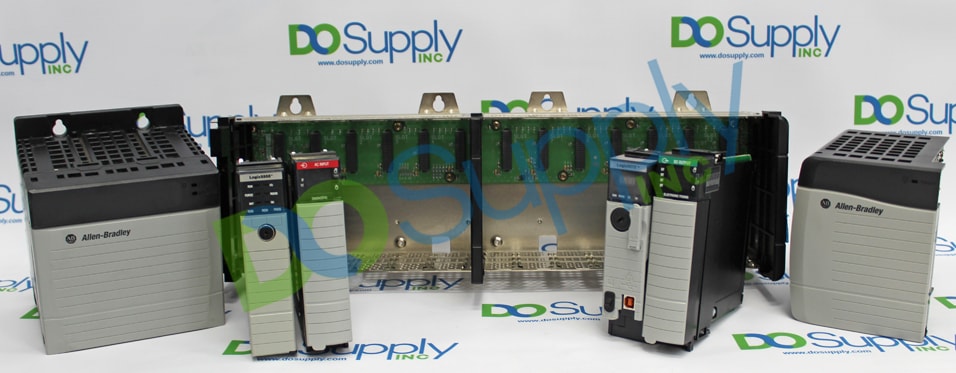
The Allen-Bradley Logix family of controllers is considered the most popular programmable logic controller family in the US. It consists of numerous variants but for this comparison we will look at the ControlLogix, CompactLogix and MicroLogix PLCs. By comparison, Siemens is much more common in Europe where their extensive line of PLCs are used in automation control systems throughout industries. The Siemens PLC equivalents for Allen-Bradley’s Logix family members above are part of the Siemens SIMATIC controller family and consist of the S7-200, S7-300, and S7-400 as direct comparisons. General Differences Before diving into unit by unit comparisons, we can first discuss some general differences between the Allen-Bradley and Siemens PLC lines: Performance – Both Allen Bradley and Siemens PLC groups have similar speeds and reliability. Their outputs are also close in number as well. The main differences in performance comes in their ease of use and how they integrate into control...
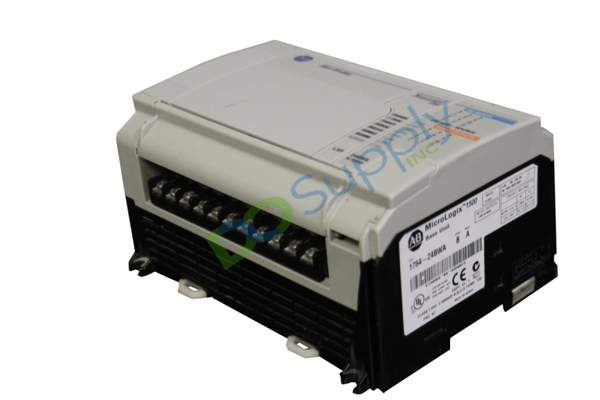
Like the other entrants in the MicroLogix series, the MicroLogix 1500 is small and can be expanded to fit a wide range of control and communication requirements. The 1500 is also expandable to 512 I/O points and is the most powerful in the MicroLogix family in terms of capabilities. As an addition to the MicroLogix 1100 and 1200 series family members, The MicroLogix 1500 has three base options with a removable processor and an updateable flash OS. With its numerous embedded as well as expandable I/O, the 1500 is a workhorse within the MicroLogix family. Main differences between the 1500 and other MicroLogix family members include: Central Processing Unit – Perhaps the biggest distinction between the MicroLogix 1500 and the other members of the MicroLogix Family is that the 1500 is a two-part system. One component consists of the controller, of which there are three base models, the 1764-24BWA, the 1764-24AWA and the 1764-28BXB. The second component is the central processing unit...
In today’s connected factory, visualization and interaction through human machine interfaces (HMI) are critical components of any control system. The PanelView family of HMI devices from Allen-Bradley is ideal for small, medium and large HMI systems. By leveraging the power of these devices, HMIs become scalable, adaptable and perfect for managing critical data and machine level inputs. Before you can determine whether the PanelView 700 or PanelView 1000 is best suited for your needs, one must understand that there are several families within the PanelView ecosystem. Each of these family groups have a 700 and 100 series, but there are differences in the two programming platforms that should be considered. An older offering from the Allen-Bradley line, the PanelView 6 consists of the PanelView Plus 6 and the PanelView Plus 6 Compact. The PanelView Plus 6 platform is used for applications with a larger footprint that connect with many controllers. This platform supports older...
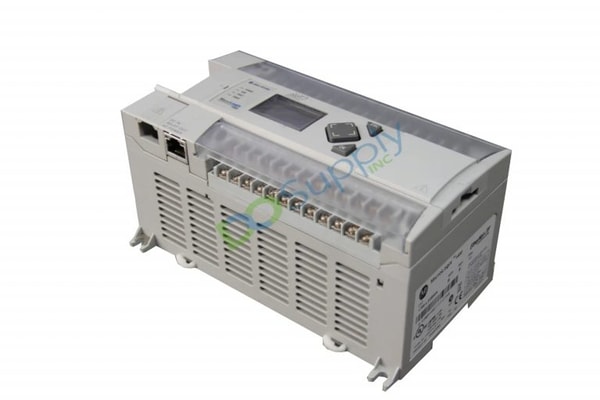
The MicroLogix 1400 series was designed to be small, versatile and expandable to suit a variety of control and communication needs. These controllers offer EtherNet/IP, as well as online editing of programming. They also feature a larger number of I/O compared to other MicroLogix family members. And the MicroLogix 1400 series can enhance network functionality and offer a range of features to help build a customized control solution for a wide range of applications. As part of a family of small programmable logic controllers, the MicroLogix 1400 offers a step up with an expansion of capabilities over other members in this family. Built upon the successful capabilities of the MicroLogix 1100, the 1400 series offers many of the same features but with a more robust feature set on some functionalities including: Increased I/O – The 1400 increases the embedded digital I/O count from 16 in the 1100 to 32. It also doubles the embedded analog I/O on some versions from the 2 offered by the 1000...
We are living in an ever-connected world. It is expected that by 2025, there will be over 75 billion connected devices worldwide. And while personal gadgets, smart homes and smart cities account a large part of those devices, there is an equally fervent push to digitize and automate factories as well. One estimate states that by the end of 2020, 80% of manufacturing companies will adopt some type of IoT technology. And the same urgency of adoption is taking place in utilities, transportation and logistics. In the industrial, warehousing and utilities sectors, much of this control is aimed at empowering the automation of equipment to perform tasks at a faster, more accurate and more productive rate. And this equipment needs control systems and ever improving control technology to adapt to these new requirements. It is easy to assume that these requirements involve large and complex buildouts connecting an entire factory or enterprise. And while that is certainly the case for larger...
Starting and stopping seem like simple concepts. But when it comes to motor controls, not only the speed of the stop and start matter, but “how” they stop matters as well. Starting solutions come in a wide array of options. Across-the-line starters are the simplest style of motor starter. Here, full voltage is applied to the motor terminals for situations where the inrush current of the motor does not cause excessive voltage drops within the supply circuit. This is often the case for simple pumps, compressors and conveyors. For applications requiring greater loads and for high degrees of variation of the specific loads placed on motors, variable frequency drives (VFD) may be used. These drives consist of an AC motor, a main drive controller and an operator/drive interface. Because of their range of speed and control, VFDs are used for process control across a variety of industrial and commercial applications for speed, flow, pressure, temperature and torque, as well as many others...
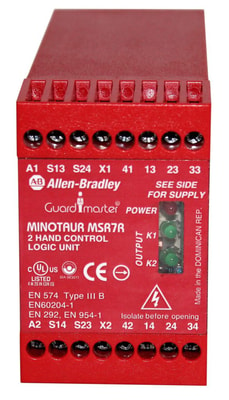
In today’s manufacturing environments, few companies can remain competitive without extensive industrial automation. Automation speeds processes, reduces errors, allows for precision manufacturing and ensures factory level control and maintenance over the system of production. It also reduces operator fatigue by eliminating manual tasks thus improving quality. Just as important as the automation functions are the safety features built into the controllers that drive this automation. These safety features are created by use of safety circuits within the automation control panels themselves and are first and foremost designed to provide safe operation for equipment operators and technicians. Aside from reducing risk of injury to those performing tasks on the equipment, safety circuits within control panels also reduce risk by allowing for safe operation to protect damage to expensive capital equipment and to reduce waste through loss of material caused by equipment malfunction. As a...
The Allen-Bradley Programmable Logic Controllers (PLC) are classified as for large, small, and micro-control system. The ControlLogix PLC series uses powerful processors to provide high performance for large control system. In the late 90s, the ControlLogix PLC was first introduced to the market. This ControlLogix series was a rack based platform, kept the major advantage of the fastest PLC. Rockwell began to use meaningful tag addressing instead of direct addressing on the platform. The 5550 with L1 processers are included in the First ControlLogix platform. Due to technological improvements in memory capacity and processing speed, the First ControlLogix favored the 5560 and L60 processor. The ControlLogix 5570 with improved speed and more memory to replace the 5560. Also the Armor ControlLogix controller is introduced in 5570 production line to extend the standard ControlLogix platform for dust and wash-down protection. For new project design, Rockwell Automation recommends first...
Industrial automation has long been at the heart of many of the improvement in manufacturing and process efficiencies across many industries. And the ability to use standardized applications to control devices and equipment at a speed and precision greater than that possible by human range of motion and reaction is one of the key reasons for that reality. As the digital revolution as grown, it has ushered in an accelerated need for improved and evolving control over such devices to handle new capabilities and new inputs from a data stream that is growing exponentially. Even more than a smart home or a connected individual, factories, warehouses, and supply chains are becoming more and more connected to leverage this connectivity to add value to their processes and improve competitiveness. As a result, the sophistication and capability of the communication types and protocols used to drive PLCs and other control equipment has grown and evolved as well. In this article we’ll cover the...
In part 1, we discussed general safety terms and categories and covered the concept of risk. By understanding risk, we can determine a structure for the architecture needed to manage that risk. That structure will result in a controller that accomplishes all the tasks involved with the lowest acceptable risk to equipment and staff. In part 2, we will dig deeper into terms and categories to understand their impact on machine safety. The concept of building this structure is called Functional Safety Engineering. Here, functional safety means that the automation protection protocols correctly operate in response to inputs. According to the International Electrotechnical Commission 61508 (IEC): “Functional safety is the detection of a potentially dangerous condition resulting in the activation of a protective or corrective device or mechanism to prevent hazardous events arising or providing mitigation to reduce the consequence of the hazardous event ”. Functional safety is achieved by...
Industrial automation applications range from straightforward to extremely complex depending on the industry. For those just beginning their digital transformation, starting simple and then scaling as the value becomes evident is an accepted path. For others with the technical skillset and IT infrastructure in place, more complicated data needs may dictate a broader and deeper path to digitization. There are other factors to consider as well. For many companies, ROI is high on the list moving forward. And it may also depend on practical factors such as the number of devices that may need to be controlled off multiple I/Os. Finally, practical considerations such as facility layout and age of legacy equipment in a factory may point toward a specific solution as there is still a considerable amount of older manufacturing equipment that needs to be retrofitted. While having the latest and greatest technology is considered optimal, it may not be practical or necessary given considerations...
There are hundreds of Allen Bradley 1336 Drives, all of which are controlled by a microprocessor. We focus on comparing the technical specs of the Allen Bradley 1336 Drives, IMPACT Drives, and PLUS Drives in this post. Check out details on Allen Bradley 1336 Drives based on your desired specifications and see the link in each section for further insight. Allen Bradley 1336 Drives are adjustable frequency AC drives that feature handheld programming terminals. The drives are microprocessor-controlled and high-performance units that guide 3-phase industrial applications. The output voltage is determined as a function of the output frequency and adjusts for alignment with motor parameters. Catalog # Input Voltage Hz Phases Amps Out KVA Out @ 380V AC KVA Out @ 415V AC KVA Out at 460V AC Enclosure Type 1336-B003-EAD 380/415/460V AC 50/60 3 6 3.9 4.3 4.8 NEMA Type 1 (IP20) 1336-B005-EAD-FA2 380/415/460V AC 50/60 3 9.6 6.3 6.9 7.6 NEMA Type 1 (IP20) 1336-B007-EAD-FA2 380/415/460V AC 50/60 3...