Maximizing Energy Efficiency With Variable Frequency Drives
In recent years, there has been a growing global awareness of the impact of energy usage on the environment, resulting in an increased focus on energy efficiency. Various industries and organizations are actively seeking ways to improve their financial performance while minimizing their environmental footprint. Industrial energy efficiency, in particular, has become a prominent area of interest. “Variable Frequency Drives” (VFDs) play a crucial role in enhancing energy efficiency in industrial settings.
In this discussion, we delve into the significance of maximizing energy efficiency. We aim to explore the practical application of “Variable Frequency Drives” (VFDs) in enhancing energy efficiency within industrial environments. This includes examining the energy-saving features of VFDs, such as temperature-controlled fans, energy-saving functions, and connectivity via a DC link. Additionally, we highlight how VFDs contribute to improved efficiency, performance optimization, and effective management of ramp-up techniques, motor starting energy consumption, and power line interruptions. Furthermore, we explore the capabilities of VFDs in speed adjustment, torque limitation settings, and gradual stopping.
Finally, we will discuss the energy-saving techniques and mechanical-free drive elements that make VFDs a creative and sustainable replacement for conventional motor control systems.
Maximizing Energy Efficiency and its Importance
Maximizing energy efficiency is optimizing a smaller amount of energy to perform an activity or attain a particular objective. Energy-efficient industries consume less power to make items. They also use less heat, cooling, and operating appliances to operate their production facilities.
Maximizing energy efficiency is the easiest and cheapest solution to address climate change, reduce energy prices for customers, and increase competition. It is also essential in obtaining net-zero carbon dioxide pollution by reducing greenhouse gas emissions.
Industrial Energy Efficiency and Sustainability
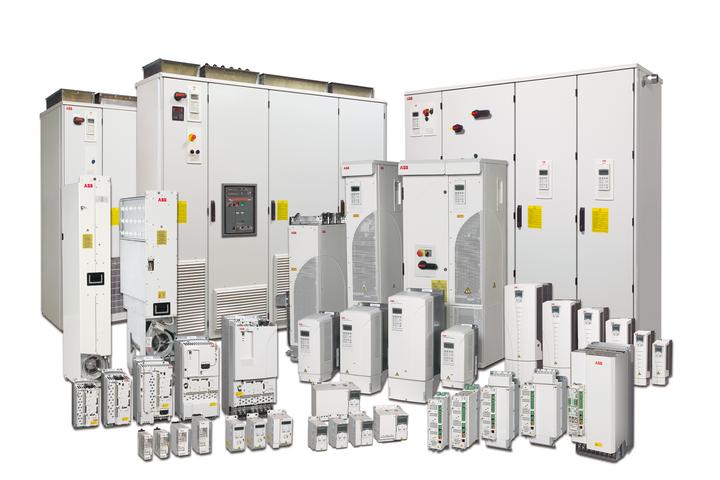
Due to measures promoting energy efficiency, the power demand needed to create one unit of GDP declined by roughly twenty percent globally from 2000 to 2016. The decrease in energy consumption was noticed in the “International Energy Agency’s” 29 member states and in most emerging economies. Industry experts have identified several areas where significant energy savings can be achieved. These include using more efficient motors, recycling wasted energy, and improving production. Switching older inefficient motors with modern motors can result in enormous savings for industries, and the steel industry has already reduced energy use and CO2 emissions through advances in steel production processes. Improving fluid handling and capturing wasted thermal energy can also save energy and cost. LED lights can conserve energy savings by over 75%, and intelligent use of motion sensors can further increase savings and reduce emissions. Finally, district heating and cooling systems, like those used in Finland, can be highly efficient and produce excess electricity that can be sold to other countries.
Benefits of Energy Efficiency
Energy efficiency improves the atmosphere, overall community, and human health, along with reducing expenses and costs.
- Energy-efficient assemblies are economical for heating, cooling, and running. Fuel savings result from energy-saving in transport.
- By supplying efficient, affordable technology and infrastructure to underprivileged areas. Energy-saving programs increase social resilience while addressing energy injustice.
- Conventional power plants burn fossil fuels that emit atmospheric CO2 and add to the air; eliminating energy usage is essential for the environment. So, factories that use a minimal amount of energy don’t release any harmful pollutants.
- In particular, for individuals living in underserved regions and those whose situations are made harsher by pollution, decreased consumption of fossil fuels results in cleaner land, water, and air, all directly influencing people’s health.
- Energy-efficiency enhancements reduce the “load,” or amount of energy passing through the system simultaneously, easing the power grid strain. A reduced load reduces the risk of power disruptions.
What are Variables Frequency Drives (VFDS)
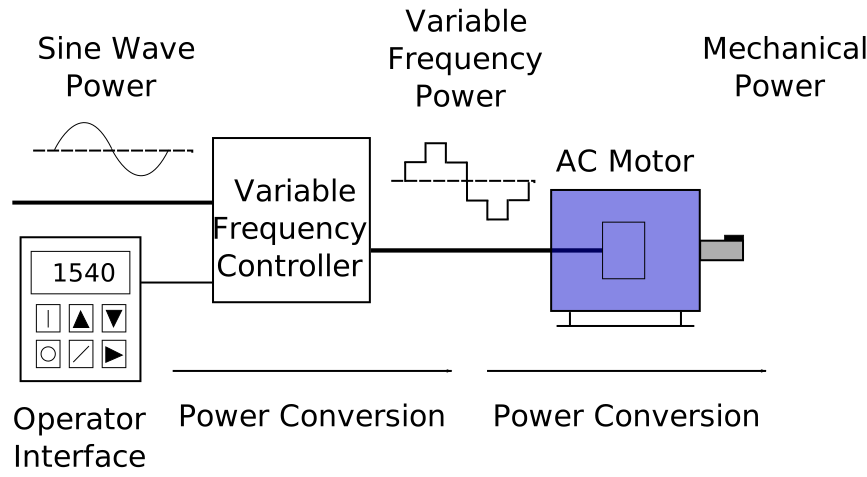
A motor controller known as a “Variable Frequency Drives” controls an electric motor by adjusting the power supply’s frequency and voltage. It may also adjust the motor’s ramp-up and ramp-down systems while starting and stopping. This feature is also known as the soft start or soft stop function. When a motor is activated, the quick burst of power may cause it to be under a lot of stress and strain. This might shorten the motor’s lifetime by causing mechanical wear and tear. The motor may also experience stress if it abruptly slows down or stops, which may happen in both situations.
VFDs may be set to progressively ramp up the motor speed during the start phase and ramp down the motor speed during the stop process to get around these problems. The motor can start and stop easily as a result, which lessens mechanical stress on the motor and increases its lifetime. Additionally, it can reduce the likelihood of electrical problems like voltage dips or spikes, improving the system’s overall dependability.
Although the VFD controls the voltage and frequency of the power delivered to the motor, it is usually called speed control because the outcome is a change in the speed of the motor.
Reason to Achieve Motor Speed
We could wish to change the motor’s speed for various reasons.
- Energy savings and increased system performance
- Power conversion for hybridization purposes
- Adjust the drive speed to what it needs.
- Match the drive’s power or torque to the process’s specifications.
- Increase the quality of the workplace
- Reduced noise levels, such as those produced by fans and pumps
- To increase the lifespan of equipment, VFDs lessen their mechanical stress.
- Reduce peak usage to prevent price spikes and the necessary motor size.
So, using a VFD as a controlling device for each motor-driven mechanism is highly recommended due to reduced energy consumption and sophisticated motor control. Controlling fans, compressors, and pumps is a typical application of VFDs, which comprise 75% of the total drives employed worldwide.
Types of Controllers
The speed and functioning of electric motors may be controlled using a variety of motor controllers. There are two types of controllers: Soft Starters and Across the Line Starters.
Soft starters are a type of solid-state device that provides a gradual ramp-up to full speed during the startup of an electric motor. This incremental increase in speed helps to reduce mechanical stress and wear on the motor. In contrast, an across-the-line starter is a more straightforward type of motor controller that applies the full line voltage to an electric motor, which can result in a sudden surge of electricity and stress on the motor. While across-the-line contractors are less sophisticated than soft starters, they can still be effective in specific applications.
Energy Saving with VFDs
By lowering the energy consumption or electric motor’s losses, energy may be saved by a “Variable Frequency Drive.” Additionally, the power the generator produces during braking operations can be utilized rather than converted to heat. They can also calculate the savings using the calculator provided.
These energy-saving options are available with variable frequency drives:
Energy-Saving Feature
The motor’s operation is optimized to maximize energy savings while minimizing power usage.
The energy-saving feature is appropriate for both a VFD operating under a partial load and VFDs with low to moderate load fluctuations. A synchronous motor, unfortunately, cannot be operated using the energy-saving option.
VFDs Sensorless control: When an asynchronous motor is controlled without a sensor by using the VFDs features, its optimal operation is modified to reduce energy usage.
VFDs Sensorless FOC (field-oriented control): The asynchronous motor’s optimal operation is changed in the “field-oriented control” situation to minimize power usage.
Quadratic VFDs Feature
Power usage may be decreased, and the energy can also be conserved for appliances where the torque rises quadratically with speed, such as controlling a fan. Energy is also saved during low speed when the whole torque isn’t needed.
Standby Mode
The “variable frequency drive’s” power usage is decreased while on standby. Energy is preserved while consumption is reduced.
When the period specified in the parameter has passed without a button being pressed, the user’s display is turned off. A spotting light denotes the panel’s standby mode. When an alert or fault is sent, standby mode is immediately removed. In the event that the Time till Keypad Standby setting is configured to 0, the user’s standby mode is turned off. In this instance, the LCD screen is turned on continually.
Connection Through a DC-Link
Energy may be conserved by DC-linking multiple variable speed drives together because the energy collected during the braking of a single motor may be utilized to accelerate the other VFD. The accelerated energy in this situation does not need to come from the power grid.
If the energy generated by the motor deceleration is not utilized for accelerating another motor, it can be harnessed to power the “Variable Frequency Drives” connected to it.
Optimized Braking for Energy
It is possible to configure the voltage regulator so that the brake resistor does not generate heat from the kinetic energy regained during braking operations. The braking ramp may be immediately modified to keep the DC-link voltage within a predetermined range. The engine is slowed down in an energy-efficient manner. The VFDs demand is satisfied by the braking energy generated by it, therefore energy is not used from the power supply.
Controlling PID
The PID controller may turn the motor off as the PID anticipated set value is attained. Asynchronous motor is a good choice for energy savings since they use the magnetizing current regardless of whether they’re at a halt. For example, level-filling controls may be utilized with this function.
24 Volts External Power Source
The “variable frequency drive’s” control unit may be operated independently from the main supply using a 24-volt power source. Via a contractor, for instance, the “variable frequency drive” may be unplugged from the main supply. Even when the power is turned off, parameterization remains feasible, and the functionality of the I/O and communication are kept alive.
During prolonged operating interruptions, the “variable frequency drive’s” power usage may be virtually eliminated.
Temperature-regulated Fans
The temperature-controlled fans in this system are controlled in two stages, including the inside and sink fan. If the temperature inside the system or its components exceeds a certain threshold, the heat sink fan and inside fan are activated at half power to prevent overheating. The fan of VFD will be turned off immediately after the temperature drops below the Switch-On heat by 5 °C.
“When the VFD’s internal components reach their maximum temperature thresholds (set 5 °C below the maximum temperature), the VFD fans are automatically switched to full power. The fans return to the half-power stage once the temperature drops 5 °C below the switch-on threshold. This automatic adjustment helps regulate the temperature of the VFD, ensuring efficient operation and preventing damage due to overheating.”
Auto Switching Between Frequencies
The system includes an automatic switching frequency changeover feature. The VFD has a feature that aims to minimize power losses in semiconductor components when handling high current loads. To achieve this, the pulse width modulation’s switching frequency can be temporarily reduced during VFD acceleration of high loads. The VFD will automatically set a higher switching frequency once the acceleration phase is complete and the current drops. This feature optimizes energy efficiency during “variable frequency drive” operations.
Improving Efficiency and Performance With VFDs
“Variable Frequency Drives” (VFDs) offer several benefits to operators. One of the primary advantages is the ability to deliver speed levels on an as-needed basis rather than at uniform, predetermined rates. This allows operators to reduce energy costs by up to 70% compared to using fixed-speed drives. In addition to energy savings, VFDs also eliminate the need for various secondary mechanical components, which can simplify the overall system and reduce maintenance costs over time. Furthermore, VFDs can help conserve space, as they take up less room than traditional motor loads.
Controlling Motor Startup Current
Starting an AC motor and loading while operating at full power may take up to eight times as much current. This high starting current can cause stress on the motor and ultimately reduce its lifespan. However, using a “variable frequency drive” (VFD) can significantly reduce the starting current and extend the lifespan of the AC motor. It is essential to ensure that machines are not started abruptly with poorly designed set-speed controllers, as this can cause unnecessary stress on the motor and other connected mechanisms.
Minimized Power Lines Disturbances
The given two factors may quickly deplete the power supply connected to the motor: Cross-line initiation of an AC motor or initial and ongoing demand.
Either issue could lead to power sagging, which may impact other connected devices, such as sensors, computers, and other devices that are sensitive to the voltage level. But with a variable-speed drive, you won’t have to be concerned about dwindling power and what damages it may do to pricey equipment and electronics.
Reduced Energy Consumption During Motor Startup
The AC motor takes a smaller amount of energy to start up using a variable-speed drive. Given that set-speed drives tend to consume a lot of energy when they first start, this is where a few of the most significant savings can be made. The more frequently an electric motor starts, the more energy it consumes during startup. This increased energy consumption can lead to a shorter lifespan for the motor and a greater need for maintenance. This phenomenon is similar to the effect of computer screens and light bulbs, where frequent on/off switching can result in a shortened lifespan due to the extra energy required during activation.
Regulated Ramp-Up Method
Any time startup occurs across the lines, the AC motor and all associated components are susceptible to physical shock. Each piece of equipment is subjected to a destructive impact whenever such a shock arises. Conversely, variable speed drives start more smoothly for large loads since they progressively increase speed from zero and start slowly.
Modifiable Speeds
In various applications, a “variable frequency drive” (VFD) may provide flexibility in altering speed and maximizing efficiency. VFDs may be used to remotely change speeds using a process controller and start machines at reduced rates. A VFD can adapt to shifting speed and torque needs for particular devices, such as those that need warm-up time or human input owing to changeable demands. VFDs may assist in reducing energy consumption significantly and enhance machine performance.
Adjustable Torque Limits
“Variable speed drives,” which may be designed to limit torque and prevent the motor from exceeding a specific limit, can better safeguard machines and goods with exact torque management throughout a particular process. The dynamic drive adapts to machines and tools requiring modest rotational power, conserving energy by keeping back surplus power that an established-speed controller would ultimately waste.
Gradual Stopping
The number of items damaged due to mechanical and rupture degradation brought by shocks and abrupt interruptions is reduced with regulated stopping. Doing this reduces the possibility of product loss due to unforeseen effects that may otherwise harm a motor’s systems. Moreover, equipment that employs variable speed drives is much safer coupled with this function because not all equipment destruction comes from outside, and destruction to inside components is frequently more expensive.
Power-Saving Measures
Variable speed drives considerably reduce the energy used while operating centrifugal loads like fans. A fan, for instance, may be powered with eight times less horsepower if it operates at just 50% of its regular speed. The savings might be enormous when you consider the amount of energy used in a particular operation and how much it contributes to annual energy bills, particularly when usage rates are cut in half.
Reverse Operation Capability
Since their outputs can be switched electronically, variable speed drives (VSDs)-equipped motors don’t need reverse starters, simplifying reverse operations and lowering maintenance costs. Also, this method can save space by eliminating the need for a reversing starter.
Mechanical-Free Drive Components
There is no requirement for separate speed-varying devices in a mechanical drive arrangement since VFDs can modify speeds as required for every application. As a result, you may avoid using a gearbox along with all of its associated problems, including extra maintenance and space requirements. One of the significant advantages of “variable-speed drives” may be eliminating this part from your toolbox, especially in light of how expensive it might be to maintain the intricate components of a gearbox.
Innovative Movement Alternatives
A “variable speed drive” may also manage the motor in novel ways for even larger mechanical or power stress savings. For example, the S-curve may be used on conveyors to facilitate speed-up and speed-down orders and reduce the likelihood of conveyor recoil, which may happen due to rapid speed changes.
Conclusion
In summary, “Variable Frequency Drives” (VFDs) are essential for maximizing energy efficiency in industrial settings. They are environmentally friendly and an economically advantageous replacement for conventional motor control systems because of their capacity to manage motor speed and torque. Industries and organizations must enhance their bottom line and lessen their effect on the environment by using VFDs. For organizations to achieve the highest levels of energy efficiency and build a sustainable future for everybody, VFD usage must be given top priority.
DO Supply Inc. makes no representations as to the completeness, validity, correctness, suitability, or accuracy of any information on this website and will not be liable for any delays, omissions, or errors in this information or any losses, injuries, or damages arising from its display or use. All the information on this website is provided on an "as-is" basis. It is the reader's responsibility to verify their own facts.