We found 260 posts about Automation Technologies from DO Supply, a global automation parts
reseller focused on hard-to-find and obsolete industrial automation products.
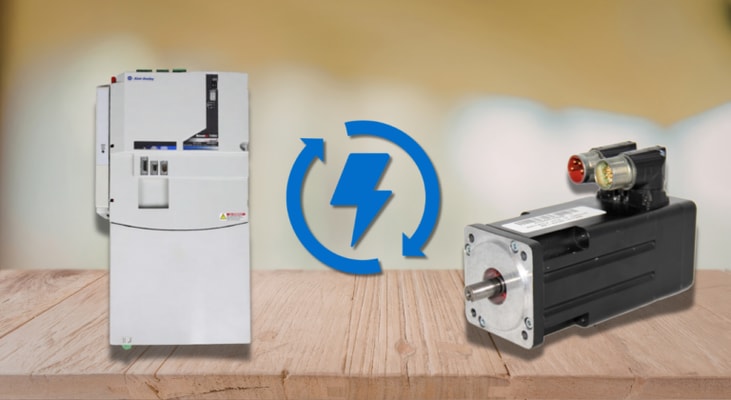
Rockwell Automation’s high-power servo drive platform, the Kinetix 7000, is intended for large-frame motion applications. Commonly paired with MP-Series motors, the drive was available in power ratings from 22 to 149 kW, making it well suited for applications involving high inertia, large mechanical loads, and demanding acceleration and deceleration cycles. One challenge that arises with these applications is managing regenerative energy. When a servo motor decelerates or is driven by its mechanical load, it can operate as a generator and return excess energy back to the drive’s DC bus. However, if that energy has nowhere to go, the rising bus voltage can cause an overvoltage fault. How the Kinetix 7000 handles this energy depends on the system’s power configuration. A drive can operate from its own AC line connection, while systems with greater regenerative demands can incorporate external shunt equipment or a regenerative power supply such as the 8720MC-RPS . Kinetix 7000 drives can...
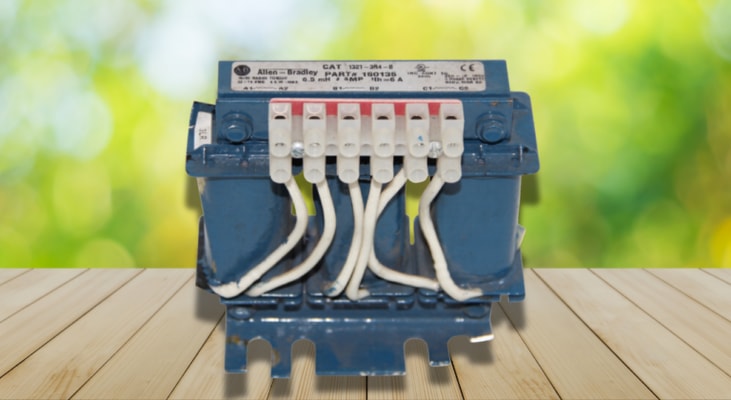
Modern motor control relies heavily on variable frequency drives, yet the components that safeguard them are often the first to suffer budget cuts. Line reactors, also known as input reactors, are often seen as optional add-ons rather than necessary safety measures. The electrical mechanics underlying reactor protection, the failure types that reactors avoid, and the cost justification for implementing them on each drive installation are all discussed in this article. In simple terms, an input reactor is a three-phase inductor placed between a drive’s input terminals and the incoming AC power source. Its purpose is surprisingly straightforward: it increases the line’s impedance. In a drive environment, this impedance smooths out the abrupt current spikes that occur each time the drive’s rectifier bridge charges its DC bus capacitors, as it resists rapid current changes. Drives convert incoming AC to DC using an SCR bridge rectifier or diode. Because the current is drawn in brief...
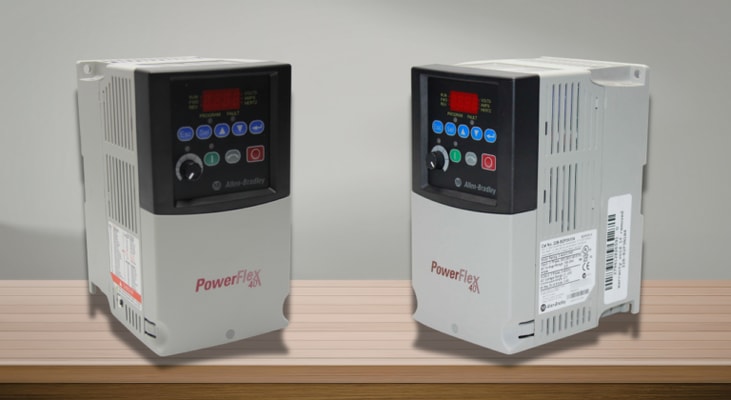
It’s no secret that AC drives, particularly variable frequency drives, have been efficiency and productivity boosters for automation facilities. Manufacturers boast about how their drives can pay for themselves with the money you save with reduced energy costs, while also reducing mechanical wear throughout the system For those who want to stick to their guns and continue using their conventional motor controller until it breaks, there is a cost to waiting. AC drives are effective because they address many of the inherent inefficiencies and mechanical stresses associated with controlling motor speed using fixed-speed equipment. Without one, a facility may be paying a hidden tax through wasted energy, increased maintenance, reduced process control, and premature equipment wear. One of the biggest arguments against installing an AC drive is often the initial cost of the system. One may argue that an AC drive may be more difficult to install, and if done improperly, could lead to even...
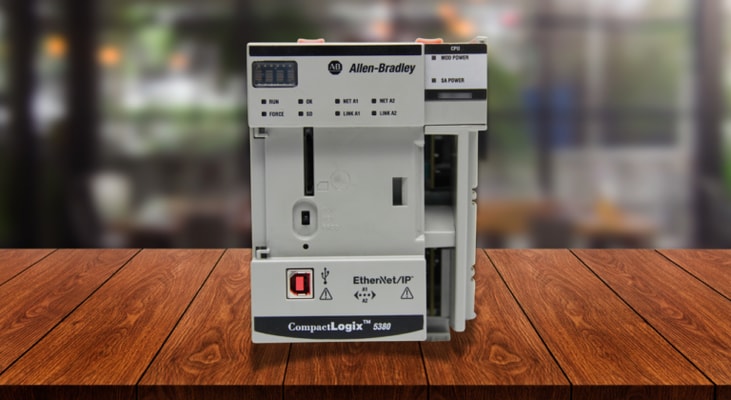
There was a time when PLC memory planning mainly consisted of counting I/O points, estimating the number of instructions, and making sure that the program would fit inside the controller’s memory. This approach worked when a PLC’s primary responsibility was reading switches, controlling outputs, and keeping a machine moving through a relatively simple sequence. Fast forward to modern facilities, and you will see that PLCs are asked to do a lot more. In addition to running the core program, modern PLCs may coordinate motion, communicate with dozens of devices, and retain maintenance data. Every function that a controller is told to do requires memory, even when it doesn’t add many visible rungs to the program. Because of this, sizing a PLC for its memory can be an easy oversight. While it may seem to have enough processing power and I/O capacity for an application, it can fall short on program memory, data memory, retentive storage, or even communication resources. PLC memory is...
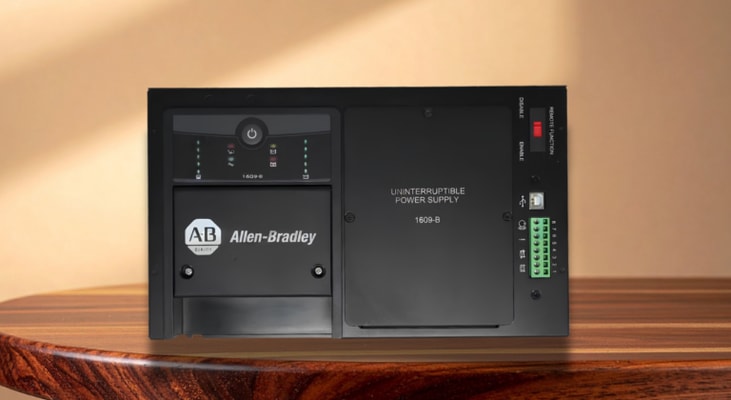
Modern industrial automation relies heavily on Programmable Logic Controllers (PLCs). PLCs are ruggedized, microprocessor-based industrial computers used to govern critical industrial processes across chemical processing plants, oil & gas systems, food packaging systems, water & wastewater treatment plants, manufacturing, and other industrial complexes. While control engineers and system integrators invest substantial effort into optimizing PLC control code, network configurations, and field input/output devices, a stable PLC power supply is equally vital for reliable system performance. Although PLCs are inherently designed to withstand harsh environmental conditions, such as vibration, extreme temperatures, and dirt, they do require a highly consistent power supply to function properly. An uninterrupted power supply prevents data corruption, logic errors, and catastrophic downtime in any PLC-controlled automation system. A stable PLC power supply readily converts variable line...
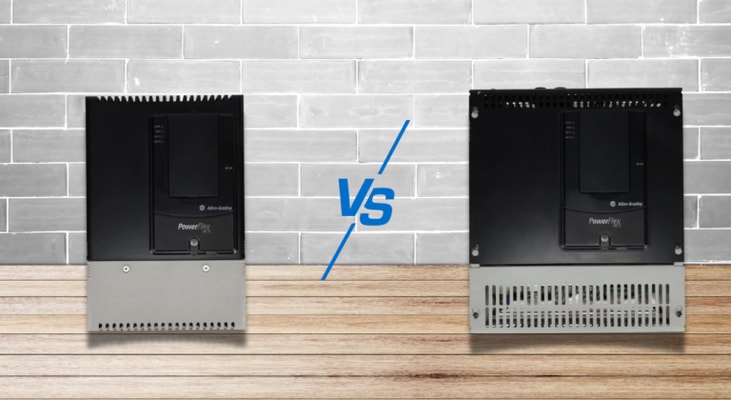
DC drives continue to play a crucial role in heavy industrial applications that need outstanding starting torque, accurate speed control, and quick dynamic response, even though AC variable frequency drives have significantly increased their market share. DC drive technology is still used in a number of industries, including material handling, elevator systems, crane operations, paper making, and metal processing. Performance capabilities, energy efficiency, hardware complexity, and long-term operating costs are all determined by the basic differences between regenerative and non-regenerative DC drives. This page offers a thorough technical comparison of these drives, backed by up-to-date performance measures and industry statistics. The operational quadrant capability represents the most fundamental distinction between these drive types. Source Regenerative PowerFlex DC Drives Non-regenerative drives are commonly one- or two-quadrant converters. A one-quadrant drive provides motoring...
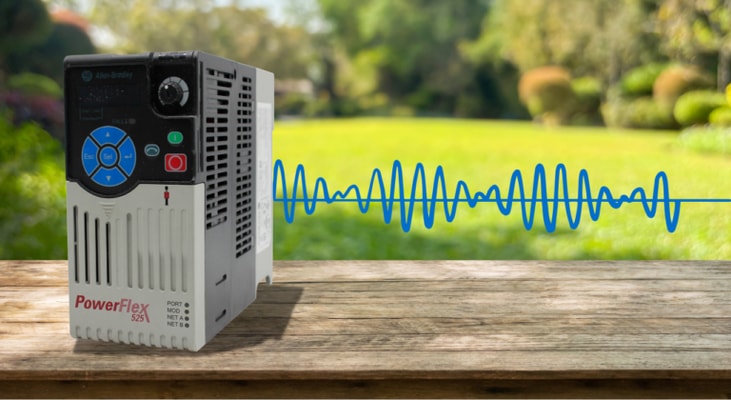
Modern-day electronics have become the new normal within industrial settings. Take a look up in a factory, and you may see rows of LED lights. Turn to the right, and a conveyor line powered by VFD-driven motors could be humming along, while to the left, a robotic arm may be sorting products for palletization. It’s incredibly easy to see this technology on the surface: you plug it in, set the parameters, and watch it go. The problem is that all of this equipment has to live on the same electrical system. Just as drinking dirty water would harm our bodies, electronics receiving dirty power could also show symptoms of their own illness, such as increased heating, lower life spans, and nuisance tripping. Harmonics are among the most common forms of dirty power and are produced by devices such as rectifiers, inverters, fast-switching devices, and more. These are your VFDs, variable power supplies, switch-mode power supplies, PWM-operated devices, and even EV chargers. Before getting into...
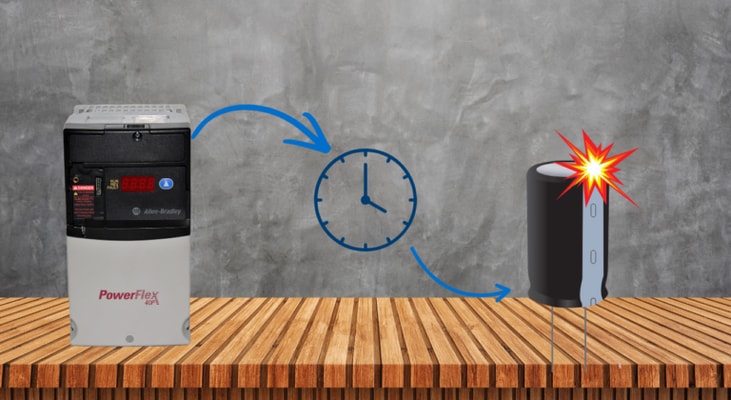
For many facilities, uptime is a priority when selecting which equipment to deploy in their line. Because of this, redundancy modules and spares are kept so that high-priority equipment and processes can be repaired with minimal downtime. As you can imagine, this is an effective technique when properly executed. Sometimes these processes are designed so well that they simply chug along for years and years without having to dust off the replacement in the supply cabinet. Drives that have been obtained for replacement now sit on the shelf waiting for the baton to be passed, and it can be years before it does, and plugging them in might just bring more issues. When it comes to storing drives, there is no official expiration date printed on the part, but guidelines for the amount of time a drive can sit without power. This time frame varies across manufacturers: Rockwell’s PowerFlex guidelines specify 2 years, while ABB and Eaton specify 1 year. This is because the electrolytic capacitors...
Safety is the foundation of hazard-free and reliable industrial applications. DC drives operate at hazardous current and voltage levels to regulate the field current and armature voltage, thereby precisely controlling motor speed, torque, and direction. Therefore, strict adherence to established electrical safety protocols such as proper grounding, isolation, and Lockout/Tagout (LOTO) procedures, as well as compliance with IEC 61800-5-1 standards, is essential in DC drive systems. It helps isolate dangerous voltages and minimize arc flash hazards, protecting both personnel and machinery from catastrophic electrical faults. This article provides a detailed technical analysis of the essential safety considerations for designing, operating, and maintaining DC drive systems. A DC drive system is an electronic motor controller designed to regulate the torque, speed, and rotational direction of a DC motor. It achieves this by actively modulating the current and voltage applied to the...
DC motor systems remain deeply embedded in industrial infrastructure. Steel rolling mills, paper machines, mine hoists, crane drives, and extruders continue to operate on DC drives, where their precise torque-speed controllability justifies retention. Yet these systems carry a well-documented efficiency liability: energy losses distributed across electrical, magnetic, mechanical, and power conversion pathways that compound significantly at partial load. Regardless of the application, even small reductions in DC motor losses can yield significant gains in overall process efficiency, motor life, and cost-effectiveness. Understanding each loss mechanism at the parameter level and matching it to a specific DC drive mitigation strategy is the foundation of any credible energy optimization program in a DC-driven facility. Armature copper loss is the dominant electrical loss in any DC motor system. These losses are proportional to the square of armature current and are expressed as Ia²Ra...
Allen-Bradley PanelView terminals from Rockwell Automation are core Human-Machine Interface (HMI) solutions for industrial automation. While ideal for climate-controlled industrial settings, cold storage and outdoor deployments present significant extreme environmental challenges, such as sub-zero temperatures and direct UV & solar radiation. Optimizing PanelView terminals for such extreme environmental conditions requires strategic hardware selection (e.g., robust enclosures such as NEMA 4X-rated enclosures), precise thermal management strategies, and comprehensive preventive maintenance practices. This article explores the operational parameters of PanelView terminals deployed in extreme industrial environments. It presents a comparative analysis of specific PanelView terminal models, practical environmental mitigation strategies, and proactive failure-prevention techniques. Standard PanelView terminals are designed to operate within specific temperature ranges (typically 0°C to...
A bottle of water or a frozen dinner may look simple and unassuming on the outside. You pick it up, toss it into your cart, and go about your day. Yet, behind the scenes lie a choreographed dance of machinery and control systems that cook, pack, and label your next easy meal or bottled beverage. Food and beverage automation comes in many different flavors, from motors to run conveyor lines to robot arms that sort packages to make palletizing easier. Today, we will highlight one of the most important pieces of the system: the PLC, the glue that holds together an industry that relies on consistency, sanitation, uptime, and quality control. The Food and Beverage industry is one of the largest manufacturing sectors in America, accounting for 16.8% of all U.S manufacturing sales and 15.4% of U.S. manufacturing employment as of 2021, according to the USDA. That’s over 1.7 million workers ensuring that the quality of your next meal or drink is as you would expect it to be. On top of that...
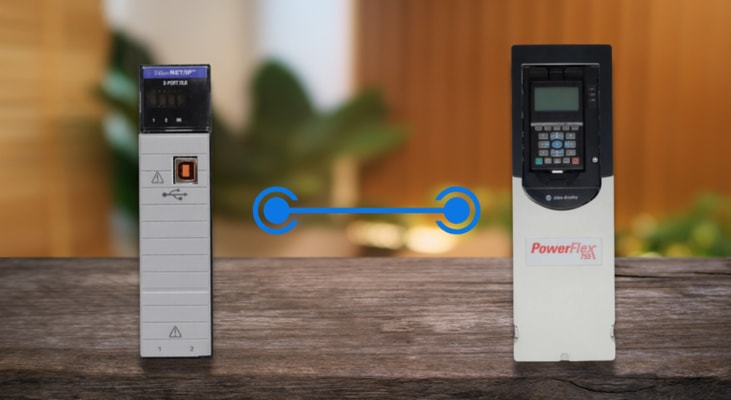
Variable frequency drives and programmable controllers have evolved from loosely connected hardware communicating via hardwired I/O to tightly integrated systems that share tag-based data, diagnostic information, and motion commands over a single industrial Ethernet network. The main point of this architecture in Rockwell Automation environments is the ControlLogix platform, and its integration with the PowerFlex drive family defines how modern Allen-Bradley-based control systems handle motor control from simple pump speed regulation to coordinated multi-axis positioning. This article covers the full integration architecture across hardware, communication protocols, Auto-Device Replacement, CIP Motion, and diagnostic practices. Order PowerFlex 755 Drives Here The PowerFlex drive portfolio spans several product lines, each with distinct integration characteristics when paired with ControlLogix. The PowerFlex 525 (catalog 25B series) is a compact drive rated from 0.5 to 30 HP and...
If you have spent any time reading about automation equipment and how they work, you would come across phrases such as: “Real-time control”, “real-time monitoring”, “operates in real-time”, or “real-time deterministic behavior”. It becomes one of those things that you might be afraid to ask about because it’s thrown around so much that it seems like it’s common knowledge. Alas, we at DO Supply don’t judge and encourage learning opportunities, so let’s get you up to speed on what ‘real-time’ actually means. In the world of industrial control, “real-time” is a more precise engineering term. It means predictable, rather than “fast”. A real-time system isn’t defined by how quickly it responds, but by whether it responds within a guaranteed, bounded window of time, every single time. That guarantee is what engineers call determinism, and it’s the whole reason the phrase gets used so often around PLCs, drives, and industrial networks. To put it in perspective, say a video game you’re...
Modern industrial facilities do not stop when the network drops. A refinery keeps processing crude oil. A water treatment plant keeps dosing chemicals. A conveyor line keeps moving parts through assembly stages. This stability is not accidental; it is the result of deliberate engineering decisions built into every layer of automation systems, from the controller firmware to the field instrument logic. Communication failure is not an edge case in industrial automation. It is a known, expected condition that every well-designed system must handle without losing process stability, safety state, or data integrity. This article breaks down the exact mechanisms, hardware, and protocol-level details that keep automation systems stable when communication degrades or fails. Industrial environments are electrically hostile. Variable-frequency drives inject high-frequency noise into power lines. High-voltage switchgear generates radiated electromagnetic interference during switching transients...