Soft Starters vs VFDs in High-Inertia Loads
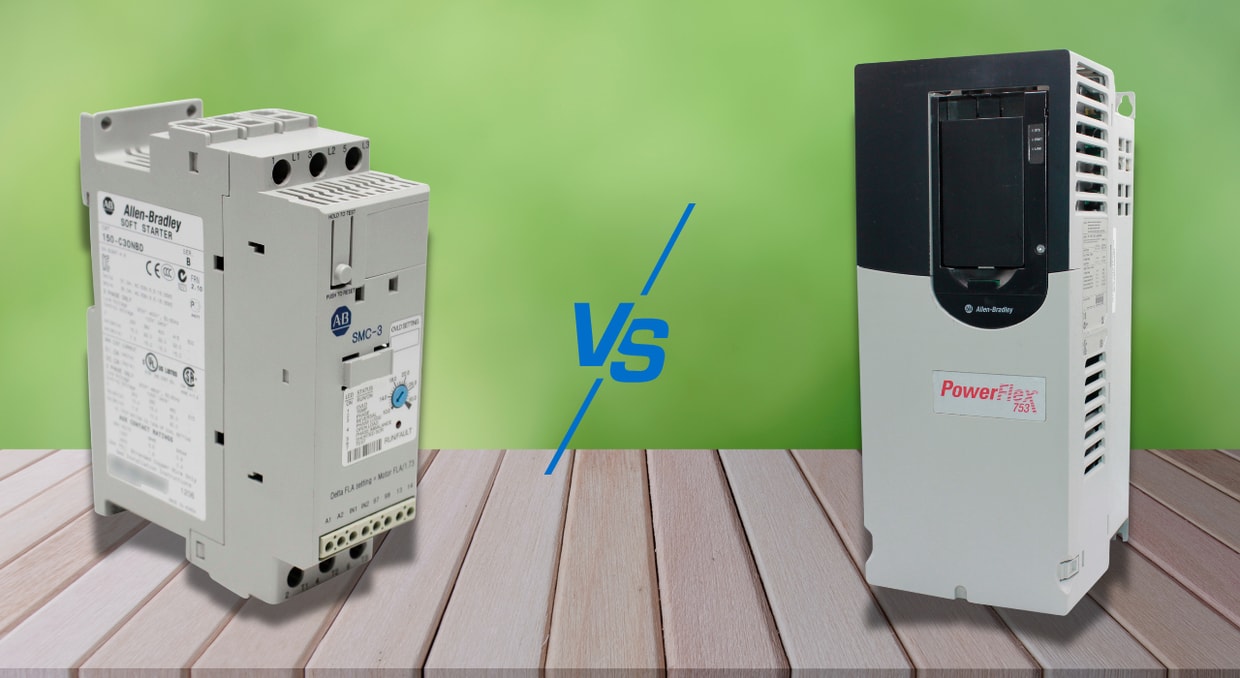
In industrial motor control applications, choosing the right starting and control method for high-inertia loads is a decision with significant consequences for equipment longevity, process stability, and energy efficiency. Soft starters and Variable Frequency Drives (VFDs) are the two dominant technologies for this purpose. While both reduce mechanical stress during motor starting, they differ fundamentally in operational scope, torque-control capability, and suitability for specific load profiles. Understanding these distinctions is critical when specifying drive systems for conveyors, centrifuges, fans, pumps, and compressors that impose substantial inertia on the drivetrain.
Defining High-Inertia Loads
High-inertia loads are characterized by a large moment of inertia (J, measured in kg·m²) relative to the motor’s rated torque. These loads require extended acceleration times to reach synchronous speed and impose prolonged mechanical and thermal stress on both the motor and the driven equipment. Common examples include:
- Large centrifugal fans with blade diameters exceeding 2 meters
- Ball mills and crushers in the mining and cement industries
- Centrifuges with heavy drum assemblies
- Conveyor systems with fully loaded belts and extended run lengths
- Compressors and large pump sets with flywheel coupling
The defining challenge with these loads is that starting current in a direct-on-line (DOL) scenario can reach 600–800% of Full Load Amperes (FLA), and acceleration time can stretch from 10 to 30 seconds or more. Both soft starters and VFDs address this problem through fundamentally different mechanisms.
How Soft Starters Manage High-Inertia Acceleration?
Soft starters reduce the voltage applied to the motor during the start sequence using back-to-back thyristors (SCRs) in each phase. By controlling the firing angle of the SCRs, the soft starter progressively ramps up the voltage from an initial value, typically 30–50% of line voltage, to full voltage over a programmed ramp time. This voltage reduction correspondingly limits starting current and the torque shock applied to the load.
Key parameters configurable in a soft starter for high-inertia applications include:
- Initial voltage (Vs): Set as a percentage of line voltage, typically 30–50%
- Current limit: Usually adjustable from 100–600% FLA; commonly set at 300–400% for heavy starts
- Ramp time: Can be set from 1 to 60 seconds depending on inertia
- Torque control mode: Available in advanced units like the Allen-Bradley SMC-50, enabling closed-loop torque ramp instead of voltage ramp
It is critical to note that a soft starter does not control frequency; it only controls voltage. This means torque production during the start sequence is voltage-dependent and less precise than frequency-based control. For very high-inertia loads, this can result in insufficient breakaway torque if the initial voltage setting is overly conservative.
How VFDs Control High-Inertia Loads
A Variable Frequency Drive controls both the output voltage and the output frequency applied to the motor, enabling precise speed control from 0 Hz to the motor’s rated frequency and beyond. The VFD converts incoming AC to DC via a diode or active front-end rectifier, then reconstructs AC at the desired frequency using an IGBT-based inverter stage with Pulse Width Modulation (PWM).
For high-inertia loads, VFDs offer two advanced control modes:
- V/Hz (Volts per Hertz) Control: Maintains a constant V/Hz ratio across the speed range, suitable for variable-torque loads such as fans and pumps. Acceleration ramps are programmable in Hz/sec.
- Vector Control (FOC, Field Oriented Control): Independently controls the flux-producing and torque-producing current components, enabling high torque at zero or near-zero speed. This is critical for loads requiring full torque at startup, such as loaded conveyors.
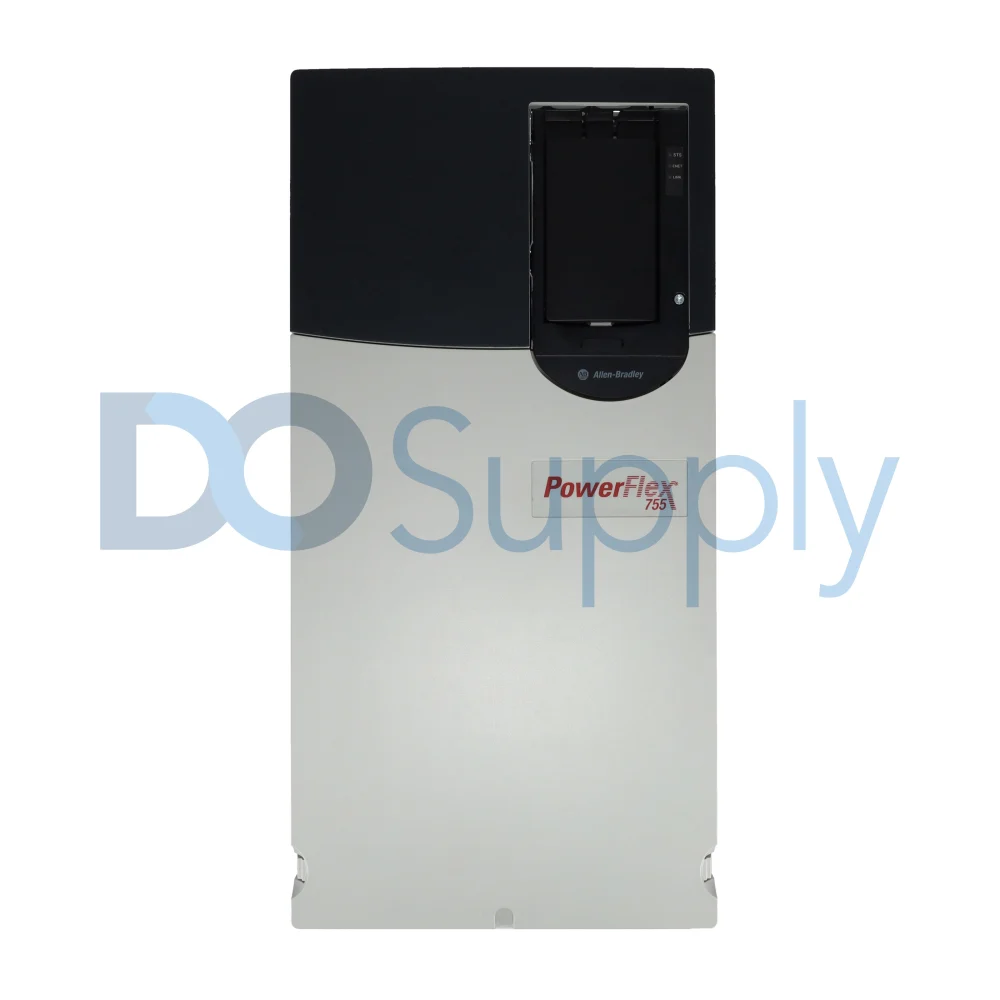
The Allen-Bradley PowerFlex 755 and Siemens SINAMICS S120, for example, support closed-loop vector control with encoder feedback, enabling torque accuracy within ±2% across the speed range. This level of control is unattainable with a soft starter.
Torque Characteristics: The Core Differentiator
The torque-speed curve defines the suitability of each technology for a given high-inertia load. Soft starters reduce voltage, which reduces torque by the square of the voltage reduction. If the soft starter reduces voltage to 50% during startup, available torque drops to 25% of rated torque, a significant reduction that can cause starting failure on heavily loaded systems.
VFDs maintain constant torque capability across the speed range in vector control mode. This is because the V/Hz ratio is maintained, or in the case of vector control, the magnetizing current is kept constant independently of load torque. This makes VFDs suitable for:
- Constant-torque loads: conveyors, positive displacement pumps, extruders
- Variable-torque loads: centrifugal fans, centrifugal pumps (square-law torque curve)
- High breakaway torque applications: crushers, mills, compressors starting under load
Soft starters remain effective for variable-torque loads where the startup torque is inherently low (e.g., unloaded centrifugal pumps and fans), and their reduced complexity and cost justify their application.
Thermal Considerations During Extended Starts
High-inertia loads with long acceleration times impose significant thermal stress on the motor and the starting device. During extended starts, I²t (current-time product) accumulates in both the motor windings and the SCR thyristors in the soft starter.
Soft starters have defined thermal capacity limits, typically specified by maximum starts per hour and maximum start duration. The Allen-Bradley SMC-50, for instance, can sustain 400% FLA for up to 30 seconds, with a mandatory cooling interval before the next start. Exceeding these parameters triggers Overload Fault (Fault Code 3) and requires a manual reset or programmed auto-restart delay.
VFDs, conversely, control the acceleration current electronically without sustained high current through power semiconductors during the ramp period. IGBT switching elements are not subjected to continuous conduction at high current levels, unlike SCRs. However, VFD thermal management must account for motor heating at low frequencies in V/Hz mode, where reduced motor self-cooling can cause winding overtemperature. This requires either:
- Derating the motor for low-speed continuous operation
- Installing a separately powered cooling fan on the motor
- Using a motor with Class F or H insulation rated for inverter duty per NEMA MG1 Part 31
Harmonic Distortion and Power Quality
Both soft starters and VFDs introduce harmonic distortion into the power supply, but through different mechanisms and at different magnitudes.
Soft starters using SCR phase-angle firing generate significant low-order voltage notching and current harmonics (primarily the 5th and 7th) during the ramp phase. However, once the bypass contactor closes at full speed, the soft starter is electrically removed from the circuit, and harmonic injection ceases. This makes the harmonic impact time-limited to the start sequence.
VFDs with standard 6-pulse diode rectifier front ends generate continuous 5th and 7th harmonic currents throughout operation. Total Harmonic Distortion in current (THDi) can reach 30–50% at rated load. Mitigation strategies include:
- 12-pulse or 18-pulse rectifier configurations, reducing THDi to below 10%
- Active Front End (AFE) rectifiers, achieving THDi below 5% and enabling regenerative braking
- Line reactors (3–5% impedance) reducing THDi by approximately 50%
- Passive harmonic filters tuned to 5th and 7th harmonic frequencies
For high-inertia applications on weak utility feeders or with sensitive co-located instrumentation (such as analytical instruments or PLCs on shared bus), VFD harmonic content must be assessed per IEEE 519-2022 limits before installation.
Braking and Deceleration in High-Inertia Systems
High-inertia loads also present a significant deceleration challenge. When power is removed from a motor driving a high-inertia load, the driven equipment can coast for extended periods, which may be unacceptable in process control applications.
Soft starters with deceleration control ramp the voltage down during braking, reducing the torque available to decelerate the load. However, they cannot provide active braking; they simply limit the rate of voltage reduction. In loads that require rapid stopping, soft starters are inadequate without additional mechanical braking systems.
VFDs can provide several forms of controlled deceleration:
- Controlled deceleration ramp: Programmable deceleration time from rated speed to zero
- DC injection braking: Injecting a DC current into the stator to produce a braking torque, available at low frequencies
- Dynamic braking: Dissipating regenerative energy in a braking resistor via a dynamic braking chopper (IGBT transistor)
- Regenerative braking via AFE: Returning braking energy to the supply grid, recovering kinetic energy from the high-inertia load
For centrifuge and mill applications where stopping time is a safety or process requirement, VFDs with dynamic or regenerative braking are the only practical electrical solution.
Practical Commissioning Considerations
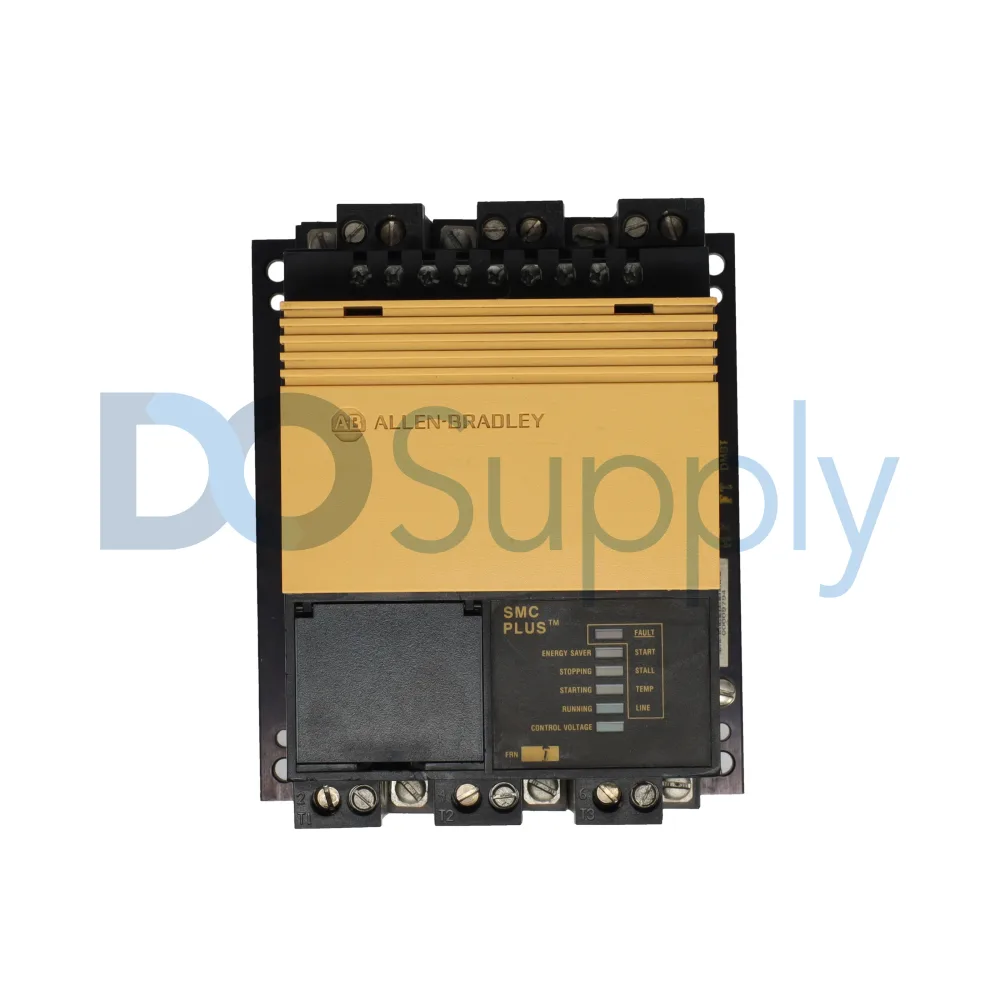
Commissioning a soft starter or VFD on a high-inertia load requires systematic parameter verification before motor energization. For soft starters, the initial voltage and current limit settings must be calculated from the motor’s locked-rotor current (LRC) and the load’s required breakaway torque. Setting the current limit too low will result in a stall condition, triggering an Overcurrent fault or a Starts-Per-Hour lockout.
For VFDs driving high-inertia loads, the following commissioning sequence is recommended:
- Perform motor data auto-tune (rotational or static) to identify stator resistance, rotor time constant, and magnetizing inductance
- Set acceleration time conservatively (20–30% longer than calculated) to prevent DC bus overvoltage from regenerative current during heavy load acceleration
- Verify drive thermal model settings match motor nameplate data: FLA, service factor, and insulation class
- Configure speed feedback source (encoder or resolver) and verify closed-loop gain settings if operating in vector control mode
- Test dynamic braking resistor sizing against calculated kinetic energy: KE = 0.5 × J × ω² (joules), ensuring resistor duty cycle is within rating
Fault logging should be enabled from commissioning to capture the fault code history during initial load cycles. On Allen-Bradley PowerFlex drives, parameters P950–P959 store the last 10 faults with timestamps, enabling rapid diagnosis of thermal, overcurrent, or ground fault events during high-inertia starting sequences.
Final Thoughts
In conclusion, Soft starters and VFDs both reduce mechanical starting stress on high-inertia loads. Still, their functional boundaries diverge sharply in torque-control precision, runtime efficiency, braking capability, and harmonic behavior. Soft starters are cost-effective for fixed-speed, light-start applications where energy savings during operation are not required. VFDs with vector control are the technically superior solution for high breakaway torque requirements, variable-speed processes, controlled deceleration, and energy-critical applications. Selection must be driven by load torque profile, duty cycle, energy cost analysis, and power quality constraints, not by capital cost alone. If a soft starter is what you are leaning towards, we have a guide on how to get started with the Allen-Bradley SMC 2 here.
No matter which your factory demands, we at DO Supply aim to be your one stop shop for all things automation. We carry soft starters and VFDs from brands you know and trust, as well as offer our own repair services backed by our two-year warranty. Stop by our site or give our friendly support specialists a call today to see what we can DO for you.
DO Supply Inc. makes no representations as to the completeness, validity, correctness, suitability, or accuracy of any information on this website and will not be liable for any delays, omissions, or errors in this information or any losses, injuries, or damages arising from its display or use. All the information on this website is provided on an "as-is" basis. It is the reader's responsibility to verify their own facts.