Mitsubishi A Series Inverters: Comprehensive Product Selection Guide
Mitsubishi A Series Inverters are renowned for their robust reliability, high performance, and exceptional versatility in industrial applications. Tailored for smooth and precise motor control, they excel in durability with robust components and advanced cooling. The series offers compatibility with various AC motors and communication protocols, ensuring seamless integration. Beyond toughness, these inverters feature advanced capabilities, including built-in PLCs, PID control, and comprehensive fault protection. The A Series encompasses a range of models with varying power ratings, functionalities, and application focus. Here’s the breakdown
Mitsubishi A700
Technical Specifications of Mitsubishi A700 Inverters
The Mitsubishi A700 Inverters feature advanced control methods, including Soft-PWM control, high carrier frequency PWM control (selectable for V/F control, advanced magnetic flux vector control), and vector control. With an output frequency range of 0.2 to 400Hz, the A700 series offers versatile adaptability for various operational needs. Analog inputs include 0.015Hz to 60Hz (terminal 2, 4: 0 to 10V/12bit)*, 0.03Hz to 60Hz (terminal 2, 4: 0 to 5V/11bit, 0 to 20mA/about 11bit, terminal 1: 0 to ±10V/12bit), and 0.06Hz to 60Hz (terminal 1: 0 to ±5V/11bit). The series ensures precise frequency control with a digital input resolution of 0.01Hz. With a frequency accuracy of ±0.2% of the maximum output frequency at 25°C±10°C, the A700 series guarantees reliable and consistent performance, allowing effortless tailoring of operations within a broad frequency range of 0 to 400Hz.
Performance Features
The A700 series empowers industrial operations with a robust starting torque of 200% at 0.3Hz for models 0.4K to 3.7K and 150% at 0.3Hz for models 5.5K or more, especially under real sensorless vector control or vector control. Manual torque boost capabilities ensure precise acceleration/deceleration with settings from 0 to 3600s, and selectable linear or S-pattern modes enhance control. The DC injection brake, customizable stall prevention, and torque limitation control (0 to 400%) contribute to safety and efficiency. The series supports flexible frequency setting signals through analog and digital inputs, simplifying initiation with versatile start signal options.
Advanced Output Terminals and Monitoring Capabilities
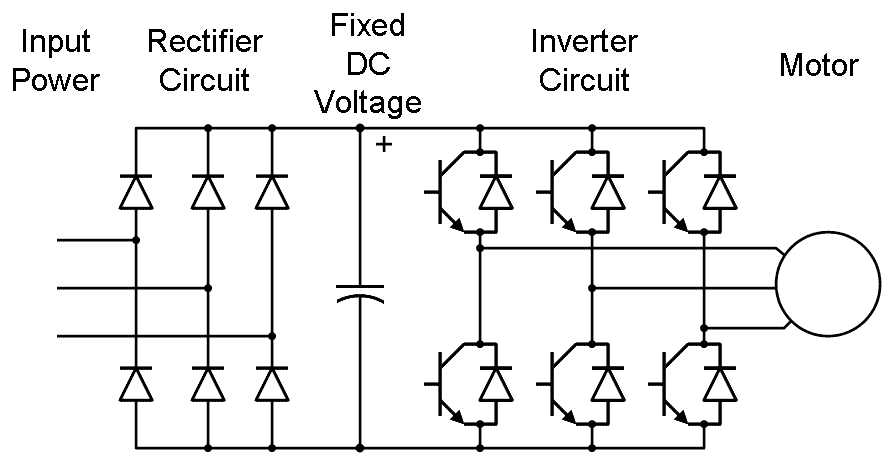
The Mitsubishi A700 Series Inverters offer unparalleled
output flexibility with open collector output (5 points), relay output (2
points), and a 4-bit alarm code output through the open collector. Additional
signals from optional accessories FR-A7AY or FR-A7AR enhance capabilities for
controlling circuit capacitor life, main circuit capacitor life, cooling fan
life, and inrush current limit circuit life. The pulse train output capacity of
50kpps ensures precise control in various operational scenarios. Users can
customize monitoring preferences through pulse and analog output signals **
(Pr. 54 and Pr. 158), covering crucial parameters like output frequency, motor
current, and torque. The user-friendly PU interface (FR-DU07/FR-PU07/FR-PU04)
elevates the user experience, providing comprehensive indications such as
cumulative energization time and actual operation time. With interactive
guidance featuring alarm definitions during protective function activation, the
A700 Series stands out for its leadership in protective and warning functions,
ensuring operational safety and efficiency in industrial applications.
Environmental Resilience of Mitsubishi A700 Series Inverters
The Mitsubishi A700 Series Inverters excel in diverse environments, operating effectively from -10°C to +50°C, ensuring adaptability and durability in non-freezing conditions. With a humidity tolerance of 90%RH (non-condensing) and resilience in storage temperatures from -20°C to +65°C, they are suitable for indoor use. Thriving in environments free from corrosive elements, these inverters meet standards for altitude (up to 1000m) and vibrations (5.9m/s² or less), emphasizing stability and performance in varying conditions.
Mitsubishi A740
Technical Specifications
The Mitsubishi A740 utilizes Soft-PWM control/high carrier frequency PWM control, offering V/F control, advanced magnetic flux vector control, and real sensorless vector control modes. Optional FR-A7AP enables vector control. Modulation control uses Sine Evaluated PWM and Soft PWM, with a carrier frequency range of 0.2 to 400 Hz for adaptable frequency control. Analog input resolutions vary, providing precision, such as 0.015 Hz–50 Hz (terminal 2, 4: 0–10 V/12 bit) and 0.03 Hz–50 Hz (terminal 2, 4: 0–5 V/11 bit, 0–20 mA/11 bit, terminal 1: 0–±10 V/12 bit). The digital input resolution is 0.01 Hz. Analog input accuracy is ±0.2% of the maximum output frequency at 25°C ± 10°C. Digital input accuracy is ±0.01% of the set output frequency. The adjustable base frequency ranges from 0 to 400 Hz, offering choices between constant torque, variable torque, or optional flexible 5-point V/f characteristics.Top of Form
Performance Features
The Mitsubishi A740 delivers robust starting torque,
achieving 200% at 0.3 Hz (0.4 kVA to 3.7 kVA) and 150% at 0.3 Hz (5.5 kVA or
more) under real sensorless vector control or vector control. Manual torque
boost enhances starting performance and acceleration and deceleration times,
ranging from 0.1 to 3600 seconds, feature linear or S-pattern modes with
selectable backlash measures. The inverter includes a DC injection brake with
customizable parameters, such as operating frequency (0–120 Hz), operating time
(0–10 s), and operating voltage (0–30%), ensuring effective braking. Stall
prevention responses are user-adjustable within the range of 0–220%,
configurable via analog input. Fine-tuned control is facilitated with torque
limit values adjustable from 0 to 400%. Flexible frequency setting values
support various input types through analog and digital inputs, providing
operational precision for the Mitsubishi A740.
Output Signals, Display Functions, and Protective Features of Mitsubishi A740 Inverters
The Mitsubishi A740 Series Inverters provide an extensive
array of output signals and display functions, enhancing user visibility and
control over the inverter’s operating status. Users can select signals such as
inverter running, frequency detection, overload warning, and regenerative brake
pre-alarm. Extension output terminal functions, with specific options, allow
signals related to capacitor life and cooling fan life. Pulse/analog output
signals cover parameters like output frequency and motor torque. The control
unit display offers real-time information, and alarm definition and interactive
guidance enhance troubleshooting. The A740 Series is fortified with protective
functions, including safeguards against overcurrent, overvoltage, thermal
operations, power failures, and parameter errors, ensuring resilient and
reliable operational performance in industrial applications.
Environmental Specifications of Mitsubishi A740 Inverters
The Mitsubishi A740 Inverters are designed for effective operation in a specified environmental range, ensuring reliability in diverse industrial settings. Operating temperatures range from -10 °C to +50 °C, ensuring non-freezing conditions, with a maximum temperature of 40 °C for a 120% overload rating. Storage temperatures vary from -20 °C to +65 °C. Designed for indoor use, the inverters excel in environments free from corrosive gases and dust. Altitude considerations support standard operation up to 1000m above sea level, with a 3% derating for every additional 500m up to 2500m (92%). Vibration resistance, compliant with JIS 60068-2-6 standards, is maintained at 5.9 m/s² or less.
Mitsubishi A800
Technical Specifications
The Mitsubishi A800 series presents an advanced repertoire of control methods, delivering versatility and precision in industrial applications. Featuring Soft-PWM control, high carrier frequency PWM control with selectable modes such as V/F control, Advanced magnetic flux vector control, Real sensorless vector control, Optimum excitation control, Vector control, and PM sensorless vector control, the A800 series ensures adaptability to diverse operational needs. Operating seamlessly within a frequency range of 0.2 to 590 Hz, it offers precise frequency setting and resolution through analog input options such as 0.015 Hz – 60 Hz at 0 to 10 V/12 bits, 0.03Hz- 60 Hz at 0 to 5 V/11 bits or 0 to 20 mA/approx. 11 bits, and 0.06Hz- 60 Hz at 0 to ±5 V/11 bits. The series maintains frequency accuracy with a deviation within ±0.2% of the maximum output frequency for analog input and an impressive 0.01% or less for digital input. With customizable voltage/frequency characteristics, the A800 series stands as a technically advanced and dynamically versatile solution for a wide range of industrial applications.
Mitsubishi A800 Starting and Torque Excellence
Distinguished by its exceptional starting torque
capabilities, the Mitsubishi A800 series showcases outstanding performance
across diverse load ratings and control modes. Operating seamlessly under both
Sensorless Vector Control and Vector Control, the A800 series impresses with
Stall Level Designation (SLD) ratings of 120% at 0.3 Hz, Load Designation (LD)
ratings of 150% at 0.3 Hz, Normal Duty (ND) ratings of 200% at 0.3 Hz, and
Heavy Duty (HD) ratings of 250% at 0.3 Hz in Real Sensor less Vector Control mode.
Similarly, under Vector Control, the A800 maintains exceptional starting torque
with SLD ratings of 120% at 0 Hz, LD ratings of 150% at 0 Hz, ND ratings of
200% at 0 Hz, and HD ratings of 250% at 0 Hz. The series offers versatile stall
prevention operations, accommodating user-configurable activation ranges based
on load ratings. Manual torque boost capabilities, customizable
acceleration/deceleration settings, DC injection brake functionality, precise
torque limit level settings, and flexible frequency setting options contribute
to the A800 series’ reputation for unparalleled control in various industrial
applications.
Output Monitoring and Protective Features in Mitsubishi A800 Series
The Mitsubishi A800 series offers diverse output monitoring options for a holistic view of the inverter’s performance. The Pulse Train Output, reaching up to 2.4 kHz through one terminal, allows precise indication of the output frequency with customizable monitoring items. Current Output, providing a maximum of 20mA DC via one terminal, serves as a reliable indicator of the output frequency. Voltage Output, delivering a maximum of 10V DC through one terminal, enables a clear indication of the output frequency, with customization options available. The Operation Panel (FRDU08) supports real-time monitoring of critical parameters like output frequency, current, voltage, and frequency setting value, with customization flexibility. The series incorporates advanced fault monitoring, offering detailed indications in the event of protective function activation, recording and storing the last eight fault instances for analysis. Protective functions cover various scenarios, including overcurrent trips, regenerative overvoltage trips, motor overload trips, heat sink overheat protection, instantaneous power failure, under voltage, input phase loss protection, stall prevention detection, loss of synchronism detection, and brake transistor alarm detection.
Operating Conditions and Environmental Compatibility of Mitsubishi A800 Series
The operational temperature of the Mitsubishi A800 series varies depending on load ratings, with LD, ND, and HD ratings supporting -10 to +50°C, and SLD ratings and IP55 compatible models operating within -10 to +40°C under non-freezing conditions. Humidity levels are model-dependent, accommodating 95% RH or less with circuit board coating (IP55 compatible models) and 90% RH or less without coating in non-condensing environments. The recommended storage temperature is between -20 to +65°C. Designed for indoor use, the series is suitable for environments free from corrosive gases, flammable gases, oil mist, dust, and dirt. It is compatible with altitudes up to 2500 meters, and vibration tolerance is limited to 5.9 m/s² or less at frequencies from 10 to 55 Hz in the X, Y, and Z axes directions.
Mitsubishi A500
Control System Overview
The Mitsubishi A500 series incorporates an advanced control
system with Soft-PWM and high carrier frequency PWM control options, providing
users with the flexibility to choose between V/F control and advanced magnetic
flux vector control. With an extensive output frequency range of 0.2 to 400Hz,
the A500 series is suitable for a wide range of applications. Analog input
capabilities include precise frequency resolution from 0.015Hz to 60Hz, with
Terminal 2 supporting (0 to 10V)/12 bits or (0 to 5V)/11 bits, Terminal 1
accommodating (−10 to +10V)12 bits or (−5V to +5V)11 bits. The digital input
ensures accuracy with a precision of 0.01Hz. The series maintains exceptional
accuracy, with analog input precision within ±0.2% of the maximum output
frequency at a temperature range of 25°C ±10°C and digital input accuracy
within 0.01% of the set output frequency. Users can customize the
voltage/frequency characteristic for base frequency settings within the 0 to
400Hz range and the option to choose between constant torque and variable
torque patterns.
Mitsubishi A500 Starting and Control Features
The Mitsubishi A500 series boasts an impressive starting torque of 150%, achievable at 0.5Hz, specifically designed for advanced magnetic flux vector control. Operational flexibility is enhanced with manual torque boost functionality, allowing direct control over torque levels. Addressing diverse operational needs, the series offers acceleration/deceleration time settings ranging from 0 to 3600 s, with options for linear or S-pattern modes. The inclusion of a DC injection brake feature provides precise control over operation frequency (0 to 120Hz), operation time (0 to 10 s), and voltage (0 to 30%). Noteworthy control specifications include stall prevention operation, offering flexibility to set operation current levels within a range of 0 to 200%, with the option to choose the presence or absence of stall prevention based on operational preferences.
Mitsubishi A500 Operational Functions and Signals
The Mitsubishi A500 series offers diverse operational functions, including frequency setting, thermal relay input, restart after a power failure, power supply switching, rotation prevention, compensation, mode selection, tuning functions, PID control, programmed operation, and computer link (RS-485). Operational signals cover inverter running, frequency levels, power failure, detection modes, program operations, PU status, alarms, brake pre-alarm, current detection, PID limits, power supply switching, operation readiness, fan fault, and overheating pre-alarm. Using open collector and contact outputs, it provides signals for meter readings, including frequency, motor current, voltage, setting, speed, torque, converter output, brake duty, load factor, power, and current. The series also offers pulse train and analog outputs for enhanced monitoring and control.
Comprehensive Monitoring and Protective Features

The Mitsubishi A500 series offers advanced features for monitoring and controlling operational status, enabling users to gain comprehensive insights. Precise monitoring of parameters such as output frequency, motor current, and voltage allows real-time assessment. The Parameter Unit (PU) acts as a centralized interface for seamless interaction and configuration. Alarm definitions provide insights into specific protective function activations, with the system storing up to eight for reference. Monitoring input/output terminal states, option fitting status, and terminal assignments ensures a clear overview. Robust protective and alarm functions address potential issues, facilitating efficient troubleshooting in diverse operational scenarios. These functions cover overcurrent shut-off, regenerative overvoltage shut-off, under voltage protection, instantaneous power failure protection, electronic overcurrent protection, brake transistor alarm, ground fault current protection, output short circuit protection, main circuit device overheat protection, stall prevention, overload alarm, brake resistor overheat protection, fin overheat protection, fan fault detection, option fault monitoring, parameter error protection, PU disconnection detection, retry count exceeded protection, output phase failure protection, CPU error detection, short circuits in 24VDC power output protection, and operation panel power short circuit detection, ensuring the longevity and dependable performance of industrial applications.
Robust Performance in Varied Conditions
The Mitsubishi A500 series ensures reliable performance in diverse conditions with an ambient temperature range of -10°C to +50°C (constant torque) and -10°C to +40°C (variable torque). The optional FR-A5CV extends this range further. Maintaining ambient humidity below 90%RH in a non-condensing environment, the recommended storage temperature is -20°C to +65°C. Designed for indoor use, it operates at altitudes up to 1000m, with a 3% derating for every additional 500m up to 2500m. Vibration resistance complies with JIS C 0040 standards, limiting to 5.9 m/s² or less.
Conclusion
In conclusion, Mitsubishi A Series Inverters stand out for their robust design, reliability, and exceptional versatility in industrial applications. The A700, A740, and A800 series offer advanced control methods, precise motor control, and comprehensive features. With durability, compatibility with various motors, and communication protocols, these inverters provide reliable performance across diverse conditions. The A500 series impresses with its starting torque and control features, ensuring efficiency and flexibility. The whole series incorporates advanced monitoring and protective functions, making Mitsubishi A Series Inverters a dynamic solution for industrial needs.
DO Supply Inc. makes no representations as to the completeness, validity, correctness, suitability, or accuracy of any information on this website and will not be liable for any delays, omissions, or errors in this information or any losses, injuries, or damages arising from its display or use. All the information on this website is provided on an "as-is" basis. It is the reader's responsibility to verify their own facts.