We found 97 posts about Selection Guides from DO Supply, a global automation parts
reseller focused on hard-to-find and obsolete industrial automation products.
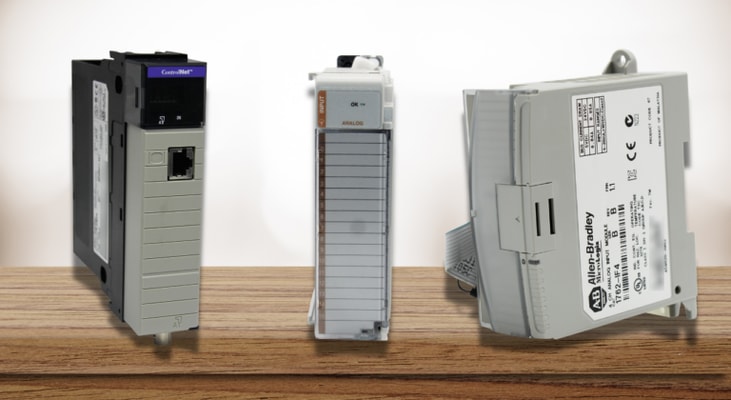
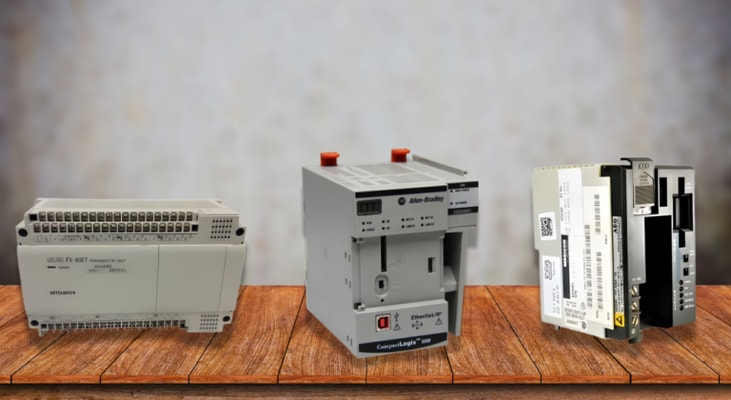
Choosing the right PLC is one of the most important decisions in an automation or infrastructure project. A well-designed PLC can help minimize commissioning time, reduce stability problems during long-term operation, and lower maintenance costs. In energy-intensive applications, PLCs do more than handle basic logic. They may also support energy optimization, multi-VFD coordination, system monitoring, and long-term lifecycle reliability. The system requirements should drive the PLC selection, not the brand name alone. Start by determining how many I/O points the application requires. A small machine may only need a few dozen I/O points, while a tunnel, pump station, or utility system may require hundreds or thousands across ventilation, drainage, lighting, monitoring, and safety-related equipment. In larger systems, distributed I/O, expansion capacity, remote communication, and reliable backplane or network performance become major selection factors. For applications tied into utility...
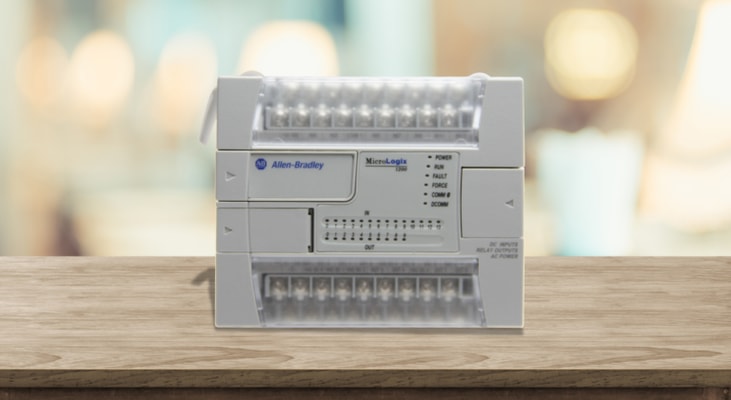
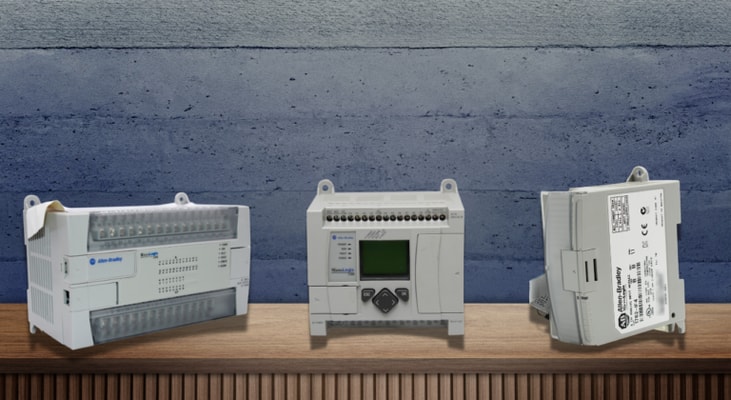
In industrial automation, there are three types of controllers: Those that are replaced because something better came along, those that are swapped out because they finally gave out after years of service, and those that never get replaced at all because nobody could find a good enough reason to mess with what’s working. The MicroLogix 1200 fits right in that last category. These middle-child controllers in the MicroLogix family have been holding down applications for over two decades now, quietly doing their jobs in packaging lines, water treatment plants, material handling systems, and thousands of other installations. These controllers are wired in, commissioned, and essentially forgotten in the best possible way. Rockwell Automation has long since moved on to newer platforms, but in the automation world, “discontinued” and “gone” are two very different things. What made the MicroLogix 1200 popular in the first place is still what keeps it relevant: expandable I/O, a...
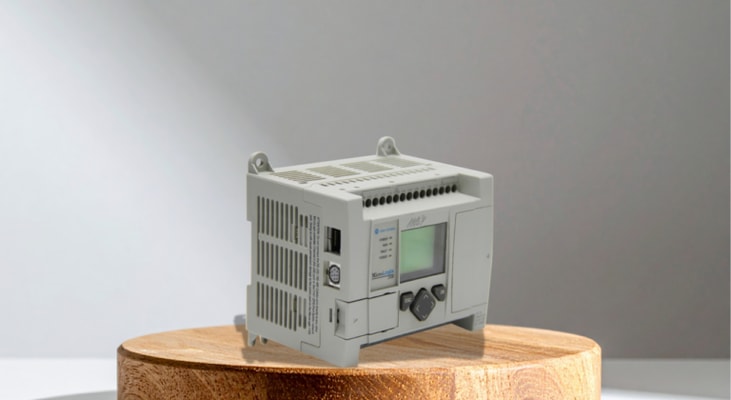
If you’re considering a compact controller for a small to mid-scale automation project, the Allen-Bradley MicroLogix 1100 deserves a close look. While it may be a legacy system, the MicroLogix 1100 still strikes a balance between capability and footprint, giving engineers a robust feature set without the overhead of a larger platform. The Micrologix 1100, at its core, is a fixed I/O programmable controller built around 18 onboard I/O points: 10 digital inputs, 2 analog voltage inputs (0-10V DC), and 6 discrete outputs. What sets it apart from this class of controller is the inclusion of a built-in Ethernet/IP port alongside an isolated RS-232/RS-485 combination port, an onboard LCD display with keypad, a real-time clock, and support for up to four 1762 expansion I/O modules. While the MicroLogix 1100 series has only four controllers, we will go over each one, the expansion I/O lineup, and common applications to help you select the right configuration for your project. As we mentioned...
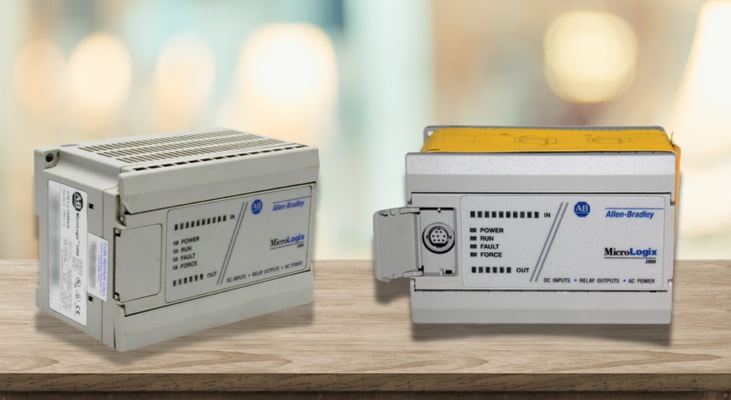
The Allen-Bradley MicroLogix 1000 has been around the block for a while, long enough to be a seasoned veteran before some of today’s engineers even start their first internship. Rockwell Automation has since discontinued the line, but if you’ve spent any time in the field, then you know that “discontinued” doesn’t mean gone. In fact, these little fixed I/O controllers are still working in packaging lines, HVAC systems, conveyor controls, and countless other applications where they were originally installed and never gave anyone a reason to rip them out. That being said, there are still several reasons to pick these controllers for your project. Whether you’re sourcing a drop-in replacement for an existing system or maintaining a fleet of legacy machines, this guide is for you. We’ll walk through the part number system, the different I/O configurations, power supply options, and output types so you can confidently select the right MicroLogix 1000 for your application. Source MicroLogix...
The MicroLogix controller series really hits that sweet spot for folks who need reliable automation in tight spaces, without blowing the budget. You’ve got five different models to pick from, each one tailored for different levels of complexity, but they all play nicely when it comes to programming. If you’re designing machines or building equipment, knowing the differences between these controllers isn’t just trivia—it shapes what you spend, how easily you can grow your system, and how much hassle you’ll deal with years down the line. Think of the MicroLogix 1000 as the no-nonsense starter in this lineup. It gives you the SLC 500 instruction set, but in a small, affordable package—perfect if you’re cranking out lots of the same machine and need solid, basic control. It’s quick on its feet, too, so it fits well in fast-moving jobs like sorting or packaging. You can get it with 10, 16, or 32 digital inputs and outputs, and some versions throw in analog I/O as well. Those models step it...
PLCs have become intelligent brains that control manufacturing processes, process control systems, and infrastructure management worldwide. The choice of the PLC brand is very important for project success, operational efficiency, and long-term cost-effectiveness. This paper will examine the applicability of six primary manufacturers of PLCs: Allen-Bradley, Omron, Siemens, Schneider Electric, and Mitsubishi Electric to small, medium, and large-scale automation projects. The factors that determine the PLC across project sizes are essential before delving into specific brands. These are processing capabilities and performance, power and scalability, software development environment, ease of programming, integration with existing system capabilities, cost impact and base costs, availability of technical support and training, reliability and mean time between failures, and compliance with international standards and certifications. Allen-Bradley, a company within Rockwell Automation, has...
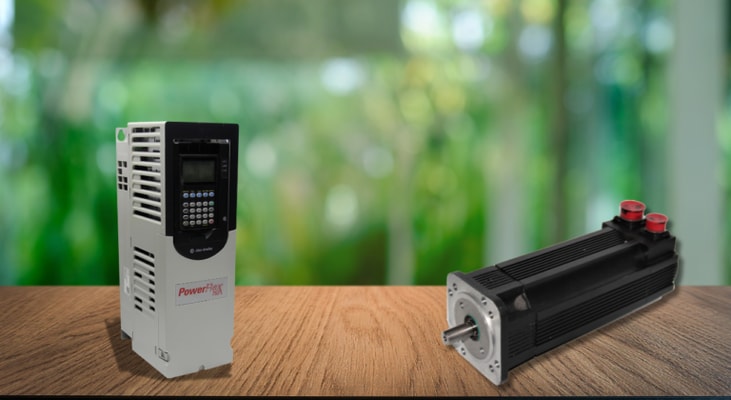
Allen-Bradley is a renowned brand of industrial automation technologies owned by Rockwell Automation, a company that offers a wide variety of digital transformation and factory automation solutions. The Allen-Bradley product line features a broad portfolio of industrial automation and control products like Human-Machine Interfaces (HMIs), Programmable Logic Controllers (PLCs), sensors, DC drives, Variable Frequency Drives (VFDs), and safety devices. All these products are designed for optimal performance, robust, and reliable operation in harsh industrial settings. They enable real-time system monitoring, precise control over machinery, and improved safety within manufacturing and other industrial environments. The PowerFlex DC drive family is a complete collection of high-performance DC motor control technologies. It includes Allen-Bradley PowerFlex DC field controllers, PowerFlex DC drives, and PowerFlex DC stand-alone regulators (SARs). PowerFlex DC drives provide cost-effective...
Accuracy, efficiency, and reliability are the keys in the CNC machining arena. The Spindle Motors—the power that drives the rotation of the cutting tool and performs the material removal—lie behind this accuracy-based arena. Even with the finest Spindle Motors, though, they cannot do the job on their own. Their application is, understandably, coupled with the drive electronics that power them. Drive-motor interfacing isn’t a technical nicety; it is the key driver that determines a CNC machine’s ability and has a direct impact on everything from surface finish quality and dimensional tolerances to tool life and uptime. This article is a detailed examination of the critical process of selecting and matching Spindle Motors to their corresponding drives to achieve the best machining performance. Spindle Motors are CNC machinery’s rotating workhorses that transform electrical power to the exact mechanical motion needed for cutting, drilling, and milling. Spindle Motors, unlike conventional...
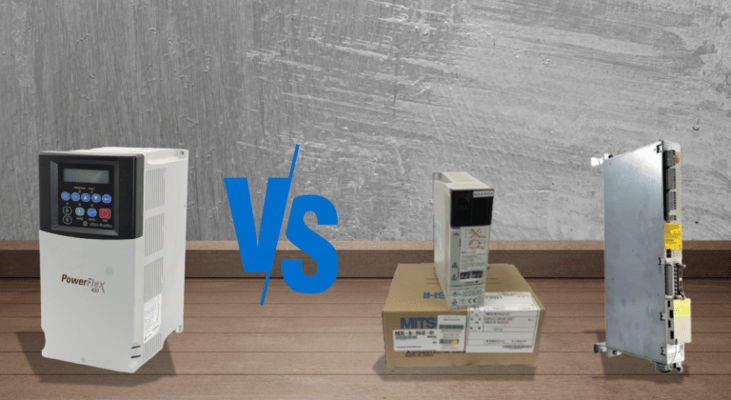
In the highly competitive world of industrial automation, selecting the most appropriate motion control solution for your application is critical. Variable Frequency Drives and DC drives are an integral part of modern industrial automation, providing precise control over motor speed and torque. These motion control solutions help improve energy efficiency, optimize process performance, and increase the service life of the equipment. Allen-Bradley (Rockwell Automation), Danfoss, Delta Electronics, Fuji Electric, Mitsubishi Electric, ABB, and Siemens are some of the leading manufacturers of AC and DC drives. Each brand offers distinct motion control characteristics and capabilities geared to specific industrial automation applications. This article provides a technical comparison of the AC drives offered by some of the aforementioned manufacturers, with the aim of assisting users in identifying the best solution for their specific automation requirements. The Allen-Bradley PowerFlex...
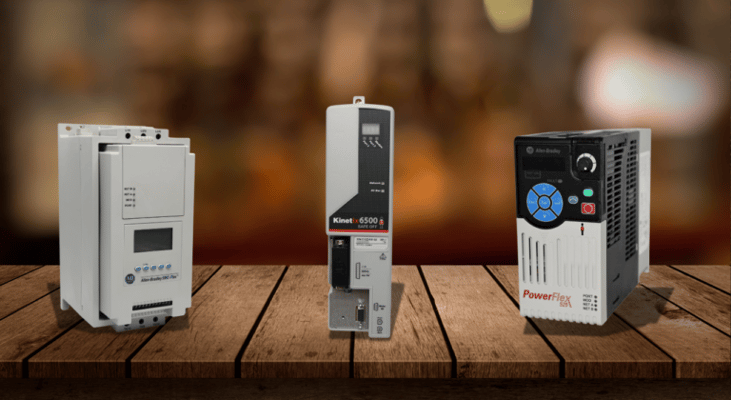
The Allen-Bradley family offers various industrial drives designed to cater to diverse global applications. From DC drives to low-voltage, compact, and medium-voltage options, this article provides comprehensive control modes and power ratings to suit various operational needs. Known for seamless integration into industrial systems, these drives enhance productivity and operational efficiency. In this article, we delve into the key technical features and functionalities of Allen-Bradley drives. This guide simplifies the selection process by breaking down the attributes of each drive type, empowering users to identify the right solution for their unique requirements. Whether optimizing energy consumption, ensuring motor protection, or achieving precise control, this beginner-friendly overview ensures an informed approach to drive selection, making industrial automation accessible and efficient for all levels of expertise. The PowerFlex DC drives offer extensive power and voltage...
Choosing a network switch for your industrial operation is a bit like picking the right tool for a DIY project. You know what needs to be done, but grabbing a hammer when you really need a screwdriver isn’t going to get you very far. The key is finding the right tool for the job, and with the Stratix series, Rockwell Automation has built a toolbox that’s hard to ignore. Whether you’re looking for the straightforward reliability of the Stratix 5700 or the security-first approach of the Stratix 5900, each switch has a role to play. The question is, how do these tools compare to others in the hardware store? And, more importantly, which one will help you get the job done? Before you start building, let’s dive in and see which tool fits your industrial network best. If you had to pick a go-to switch for handling most industrial network challenges, the Stratix 5700 would be that trusted multi-tool you always keep within reach. Designed for small to medium-sized networks, this switch is all...
Introducing the PowerFlex 520-Series AC drives, the next generation of compact drives designed to revolutionize motor control across a wide range of global applications. Whether you’re working on standalone machines or integrated systems, the PowerFlex 520-Series offers innovative features and time-saving benefits to elevate your operations. For reliable motor control in standalone machines choose PowerFlex 523 AC drives. They offer an intuitive interface and easy setup, saving time on installation and programming. For complex, networked machines, PowerFlex 525 AC drives are ideal. Featuring embedded Ethernet/IP, these drives ensure smooth connectivity and support advanced safety features and motor control options. PowerFlex 527 AC drives integrate with Logix PAC for unified control of servo and AC drives. Perfect for optimizing configuration and enhancing system performance across various industrial applications. “Tesla Motors Assembly Line ” by jurvetson is licensed under CC BY 2.0...
The Kinetix 350 series represents an advanced line of single-axis Ethernet/IP servo drives manufactured to enhance scalability within integrated motion systems. These drives are designed to unify the various components of an automation architecture, utilizing the power of a single EtherNet/IP network. This integration simplifies the connectivity of the human-machine interface (HMI), input/output (I/O) modules, programmable automation controllers (PACs), and motion controllers, ensuring a streamlined and efficient system configuration. “Ethernet RJ45 connector p1160054 ” by No machine-readable author provided. David.Monniaux assumed (based on copyright claims). is licensed under CC BY-SA 3.0 . The Kinetix 350 servo drives offer a versatile continuous output power range, from 400 Watts to 3 kilowatts, accommodating diverse application requirements. They provide flexibility for a range of industrial events by supporting an input voltage range that covers both 240 to 460VAC three-phase...
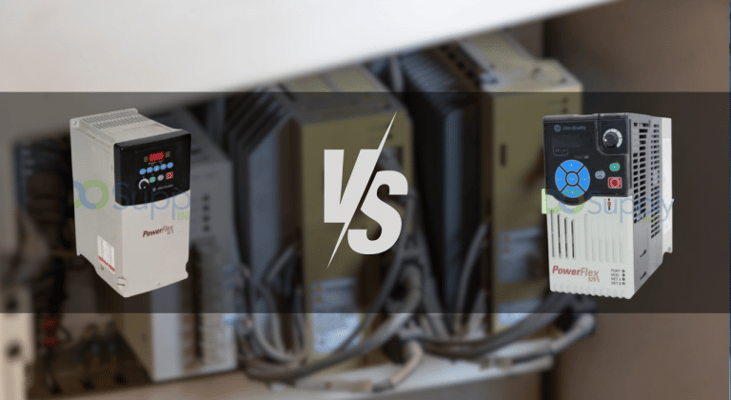
Before you select a variable-frequency drive for your system, you need to consider factors like control capabilities, power and voltage ratings, environmental specifications, and communication options. Both PowerFlex 525 drives and PowerFlex 40 drives are equipped with features that make them more suitable for industrial needs than other VFDs. This article is a technical guide for your selection. Power Range: 0.4-22 kW (0.5-30 Hp) Voltage Classes: 100-600V Power Range: 1Ø: 0.4-1.5 kW (0.5-2 Hp)3Ø: 0.4-7.5 kW (0.5-10 Hp) Voltage Classes: 1Ø: 100-2003Ø: 200-600V The PowerFlex 525 is more suitable for high-power applications with its 22 kW power range. The maximum power output of the PowerFlex 40 drives is lower than that of the PowerFlex 525 drives, which makes these drives more suitable for smaller- and medium-sized applications. Control Methods: Volts/Hertz, Sensorless Vector Control, Closed Loop Velocity Vector Control, Permanent Magnet Motor Control (with and without encoder)...
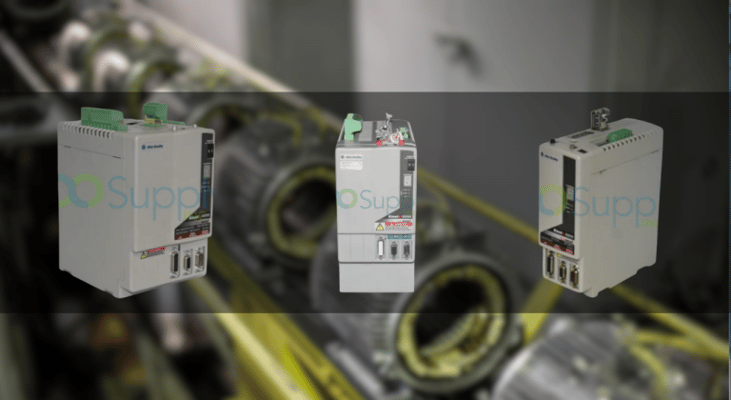
In the dynamic world of industrial automation, efficiency and precision are key. The Kinetix 6000 drives are here to revolutionize your operations, offering a cutting-edge solution that boosts system performance while slashing costs and saving valuable time. These multi-axis drives are designed to streamline programming, wiring, diagnostics, and machine operation, significantly accelerating the engineering and installation processes. For industries tackling demanding motion applications, the Kinetix 6000 series provides unmatched flexibility and efficiency, ensuring your systems run smoothly and effectively. With a continuous power output range of 0.3 to 3 kilowatts, these drives are versatile enough to meet the needs of various applications. They are built to handle global voltage requirements, making them suitable for diverse industrial environments. Input Voltage Range: 195 to 265 Volts AC or 324 to 528 Volts AC. Input Frequency Range: 47 to 63 Hertz. Velocity Loop Bandwidth: 500...