5 Ways Advanced Servo Drives Can Improve Your Automation Precision
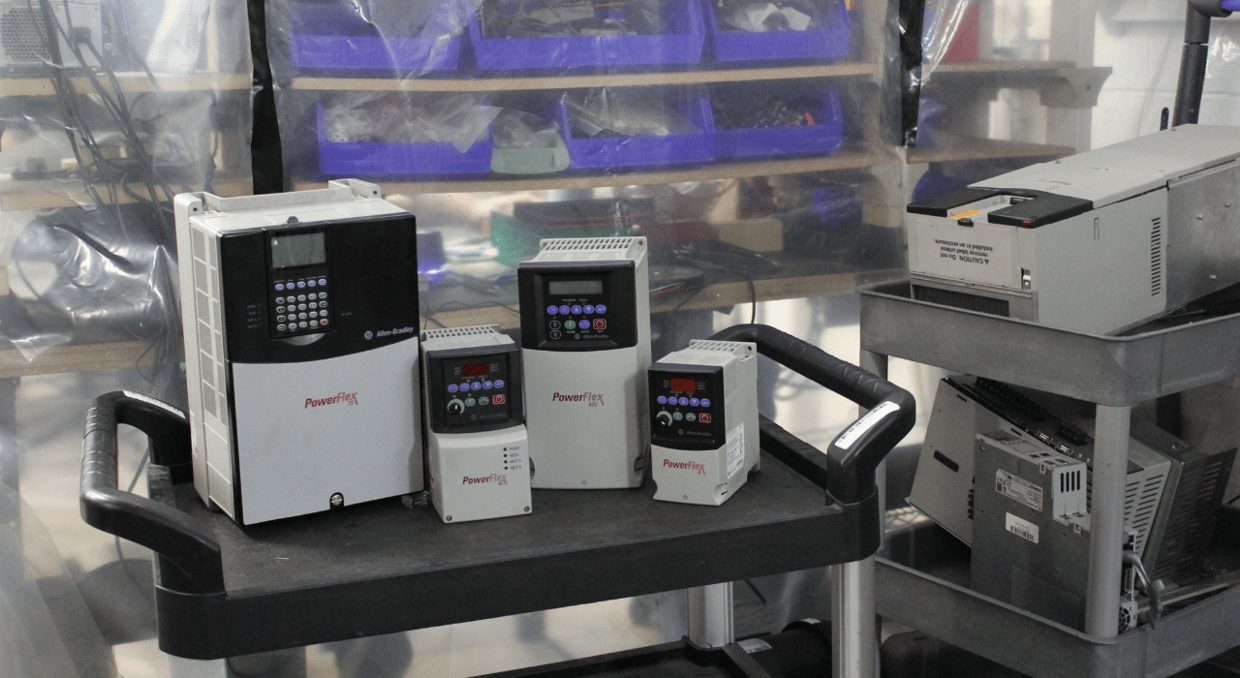
Advanced servo drives are essential for improving automation systems’ precision in a variety of sectors. In this article, we will discuss how these drives provide precise and seamless operations by talking about the integration of high-resolution feedback, adaptive tuning, torque control, sophisticated motion control algorithms, and real-time position error correction. Furthermore, servo drives provide smooth coordination between system components using high-speed communication protocols and programmable logic control (PLC) characteristics, enhancing performance. Modern servo drive technologies from top manufacturers like Allen-Bradley, Siemens, Mitsubishi Electric, and Rockwell Automation offer the precision and dependability required for demanding, high-performance automation applications.
High-Resolution Feedback and Adaptive Tuning
Advanced servo drives dramatically increase automation precision by utilizing adaptive tuning technologies and high-resolution feedback systems. Precise motion control is made possible by high-resolution encoders included in servo drives, which are able to identify even the tiniest positional deviations. Real-time data monitoring reduces mistakes and guarantees precise performance in high-stakes applications such as material handling, robotics, and CNC machining. For instance, multi-feedback technology is used in Rockwell Automation’s Kinetix 5700 series to improve positioning accuracy in multi-axis systems. Similarly, high-resolution feedback is integrated into Siemens’ SINAMICS S120 drive system for enhanced motion control, guaranteeing more consistent and smoother movement in high-precision automation operations.
Advanced servo drives use adaptive tuning mechanisms that dynamically modify drive parameters in response to real-time situations, in addition to feedback systems. These drives can automatically adjust their performance in response to changes in load, mechanical shifts, and environmental conditions. For example, the MR-J5 series from Mitsubishi Electric employs adaptive tuning to automatically optimize its functioning, guaranteeing constant accuracy even when load or process conditions change. Similar adaptive features are included in Schneider Electric’s Lexium 32 drives, which adjust for any changes that may affect performance. Adaptive tuning with high-resolution feedback guarantees that contemporary servo drives provide the accuracy required for sophisticated automation applications.
Advanced Motion Control Algorithms and Damping Control
Modern servo drives utilize advanced motion control algorithms and vibration-dampening characteristics to improve automation precision. PID (Proportional-Integral-Derivative) and model predictive control (MPC) are examples of advanced algorithms that reduce overshoot, optimize settling times, and improve trajectory accuracy to enable smoother, more precise motion. For example, these algorithms are used by Rockwell Automation’s Kinetix 5500 series to achieve accurate motion control in high-performance applications. Predictive algorithms are integrated into Siemens’ SIMOTION D system, enabling enhanced control over intricate multi-axis motions and guaranteeing high precision and seamless system operation.
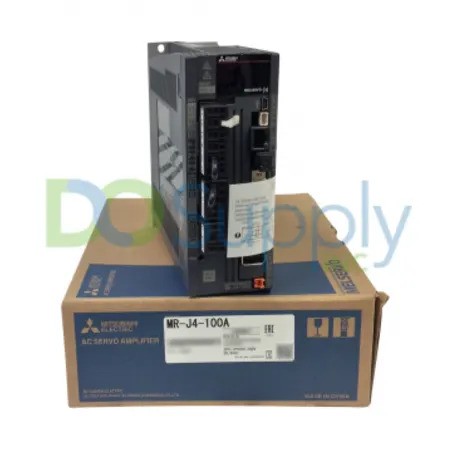
Furthermore, damping control mechanisms are included in sophisticated servo drives to actively minimize vibration during high-speed operations. This is an essential characteristic for stable jobs like cutting, packing, and pick-and-place procedures, where even little vibrations can impair accuracy. For example, the MR-J4 servo drives from Mitsubishi Electric include sophisticated vibration suppression technology to guarantee steady and accurate motions. Similarly, to lessen mechanical oscillations and enable smoother operations in high-speed automation situations, Schneider Electric’s PacDrive 3 incorporates damping control. When combined, these cutting-edge vibration reduction technologies and control algorithms greatly increase automation precision, guaranteeing accurate and dependable performance in even the most demanding industrial applications.
Multi-Axis Synchronization and DSP
By providing perfect multi-axis synchronization and employing Digital Signal Processing (DSP) technology, advanced servo drives increase automation precision. In intricate applications such as robotics and multi-axis machining, multi-axis synchronization guarantees that several motors operate in perfect coordination, eliminating misalignment and desynchronization. For example, the AX8000 servo drive system from Beckhoff facilitates the smooth synchronization of several axes, providing extremely precise motions for jobs needing complex coordination. The synchronized motion control capabilities of Bosch Rexroth’s IndraDrive Mi system make it perfect for automated tasks requiring synchronous, accurate motions.
DSP technology further increases automation precision, which processes control signals with improved accuracy and at very high rates. Because DSP allows for better control over motor performance and reduces signal latency, it is crucial for enhancing real-time responsiveness. DSP makes it possible for contemporary servo drives to include sophisticated functions such as real-time error correction, trajectory optimization, and motion smoothing. For instance, Yaskawa’s Sigma-7 series uses DSP to provide better motion control and quicker reaction times for high-speed applications. The 1S series from Omron makes use of DSP to guarantee that accurate motion control is maintained even in intricate, fast-paced processes. Furthermore, DSP enables the integration of adaptive tuning, vibration suppression, and predictive algorithms, resulting in a comprehensive improvement in automation precision across a range of industrial applications.
Torque Control and Position Error Compensation
Sophisticated servo drives provide precise torque control and position error correction to improve automation accuracy. Torque ripple, which can cause jerky or unstable motions, is reduced by torque management, which guarantees a smooth and steady transfer of power. Applications where steady force application is essential for accuracy, such as material handling, robotics, and precision machining, benefit greatly from this smooth torque production. For example, ABB’s ACS880 servo drives provide improved torque control to guarantee accurate, seamless operations in industrial settings with high demand. Similar to this, Delta’s ASDA-A3 series lessens torque ripple, which leads to improved motion control, particularly for jobs requiring steady and constant force.
Advanced servo drives provide position error compensation in addition to torque control, which tracks and adjusts positional variations in real-time. This feature ensures that the system maintains a high level of accuracy even in the face of external disturbances, thermal expansion, and mechanical wear. Position error correction is used by Panasonic’s MINAS A6 servo drives to swiftly correct deviations and guarantee steady accuracy throughout extended operation. This technology is also used in Fuji Electric’s FRENIC MEGA series to compensate for positional errors, aiding in the preservation of accuracy in demanding automation settings. When combined, these technologies ensure that servo systems operate smoothly, accurately, and dependably—even in intricate and dynamic industrial processes.
Programmable Logic and Communication Protocols
By integrating programmable logic control (PLC) capabilities and supporting high-speed communication protocols, advanced servo drives improve automation precision. Many servo drives include built-in PLC capabilities, which enable users to adjust control settings and motion profiles to fit particular applications. For jobs like robotics, packing, and intricate assembly procedures, this flexibility is essential. For instance, the Kinetix 5500 servo drive from Allen-Bradley seamlessly integrates with the Logix controllers from Rockwell Automation, offering strong PLC capabilities for customized motion control. Similarly, the Kinetix 5700 series facilitates extremely flexible motion profiles, guaranteeing accuracy in a variety of industrial settings.
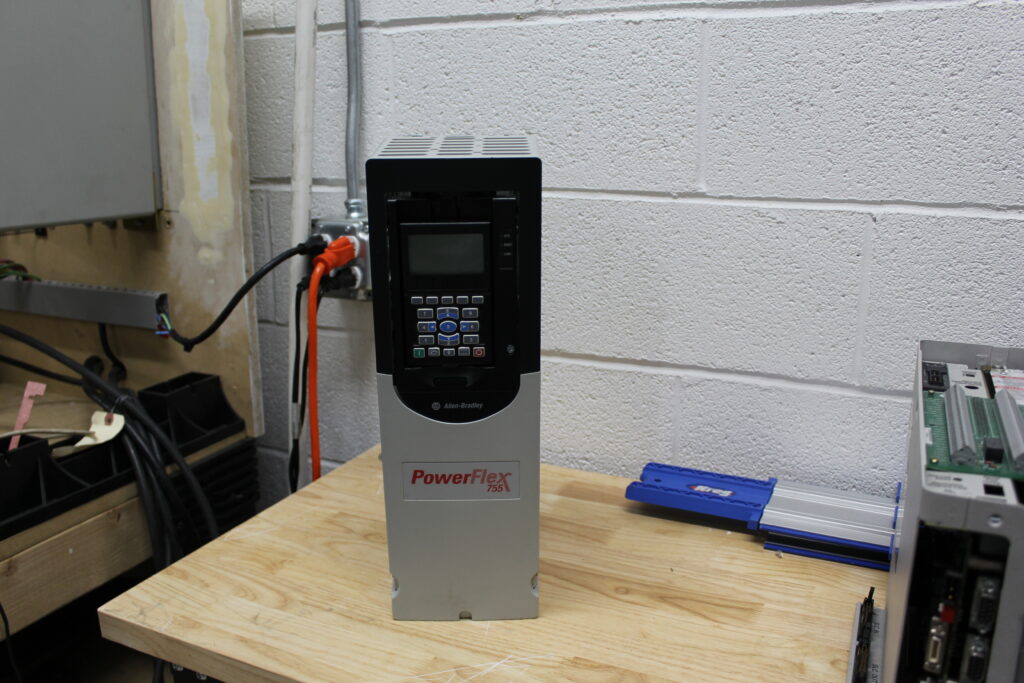
These drives offer high-speed communication protocols, including Ethernet/IP and CIP Motion, in addition to programmable logic, which allows for better integration and coordination with PLCs, SCADA systems, and other automation components. Through improved communication, all system components operate in unison, cutting down on delays and increasing the accuracy of intricate multi-axis motions. For example, the Allen-Bradley PowerFlex 755 drive series provides Ethernet/IP connectivity, enabling accurate synchronization and real-time data interchange across the automation system. Together, these technologies increase system accuracy and guarantee dependable and consistent performance in applications requiring high precision.
Conclusion
In conclusion, modern servo drives play a crucial role in enhancing automation precision by incorporating cutting-edge technologies, including torque control, real-time position error compensation, adaptive tuning, high-resolution feedback, and sophisticated motion control algorithms. These characteristics make it possible to precisely manage intricate movements, lowering error rates and guarantee dependable performance in taxing applications such as material handling, robotics, and CNC machining. DSP technology and multi-axis synchronization improve real-time data processing and guarantee coordinated motion control, further increasing system accuracy. Furthermore, high-speed communication protocols like Ethernet/IP and programmable logic control (PLC) characteristics allow for easy connection with larger automation systems, enhancing efficiency and synchronization. Servo drives are an essential component of high-performance industrial automation systems since they provide precision and stability.
Here at DO Supply, our mission is to make buying quality automation equipment easy. Whether it’s figuring out compatibility or even the latest and greatest recommendations, our sales and technical team is on standby and ready to assist. If this article has inspired you to keep reading, we thin you will love this article here.
DO Supply Inc. makes no representations as to the completeness, validity, correctness, suitability, or accuracy of any information on this website and will not be liable for any delays, omissions, or errors in this information or any losses, injuries, or damages arising from its display or use. All the information on this website is provided on an "as-is" basis. It is the reader's responsibility to verify their own facts.