Why Harmonics Matter More Than Most Facilities Realize
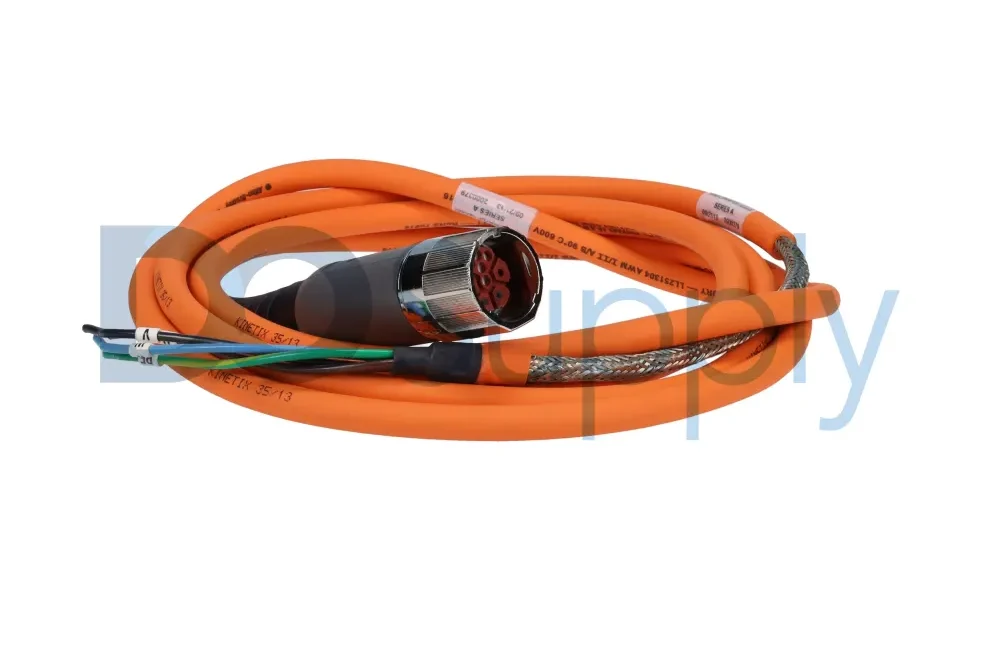
Modern-day electronics have become the new normal within industrial settings. Take a look up in a factory, and you may see rows of LED lights. Turn to the right, and a conveyor line powered by VFD-driven motors could be humming along, while to the left, a robotic arm may be sorting products for palletization. It’s incredibly easy to see this technology on the surface: you plug it in, set the parameters, and watch it go.
The problem is that all of this equipment has to live on the same electrical system. Just as drinking dirty water would harm our bodies, electronics receiving dirty power could also show symptoms of their own illness, such as increased heating, lower life spans, and nuisance tripping. Harmonics are among the most common forms of dirty power and are produced by devices such as rectifiers, inverters, fast-switching devices, and more. These are your VFDs, variable power supplies, switch-mode power supplies, PWM-operated devices, and even EV chargers.
Before getting into filters, reactors, transformers, and mitigation methods, it helps to understand what harmonics actually are, why they matter, and how they can quietly chip away at the reliability of an electrical system or even induce unexpected downtime.
What are Harmonics and Why You Should Care
Electrical wave harmonics may sound like something you should leave for your local electrician / electrical engineer, but this mentality leads to the premature death of industrial equipment. So let’s go over it in a way that anyone, with or without an advanced degree, can understand.
An Imperfect Sine Wave
Electricity in an ideal AC system will oscillate at a rate between 50 and 60 Hz, depending on where you live. The electrons go back and forth within the wire, over and over, multiple times a second. That means the electrical waveform rises, falls, and reverses direction in a steady, repeating pattern. This is the clean, undistorted electricity that your electronics, especially sensitive equipment, desire to perform optimally.
That clean sine wave is the goal, but it is not always what your facility actually gets. Modern industrial equipment does not always draw power in a smooth, steady pattern. Devices like VFDs, LED drivers, UPS systems, and switch-mode power supplies often pull current in short bursts. Those bursts distort the waveform, adding extra frequencies on top of the normal 50 or 60 Hz signal. Those extra frequencies are called harmonics.
Why Harmonics are Destructive
While describing harmonics as destructive sounds a bit dramatic, it’s fitting when you consider the consequences of leaving them unmanaged. Rather than destroying your equipment in one big spectacular explosion, harmonics chip away at its lifespan over time through heat, stress, and electrical noise. Because of this, harmonics are often easily missed or even outright ignored. A motor may still run, a transformer may still feed power, and a control panel may still operate, but the system could be working harder than it should.
Transformer Vulnerabilities
Transformers are built to move electrical energy from one voltage level to another. Under clean sinusoidal power, they do this very well. But when harmonic currents enter the system, the transformer has to deal with more than just the normal 50 or 60 Hz waveform. The biggest issue is that harmonic currents increase the total RMS current flowing through the transformer windings. This causes copper loss, which consequently leads to more heating.
Harmonics also create additional internal losses. Higher-frequency currents increase eddy-current losses and stray losses inside the transformer. These losses are different from normal load heating because they become worse as frequency increases. In other words, the transformer may be carrying the same general load, but the harmonic content makes that load harder on the transformer than it appears on paper.
Neutral Conductors
The neutral conductor in AC systems can be a hot spot for harmonic problems. In a balanced three-phase system, the current from each phase normally cancels out in the neutral. Because of that, it is easy to assume the neutral conductor is not carrying much current at all. The biggest concern is usually triplen harmonics, especially the third harmonic. Triplen harmonics are odd multiples of the third harmonic, such as the 3rd, 9th, 15th, and so on.
Unlike balanced fundamental currents, these harmonics do not cancel each other out in the neutral. Instead, they can add together. That means the neutral conductor may carry more current than expected, even when the phase conductors look reasonably balanced. In some cases, the neutral can become heavily loaded while the rest of the system does not appear to be in trouble. This can lead to excessive heating in the neutral conductor, neutral bus bars, panel connections, and transformer secondary connections.
Motors and VFDs
Motors and VFDs are a bit tricky when it comes to harmonics, as they can sit on both sides of the issue. A VFD can create harmonic distortion on the line side because of the way it draws current from the electrical system. At the same time, motors can suffer from the effects of distorted voltage and current, especially when the drive system is not properly specified, filtered, grounded, or installed.
On the VFD side, the drive does not draw current in the same smooth pattern as a simple resistive load would, but rather the rectifier section of the drive pulls that current in pulses as it converts AC power into DC bus voltage. This pulsing is the primary reason VFDs are associated with harmonics. The more drives a facility adds, the more important it becomes to think about how those drives affect the electrical system feeding them.
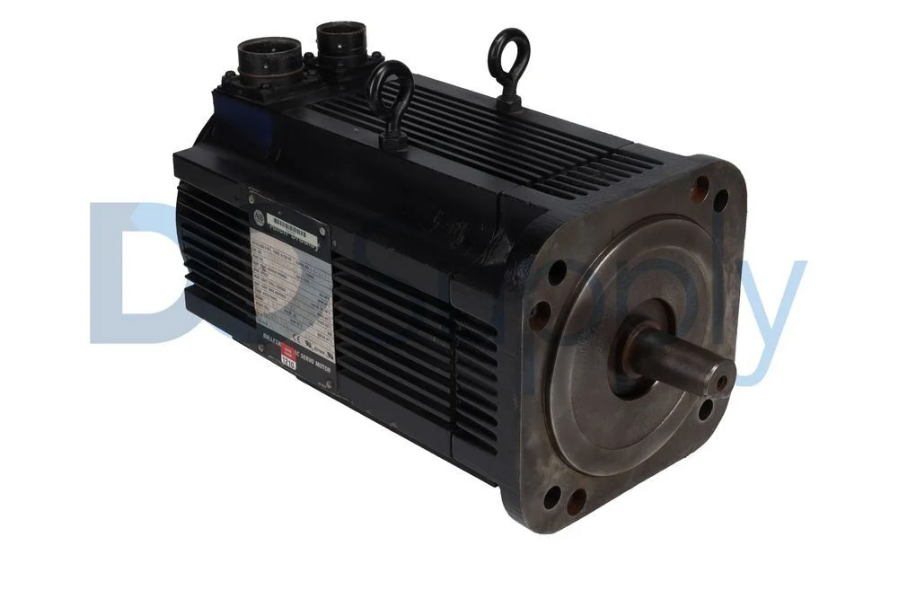
The motor side is where these harmonics begin to show their impacts. A motor is designed to operate within certain electrical limits. When voltage distortion becomes excessive, the motor could experience additional heating, vibration, torque pulsations, and reduced efficiency. These issues may not stop the motor immediately, but they can slowly shorten its lifespan. Heat is especially damaging because it accelerates insulation aging, which can eventually lead to winding failure. When that happens, a complete rebuild of the motor is required. Heat can also be due to poor installation practices, and in fact, we have an article here going over that as well!
How to Clean Your Power
Cleaning your power isn’t taking a soapy sponge and scrubbing at it (because that is incredibly dangerous), but rather being strategic about your equipment selection, filtering, transformer design, wiring practices, and system planning. One thing to keep in mind is that it is impossible to eliminate harmonics. The best you can do is minimize them.
Start With a Power Quality Study
Before racing to filters or replacing equipment, the facility needs to understand what is going on. A power quality study can measure voltage distortion, current distortion, total harmonic distortion, neutral current, transformer loading, voltage sags, and transient spikes.
Usually, the equipment to do this is very expensive and specialized, so outsourcing this to professionals is not a bad idea. It will also give you a bigger idea of what’s happening within your system and help create a path forward to fixing the issue.
Use Line Reactors
Line reactors are one of the more common ways to reduce harmonic effects from drives and other nonlinear loads. A line reactor is an inductor installed in series with the load, usually between the power source and the drive.
It helps smooth out sharp changes in current, reduces some harmonic distortion, and gives the drive extra protection from voltage spikes and line disturbances. Line reactors do not remove every harmonic, but they can make the electrical system less harsh.
Add Harmonic Filters
Harmonic filters are exactly what you may think they are. They help filter out harmonic distortion before it spreads to the rest of the system. There are two types to look for:
- Passive Harmonic Filters: These utilize inductors and capacitors to target certain harmonic frequencies, useful when the problem is predictable.
- Active Harmonic Filters: More advanced filters that monitor the system in real time to inject corrective current to cancel out harmonic distortion. Similar to how noise-canceling headphones work.
Choose Low-THD Equipment
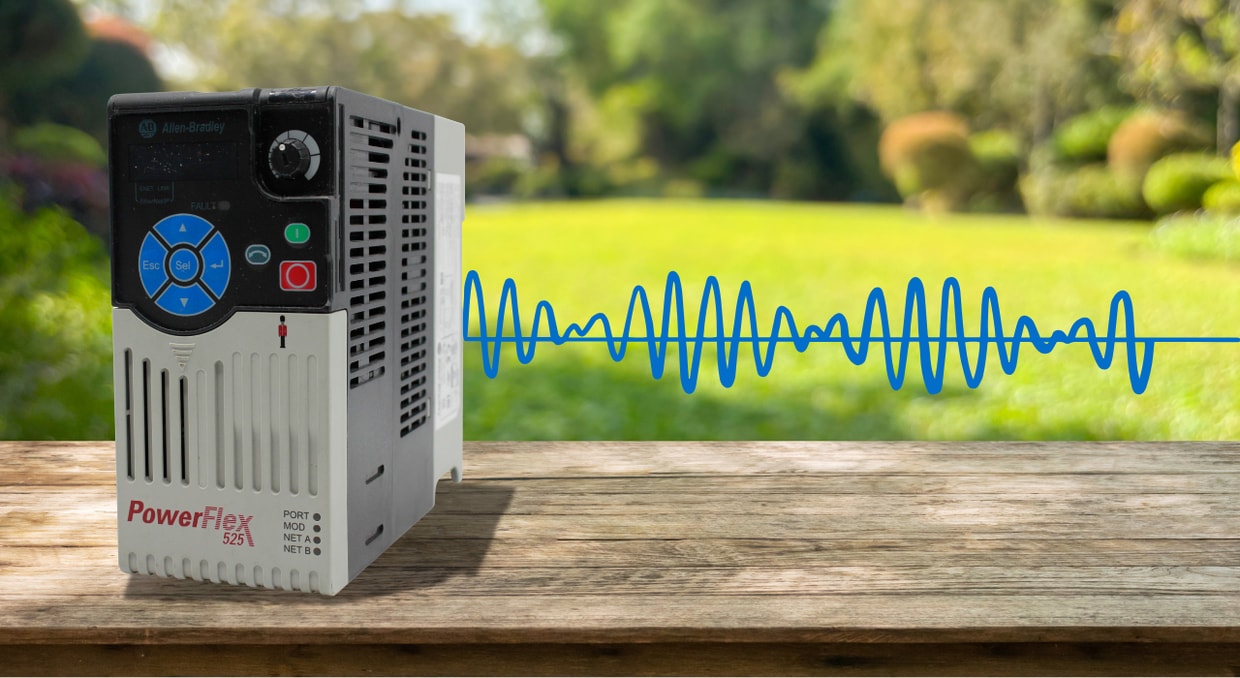
Sometimes the best fix is choosing cleaner equipment from the beginning. Low-THD drives, active front-end drives, 12-pulse drives, and 18-pulse drive arrangements can reduce the amount of harmonic distortion fed back into the electrical system.
Modern drives do boast their harmonic-mitigating technology and rightfully so. PowerFlex drives with Active Front End technology, as well as the PowerFlex 755T series drives, are great examples of VFDs that take harmonics seriously.
Use K-Rated Transformers
K-rated transformers are another piece of equipment that keeps harmonics in mind for their design. While they do not remove harmonics from the system, they are built with more robust neutrals to better handle the extra heat caused by them. This makes them useful for facilities with a lot of nonlinear loads, such as VFDs, LED lighting, UPS systems, switch-mode power supplies, computers, and chargers. A K-rated transformer helps the transformer survive the heat, but it does not clean the power for everything else downstream.
Final Thoughts
While harmonics are normal in fast-switching or pulsing electronics, they should still be taken seriously when planning systems or ensuring maximum reliability. This step in the facility building and maintenance process will pay dividends with increased equipment life as well as less downtime.
If harmonic distortion has already taken a toll on your equipment, we at DO Supply can help! We offer repair services for industrial electronics that need a second chance, along with filters, low-THD equipment, drives, transformers, and accessories that can help support cleaner, more reliable facility power. Give us a call today to find the right solution for your system.
DO Supply Inc. makes no representations as to the completeness, validity, correctness, suitability, or accuracy of any information on this website and will not be liable for any delays, omissions, or errors in this information or any losses, injuries, or damages arising from its display or use. All the information on this website is provided on an "as-is" basis. It is the reader's responsibility to verify their own facts.