Mitsubishi MDS-D vs. MDS-C1: Which Drive Suits Your Precision Needs?
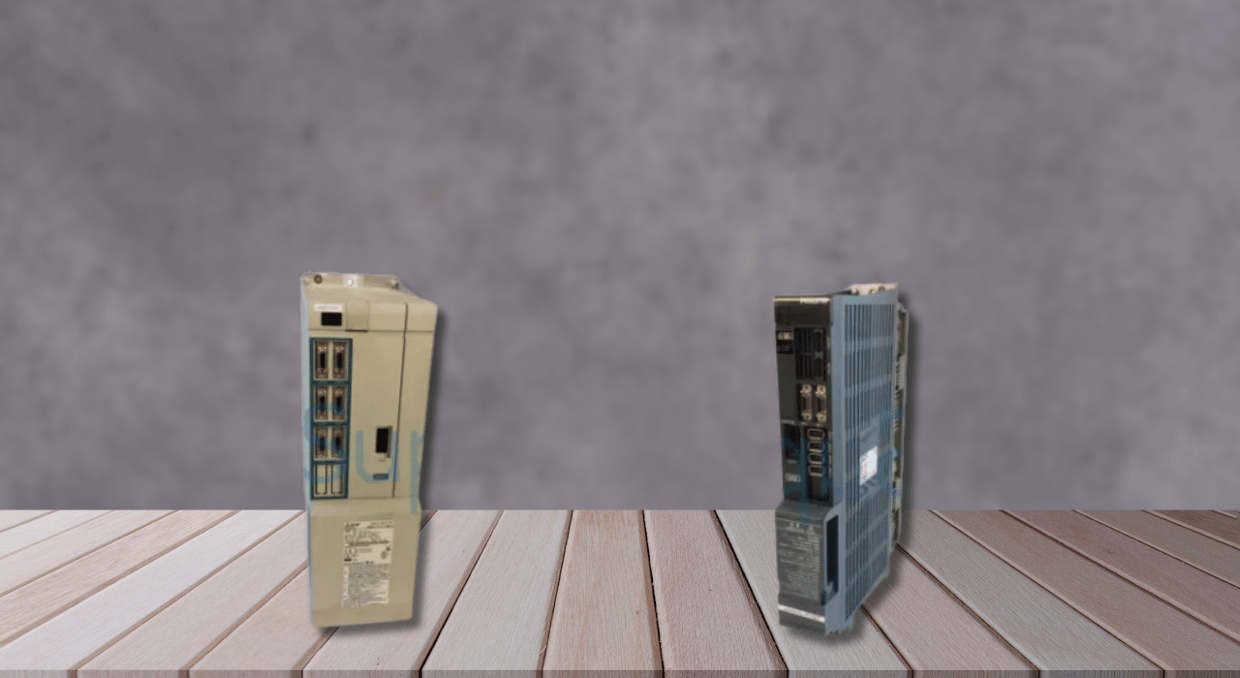
In industrial automation, choosing the appropriate drive is essential to maximize efficiency and accuracy. Mitsubishi’s MDS-D and MDS-C1 drives have unique characteristics that are designed to meet different application requirements. The MDS-D is perfect for complicated operations because of its sophisticated features, which include extensive safety functions and high-resolution encoders. It performs well in high-performance applications. On the other hand, the MDS-C1 is a dependable option for mildly industrial settings, offering enough accuracy and crucial safety characteristics at a relatively affordable price. To assist you in selecting the drive that best meets your demands for accuracy, this article will examine salient features of both types.
Comparison between Mitsubishi MDS-D and MDS-C1
Voltage Range
When comparing the voltage ranges of the Mitsubishi MDS-D and MDS-C1 drives, the former offers greater flexibility for medium to high-voltage applications since it supports an AC input voltage range of 200V to 400V. Because of its wide range, the MDS-D can manage larger power needs, making it appropriate for precision activities in settings with more reliable electrical input.
The MDS-C1, on the other hand, is designed for medium-voltage activities and runs in the 200V class. It is more appropriate for situations where moderate voltage suffices, and great flexibility is not required, even if its lower voltage range restricts its utility in high-power scenarios. It is nevertheless competent for typical accuracy activities.
Output Power Capacity
The Mitsubishi MDS-D has an output power capacity ranging from 1.5kW to 30kW, which makes it appropriate for high-power applications like multi-axis systems and large CNC machines. It is perfect for demanding sectors like heavy machinery processing and automobile manufacture because of its ability to produce high torque and speed. The MDS-D-SPJ3 module, for instance, offers improved control in dynamic situations by supporting larger power ratings.
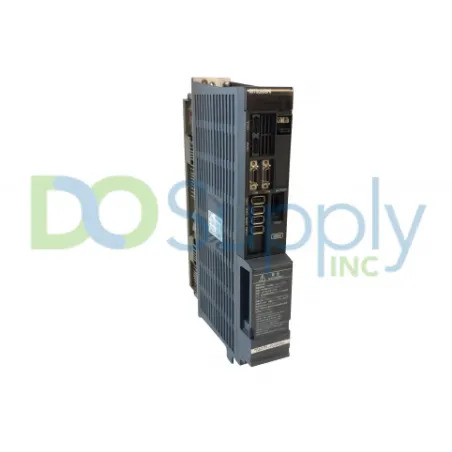
On the other hand, the MDS-C1 drive is more appropriate for low- to medium-power applications in small to mid-sized equipment due to its power output range of 0.5kW to 7kW. It is frequently used in printing presses and packaging machinery. Modules that give precise control without using excessive power, as those in the MDS-C1-V2-series, concentrate on dependable performance under moderate load situations.
Current Rating
With a greater current rating of 5A to 80A, the Mitsubishi MDS-D drive is perfect for robotic systems and heavy-duty CNC machines needing significant torque at low speeds or quick acceleration. Modules such as the MDS-D-SPJ3 series support these greater current needs, allowing for better performance in dynamic operations.
The MDS-C1 drive, on the other hand, is appropriate for less demanding applications that need modest torque and acceleration, including conveyor systems or packing machines, because of its current rating range of 3A to 25A. The MDS-C1-V1 modules, for instance, are designed to provide accurate and efficient control without requiring excessive power output in smaller-scale automation operations. They are tailored for dependable, mid-range current demands.
Precision Control (Resolution)
High-resolution encoders up to 22 bits are characteristic of the Mitsubishi MDS-D drives, offering exceptional accuracy for high-accuracy operations. It is perfect for sophisticated motion control because of its high resolution, which guarantees precise positioning and facilitates multi-axis synchronization. For instance, the MDS-D-SPJ3 series uses this enhanced accuracy to satisfy the requirements of high-performance systems that need strict control.
The MDS-C1 drive, on the other hand, provides adequate precision for common industrial operations with its 16-bit encoder resolution. It is accurate enough for basic to intermediate motion control, but it doesn’t have the MDS-D’s ultra-fine resolution. The MDS-C1-V1 series is designed to deliver dependable performance in situations where a modest level of accuracy is enough, and the sophisticated synchronization capabilities of the MDS-D are not needed.
Speed Control and Response Time
With a high response frequency of 1.5 kHz, the Mitsubishi MDS-D drive provides exceptional speed control, allowing for quick and accurate changes in dynamic applications. Improved precision and stability in fast-paced jobs are guaranteed by this. For instance, the MDS-D-SVJ2 series is designed for high-performance systems of this kind and provides precise and quick speed control in harsh settings.
The MDS-C1 drive, on the other hand, has a response frequency of 1 kHz, which makes it appropriate for medium-speed operations. Still, it is insufficient for highly dynamic or precision-critical applications. The MDS-C1-SP series lacks the high-speed accuracy of the MDS-D, which limits its usefulness in more demanding activities. However, it provides enough speed control for applications where moderate reaction times are acceptable.
Feedback System Compatibility
High-resolution absolute encoders can be used with the Mitsubishi MDS-D drive to provide accurate position feedback along several axes. High-level synchronization and control depend on precise position retention even in the event of a power outage, which is made possible by this feature’s support for multi-turn absolute encoder systems. One series that makes use of these sophisticated encoder capabilities to provide better accuracy in intricate systems is the MDS-D-SVJ3 series.
While the MDS-C1 drive delivers high precision, it does not have the advantages of absolute positioning that come with the MDS-D. Instead, it uses incremental encoders for standard feedback. Because of this, it is less appropriate for tasks requiring precise positioning even after power outages. Because the MDS-C1-SP series provides consistent incremental input, it works well for activities requiring less accuracy.
Communication and Network Support
The Mitsubishi MDS-D drive provides improved integration and high-speed communication in complex automation systems by supporting modern communication protocols such as Ethernet, CC-Link IE Field, and SSCNET III/H. This makes it possible to manipulate several axes in real time, guaranteeing smooth coordination and communication. For example, the MDS-D-SP series makes use of these protocols to provide synchronized and accurate control in large-scale systems.
By comparison, the MDS-C1 drive has enough communication capabilities for common automation systems because it supports SSCNET III and RS-485, two fundamental Fieldbus protocols. It works better in less complicated configurations with fewer axes and gadgets. For simple control requirements, for instance, the MDS-C1-V1 series works well since it prioritizes moderate communication performance and does not require high-speed, multi-axis synchronization.
Safety Functions

Adhering to SIL3 safety regulations, the Mitsubishi MDS-D drive has sophisticated safety features, including Safe Torque Off (STO), Safe Speed Monitor (SSM), and Safe Stop 1 (SS1). These elements are essential to ensure operational safety in high-risk areas. The MDS-D-SVJ2 series, for example, has these cutting-edge safety features, offering improved protection and adherence to stringent safety regulations.
However, the MDS-C1 drive lacks the sophisticated protection found in the MDS-D series while having basic safety features like emergency stop and safe placement that are sufficient for normal industrial use. The MDS-C1-V2 series is appropriate for areas with modest safety demands where extensive safety measures are not necessary since it concentrates on fundamental safety needs.
Which Drive Suits Your Precision Needs?
The particular requirements of your application will determine which drive is best for your accuracy demands. For high-performance applications requiring superior accuracy, cutting-edge safety features, and strong communication capabilities, the Mitsubishi MDS-D drive is perfect. Its exceptional speed control and high-resolution absolute encoders make it appropriate for intricate multi-axis systems where precision is crucial. For less demanding applications, however, the MDS-C1 drive provides a more affordable option. It can handle mild industrial operations with enough accuracy and basic safety features. Choose the drive that best fits your operating objectives and precise needs by weighing aspects, including power capacity, feedback systems, and safety standards.
In conclusion, your unique operating needs will determine which of the Mitsubishi MDS-D and MDS-C1 drives you should choose. With its cutting-edge features, remarkable precision, and strong safety measures appropriate for challenging jobs, the MDS-D is unique for high-performance applications. On the other hand, the MDS-C1 strikes a compromise between enough accuracy and necessary safety measures to offer a workable and affordable solution for moderate industrial applications. You may choose the best drive to meet your operational objectives and accuracy requirements by carefully weighing variables like voltage range, power capacity, feedback systems, and communication capabilities. This will guarantee optimal performance and efficiency in your automated operations.
At DO Supply, we understand the importance of finding the right drive to optimize your industrial operations. Our tech and sales teams are here to guide you in selecting the perfect Mitsubishi MDS-D or MDS-C1 drive to meet your unique application requirements. Contact us today to experience unmatched expertise and support in achieving precision and efficiency in your automation systems. If you would like to learn more about the Mitsubishi MDS-C1, you can read that article here.
DO Supply Inc. makes no representations as to the completeness, validity, correctness, suitability, or accuracy of any information on this website and will not be liable for any delays, omissions, or errors in this information or any losses, injuries, or damages arising from its display or use. All the information on this website is provided on an "as-is" basis. It is the reader's responsibility to verify their own facts.