Selecting DC Drives for Regenerative Applications
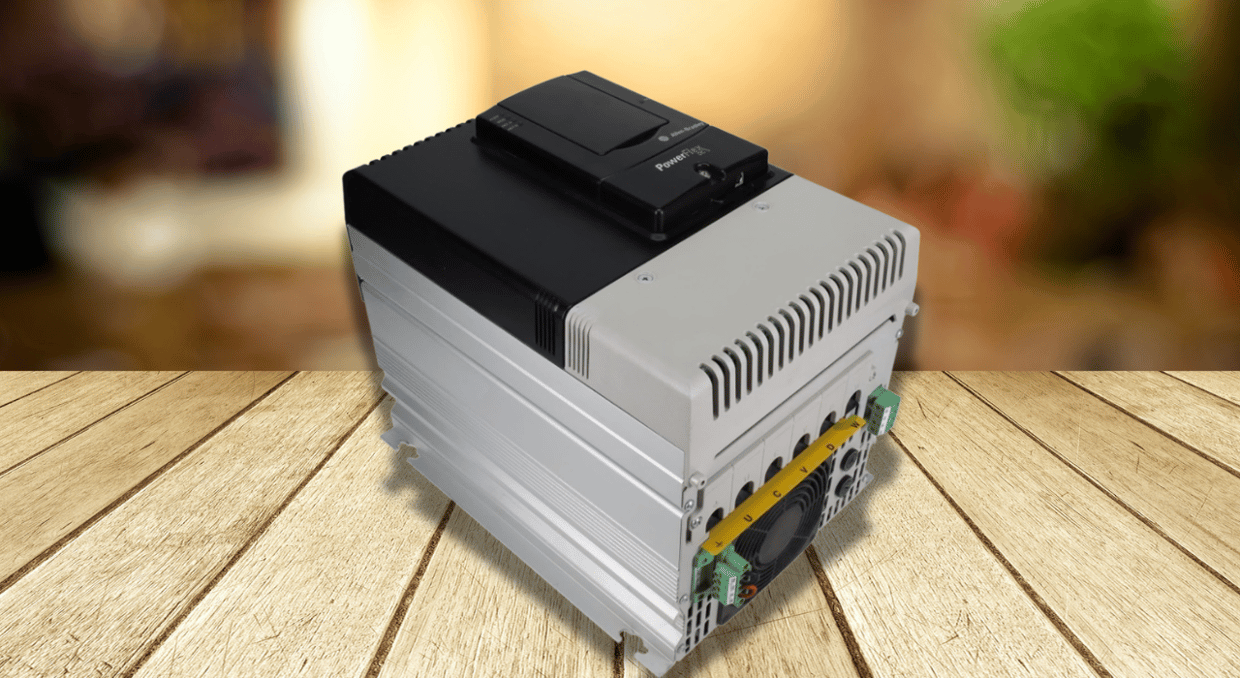
A crane lowering a loaded hook, an extruder decelerating between batches, a dyno test stand pulling a motor down through its rated speed; all three send energy backward through the drive instead of consuming it. Whether that energy gets dumped as heat or pushed back onto the line depends entirely on how the DC drive was specified in the first place. Getting DC drives right for regenerative duty isn’t about buying the biggest frame size available; it’s about confirming, in order, that the drive can even operate in the right quadrants before anything else on the spec sheet matters.
Quadrant Configuration
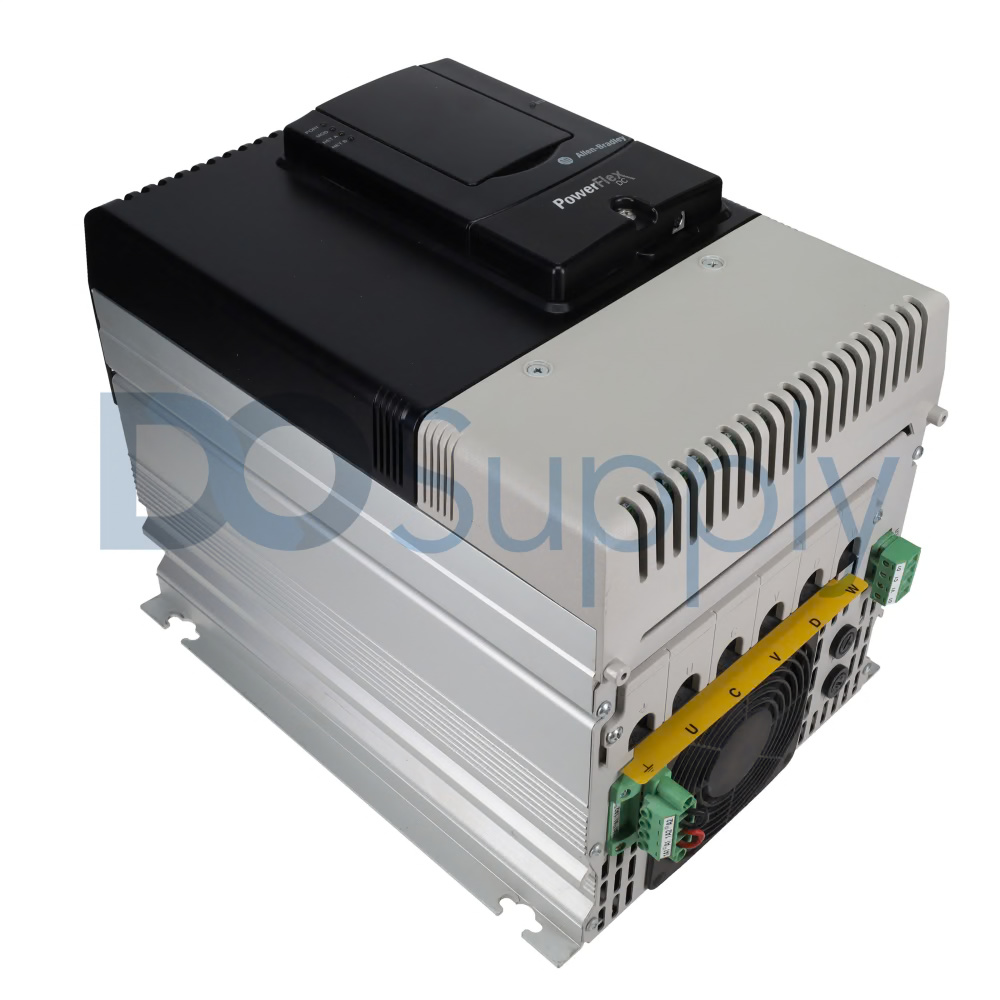
Start here, because nothing downstream matters if this is wrong. A two-quadrant (2Q) DC drive motors in one direction and dissipates any braking energy as heat; it has no path to send that energy anywhere useful. A four-quadrant (4Q) drive motors and brakes in both rotational directions, and that reversibility is what makes energy recovery physically possible. ABB doesn’t leave this ambiguous with its DCS880 family: the drive ships with selectable 2Q and 4Q configurations, and ABB states plainly that 4Q is the configuration required for regenerative braking. So the first question on any regenerative spec isn’t “how big”; it’s “can this thing even push power backward.” A 2Q drive, no matter how well it’s sized otherwise, fails the application before sizing is even relevant.
Voltage and Current
With quadrant operation settled, the next question is whether the converter’s voltage and current envelope covers both directions of power flow, not just the motoring side. ABB’s DCS880 line tops out at 5,200 A and 1,500 VDC, enough headroom for heavy motors that cycle frequently between motoring and braking rather than running steady-state. Siemens takes the SINAMICS DCM platform further up the power ladder, rating it for applications up to 30 MW and 3,000 A. The reason this matters for regenerative work specifically: a drive undersized here isn’t just risking a nuisance trip on acceleration, it’s also absorbing reverse current during every braking event, and both directions have to fit inside the same thermal and semiconductor limits.
Retrofitting an Existing DC Motor
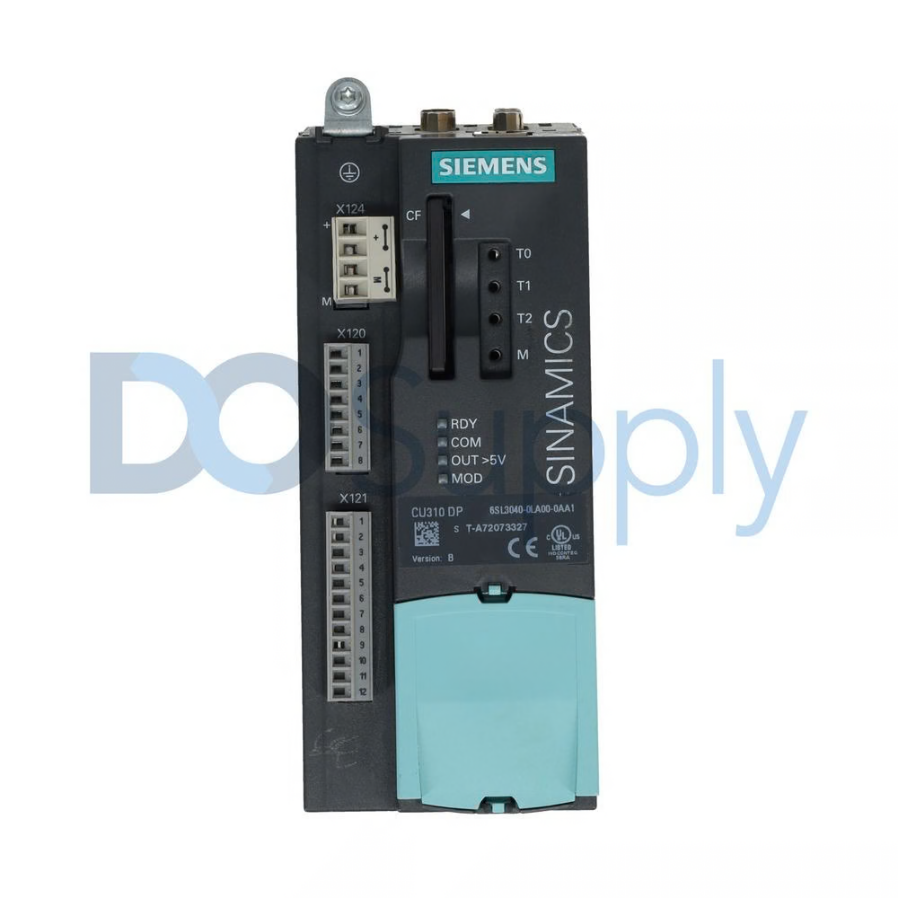
Most of the regenerative DC drive selection happening right now isn’t for new installations; it’s for plants that already own DC motors and want regenerative capability added without replacing the motor. Siemens builds the SINAMICS DCM specifically around this scenario, positioning it as a modernization platform for existing DC motor installations. In that case, the drive’s current and voltage ratings are only part of the story; field-circuit compatibility, existing winding condition, and legacy control wiring matter as much as the converter’s rated output.
The Duty Cycle
A regenerative application rarely holds steady at one operating point; it swings between motoring and braking on a repeating cycle, sometimes every few seconds on a hoist or crane. That means the number worth checking isn’t the drive’s continuous rating in isolation, but how it holds up under that repeated transition. Both the DCS880 and SINAMICS DCM are built by their manufacturers for continuous industrial duty rather than intermittent service, which is the right baseline to be looking for; a drive rated only for occasional overload will age fast under a duty cycle that swings back and forth all shift long.
AC Regeneration Fits into a DC Drive Decision
Some engineers reach this point in the spec process and start wondering whether to stay with DC at all. It’s worth knowing what the AC side looks like before making that call, if only so the comparison is an informed one rather than a guess.
Active Front End Regeneration
Schneider’s Altivar Process 980 takes a different route entirely; it’s a regenerative AC drive, not a DC motor drive, and it gets its four-quadrant capability from an active front end (AFE) rather than a DC armature control loop. The comparison that matters here isn’t “which is better” in the abstract; it’s whether an engineer retrofitting an existing DC motor with a 4Q DC drive should instead consider migrating the whole application to AC with an AFE front end. Both recover energy. They do it through completely different converter topologies, and that difference has real consequences for motor replacement cost, wiring, and commissioning.
A Separate Regenerative Unit Bolted onto an AC Drive
Schneider also documents a third path: pair a dedicated ATV Regenerative unit with an Altivar Machine drive, letting the regen unit handle sending braking energy back to the AC supply while the drive itself handles motor control. Schneider’s own documentation covers this for material handling and hoisting; the exact same application space where DC drives get specified for regenerative duty. The structural difference is worth noting: instead of one 4Q DC converter doing both jobs, this splits regeneration into its own hardware sitting next to the drive.
What Actually Prevents Bad Selections
The sequence that keeps this from going wrong: start with what the application and motor actually demand, nail down the regenerative duty the process creates, confirm 2Q versus 4Q, then size for voltage and current across both motoring and braking. After that, check the overload profile against the real duty cycle, and only then move to supply configuration, control and feedback, environmental conditions, communication protocol, safety architecture, and retrofit fit.
Key Takeaways
Quadrant configuration is the gate everything else passes through; 4Q is non-negotiable for regeneration, and ABB says so directly about the DCS880. Once that’s settled, size for the full motoring-and-braking cycle rather than a single number, using the DCS880 (up to 1,500 VDC / 5,200 A) and SINAMICS DCM (up to 30 MW / 3,000 A) as reference points for two different power tiers. If the job is a retrofit onto an existing DC motor, treat field circuit and wiring compatibility as seriously as the drive’s own ratings. Know the AC alternatives, AFE regeneration or a paired regen unit, well enough to rule them in or out on purpose, rather than defaulting to a DC drive out of habit. If you would like to learn more about PowerFlex drives, we have a comparison between the entry-level and high-performance models here.
If you are in the market for a new regenerative drive, AC or DC, stop by DO Supply! We carry drives from reputable brands, such as Allen-Bradley, Siemens, Mitsubishi, and more. You can also find PLCs, motors, and supporting equipment to match your new drive. Give us a call today and let our sales team help you find the right drive for the right job!
DO Supply Inc. makes no representations as to the completeness, validity, correctness, suitability, or accuracy of any information on this website and will not be liable for any delays, omissions, or errors in this information or any losses, injuries, or damages arising from its display or use. All the information on this website is provided on an "as-is" basis. It is the reader's responsibility to verify their own facts.