We found 260 posts about Automation Technologies from DO Supply, a global automation parts
reseller focused on hard-to-find and obsolete industrial automation products.
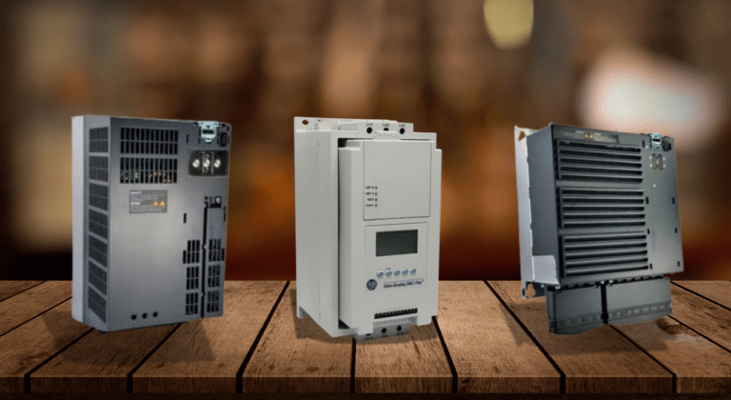
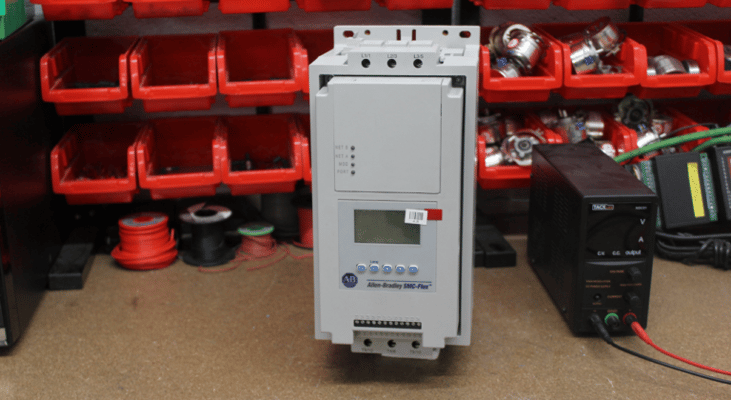
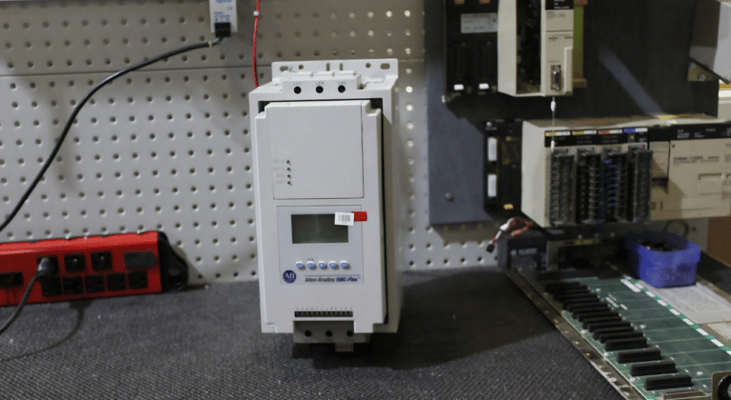
Smart motor controllers (SMCs) are advanced, microprocessor-based soft starters designed to manage and protect AC motors in a variety of industrial applications. They offer a wide array of advanced functionalities beyond solely starting and stopping motors efficiently. These functionalities include comprehensive monitoring, precise speed control, integrated diagnostics, communication and networking capabilities, and advanced motor protection. Prominent smart motor controller brands include Allen-Bradley (from Rockwell Automation), Mitsubishi Electric, Siemens, ABB, Honeywell, Schneider Electric, and Eaton. SMC controllers use diverse operating modes to precisely control motor starting & stopping characteristics, speed, and torque. Common modes of operation include Current Limit Start, Soft Start, Soft Stop, Full Voltage Start, and Selectable Kickstart, alongside specialized control options such as Dual Ramp Start, Preset Slow Speed, Accu-Stop, Smart Motor Braking, Pump Control, and...
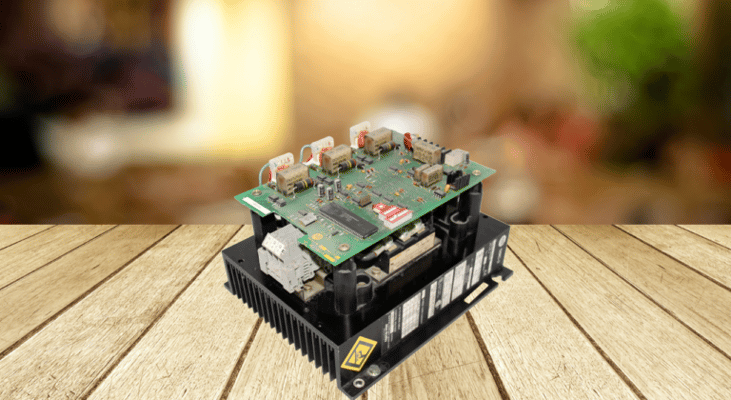
Maintaining and troubleshooting the SMC 2 soft starter is essential for ensuring reliable motor control and maximizing equipment lifespan. This comprehensive guide covers both foundational and advanced diagnostic techniques to help technicians and engineers keep their systems running at peak performance. From interpreting fault codes and verifying configuration settings to analyzing SCR gate signals and evaluating load imbalances, each section provides practical insights and technical depth. Whether you’re performing routine maintenance or addressing complex operational issues, these strategies will help you minimize downtime, enhance safety, and extend the life of your motor control system. Buy SMC 2 Soft Starters Here To help technicians quickly diagnose operational issues, the SMC 2 soft starter displays fault codes. These codes are crucial for identifying issues like overload, phase loss, shorted SCRs, and undervoltage. A motor with an overload fault is consuming too much current...
Reliability, efficiency, and accuracy are necessary in today’s rapidly changing industrial environment. With intelligent control that improves all facets of operation, smart motor controllers, or SMCs, are revolutionizing the management of motors from initial energization to total shutdown. SMCs offer unparalleled versatility and protection, whether your goal is tighter energy efficiency, more seamless starting, or real-time diagnostics. To provide better performance and higher cost savings across the whole equipment lifespan, this article examines how SMCs transform motor control by increasing safety, lowering maintenance, ad seamlessly integrating with contemporary automation systems. Shop for Allen-Bradley SMCs Here Conventional motor starters instantaneously give full voltage, which sometimes causes excessive wear and mechanical stress. Soft start and soft stop capabilities of SMCs transform this procedure. These lessen the strain on mechanical parts like gears, belts, and pumps...
The evolution from traditional motor starters to smart motor controllers (SMCs) marks a significant technological leap in modern industrial applications. While conventional starters rely on electromechanical components for basic motor control, smart motor controllers integrate advanced technologies such as power electronics, real-time data logging, predictive analytics, and IoT connectivity. These innovations enable SMCs to provide precise, adaptive control over motor speed, torque, and energy consumption while minimizing downtime and maintenance costs. This article explores the key differences between smart motor controllers and traditional starters, focusing on aspects like power electronics, adaptability to load changes, starting current management, feedback mechanisms, and diagnostic capabilities. Understanding these distinctions highlights the benefits of SMCs in optimizing performance, reliability, and energy efficiency in today’s automated industrial systems. One of the primary...
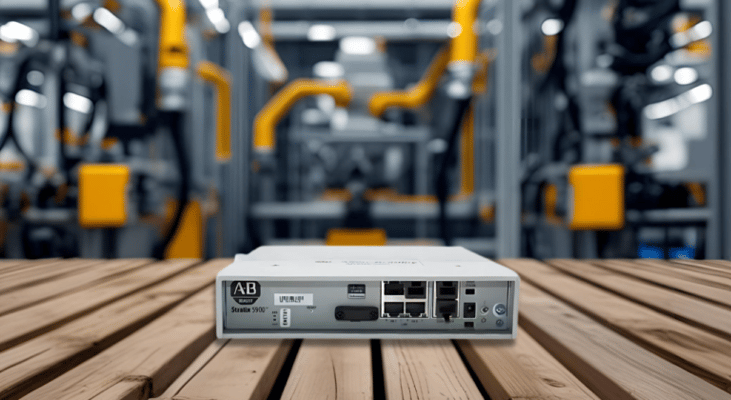
Allen-Bradley’s Stratix 5900 Services Router is an industrial networking technology milestone that provides functions that are much superior to those of conventional industrial routers. This comparison of the two types of networking devices scrutinizes their technical details, environmental hardness, security attributes, and conformity standards for professionals to make sound judgments on industrial networking infrastructure. The Stratix 5900 Services Router has an industrial-designed hardware platform that differentiates it from standard routers. A fixed configuration avoids the complexity of modular systems, enabling out-of-the-box functionality upon deployment. The hardware has an extensive connectivity solution with four Fast Ethernet (10/100) connections for area networking, one Gigabit Ethernet connection for high-speed uses, and one specific WAN port for wide-area networking. This integration of ports supports versatile architectures for both remote and local communications...
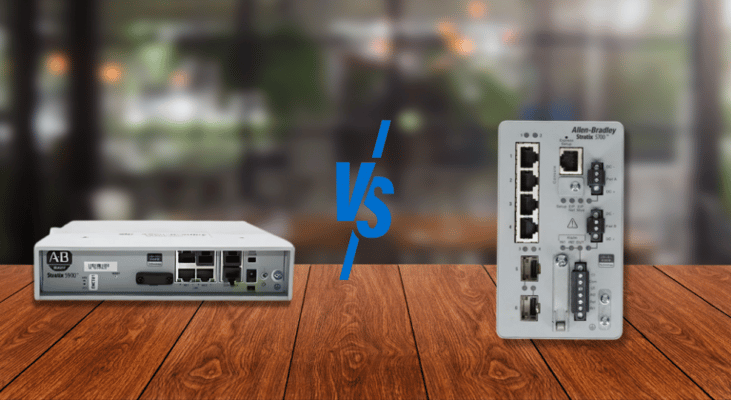
In any industrial setting, getting two machines to talk to each other is only half the battle. The real challenge is keeping that conversation organized, secure, and flowing in the right direction. This is where networking hardware comes into play. If you’re already invested in the Allen-Bradley environment, then the Stratix family might be familiar to you. Like other families of automation tech from AB, the Stratic models serve different purposes. While the 5900 and 5700 may sound like cousins, they’re built for entirely different jobs. While the 5700 keeps online traffic flowing smoothly, the 5900 stands guard to keep out bad actors from entering the network. That being said, which one belongs on your panel? Starting with our industrial-grade managed switch, the Stratix 5700 is designed to control the flow of traffic in industrial settings. It’s designed to make sense of the chatter between drives, controllers, and operator interfaces. With configurations ranging from six to twenty...
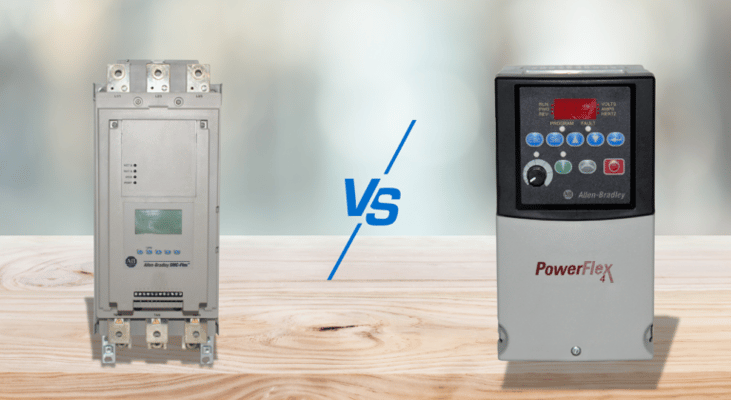
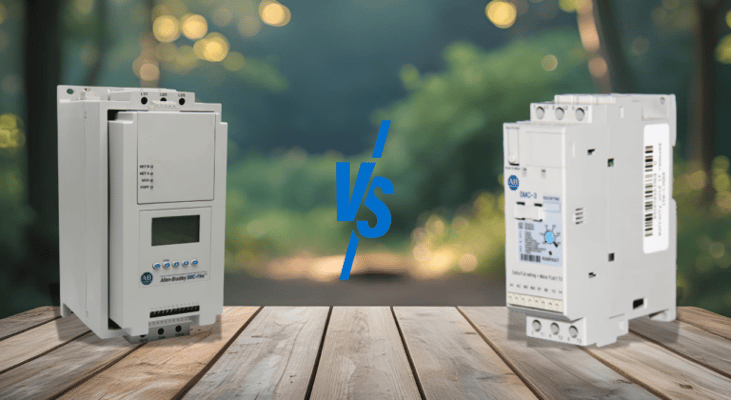
Imagine starting a 500-hp motor by flipping a switch, just like you would with a desk lamp. Sounds a bit reckless, right? After all, all of that power and torque is going to slam on, and who knows what damage that can cause? This is where smart motor controllers and soft starters come in. Yes, they’re different tools, but they’re designed to handle motor startup without damaging components or blowing fuses. But for those who haven’t been in the industry long enough, the difference between them might not be clear. So, how do they differ, and when should you reach for one over the other? A soft starter does exactly what it sounds like: it starts the motor, just.. gently. So instead of slamming full voltage into the motor the second it kicks on, it gradually ramps up to that desired voltage. This limits the inrush current, smooths out acceleration, and reduces mechanical strain on any couplings, belts, and gears. From a more technical standpoint, soft starters operate by controlling the...
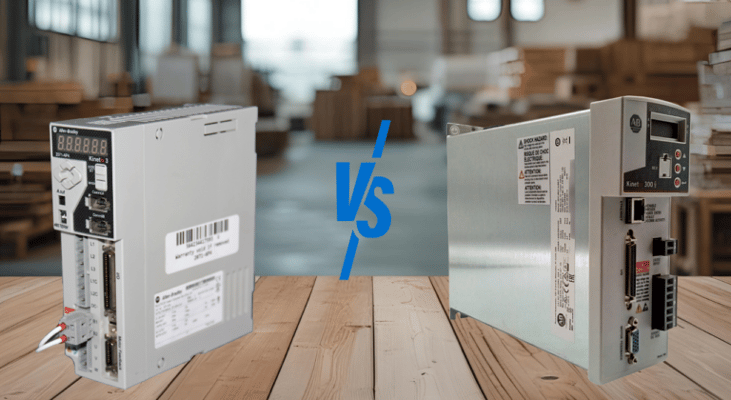
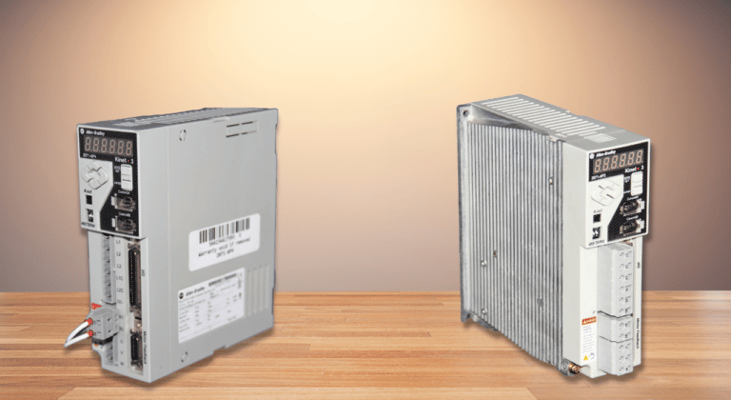
Let’s talk entry motion control, specifically the Kinetix 3 and 300. When designing a smaller automation task, it’s easy to assume that the Kinetix 3 and 300 are basically the same. After all, they’re both marketed as entry-level, low-axis drives to run small motors, but there’s more to it than that. One thrives as a standalone drive while the other belongs in coordinated motion with Logix integration and Ethernet/IP. So, which one would best fit your machine or budget? That’s the question we’re looking to resolve today, so let’s break down the differences between these brother drives and help you answer that question. The Kinetix 3 is a lightweight drive designed for simpler automation tasks that require a single axis of motion. Its main selling points are that you don’t need a full PLC network to run it and that it is plug-and-play, with automatic motor recognition for L-Series rotary motors, TL-Series linear actuators, and LDL-Series and LDC-Series linear motors. This makes it very...
When it comes to cooling off hot circuit boards and electrical components, there are many different ways to do it, but two stick out the most: air and water cooling. To water cool or not to water cool, that is a question often considered by engineers and even PC building enthusiasts alike. However, one of the differences between building a pc and integrating an automation system is the availability of parts. Now, you can walk into a Best Buy and pick up a water block for a gaming rig. But what if you need to cool a 1200-amp variable frequency drive? This is where Allen-Bradley’s LiquiFlo series enters the scene, and where we at DO Supply can help you find the hardware that’s otherwise hiding in plain sight. The LiquiFlo series of drives seems to be an enigma in Allen-Bradley’s lineup, so much so that they don’t even have much about them on their website. The story behind them is that a company called Reliance Electric, founded in 1904, was pioneering electric motor and automation...
Smart motor controllers have evolved from simple starters to intelligent, data-driven devices that are pivotal in modern industrial automation. Yet, many businesses still under-utilize these powerful tools, missing out on opportunities to enhance performance, reduce costs, and improve system reliability. Fully leveraging your smart motor controller means more than just powering motors—it’s about unlocking advanced features like real-time monitoring, predictive analytics, remote access, energy optimization, and seamless integration with other systems. When used to their full potential, these controllers provide actionable insights, streamline maintenance efforts, and significantly reduce downtime. From automated diagnostics to improved energy efficiency and predictive maintenance, smart motor controllers can revolutionize how your operation functions. This article explores the key functionalities that are often overlooked and shows you how to maximize the value of your investment. If...
Automated processes and motion control come in all different shapes and sizes. Ranging from a Pepsi bottling plant pushing out thousands of bottles per minute to tracking solar panel direction on a roof. Sure, the latter isn’t as exciting as watching bottles whiz across a factory on predetermined routes to be palletized by yet another automatic machine. Still, it doesn’t make it any less important. Small-scale, entry-level automation systems are needed everywhere, from electronics assembly to laboratory automation equipment. This is where drives, like the Kinetix 3, shine the brightest. This article highlights the factors that go into choosing a Kinetix 3 rather than its technical specifications. If you want to read about that specifically, we have an article for you here . The number one most important consideration for any move is cost. Budgets are a law of life, and the Kinetix 3 aims to offer a small package packed with necessary features at a price that won’t bring tears to your...
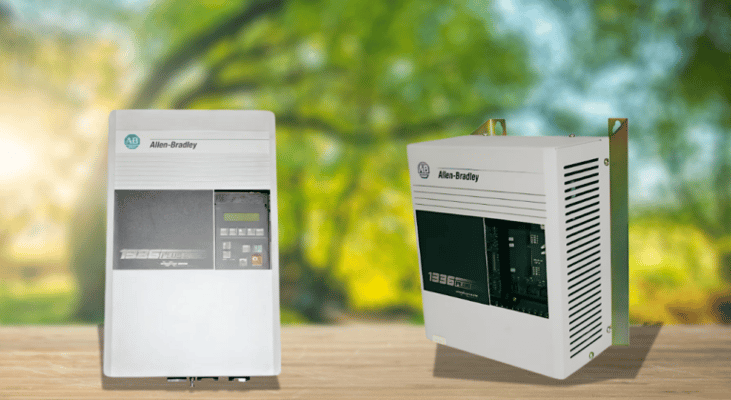
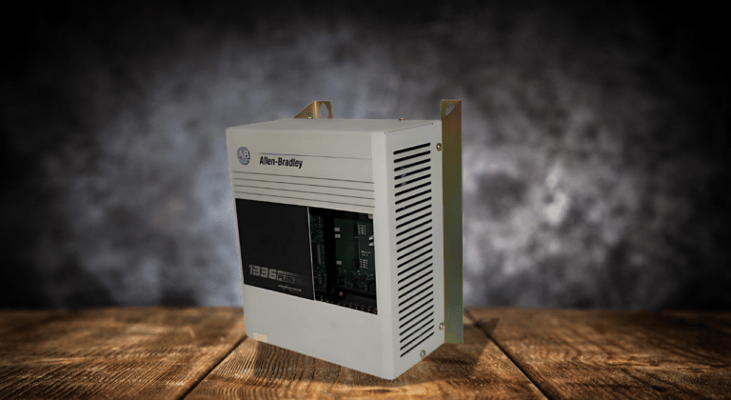
The Allen-Bradley 1336 PLUS II AC drive series offers a complete line of compact, high-performance Variable Frequency Drives (VFDs) that are renowned as a highly dependable AC drive technology in a variety of industrial applications, even after being officially discontinued several years ago. Available in power ratings ranging from 0.5 to 600 horsepower (0.37 to 448 kW) and three voltage ranges: 200 to 240V AC, 380 to 480V AC, and 500 to 600V AC, these drives help provide a single motor speed control solution for different application requirements and motor sizes. This article examines why the 1336 PLUS II drive series continues to be a preferred motion control solution for various industrial applications despite its obsolete status. The Allen-Bradley 1336 PLUS II drives are essentially microprocessor-based, high-performance PWM (Pulse Width Modulation) AC drives that are designed to provide precise motor speed and torque control using Sensorless Vector Control (SVC) and/or selectable...
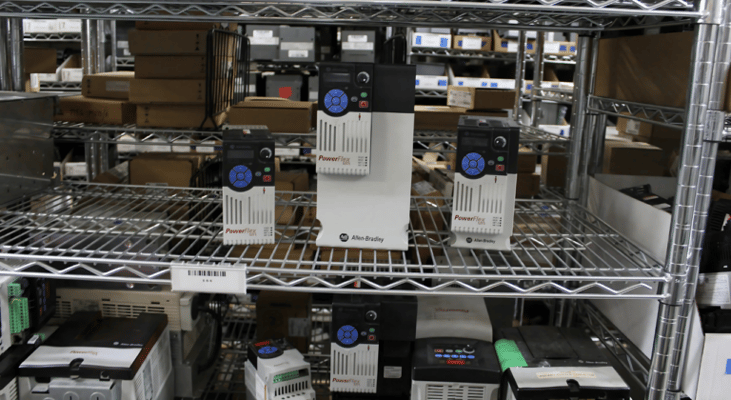
To those who are in the know, generational improvements are fascinating! Whether you are into phones, cameras, computer hardware, or, like us, automation equipment, every so often, the automation equipment that we know and love gets a refresh and is packed with new features that increase the quality of life while working on it. That’s why today we present to you a much-anticipated (albeit a bit late) introduction of Allen-Bradley’s new 755 TS line of VFDs! We will take it head-to-head against the previous generation 755 and showcase its new features. Shop for PowerFlex 755TS Drives Here The 755TS is an updated version of their 755 platform with new technology packed in and a more modern enclosure style to match. Its key features include: DeviceLogix: An embedded control technology that uses discrete inputs and drive status information to manipulate discrete outputs and drive control functions Predictive Maintenance: Leveraging TotalFORCE technology, the 755TS estimates and alerts you...
Selecting the right adjustable frequency drive is crucial for optimizing industrial automation and motor control efficiency. The Allen-Bradley 1336 Plus II series offers a diverse range of drives with varied power ratings, voltage ranges, and advanced features to meet specific application requirements. Whether you need sensorless vector control, programmable interfaces, multilingual HMIs, or enhanced protection, these drives provide high performance, reliability, and flexibility. This guide explores various 1336 Plus II models, highlighting their key specifications and applications to help you choose the perfect drive for your industrial automation needs. Buy 1336 Plus II Drives Here The Allen-Bradley 1336F-A007-AA-DE is a powerful, microprocessor-based adjustable frequency PWM AC drive designed for various industrial applications. With ratings from 0.37 kW to 448 kW (0.5-600 HP) across multiple voltage ranges, it offers precision control, high torque, and seamless integration with...
AC drives, or variable frequency drives (VFDs), are essential components in modern electrical and industrial applications. They play a crucial role in controlling the speed and efficiency of electric motors, making them widely used across industries such as manufacturing, HVAC, and automation. By regulating motor operation, AC drives contribute to energy optimization and improved process control. Their adaptability allows businesses to achieve operational stability while reducing mechanical stress on equipment. In this article, we will discuss features of AC drives that one should know before buying and other key considerations. Browse our Selection of AC Drives Here When selecting an AC motor drive, several design specifications must be considered to ensure compatibility and optimal performance. Key factors include continuous current, which determines the current supplied to the motor during continuous operation, and supply voltage, which defines the voltage input required for the...