Smart Motor Controllers vs. Traditional Starters: What’s the Real Difference?
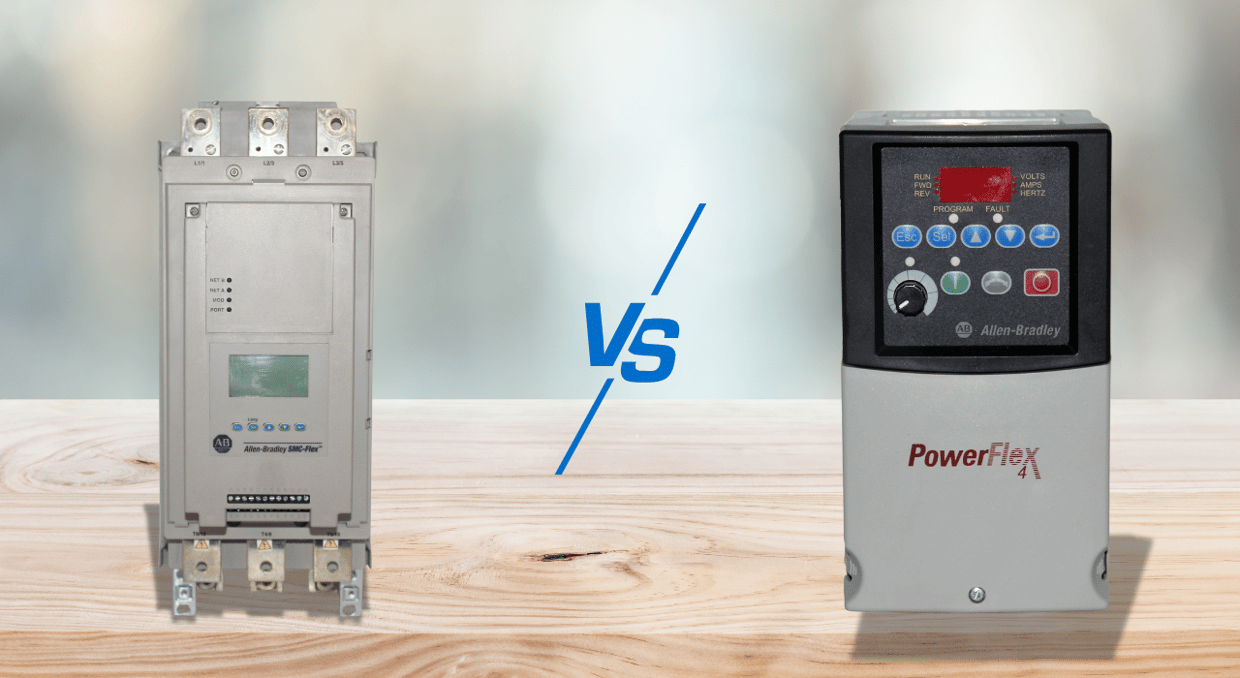
The evolution from traditional motor starters to smart motor controllers (SMCs) marks a significant technological leap in modern industrial applications. While conventional starters rely on electromechanical components for basic motor control, smart motor controllers integrate advanced technologies such as power electronics, real-time data logging, predictive analytics, and IoT connectivity. These innovations enable SMCs to provide precise, adaptive control over motor speed, torque, and energy consumption while minimizing downtime and maintenance costs. This article explores the key differences between smart motor controllers and traditional starters, focusing on aspects like power electronics, adaptability to load changes, starting current management, feedback mechanisms, and diagnostic capabilities. Understanding these distinctions highlights the benefits of SMCs in optimizing performance, reliability, and energy efficiency in today’s automated industrial systems.
Power Electronics Integration
One of the primary differences between smart motor controllers and conventional starters is the incorporation of power electronics. Conventional motor starters start and stop motor activities primarily using electromechanical parts like contactors and relays. These parts work well for simple control, but they are prone to mechanical wear, which shortens their lifespan, increases maintenance expenses, and causes sporadic operational failures.
On the other hand, for accurate and dependable motor control, smart motor controllers use cutting-edge solid-state components like Insulated-Gate Bipolar Transistors (IGBTs) and Silicon-Controlled Rectifiers (SCRs). IGBTs provide high-speed switching and PWM (Pulse Width Modulation) techniques for precise speed and torque control, while SCRs can tolerate high voltage and current levels, which makes them perfect for gentle starting and stopping. IGBT-based controllers, for instance, are used in HVAC systems to dynamically modify fan speed, improving energy efficiency.
This integration supports contemporary automation systems with protocols like Modbus or Ethernet/IP, removes moving components, increases efficiency, and lowers harmonic distortion with appropriate filtering.
Adaptability to Load Types
One significant technological distinction between smart motor controllers and conventional motor starters is their ability to adapt to changing load circumstances. Conventional starters, such as Direct-On-Line (DOL) or Star-Delta starts, are made for applications with constant loads and fixed speeds. They are not appropriate for processes that need precise control or changeable operating demands since they are unable to react flexibly to variations in load. Traditional starters, for instance, may result in inefficiencies in conveyor systems since they cannot modify speed in response to load weight.
Conversely, smart motor controllers are excellent at managing dynamic loads. These controllers, which are outfitted with technologies such as sensor feedback loops and Variable Frequency Drives (VFDs), modify motor speed and torque in real time to correspond with load demands. VFD-equipped smart controllers in HVAC systems adjust the speed of fans or pumps to maximize energy use both during peak and off-peak hours.
Because of their versatility, which guarantees operational effectiveness, reduces energy waste, and prolongs motor lifespan, smart controllers are crucial for variable-load applications.
Starting Current Management
A significant difference between smart motor controllers and conventional motor starters is starting current management. An inrush current that is normally 6–10 times the motor’s full-load current is drawn at startup by conventional starters, such as Direct-On-Line and Star-Delta designs. Motor windings, mechanical parts, and the electrical grid are all severely stressed by this abrupt surge, which frequently results in voltage dips that might destabilize other connected equipment. For example, in industrial settings, the power network may become overloaded when several motors start at the same time using DOL starters.
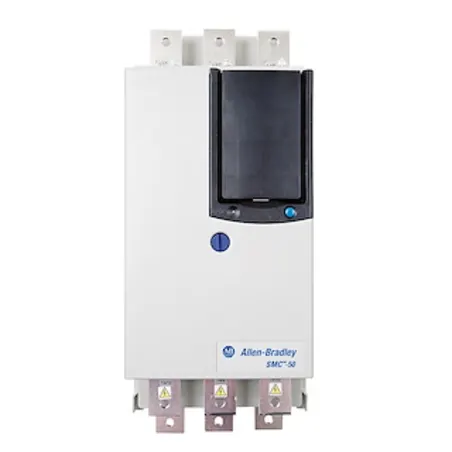
Advanced soft-start technology is used by smart motor controllers, including the Allen-Bradley SMC-50 series, to solve this problem. During start-up, the SMC-50 progressively raises voltage and current using Silicon-Controlled Rectifiers and integrated algorithms. This guarantees smooth acceleration and lowers the inrush current. The SMC-50 greatly prolongs pump life in applications such as water pumping systems by permitting regulated motor starts and stops, which eliminates water hammer.
The SMC-50 is perfect for high-demand activities because of its configurable features and real-time diagnostics, which further improve system efficiency and dependability.
Feedback Mechanism
Smart motor controllers and conventional starters differ significantly in their feedback systems. In an open-loop system, traditional starters carry out predetermined tasks without keeping an eye on or responding to changing circumstances. Because of this lack of input, they are not appropriate for applications that call for dynamic changes in torque, speed, or load situations. Traditional starters, for example, may result in inefficiencies or problems with product quality in precision manufacturing since they are unable to respond to changes in the process. Smart motor controllers, on the other hand, use closed-loop control systems and sophisticated sensors and encoders to continually monitor variables like motor position, torque, speed, and current. High-precision adaptive operation is made possible by technologies such as PID (Proportional-Integral-Derivative) control algorithms and real-time communication protocols (such as Modbus and Ethernet/IP). The Siemens SIMOCODE series, for instance, can control conveyor motor performance, guaranteeing reliable operation under various load scenarios.
Monitoring and Diagnostics
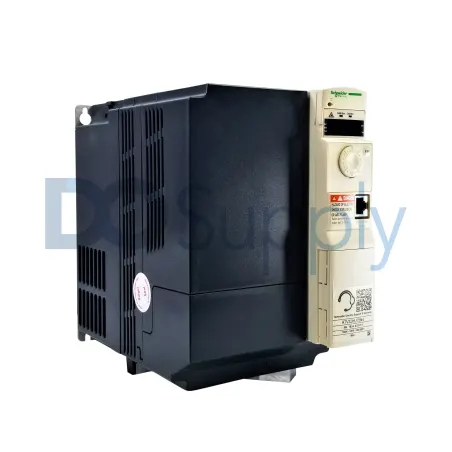
Smart motor controllers and conventional starters differ primarily in their capacity to track and diagnose system performance. Conventional starters have no built-in monitoring capabilities; therefore, they offer little information about the state of the motor. Phase imbalances and overloads are examples of problems that are only discovered after failure, leading to expensive repairs and unscheduled downtime. Advanced monitoring features are built into smart motor controllers, such as the Schneider Electric Altivar Process series. Using integrated sensors and diagnostic software, they continually monitor variables including current, voltage, power factor, temperature, and working hours. Predictive maintenance is made possible by real-time data, which warns operators of any problems before they cause a system breakdown. Additionally, these controllers provide remote diagnosis and control through cloud-based platforms or SCADA systems thanks to their IoT connection and support for communication protocols including Ethernet/IP and Modbus TCP. Smart controllers are essential in contemporary industrial applications because of their proactive approach, which eliminates downtime, maximizes motor performance, and lowers maintenance costs.
Data Logging and Analytics
With the integration of cutting-edge technologies like integrated data recording, real-time monitoring, and predictive analytics, smart motor controllers mark a substantial advancement over conventional starters. SMCs automatically record performance data, such as voltage, current, and fault situations, in contrast to traditional motor starters, which depend on manual inspections and external diagnostic instruments. Operators can see inefficiencies and possible breakdowns before they happen thanks to the stored data that can be retrieved for trend analysis. By recommending the best times for service to avoid unscheduled downtime, machine learning algorithms improve predictive maintenance.
Additionally, SMCs make use of IoT connections to provide remote control and monitoring as well as quicker reaction times. More accurate control, lower energy use, and longer equipment life are the outcomes of this integration. Traditional starters, on the other hand, do not have these qualities, which frequently results in higher maintenance expenses and less effective functioning. When combined with edge computing and cloud-based analytics, SMCs provide previously unheard-of levels of operational automation and visibility.
Final Thoughts
In conclusion, the transition from traditional motor starters to smart motor controllers represents a transformative shift in industrial motor management. Smart motor controllers leverage advanced technologies like power electronics, real-time monitoring, and predictive analytics to offer precise, adaptive control over motor operations. These controllers provide significant benefits, including improved energy efficiency, reduced maintenance costs, and extended equipment life, all while minimizing downtime. Technologies such as IoT connectivity, machine learning, and variable frequency drives enhance their versatility, making them ideal for dynamic and variable-load applications. In contrast, conventional starters lack these sophisticated capabilities, often leading to inefficiencies and higher operational costs. As industries continue to embrace automation, smart motor controllers are becoming essential for optimizing motor performance, reliability, and overall system efficiency. We have another comparison guide between AC and DC drives here if you would like to keep reading!
DO Supply Inc. makes no representations as to the completeness, validity, correctness, suitability, or accuracy of any information on this website and will not be liable for any delays, omissions, or errors in this information or any losses, injuries, or damages arising from its display or use. All the information on this website is provided on an "as-is" basis. It is the reader's responsibility to verify their own facts.